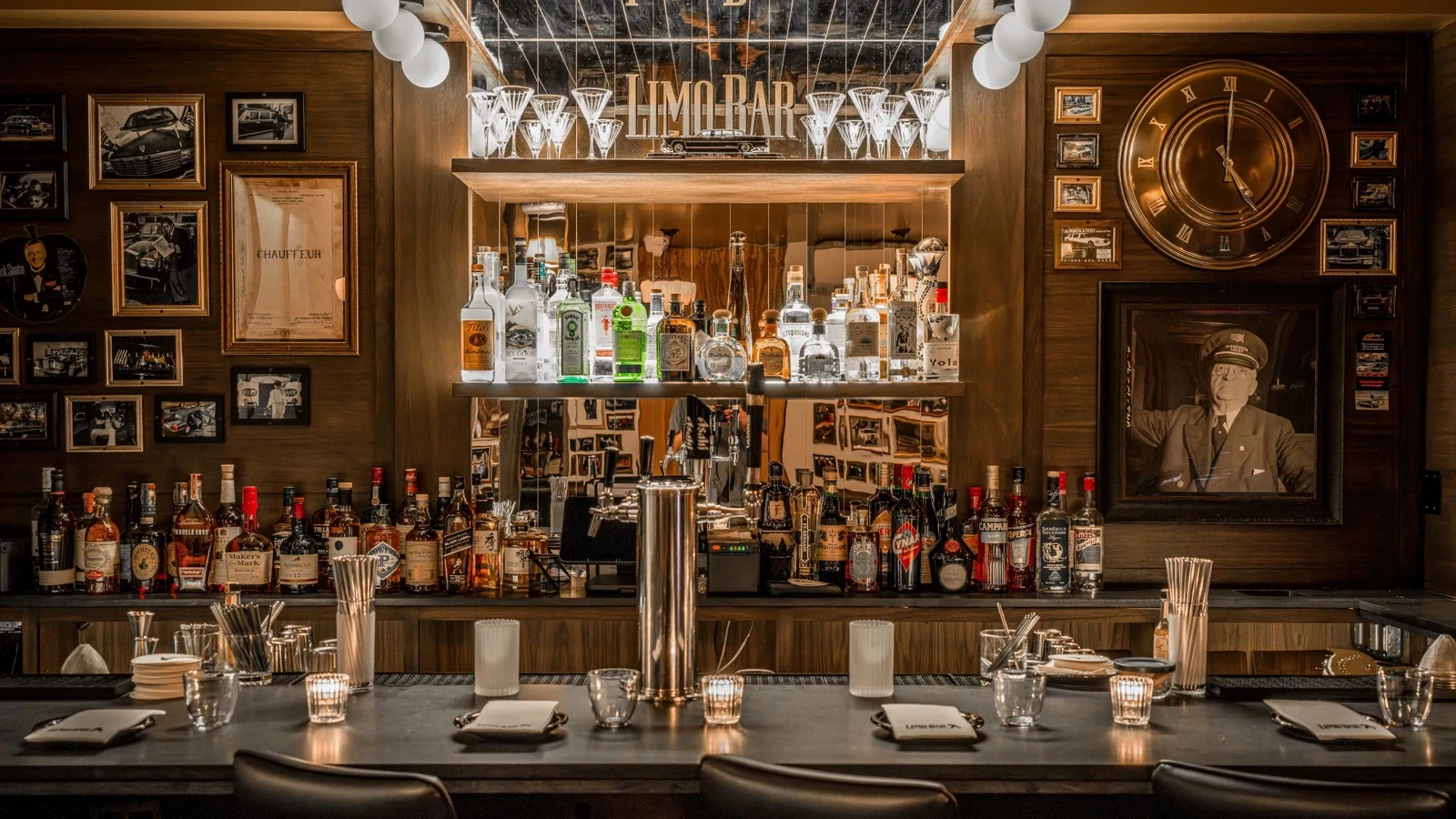
A Castelvetrano olive sits inside a frozen orb of olive juice at Limo Bar East Village, the cocktail bar opening June 11, 2026 at 33 Avenue B with Ian Alexander and Mario Firmani, both former Dead Rabbit bar directors, as beverage partners. The gesture is small enough to miss if you read the menu too quickly, but it tells the room what kind of bar this intends to be: one where a Martini changes as it warms, where dilution is part of the method, and where two bartenders trained inside one of New York’s most watched programs now build a station of their own (Thespiritsbusiness1).
According to The Spirits Business, Limo Bar is co-founded by Reed Adelson, the owner of Virginia’s bar and restaurant in New York City, and Jack Berry, of Ray’s bar and Original Henry Lambert’s Beer. Adelson has operated Virginia’s in the East Village for 10 years, including three years on East 3rd Street. Alexander and Firmani bring the beverage hands. Alex Baker, formerly of Rebelle and Yves, created the food menu. Julie Roberts collaborated on the interiors with Berry. The opening is a gathered bench, not a logo with a drinks list attached (Thespiritsbusiness1).
Why Limo Bar East Village Matters Now
The Limo Bar East Village opening lands at a moment when the Martini has returned to the front of many New York bar programs, not as a single drink but as a test of the bartender’s discipline. A Martini gives little cover. Temperature, glassware, brine, garnish, dilution, and the pace of service all sit in view. Too warm, and the structure loosens. Too much brine, and the spirit disappears. Too little attention to the garnish, and the drink becomes a cold pour with ceremony around it.
Alexander and Firmani come to that problem after serving as bar directors at The Dead Rabbit, identified in the source material as a former World’s 50 Best Bars list topper. That credential is useful only if it turns into work at the rail. The opening menu suggests they are not treating the Martini as one house serve. Martinis sit at the center of the program, with classic expressions alongside the Pickle Martini and the Pornstar Martini. The rest of the list reaches for Negronis, Cosmopolitans, Bloody Marys, and other classics. The frame is broad, but the center is narrow enough to judge.
For the practitioner-curious drinker, the point is not simply that former Dead Rabbit people have taken over a new address. New York has always moved talent from one pass to another. The point is that Alexander and Firmani are stepping into partnership at 33 Avenue B, where the menu can reveal which habits from a bar director role they keep, and which ones they cut away.
The Dead Rabbit Pedigree Behind the Bar
The Dead Rabbit name carries weight because it is associated with a kind of bartending that treats research, service, and repetition as one craft. The source confirms that both Alexander and Firmani were previously bar directors there. It does not give their exact years behind that bench, and there is no need to invent them. The title alone tells you they were not passing through. A bar director carries the program when the room is full, when the staff changes, when a menu needs to stay legible to guests and exacting to the people making it.
At Limo Bar, that experience meets founders with their own New York lineage. Adelson brings a decade of operating Virginia’s in the East Village. Berry brings Ray’s and Original Henry Lambert’s Beer into the partnership. The source quotes Adelson directly: “After 10 years of owning and operating Virginia’s in the East Village, and three years on East 3rd Street, I knew I wanted to invest more in this neighbourhood.” He continued, “Not as an extension of Virginia’s, but as a straightforward, comfortable, cocktail-focused space that I felt the neighbourhood needed.”
That sentence gives Limo Bar its useful limit. Straightforward does not mean simple. Comfortable does not mean loose. Cocktail-focused means the bar program has to carry the room every night, not as an ornament to dinner but as the reason guests come through the door. For Alexander and Firmani, the job is to make that intention repeatable from the first round to the late pour.
The opening also names the predecessor without flattening the new room into alumni theater. Colin Field, in Paris, developed the Clean Dirty Martini technique that appears on the Limo Bar menu. Alexander and Firmani are not claiming invention where the lineage already exists. They are bringing that method into a New York bar whose stated references include lobby bars, cocktail institutions, and neighborhood taverns.
The Clean Dirty Martini and the Martini Bench
The Clean Dirty Martini is the drink to watch first because it puts process in the glass. According to the source, it features a single Castelvetrano olive inside a frozen orb of olive juice. As the orb melts, it changes the Martini’s flavor profile while the guest drinks. The mechanism is visible. Brine enters slowly, not all at once. The garnish is not an ending; it is the timer.
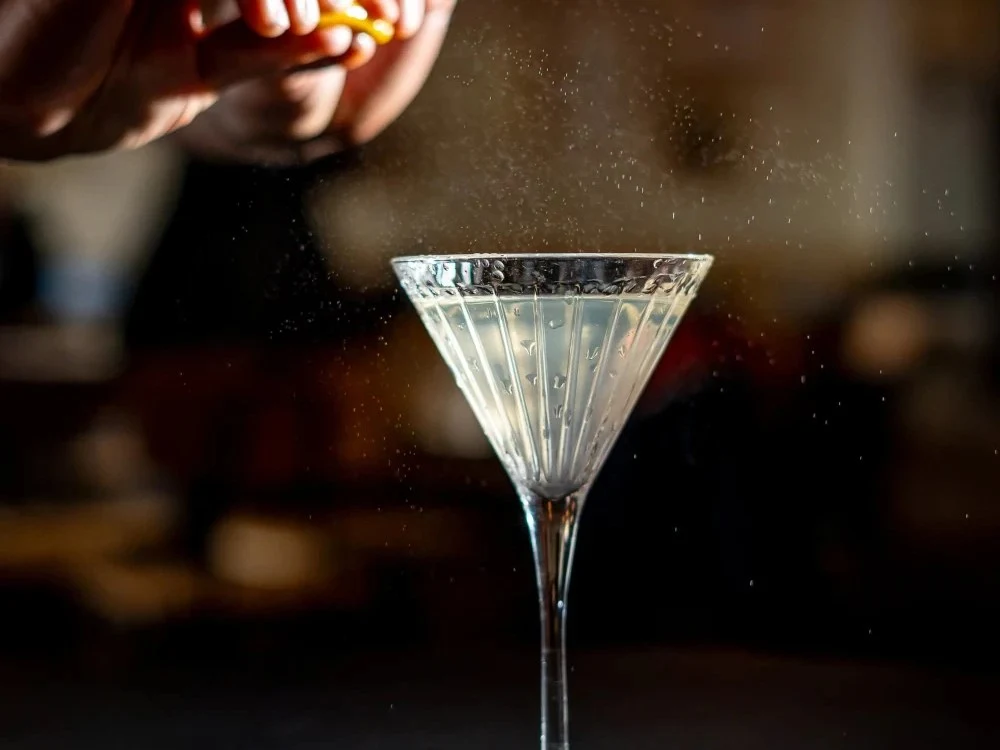
That kind of build asks a bartender to think beyond the first sip. A conventional Dirty Martini often begins with its salinity already fixed. Here, the salinity is staged. The first pull and the last pull do not have to say the same thing. The orb has dwell time. The olive has placement. The freezer becomes part of the station, not just storage. In a room that puts Martinis at the center, this is not a flourish. It is a method that lets a drink move without the bartender touching it again.
The menu also includes the Pickle Martini and the Pornstar Martini, according to the source, with classic cocktails such as Negronis, Cosmopolitans, and Bloody Marys filling out the list. That spread tells you something about the intended guest. This is not a library bar that only rewards the person who can recite old specs. It is also not a novelty menu built from names alone. The drinker who wants a Martini can stay in that lane; the drinker who wants a Cosmopolitan is not treated as a problem to solve.
Food, Interiors, and the Limo Room
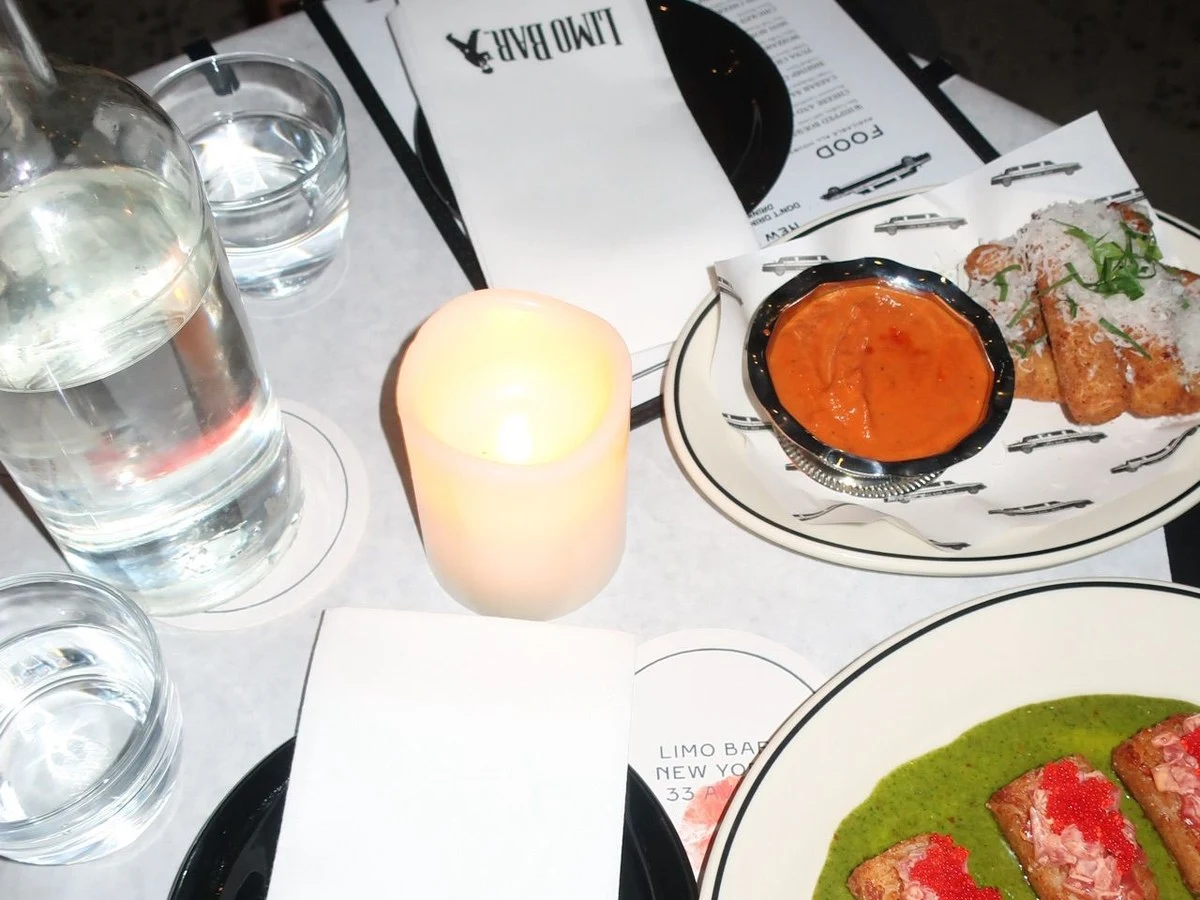
Alex Baker’s food menu draws from grand hotel and bar dining, according to the source. The listed dishes include prawn cocktail, mozzarella sticks, club sandwiches, steak frites, and classic desserts. That is a useful companion to a Martini-led bar because the food does not ask the guest to change modes. Prawn cocktail understands cold spirit. Steak frites can hold the middle of the night. Mozzarella sticks put salt and fat where a second round needs them. A club sandwich gives the room a hinge between dinner and late drinking.
Baker’s résumé, formerly of Rebelle and Yves, places another working hand inside the project. Limo Bar is not only Alexander and Firmani’s bar program in isolation. It is a collaboration among beverage, ownership, kitchen, and design. That matters because cocktail bars often fail in the seams. A good drink cannot cover a kitchen that does not know the hour. A good kitchen cannot rescue a room whose lighting makes every glass feel wrong. The whole place has to understand the same pace.
Julie Roberts collaborated with Berry on interiors intended to echo a 1980s stretch limousine. The source names wraparound banquettes, warm wood panelling, mirrors, and privacy curtains. It also notes scans of vintage private car service brochures, automobile auction catalogues, paparazzi photographs of limousine moments, and personal photos of friends and family in limos. The reference could have tipped into costume. The details in the source suggest something more specific: the enclosed seat, the reflected glass, the feeling of being carried somewhere while still sitting still.
Berry gives the room its line in the source: “New York has this addictive ability to make you feel like you’ve made it, even when you’re still on the way.” He adds, “When you’re sitting at Limo Bar, it feels like you’ve made it, and that’s what’s so New York about it.” For a bar on Avenue B, that is a clear brief. Not luxury as distance. Not polish as exclusion. A limousine interior, translated into banquettes and mirrors, becomes a New York joke with service standards attached.
33 Avenue B and What to Watch Next
The practical facts are simple. Limo Bar opens June 11, 2026 in New York City’s East Village. The address is 33 Avenue B. Supplemental source material notes dinner, weekend brunch, and cocktails until late. For drinkers tracking the city’s new openings, the date matters because first weeks reveal habits that later become invisible. You can see who is on the floor, who touches the tickets, how the opening team handles a backed-up rail, and whether a signature drink has been built for service rather than photography.
The East Village asks different things of a cocktail bar than a hotel lobby or a downtown institution. A room here has to meet regulars, industry people, dates, late diners, and guests coming because they have heard the names Alexander and Firmani. Adelson’s quote makes the neighborhood the reason for the investment, not decoration around it. Ten years at Virginia’s gives him a longer view of the blocks around the bar than an operator arriving for a trend cycle.
Limo Bar East Village also gives close watchers of bar culture a narrow window. The Clean Dirty Martini has a structure specific enough to follow: one Castelvetrano olive, one frozen orb of olive juice, a changing drink in the same glass. If it becomes the order guests repeat back to one another, it will be because the method survives the room.
The next thing to watch is the Martini station after the first rush, when glassware, garnish, and freezer work start to show strain. Watch whether the Clean Dirty Martini arrives with the frozen orb intact and the olive held cleanly inside it. Watch how the staff describes Colin Field’s technique, and whether they name the predecessor with the same care the menu gives the drink. The first weeks at 33 Avenue B will show which details become house habits, and which drink the room teaches New York to order first.