Chef Matt Stone Brings Me-Gal by Matt Stone to Taronga
Matt Stone returns to Sydney on December 15, taking Me-Gal at Taronga Zoo into induction cooking, sustainable wine, and zero-waste ambition.
HM
Director of Editorial Standards
Hugo Marchetti
Filed October 28, 2026
9 min read
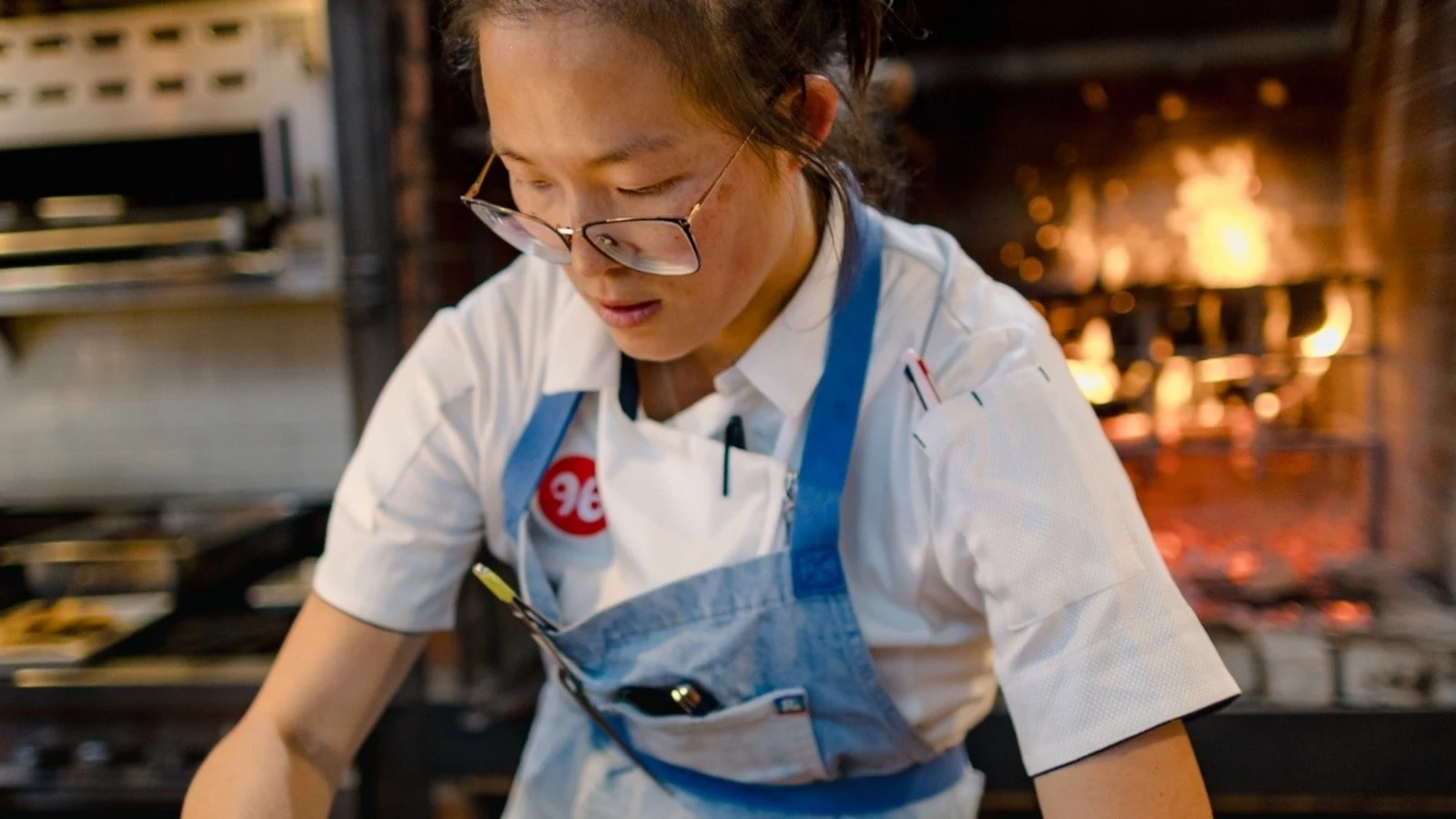
On December 15, Matt Stone will switch on a new induction kitchen at Me-Gal by Matt Stone, the Taronga Zoo restaurant he is relaunching after a decade away from Sydney restaurant cooking. The chef returns with a three-year contract, an option to stay longer, harbour views to the Opera House and Harbour Bridge, and the waste argument he has been making from the bench since Joost Bakker first pulled him into the Greenhouse project in Perth.
Stone is stepping into Taronga Zoo, a public institution with in-house guests, day visitors, catering, events, and a food hall he wants to make waste free. Me-Gal began as the dining room for guests of Taronga Zoo’s Wildlife Retreat, then opened to the public in 2023 without the zoo entrance fee. Stone now inherits that room and the operational weight around it.
The Sunday email
Get new Made By stories every Sunday.
Every Sunday we send a lead story and up to four more about the chefs, winemakers, sommeliers and hoteliers behind the restaurants, bars, wineries and hotels we cover.
Free. One email a week, and you can unsubscribe from any issue.
That project pushed socially responsible cooking and urban foraging. Me-Gal by Matt Stone brings him back with Trippas White. (Theage2).
Why Matt Stone Left Sydney, and Why He Is Back Now
“I haven't cooked [in Sydney] for a decade, if not longer,” said Matt Stone.1 In that time he moved through the country with a consistent discipline: use native ingredients, reduce waste, cook from the whole plant or animal where the menu allows, and keep the grower visible in the decision.
The line starts with Joost Bakker’s Greenhouse venture, where Stone, then a young chef in Perth, was put in front of a kitchen shaped around ecological constraint. Later, in one of Bakker’s projects, Stone lived for months in a no-waste, self-sustaining eco-house in Melbourne ’s Fed Square with chef Jo Barrett, his then-partner. In the Fed Square eco-house project, waste was measured in daily life.
You Beauty in the Northern Rivers gave Stone another bench to test the same convictions. The restaurant earned a Good Food Guide hat, and Stone’s cooking there kept pushing native ingredients and zero-waste habits into a regional restaurant setting. You Beauty in the Northern Rivers showed Stone could carry the same methods into a regional restaurant setting.
Before signing with Trippas White, Stone spoke with Mark Best at Sydney Tower and Danielle Alvarez at the Opera House, both chefs who had partnered with the group. Those conversations helped him decide to sign on. Stone has said he never wanted to put his name on a restaurant, which makes the title Me-Gal by Matt Stone a useful tension. The name puts his method under public scrutiny.
The term is three years, with an option for longer. For a chef whose work depends on changing habits, that duration matters. A no-gas kitchen can be installed quickly. Waste systems need repeated service, staff training, supplier alignment, and the patience to keep weighing what goes into the bin when the room is full.
Me-Gal by Matt Stone: What Taronga Zoo Gets
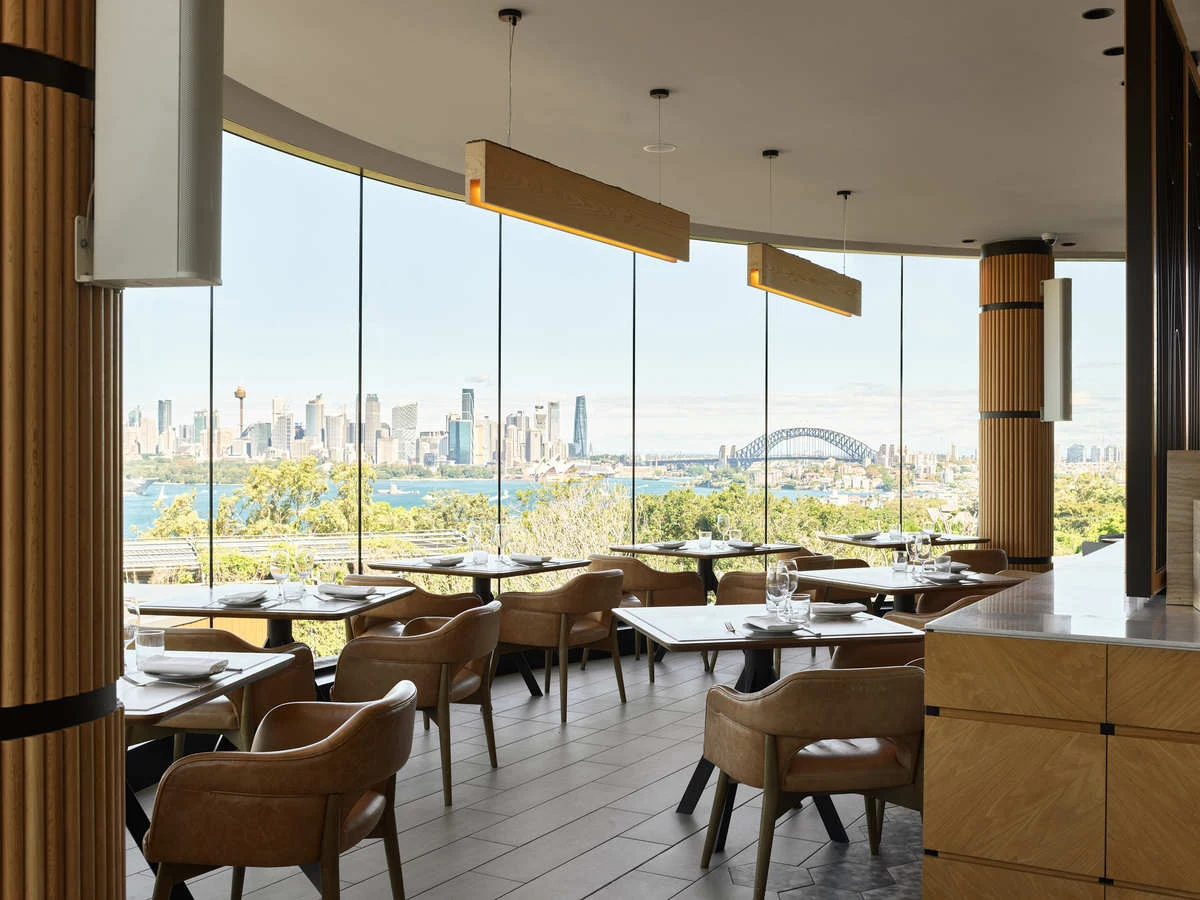
Stone called Me-Gal one of the best dining rooms in Australia because of its harbour view. The room is oriented to the harbour view before the plate arrives.
The restaurant’s access has already changed once. Me-Gal was originally for in-house guests at Taronga Zoo’s Wildlife Retreat. Stone’s December 15 relaunch gives that access a clearer culinary identity, and the first services carry scarcity of a practical kind: his first Sydney restaurant work in a decade, inside a harbour-facing room already separated from the zoo gate.
The partnership with Trippas White places Stone in a wider hospitality machine. Here, the pressure point is visible: Stone has been impressed by the scale the group offers for moving his kitchen philosophy forward. A small restaurant can separate scraps, rework trim, and maintain a close loop because the maker can stand over every station. A zoo property brings catering, events, and visitor volume into the same orbit.
Stone will be involved in Taronga’s catering and events before he moves further into the food hall. Taronga’s catering and events will be the next test of a lower-waste rhythm. Taronga Food Market sits further down the line, and Stone has said he has ambitions to make it waste free.
For Sydney, the interest reaches past the harbour view. Me-Gal asks whether a public dining room tied to a zoological institution can give equal weight to induction cooking, sustainable wine buying, native ingredients, wild game, and waste reduction. The harbour brings people in.
The Induction Bench and the December 15 Menu
The new kitchen will run without gas. Stone will cook on induction, a practical shift with implications for heat control, ventilation, staff training, and the feel of the station. Induction changes the way a cook listens to a pan. The flame is gone; the hand learns response time through the vessel and the ingredient. For Stone, that absence of gas fits the broader direction of the project.
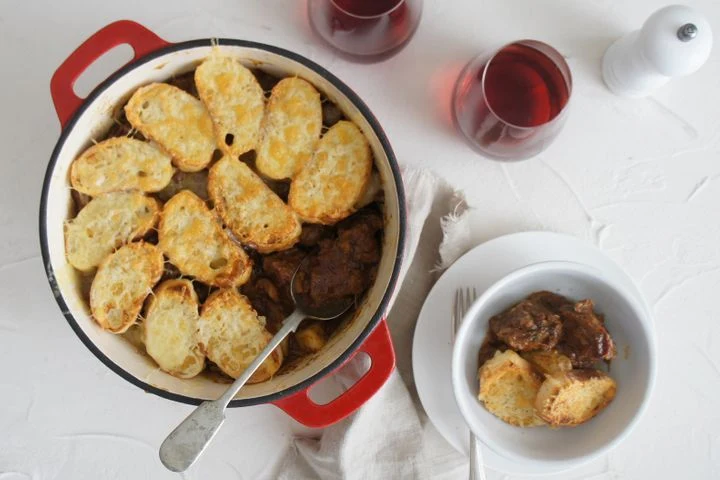
A casserole dish containing braised meat topped with toasted bread slices, served with red wine.
The menu will carry wild game, kangaroo, ethically caught crayfish, and a strong vegetable focus. Stone has said the approach focuses on Australian ingredients and the people who grow them. Waste reduction changes what the cook considers usable.
Kangaroo and wild game bring their own handling demands. Lean meat gives less cover to the cook; overcooking shows quickly, and seasoning cannot hide poor sourcing. Ethically caught crayfish places the seafood decision in the same field as the waste program. The vegetable focus gives the kitchen room to work with trim, stems, leaves, and secondary cuts in ways a meat-heavy menu often treats as garnish.
Me-Gal by Matt Stone will also carry a wine list shaped around sustainable and considered winemaking. The list will give heavy representation to female winemakers and First Nations-owned wine businesses, with Stone’s own Wines by Matt Stone also appearing. That wine direction matters because sustainability can fail when the kitchen carries the language alone and the cellar keeps buying by habit.
The wine list will feature sustainable and considered winemaking.
The Lineage Behind Stone’s Zero-Waste Mandate
Greenhouse in Perth put him close to Joost Bakker’s built-environment thinking, where food, materials, waste, and water sat inside the same argument. The Fed Square eco-house project with Jo Barrett pushed that argument into daily practice for months. Oakridge Estate and You Beauty gave the cooking further stations in Victoria and the Northern Rivers.
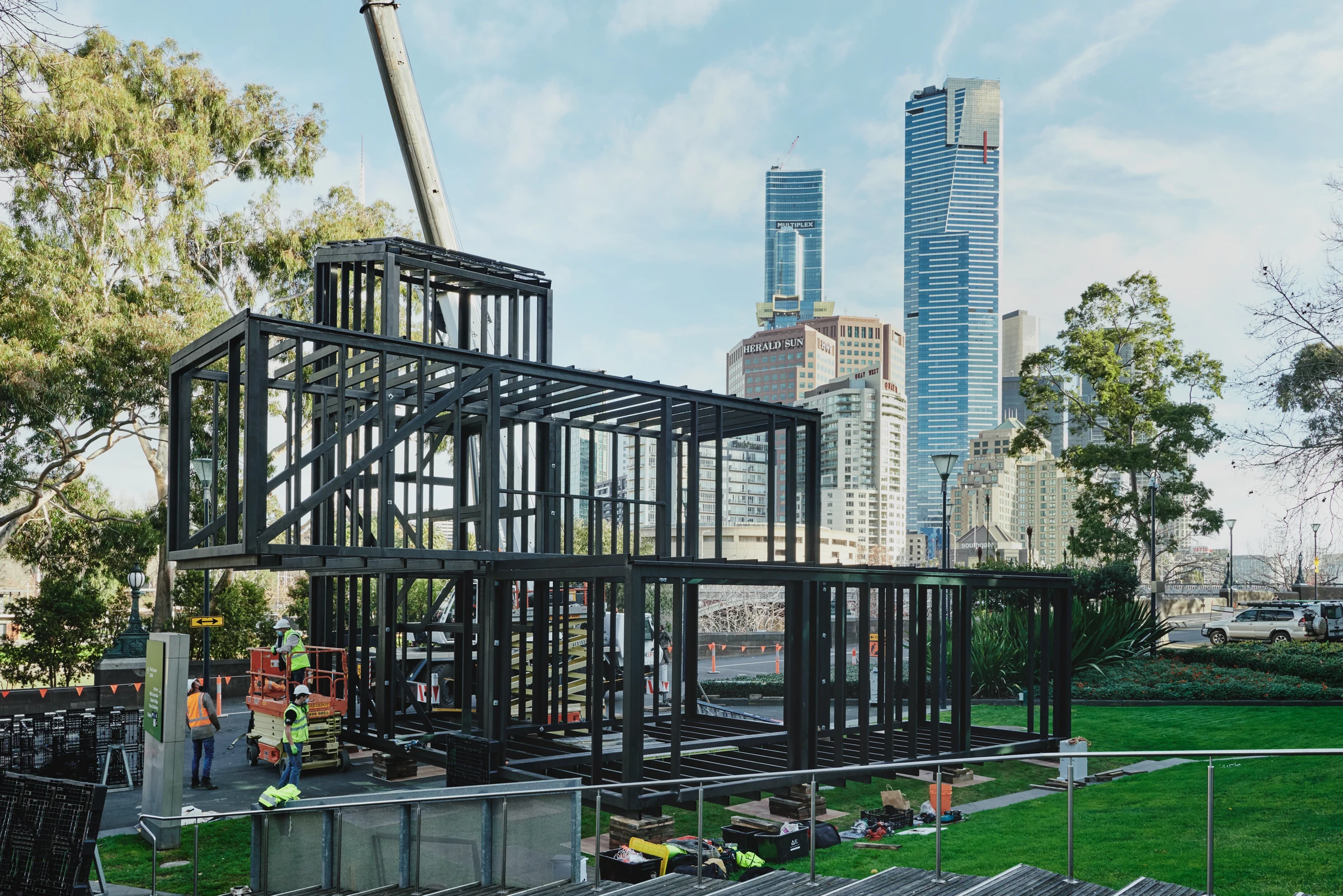
A black steel-frame modular building under construction in an urban park setting with city skyline visible.
That lineage is important because zero waste in a restaurant can become a language problem. Menus can name leaves and skins while the bins tell another story. Stone’s work has treated waste as an operational question: what gets ordered, what gets prepped, what gets cross-used, what gets repurposed, what gets refused at the supplier level, and what the team repeats when the chef is away from the pass.
At Taronga, the staff around Stone will help make zero waste work. A zero-waste room depends on the commis who labels the trim, the sous who writes prep with second-use in mind, the events cook who resists the disposable solution, and the floor team who can explain why kangaroo, crayfish, native ingredients, and vegetable work belong together.
Stone’s three-year term gives the project time to build that muscle. The first months will draw attention because of the December 15 opening and the harbour outlook. The later measure will be quieter: whether Me-Gal’s bins change, whether catering adopts the restaurant’s habits, whether Taronga Food Market can move toward the waste-free ambition Stone has named.
Visiting Me-Gal by Matt Stone at Taronga
Me-Gal by Matt Stone opens on December 15 at Taronga Zoo in Sydney. The restaurant is public-facing, following the 2023 shift that allowed diners to visit without paying the zoo entrance fee. The dining room looks toward the Opera House and Harbour Bridge, and the view is part of the site Stone agreed to inherit.
The opening is Stone’s first Sydney restaurant work after the long gap from the city. His last Sydney restaurant outing, Stanley Street Merchants in East Sydney, ran for three months in 2014. A three-year Taronga term changes the shape of the return.
The early signals are clear before the first menu lands: no gas in the new kitchen, induction at the station, wild game and kangaroo in the meat work, ethically caught crayfish in the seafood frame, vegetables carrying weight, and a wine list directed toward sustainable producers, female winemakers, First Nations-owned wine businesses, and Wines by Matt Stone.
A low-waste kitchen in a small room can rely on proximity and habit. Taronga gives Stone a restaurant, events, catering, and eventually a food market he wants to make waste free. After December 15, the method travels from the pass to the event kitchen, from the event kitchen to the food hall, and from Stone’s hands into the team that has to repeat the work when the harbour view is full of diners.
The Sunday email
Get new Made By stories every Sunday.
Every Sunday we send a lead story and up to four more about the chefs, winemakers, sommeliers and hoteliers behind the restaurants, bars, wineries and hotels we cover.