Marcus Jernmark opened Marée wine bar this month above Lielle in Pico-Robertson, and the first signal from the upstairs kitchen is a burger edged in black pepper, seared, grilled, brushed with beef tallow, and served on au poivre. Marée is Jernmark's Parisian-inspired bistro and wine bar at 9575 W. Pico Blvd., a walk-in-friendly counterpoint to the fine-dining restaurant he opened downstairs in February.1 The move matters because Jernmark is not leaving the discipline of Lielle behind; he is changing the format, the price of entry, and the way the room can be used by the neighborhood.
Jernmark's hands have spent time in kitchens built for control. He worked at Aquavit and Per Se in New York, and at Restaurant Frantzén in Stockholm, before opening Lielle in Los Angeles.1 Those rooms teach repetition, sequence, and restraint, the sort of time on the tools that shows up when a casual dish refuses to behave casually. At Marée, the menu names comfort foods, but the method keeps the fine-dining muscle visible.
Why Marée Wine Bar Matters for LA Dining
Jernmark has placed Marée wine bar above Lielle rather than beside it in spirit only. Downstairs, Lielle runs as a tasting-menu restaurant. Upstairs, Marée accepts walk-ins and opens daily from 5 to 10 p.m., with the kitchen running from 5:30 to 9:30 p.m.1 The two floors now give the same chef two registers: one for the composed sequence, one for a burger, escargot beignets, mixed grills, chocolate mousse, and a glass poured without ceremony.
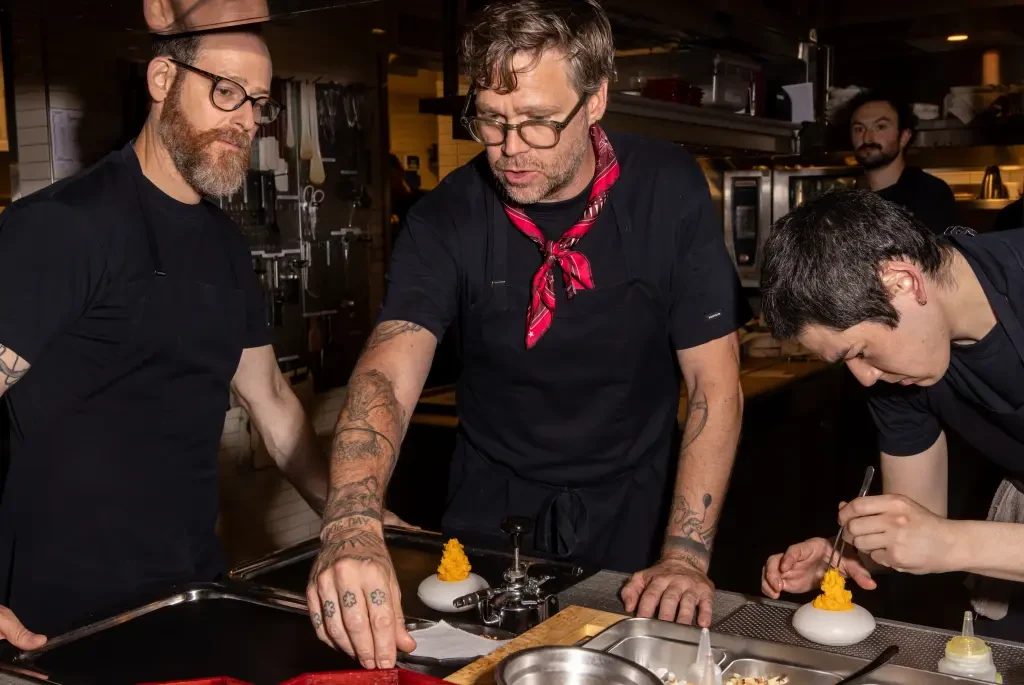
Marcus Jernmark said, "It's approached exactly the same as Lielle. It's just in a different genre of eating."1 That sentence gives the opening its shape. Marée is not a spare waiting room for Lielle, even though its hours can serve the before-dinner or after-dinner drink. It has its own menu, its own bar, and Phil South, Lielle's head sommelier, carrying the wine program upstairs.1
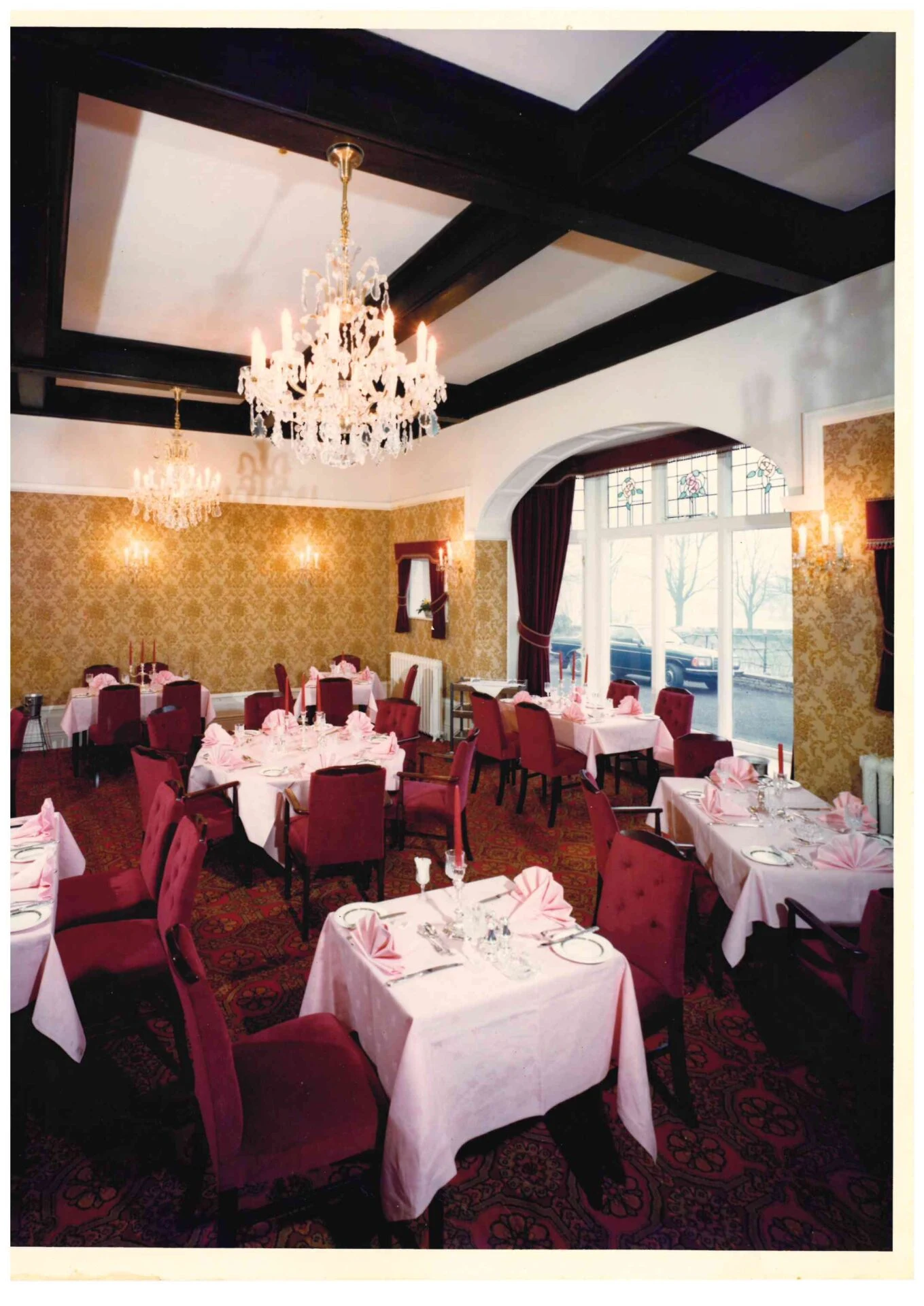
The predecessor in the space matters, too. The room previously housed Manzke, and Jernmark removed some of the partitions left by that former tenant.1 The upstairs now includes a bar with counter seats overlooking the kitchen, while parts of the former dining area have shifted into storage, bakery, office, laundry, and prep space. Those back-of-house decisions tell you how the place intends to work. A bistro cannot live on charm if the bread, mise en place, glassware, and service rhythm have nowhere to land.
Marée's dining room is painted white, with daily specials and desserts written across hanging mirrors. That detail keeps the Parisian reference from floating into costume. The board changes because the station changes. The room needs to hold a guest who came for one glass and a plate, and another who wants dinner built across several courses. In Los Angeles terms, that is a different ask from a tasting-menu reservation. It asks the chef to let the room breathe.
The Burger Carries the Fine-Dining Training
The burger at Marée is the dish where Jernmark's Lielle discipline is easiest to read. The patty is grass-fed, dry-aged beef. Black pepper and other seasonings coat the outside edge before the kitchen both sears and grills it. Instead of placing cheese on top, Jernmark's team brushes the patty with beef tallow infused with dry-aged-beef trimmings and Roquefort. The funk enters through fat, not a slice.1

The bun is baked in-house, double egg-washed and buttered. It carries an aioli-based relish, house pickles, and duxelles made from barbecued hen-of-the-woods mushrooms mixed with house-made beef garum. Thin onion rings and fried kale add the crackle. The kitchen cuts the burger in half and serves it on a layer of four-pepper au poivre, so the sauce remains part of the dish even when the burger stays handheld.1
That construction is not a garnish list. It is a series of choices about moisture, salt, fat, heat, and hand-feel. The dry-aged beef brings density; the Roquefort-infused tallow moves cheese into the grain of the patty; the duxelles pulls mushroom and garum into the middle register; the onion rings and kale keep the bite from settling into softness. The au poivre underneath makes the plate work even after the first cut.
Fine-dining chefs often reveal themselves in the small tolerances of casual food. A burger gives less cover than a composed tasting-menu course. If the bun collapses, the sauce floods, the patty dries, or the seasoning lands only on the surface, the guest feels it at once. Jernmark's version turns the burger into a station problem: grill, bread, sauce, pickles, fried garnish, and plating all have to arrive at the same time.
Escargot Beignets, Mixed Grills, and the Bistro Method
Marée's menu keeps returning to bistro grammar, then pushes the prep farther than the word bistro usually promises. The escargot beignets start with braised escargots combined with roasted mushrooms, shallots, garlic, and finely trimmed fresh spinach. The mixture goes inside a thin beignet batter, then the kitchen fries it until the shell turns airy and crisp. Vinegar powder finishes the surface. A combined house-made snail butter and béchamel comes alongside for dipping.1
The sensory work here is all in contrast. Snail butter and béchamel give the dip weight; vinegar powder cuts across the fried shell; spinach and mushrooms sit inside the batter rather than beside it. The dish keeps the emblem of French cooking, escargot, but changes the hand movement from fork-and-shell to dip-and-bite. That is a bistro move with a prep cook's patience behind it.
The rest of the menu follows the same line. Marée serves mixed grills, chocolate mousse, split whole Caledonian blue prawns, wine-cooked mussels with blue cheese, and fresh veal sausage. House-baked bread is worked into miso vinaigrette.1 None of those details needs a speech about accessibility. They show the proposition plainly: familiar shapes, longer prep.
Jernmark's background at Aquavit, Per Se, and Restaurant Frantzén sits behind this without turning the upstairs room into a résumé. Aquavit gives a chef Nordic discipline in New York. Per Se gives sequence and luxury at high pressure. Restaurant Frantzén puts Stockholm 's modern fine dining into the lineage. At Marée, that training has to survive the looseness of a wine bar, where a guest might order one beignet and a glass from Romania, then leave the stool for the next walk-in.
Phil South Builds the Wine Program for the Upstairs Room
Phil South, head sommelier for both Lielle and Marée, is the named hand on the wine program. That continuity matters because the two restaurants do not ask the list to do the same job. At Lielle, the by-the-glass list is entirely Californian. At Marée, the pours widen to California, Hungary, Spain, France, Italy, Romania, and beyond, with some glasses priced as low as $12.1
The $12 glass is not a throwaway detail. It changes how a guest can use the room. A wine bar lives or dies by the second glass, by the low-risk pour that lets someone try Hungary or Romania without making the night formal. South also gives Marée access to Lielle's bottle list, so the program can serve two speeds: a casual glass at the bar, or a deeper bottle for a table that settles in.
For collectors and working sommeliers, the useful part is the structure. Marée is not only a restaurant with wine attached. It is a bistro where the wine program has to meet fried escargot, au poivre, dry-aged beef, blue-cheese-flecked mussels, and chocolate mousse. Those dishes ask for acid, salt tolerance, and some grip. A list that moves from California to Spain, France, Italy, Hungary, and Romania gives South more tools than a narrow cellar would.
The by-the-glass breadth also separates the upstairs from Lielle without severing the lineage. Downstairs can remain Californian by the glass. Upstairs can invite a guest to test a region they do not usually drink on Pico Boulevard. That is how a neighborhood wine bar earns repeat visits: not through novelty, but through a changing set of small decisions at the bar.
The Manzke Room Becomes Jernmark's Second Station
The former Manzke space gives Marée a particular inheritance. Manzke carried its own Los Angeles memory, and Jernmark did not erase the room by simply filling it with a new logo. He removed partitions, added counter seats with a view into the kitchen, and converted part of the old dining footprint into the work areas a restaurant needs but guests rarely discuss: storage, bakery, office, laundry, prep.
Those choices place the maker back in view. Counter seats overlooking the kitchen matter because they let the guest watch the station rather than only receive the plate. The bakery space matters because the burger bun and bread program are not incidental. Prep space matters because beignets filled with braised escargot, roasted mushrooms, shallots, garlic, and trimmed spinach do not appear cleanly from a cramped corner.
Marée also changes the way Jernmark's two-floor project can move through an evening. A guest can walk in upstairs for a glass and a burger without entering the tasting-menu cadence downstairs. Another can begin or end a Lielle dinner with South's upstairs list. The same address now holds two kinds of time: the booked sequence and the looser tide of a wine bar.
The name Marée means tide in French. Jernmark has tied the idea to guests moving in and out of the room, and the practical format supports that reading. Daily hours, walk-in-friendly service, counter seats, and lower entry points on the wine list all give the room more ways to fill. The test will be whether the kitchen can keep its discipline when the room moves at bistro speed.
How to Visit Marée in Pico-Robertson
Marée is open at 9575 W. Pico Blvd. in Los Angeles, upstairs from Lielle in Pico-Robertson. The restaurant runs from 5 to 10 p.m. daily, with kitchen hours from 5:30 to 9:30 p.m. It accepts walk-ins, which gives it a different relationship to the neighborhood than Lielle's tasting-menu format.
For a first visit, the clearest read on Jernmark's method is the burger and the escargot beignets. One shows how he treats dry-aged beef, pepper, tallow, Roquefort, bread, and sauce as a single engineered bite. The other shows how a French reference point can be rebuilt through braising, batter, vinegar powder, snail butter, and béchamel. Add a glass from South's wider upstairs program and the room's intent comes into focus.
What to watch next is not whether Marée becomes a quieter version of Lielle. The more useful question is whether Jernmark and South can keep the upstairs room casual without letting the method loosen. If the burger stays on point at 9 p.m., if the $12 glass keeps company with bottles from Lielle's cellar, and if walk-ins continue to see the kitchen at work from the counter, Marée will have given Pico-Robertson a second station with its own pulse.