Sézanne's three Michelin stars disappeared from the Michelin Guide before its autumn 2026 update, after opening chef Daniel Calvert left the pass on March 31, 2026, and Stephen Lancaster took over the kitchen. The Tokyo restaurant, inside Four Seasons Hotel Tokyo at Marunouchi, now sits at the center of a question Michelin usually answers with a firm rule: stars belong to restaurants, not chefs.
That rule is easy to repeat from a guide page. It is harder to read against a restaurant whose rise was measured almost by the month. According to the South China Morning Post, Sézanne launched in July 2021, earned its first Michelin star within six months, took a second star a year later, and reached three-star status in late 2024. The same report notes that the restaurant ranked No. 1 on Asia's 50 Best Restaurants list in 2024 and No. 7 on the World's 50 Best Restaurants list in 2025.
The Sézanne Michelin stars story is not only a guidebook adjustment. It is a handover story. Calvert, the opening chef, built the kitchen that Michelin had already inspected, scored, and placed at the top tier. Lancaster, the new head chef, inherits the room, the name, the hotel address, and the pressure of cooking under a blank listing while inspectors return to the table.
Why Sézanne Michelin Stars Disappeared From the Guide
The known sequence is compact. Calvert departed Sézanne on March 31, 2026. Lancaster was appointed as his replacement. Ahead of Michelin's autumn 2026 update, the restaurant's three-star status was removed from the guide's website. Michelin Japan did not frame this as a final verdict on Lancaster's cooking; it framed it as a reassessment after a change in the kitchen.
In a written response reported by the South China Morning Post, the Michelin Japan team said, "following significant changes at Sézanne in spring 2026, the restaurant's previous listing on the Michelin Guide website was taken offline."1 The same response said the restaurant had reopened with a new team, appeared again on Michelin's platform with a new listing, and was under evaluation by inspectors.
For diners who follow the pass more closely than the logo on the door, that phrasing matters. Michelin did not say that Sézanne had closed permanently. It did not say Lancaster had been judged and failed to meet a mark. It said inspectors were evaluating a reopened restaurant with a new team. In guide language, that turns a celebrated dining room back into a live file.
The craft question sits underneath the administrative one. A three-star kitchen is not only a menu. It is timing on the pass, sauce work held at service temperature without collapse, fish cookery that survives the walk from station to table, pastry that lands at the same texture on the first and last cover. Michelin does not publish the station notes. The removal says inspectors want to taste those details again under Lancaster's hands.
The Policy That Does Not Match the Handover
Michelin has long stated, in public guidance, that stars are awarded to restaurants rather than individual chefs. The South China Morning Post points to Michelin guidance from 2016 saying star ratings remain unaffected when a head chef leaves mid-year and another chef comes on board. The same report cites a 2025 Michelin article stating that a restaurant keeps its star if a promoted sous chef or new head chef maintains the same cooking standard.
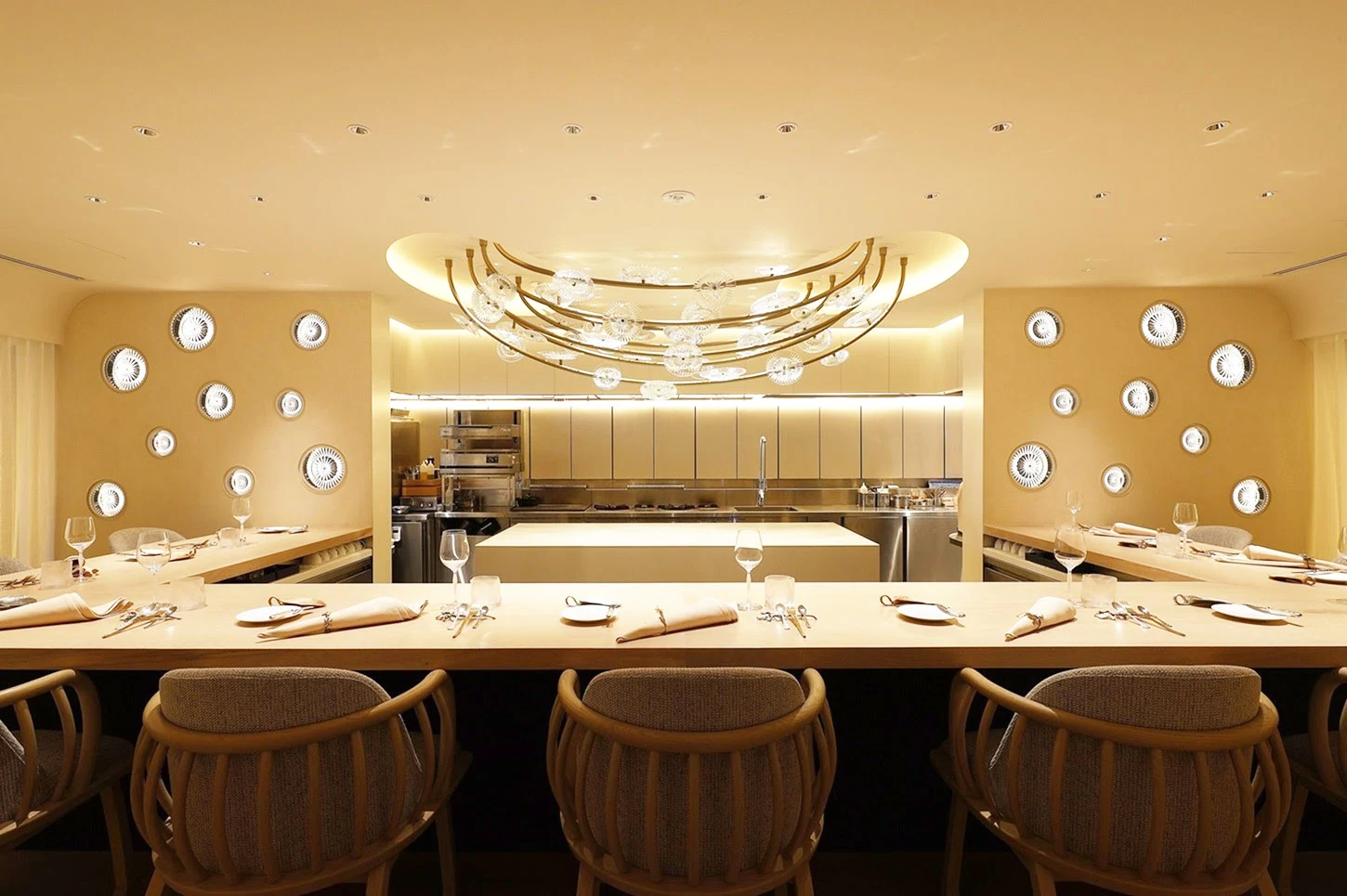
Sézanne now tests that distinction in public. The venue remains Sézanne. The address remains Four Seasons Hotel Tokyo at Marunouchi. The dining room did not become a new restaurant in the way a shuttered site and new concept would. Yet the three Michelin stars attached to Sézanne under Calvert were taken offline after his departure and before Lancaster had a full published guide cycle in place.
That does not prove Michelin has changed policy. Michelin Japan's stated position, as reported, is narrower: after spring 2026 changes, the old listing came down, a new listing returned, and inspectors are evaluating the restaurant. Still, the effect is visible to anyone searching the guide. The star status that once stood beside Sézanne no longer does.
There is a reason this lands differently from an ordinary demotion. Sézanne's ascent was short and documented. July 2021 opening. First star within six months. Second star a year later. Three stars in late 2024. Asia's 50 Best No. 1 in 2024. World's 50 Best No. 7 in 2025. A dining room can spend decades trying to produce that sequence; Sézanne did it before its fifth year of service.
When a restaurant with that public record loses all three stars during a chef transition, the reader sees how much the guide relies on the maker even when it speaks in the language of the establishment. The restaurant is the official bearer. The chef remains the person whose method inspectors must taste.
What Stephen Lancaster Brings to the Pass
Lancaster does not arrive as an unknown cook. According to the South China Morning Post, he led Saint Pierre in Singapore to two-Michelin-star status. The same report says his restaurant Poise, now closed, earned a Michelin star within its first year in 2022. Those are not background decorations; they are the parts of his record that matter to a guide built around repeat inspection.
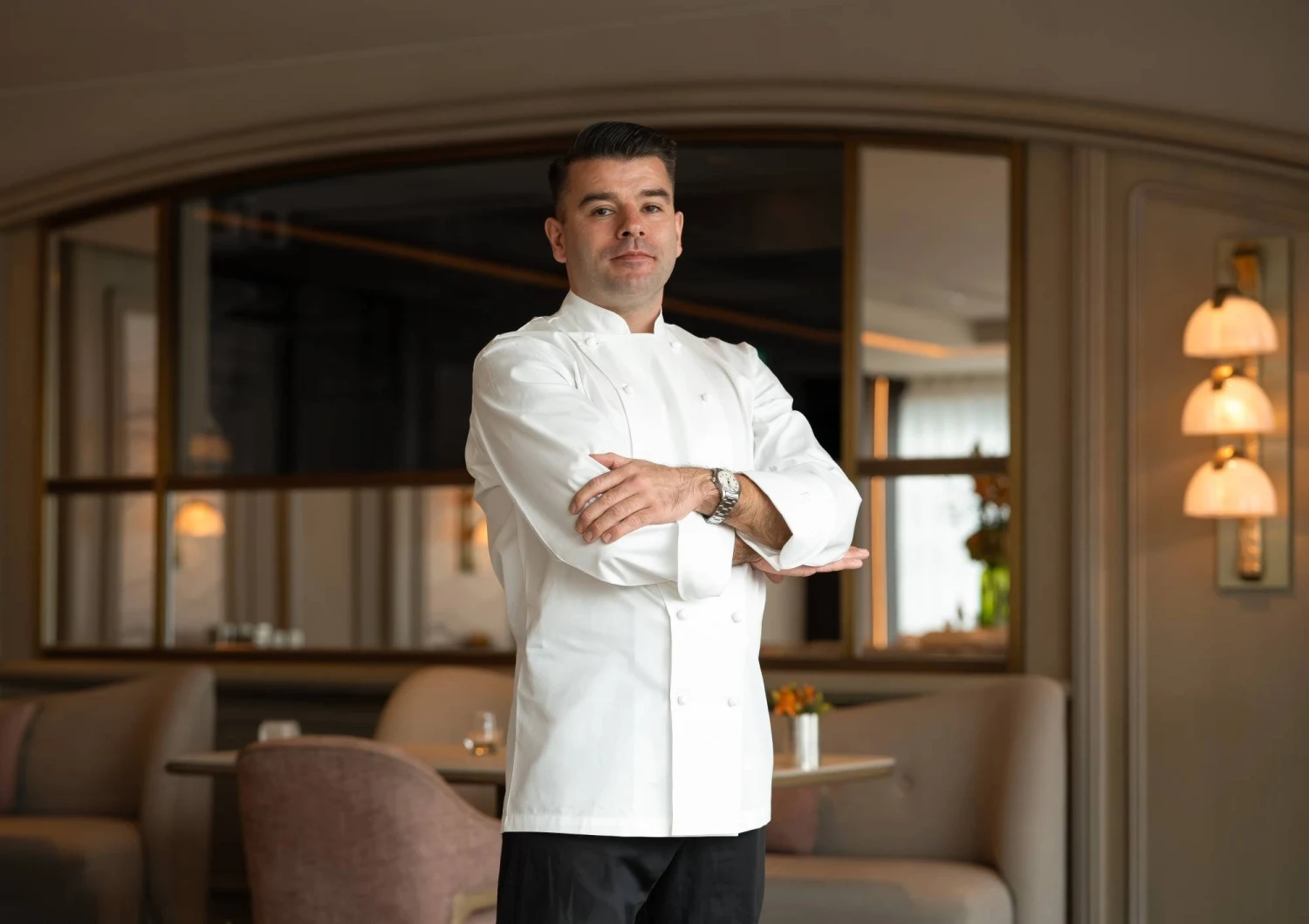
Still, Sézanne is not Saint Pierre, and it is not Poise. Lancaster steps into a restaurant whose predecessor did not simply hold stars, but opened the restaurant and carried it through each Michelin tier. Calvert's name and Sézanne's rise became difficult to separate because the timeline was so tight. The first star came within six months of opening. The second followed a year later. Three-star status came in late 2024.
The work now turns from reputation to service. Lancaster has to establish what Sézanne tastes like under his leadership while inspectors decide whether the restaurant's new listing deserves stars, and if so, how many. Michelin has said the restaurant is under evaluation. That means the next answer will come from the table, not from a résumé.
For the brigade, the pressure is more practical than symbolic. A head chef change touches the pass first. The rhythm of calling tables changes. The way a sauce is corrected changes. A predecessor might insist on one sequence of tasting spoons before service; a new chef might move the check earlier or later. None of those details appear in a guide listing, but they are where a restaurant either remains itself or becomes another thing with the same door.
Lancaster's record gives inspectors a reason to return with attention. It does not give him Calvert's stars by inheritance. That is the uncomfortable middle ground in the Sézanne Michelin stars case: Michelin's language says the restaurant is the unit of award, while the inspection response treats the kitchen's new hands as reason enough to reset the file.
Tokyo Collectors Now Have a Different Map
For travelers and collectors who build Tokyo itineraries around guide status, Sézanne's removal changes the order of the list. It does not erase the restaurant from consideration. It changes the nature of the booking. A table under Calvert's three-star tenure carried one kind of certainty. A table under Lancaster during inspector evaluation carries another: the chance to taste a kitchen before the next public ruling fixes its position again.
That is not a small distinction for the sort of diner who follows chefs across cities. Some bookings are made to confirm a consensus. Others are made to watch the method while it is still being set. Sézanne, for now, belongs to the second group. The room is inside a major hotel in Marunouchi, but the interesting fact is not the hotel setting. It is the transfer of authorship inside the same restaurant name.
The wider Tokyo scene will read this closely because Michelin's handling of Sézanne gives future chef transitions a visible case study. If a three-star restaurant can have its previous listing taken offline after a new team arrives, then the statement that stars belong to restaurants needs to be understood with a working caveat: Michelin may still revisit the award when the hands at the pass change enough to alter the restaurant being inspected.
That caveat matters to sous chefs waiting their turn, hotel groups planning succession, and diners deciding whether to book before or after an announced departure. It also matters to the chefs themselves. Calvert's departure did not merely end one tenure; it left a public measurement behind. Lancaster's first period at Sézanne begins with inspectors in the room and no three-star cushion on the page.
The next Michelin update will not only tell readers how Sézanne is classified. It will show how Michelin chooses to reconcile its stated restaurant-first policy with one of the most watched chef changes in Tokyo. Until then, the name to follow is Lancaster, at the pass in Marunouchi, cooking a restaurant back into definition one service at a time.