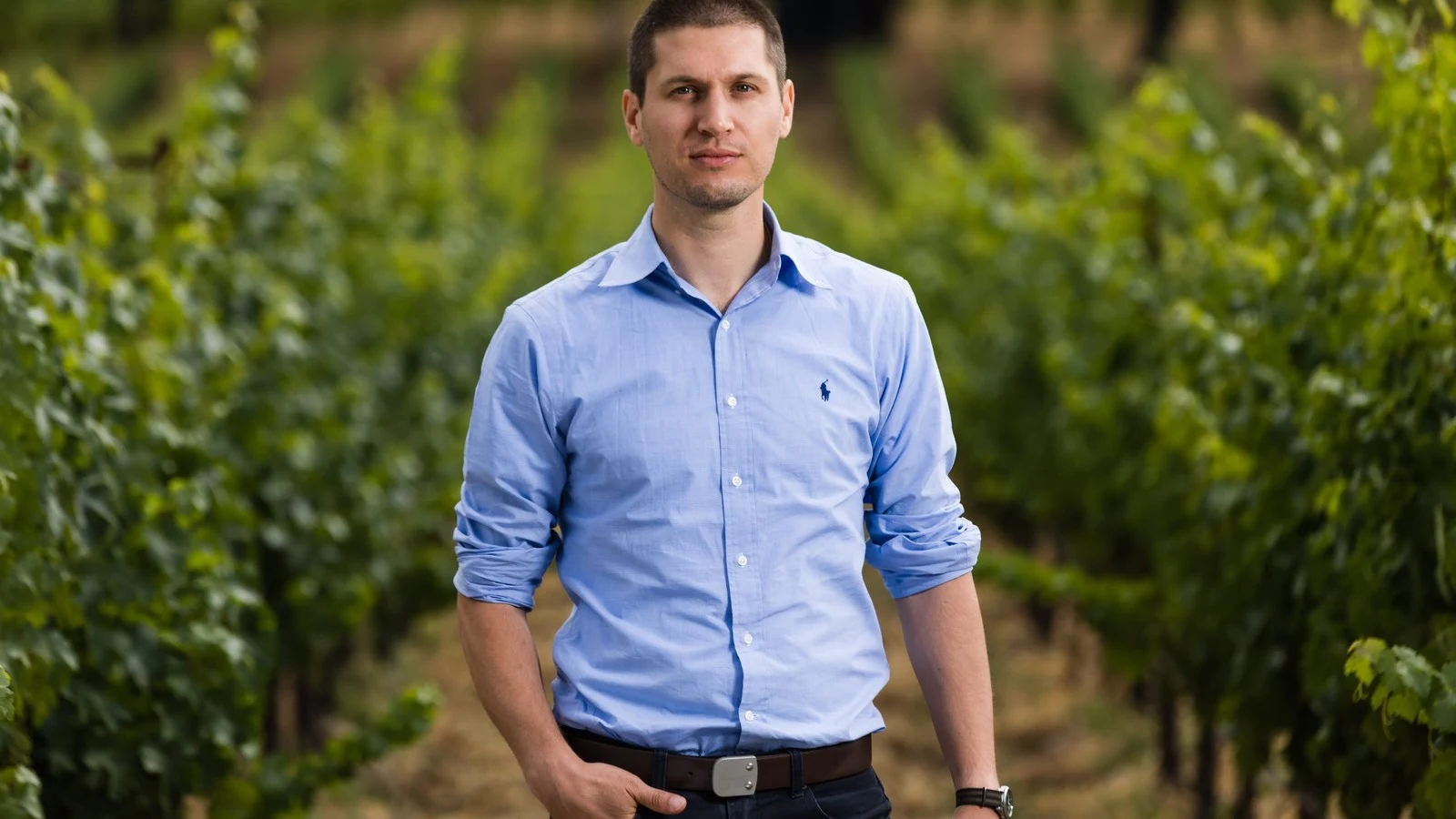
Matt Crafton arrived at his first winery interview in 2003 in a full suit and tie, an economics graduate from the University of Virginia asking for work at the bottom of a cellar in Williamsburg, Virginia. He is now president and winemaker at Chateau Montelena, the Napa Valley estate whose Chardonnay bested Burgundian competitors at the 1976 Judgement of Paris. Bo Barrett named Crafton to both roles in January 2026, after an apprenticeship inside the house that began with a one-year lab contract in 2008 and moved through white wine production, head winemaking, and now the president's chair.
Crafton has spent 23 years in wine production. In a down market for American wine, Crafton has resisted rosé, no-alcohol bottlings, national-chain shelf grabs, and discounting. He has chosen a slower hand: 40,000 cases a year, roughly the same volume Chateau Montelena made in the 1980s; small independent retailers over broad account lists; market work that puts the maker in front of drinkers, sometimes far from Calistoga. In 2026, VinePair named him its Next Wave Awards Wine Professional of the Year. The award lands on a winemaker who has spent 23 years in wine production and almost two decades building one house from the inside.
The Contrarian President Matt Crafton of Chateau Montelena
Crafton's new title sits inside a family lineage that still carries the weight of 1976. Jim Barrett purchased the estate in 1972. His son, Bo Barrett, became the CEO and owner who hired Crafton in 2008, first on a one-year contract in the lab. The house had already made history with the Chardonnay that won against Burgundian competitors at the Judgement of Paris. Crafton sees it as pressure to keep moving.
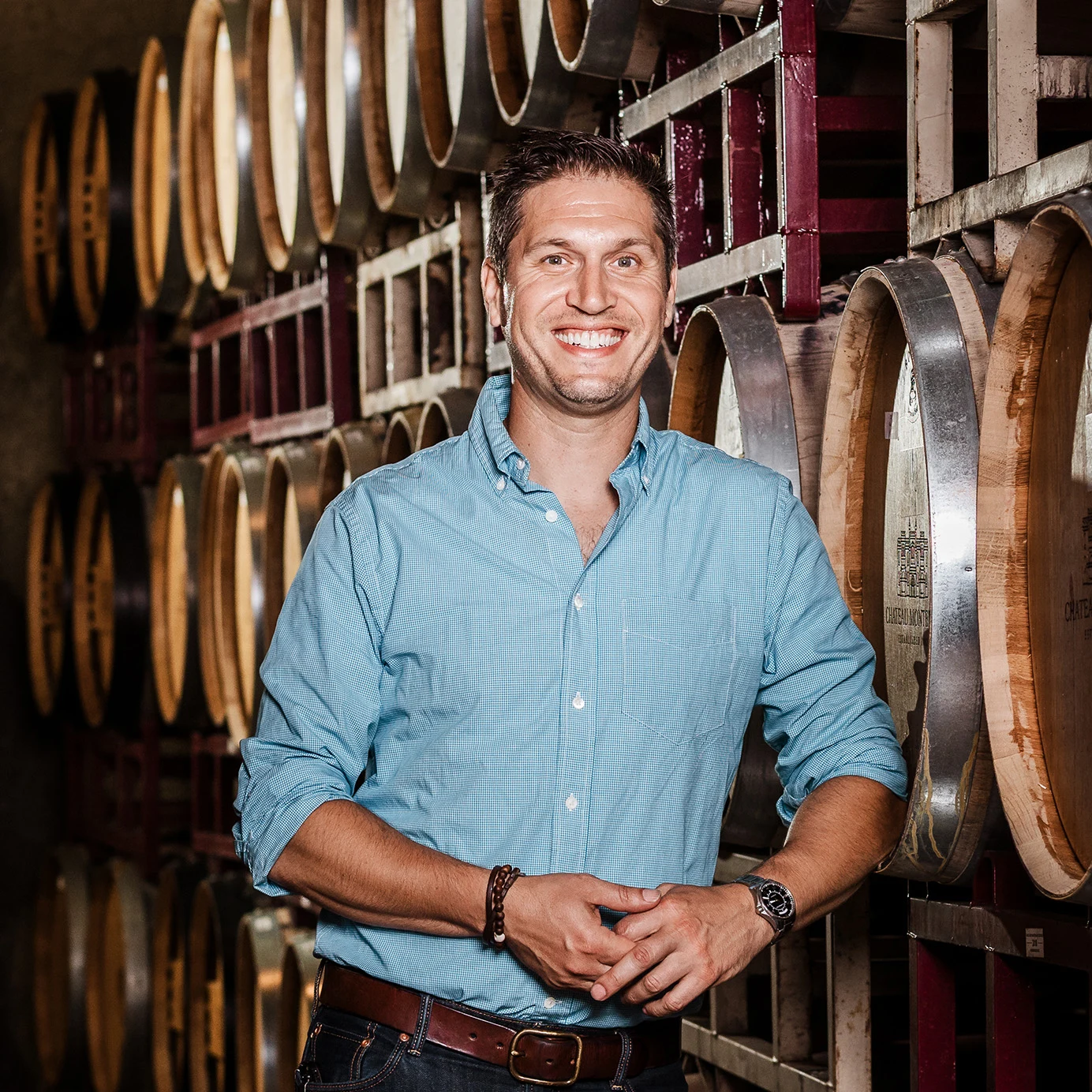
Crafton came through the cellar. Crafton started in 2003. Wine production meant dragging hoses, driving tractors, and scrubbing tanks. They mark the distance between a spreadsheet view of wine and the bench-side reality of keeping a cellar clean enough to make decisions that last years (Napavalley2).
By 2010, Crafton had moved from the lab to overseeing white wine production. Four years later, he became head winemaker. In January 2026, Barrett gave him the combined remit of president and winemaker, placing the cellar and the business under one set of hands. Crafton moved from the cellar into the president's chair and the winemaker role. Every sales decision can be tested against the wine program; every wine decision has to survive in the market without being thinned into a trend.
Chateau Montelena produces 40,000 cases a year. The estate has national visibility, and discounting, overextension, or a rushed category play can leave a mark that takes years to repair. Crafton has resisted adding rosé, non-alcoholic wine, and discounting, including rosé when pink wine filled the 2010s.
From Cellar Rat to the President's Office
The first hinge in Crafton's path came before Napa. After earning his economics degree from the University of Virginia in 2003, he went looking for cellar work in Williamsburg, Virginia. Crafton had an economics degree, and his early work involved hoses, tractors, and tanks. He eventually became cellar master at that Virginia winery.
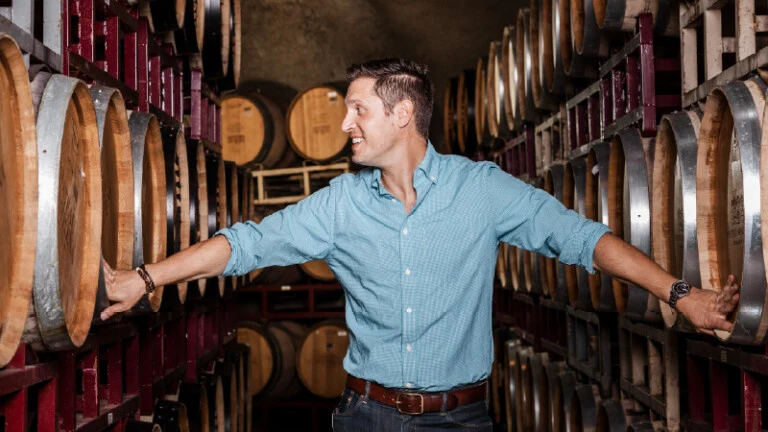
Crafton then earned a second bachelor's degree in viticulture and oenology at the University of California, Davis. By the time Bo Barrett hired him at Chateau Montelena in 2008, Crafton had the profile of someone who could test numbers against tanks and theory against fruit.
the way we honor the past is not by dwelling on it he says we d be doing a disservice to the people whose shoulders we stand on if we didn t continue to innovate they d want us to get out in the world and bring our wine to new c1
Matt Crafton, President and Winemaker
It was a one-year lab contract. The lab kept a young winemaker close to the data but still answerable to the cellar. Measurements, samples, lots, and timing decided whether an idea held. Crafton's rise from that room to white wine production in 2010 placed him in direct contact with the category that made Chateau Montelena part of American wine history.
White wine production at Montelena carries a particular burden because of the 1976 Chardonnay. A house known worldwide for Chardonnay cannot treat its white wine station as a side room. Crafton's 2010 promotion put him beside the estate's most public inheritance. When he became head winemaker in 2014, he inherited a program whose reputation had already traveled farther than most American wines ever do.
His own first wine jolt also came from 1976, though from another Napa name. Crafton has identified 1976 Heitz Martha's Vineyard as his a-ha wine, tasted in 2003 after his first week in the cellar. The symmetry is almost too neat: the year that fixed Chateau Montelena in the world's mind also gave Crafton the bottle that opened the category for him. Crafton says 1976 Heitz Martha's Vineyard was his a-ha wine, tasted in 2003 after his first week in the cellar (Napavalley2).
The Method: Hold Volume, Refuse the Easy Category
Crafton's method begins with a refusal to grow for the sake of looking active. Chateau Montelena's 40,000 annual cases sit roughly where the estate's volume stood in the 1980s. In a market where many producers talk about scale, Crafton has kept the number close to a historical line. That decision shapes the cellar, the sales plan, and the drinker's experience of the brand.
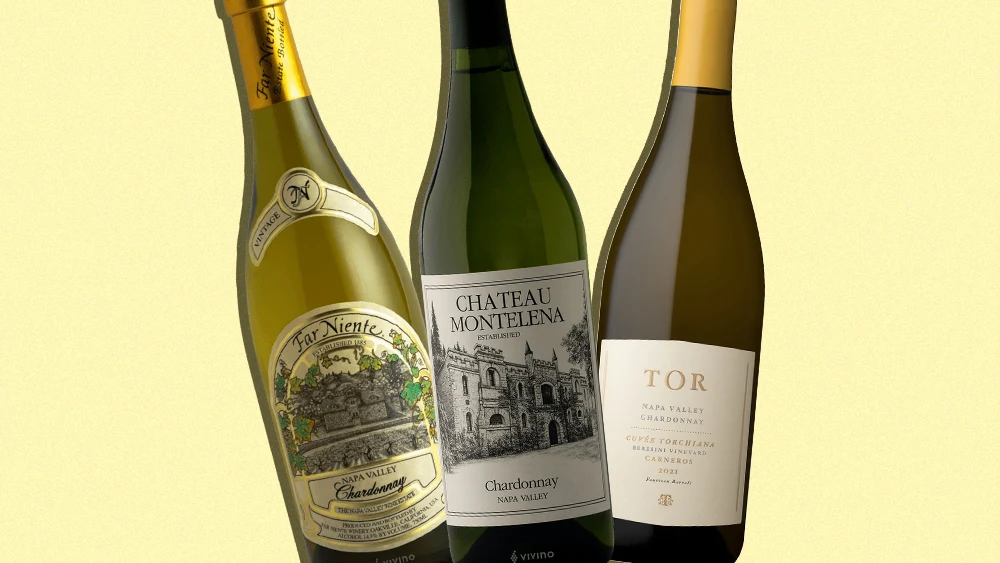
It determines how many lots need shepherding, how much pressure the team feels during harvest, how many accounts can be served without thinning allocations, and how often the estate must explain scarcity to buyers. At 40,000 cases, Montelena can remain visible while still treating the wine as a finite thing. Crafton's rejection of discounting follows from that. Once a bottle is trained into a lower price position, the next vintage carries that memory into the market.
He has also refused the category pivots that pull wineries into short-term demand. Rosé in the 2010s would have offered a visible lane. Non-alcoholic wine now offers another. Crafton has turned away from both. Crafton has said the estate has to keep innovating rather than dwell on the past. His version of innovation lives in how Montelena meets people, where it sells, and how it keeps quality and volume aligned.
Crafton has turned away from rosé and non-alcoholic wine. He takes the long way. He takes the brand to drinkers without changing the wine into a seasonal answer.
Crafton makes an English muffin from scratch. An English muffin asks for fermentation, griddle heat, timing, and restraint. An English muffin's texture changes when one variable is pushed too hard. Wine gives the same report, only more slowly.
Patrons in Iceland, Argentina, and New Zealand
In 2026, he took Chateau Montelena club members to Iceland. In previous years, he traveled with patrons to Argentina, New Zealand, and other places outside Napa Valley. The trips extend beyond cellar tours. The trips carry Chateau Montelena's story outside Napa Valley.
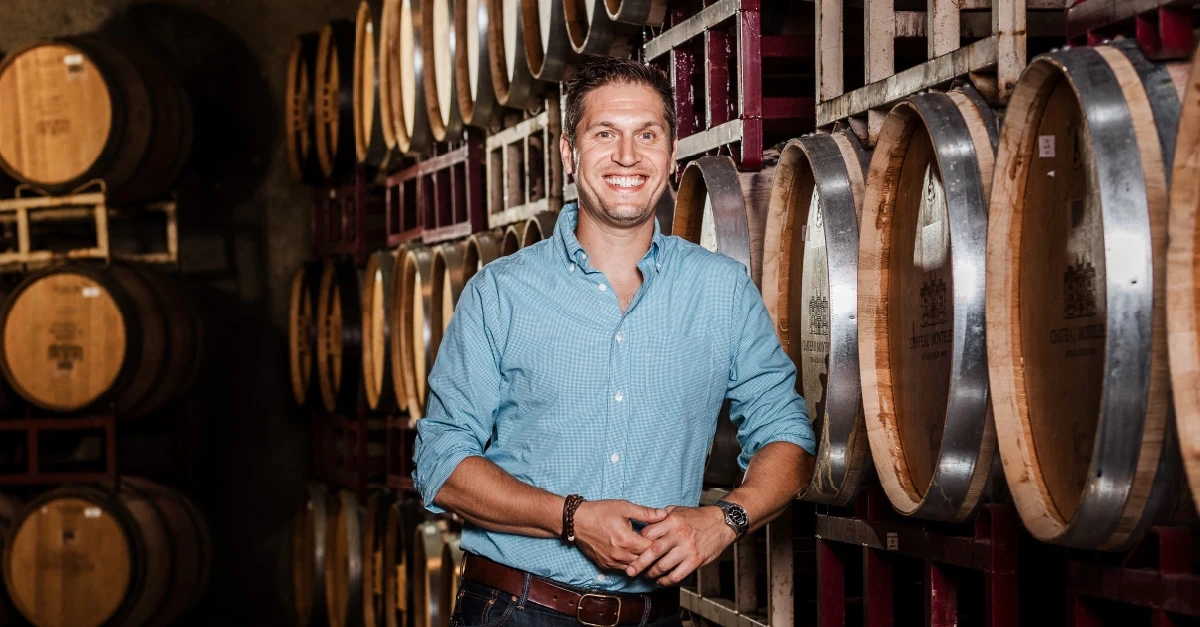
For a maker at a historic estate, that choice rejects the passive model of waiting for reputation to do the work. Montelena has the 1976 Judgement of Paris in its lineage. Crafton still goes out. The discipline is similar to working the pass during service rather than staying in the office. The maker remains visible to the people who buy, cellar, pour, and talk about the wine.
The Iceland trip also explains why Crafton does not treat direct relationships as a tasting-room-only project. The guest who travels with a winery sees the maker outside the polished frame of appointment hospitality. Conversations stretch beyond the pour. In Iceland, club members heard Crafton talk about Montelena. The setting changes; the relationship to the wine deepens through time spent with the person responsible for it.
The mechanism is simpler. Crafton travels with patrons through shared experience rather than through a discount or a new product category. Crafton takes the brand to patrons through shared experience. That kind of market work takes days. Crafton gives his own calendar to the customer. Few tactics reveal priorities as clearly as where a maker spends time.
Small Retailers Over the National Chain Shelf
Crafton has put his energy into small independent retailers. As many wineries chase national chain placements to recover volume, he has put his energy into small independent retailers. His reasoning is direct: small independent brands sell best through small independent retailers.
Independent retailers can hand-sell a bottle with memory and context. They can say who Matt Crafton is, why Bo Barrett's 2008 lab hire matters, and why a 40,000-case Napa estate tied to the Judgement of Paris has refused to inflate volume. A national chain can move cases, but the shelf card cannot always carry lineage. Crafton's preference gives Montelena a network of advocates who can explain the long game one customer at a time.
The bottle's path may run through a merchant who knows the estate rather than through the broadest retail channel. That matters when supply is finite and the producer has chosen to avoid discounting. Montelena under Crafton often reaches buyers through independent shops that support Napa estates through multiple vintages rather than through accounts with the largest displays.
This is also where his economics degree quietly returns. The move away from discounting is a brand-value decision, but it is also a relationship decision. A retailer asked to defend the full value of a wine needs confidence that the producer will not undercut that value elsewhere. Crafton's resistance to discounting gives the retailer firmer ground. The wine keeps its stated place; the merchant can speak without apology.
In a down market, that restraint can look severe. It asks the winery to accept slower movement rather than train the market to wait for lower prices. It asks salespeople to explain quality and lineage when an easier answer sits nearby. It asks leadership to measure success beyond the next depletion report.
What VinePair's Wine Professional of the Year Does Next
VinePair's Next Wave Awards Wine Professional of the Year recognition gives Crafton a public marker at the same moment his title changed. The award is secondary to the work, but it names the turn: a cellar-trained president leading a historic Napa estate by refusing the shortcuts available to him. The line runs from 2003 to 2026. First winery interview in a suit. Cellar work in Williamsburg. UC Davis. A one-year lab contract at Chateau Montelena. White wine production in 2010. Head winemaker in 2014. President and winemaker in January 2026.
The next visible work will come through three places: the cellar, the independent retail network, and the road. In the cellar, Crafton has to keep the 40,000-case discipline meaningful rather than symbolic. In the market, Crafton is relying on small retailers to carry the story without discounting. With patrons, he has already shown a willingness to travel beyond Napa, from Iceland to Argentina and New Zealand, using time with drinkers as part of the program.