1789 Restaurant
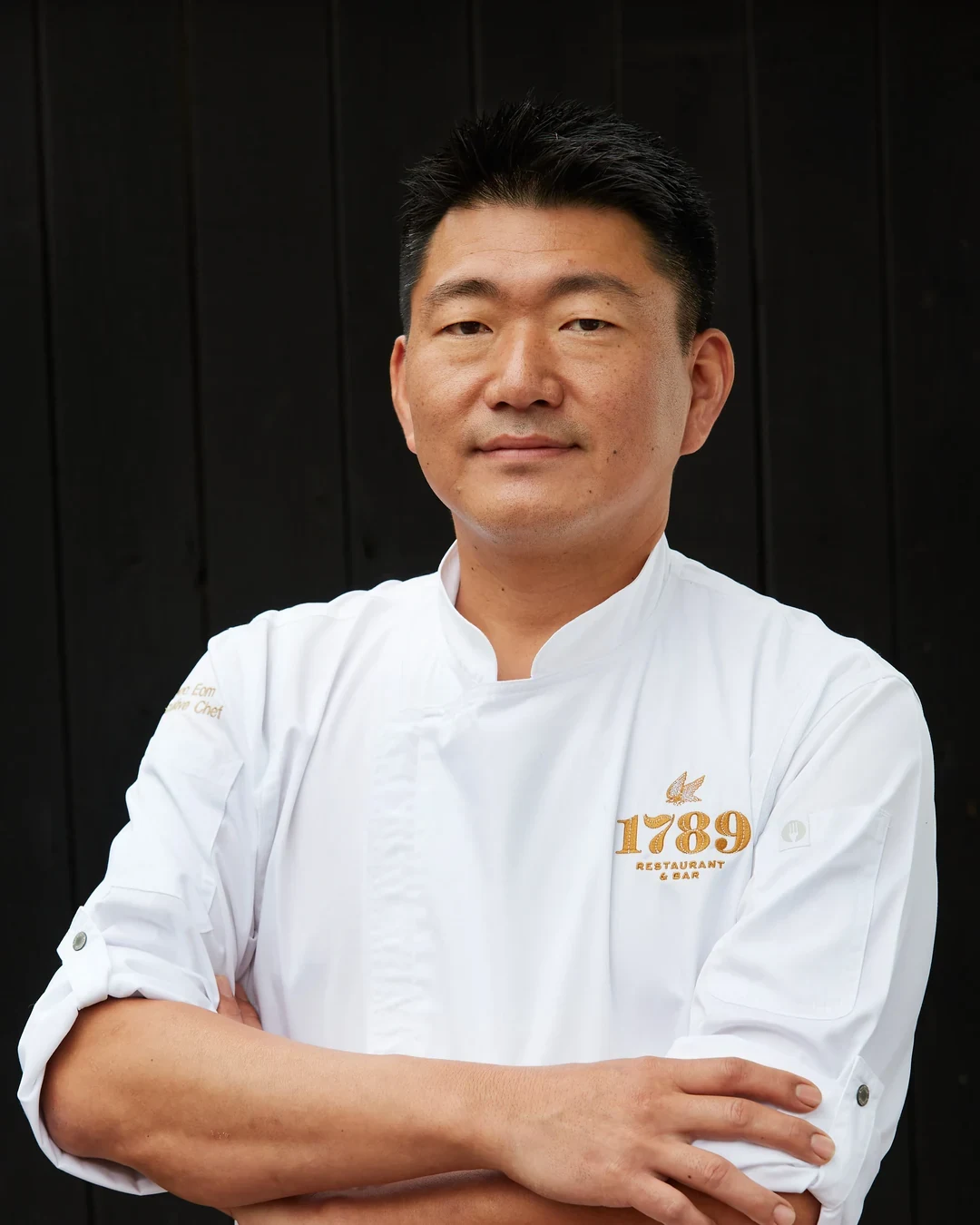
In Residence
Kyoo Eom
Chef
- 01CuisineClassic American Fine Dining
- 02CityWashington DC, United States
- Wine Spectator · Tier 2
- Wine Spectator Best of Award of Excellence · 2026
- Michelin Plate · 2025
A Room That Earns Its Age
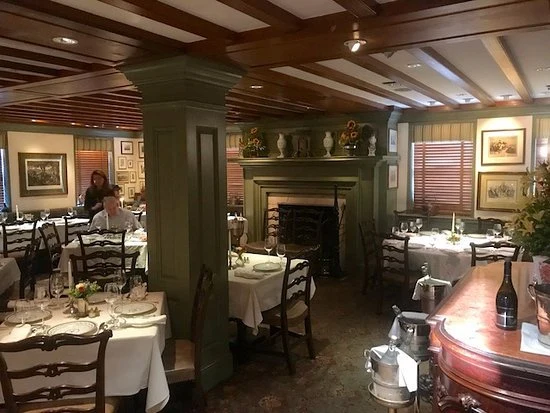
1789 is a restaurant in Washington, D.C., with a price tier of $$$$ and classic American fine dining. 1789 occupies a Federal-period townhouse on 36th Street NW, a block from Georgetown University's front gates, and the architecture is not decorative window dressing. Six dining rooms spread across three floors, each a distinct chamber of early-Republic Americana: portraits, period furniture, fireplace mantels, and the particular hush of rooms that have absorbed a lot of formal conversation over many decades. The effect is less museum and more inhabited, a house that has been continuously in use since the neighborhood was young.
Georgetown itself sets the register. This is one of Washington's oldest residential quarters, pre-dating the federal city, and its dining culture has long leaned toward the established and the occasion-driven rather than the experimental. 1789 named itself for the year Georgetown University was founded, a conscious alignment with institutional longevity rather than culinary trend-chasing. That positioning has proved durable: the restaurant functions as a de-facto formal table for the university community, drawing students and their visiting families for milestone dinners with a reliability that few American restaurants sustain across generations.
The Sunday letter
Find new places through the people who run them.
Our Sunday email brings you the chefs, winemakers and hoteliers behind our newest stories. See a sample before you subscribe.
See a sample of the Sunday emailOne email a week. Unsubscribe from any issue.
The French-American Kitchen and Its Seasonal Logic
American fine dining in the post-Escoffier tradition spent most of the twentieth century treating French technique as a structural grammar rather than a cultural statement. 1789 sits in that tradition: the kitchen applies classic French methods to ingredients and flavor profiles that read as distinctly American, and the seasonal menu adjustments reflect that dual inheritance. Dishes from recent service include a warm vichyssoise with leeks, morels, and watercress pesto, a preparation that takes a French cold-soup standard and pushes it toward something earthier and more textured, and a rack of lamb finished with lemon gremolata alongside roasted cipollini onions and fava beans. The combination of gremolata and legume suggests an Italian-inflected detour, but the overall composition stays within the tradition of classical protein cookery where the accompaniments are calibrated, not improvised.
The farm-to-table movement that reshaped American restaurant menus from the 1980s onward hit differently in cities with established fine-dining cultures. In Washington, restaurants with institutional pedigree like 1789 absorbed the seasonal imperative without abandoning the formal structure that defined them. The result is a kitchen that works with seasonal produce, morels in spring, fava beans as summer opens, root vegetables in the colder months, without advertising the sourcing as ideology. The Paris-Brest with buttermilk ice cream is a case in point: a French choux pastry form, executed with an American dairy note that grounds it somewhere between the old world reference and the local larder. That kind of quiet seasonal attentiveness sits closer to the original Chez Panisse argument about American ingredients than the louder farm-to-table branding that followed, and it suits the room's tone exactly.
Washington's fine-dining tier has broadened considerably since the early 2000s. Michelin-starred addresses now include Michele's, Opal, and the vegetable-focused New Heights, while contemporary American rooms like Blue Duck Tavern and Ris hold strong reputations for seasonal, produce-led cooking. The capital also hosts one-star operations across a range of idioms, Middle Eastern at Albi, Peruvian at Causa, modern French at Bresca, and New American at Gravitas, which means the competitive set for a room like 1789 is no longer purely defined by price tier. What distinguishes it is the weight of institutional continuity in a city where most dining rooms post-date the Clinton administration.
The Front of House as an Argument
In the American fine-dining recovery of the 2010s, when casualization swept even the top tier, veteran service culture became a minority position. The argument for formal, experienced floor staff running long careers in a single room is that they accumulate a specific kind of knowledge: the table that needs more space, the guest who has been coming for thirty years, the pacing that works for a three-hour family dinner versus a quick pre-theater catch-up. 1789's servers are described in consistent terms as effortlessly in control, which is the quality that separates institutional floor staff from trained-but-transient ones. It is harder to manufacture than any menu item and takes considerably longer to develop. Google reviewers rate the experience at 4.6 across 702 reviews.
For comparison, the American fine-dining tradition at its most architecturally serious, The French Laundry in Napa, Le Bernardin in New York City, Alinea in Chicago, invests heavily in floor choreography as part of the overall proposition. 1789 operates at a different scale and without that tier's tasting-menu format, but the underlying conviction about service matters is shared. More recently opened American rooms like Lazy Bear in San Francisco, Single Thread Farm in Healdsburg, Emeril's in New Orleans, Hilda and Jesse in San Francisco, and Selby's in Atherton each solve the service question differently, but the question itself, what kind of hospitality register matches the room, is the same one 1789 answered decades ago and has not needed to revisit.
Planning a Dinner at 1789
The restaurant sits at 1226 36th Street NW in Georgetown, walkable from the university gates and accessible from central D.C. by taxi or rideshare. The price range falls at the top tier of the Washington market, appropriate for a four-course dinner with wine. Reservations are advisable well in advance, particularly on weekends and during Georgetown's academic calendar when family visits converge on limited slots. The six-room layout across three floors means different tables carry different atmospheres, ground-floor rooms feel more social; upper rooms, quieter and more intimate, so requesting a preference when booking is worth the effort. Dress code expectations align with the formality of the architecture: this is not a room that softens on that point, and guests arriving dressed down tend to feel it.
Questions
Frequently asked
Who works at 1789 Restaurant?
Made By profiles Kyoo Eom (Chef) at 1789 Restaurant.
How expensive is 1789 Restaurant?
1789 Restaurant is listed at a price level of $$$$.
Where is 1789 Restaurant and what does it serve?
1789 Restaurant is in West Village Georgetown, Washington DC, serving Classic American Fine Dining.
The field
How it compares
| Place | Cuisine | Notes | Awards |
|---|---|---|---|
| 1789 Restaurant | Classic American Fine Dining | West Village Georgetown, $$$$ | · |
| Albi | Modern Levantine Fine Dining | Washington DC | Michelin 1 Star, World's 50 Best |
| Dōgon | Modern Afro-Caribbean | Washington DC | World's 50 Best |
| Jônt | Modern Japanese Fine Dining | Washington DC | Michelin 2 Stars |
| minibar | Avant-Garde Molecular Gastronomy | Washington DC | Michelin 2 Stars |
| Moon Rabbit | Creative Vietnamese-Cajun Fusion | Washington DC | World's 50 Best |
| Oyster Oyster | Modern Vegetable-Focused Tasting Menu | Washington DC | Michelin 1 Star |
In residence
Similar places
Modern Levantine Fine Dining
Albi
Washington DC, United States
★ · 50 Best
Modern Afro-Caribbean
Dōgon
Washington DC, United States
50 Best
Modern Japanese Fine Dining
Jônt
Washington DC, United States
★★
Avant-Garde Molecular Gastronomy
minibar
Washington DC, United States
★★
Creative Vietnamese-Cajun Fusion
Moon Rabbit
Washington DC, United States
50 Best
Modern Vegetable-Focused Tasting Menu
Oyster Oyster
Washington DC, United States
★
The Sunday letter
Get the next Made By story in your inbox.
We send one email every Sunday morning with the places and people we covered that week.
See a sample of the Sunday emailOne email a week. Unsubscribe from any issue.