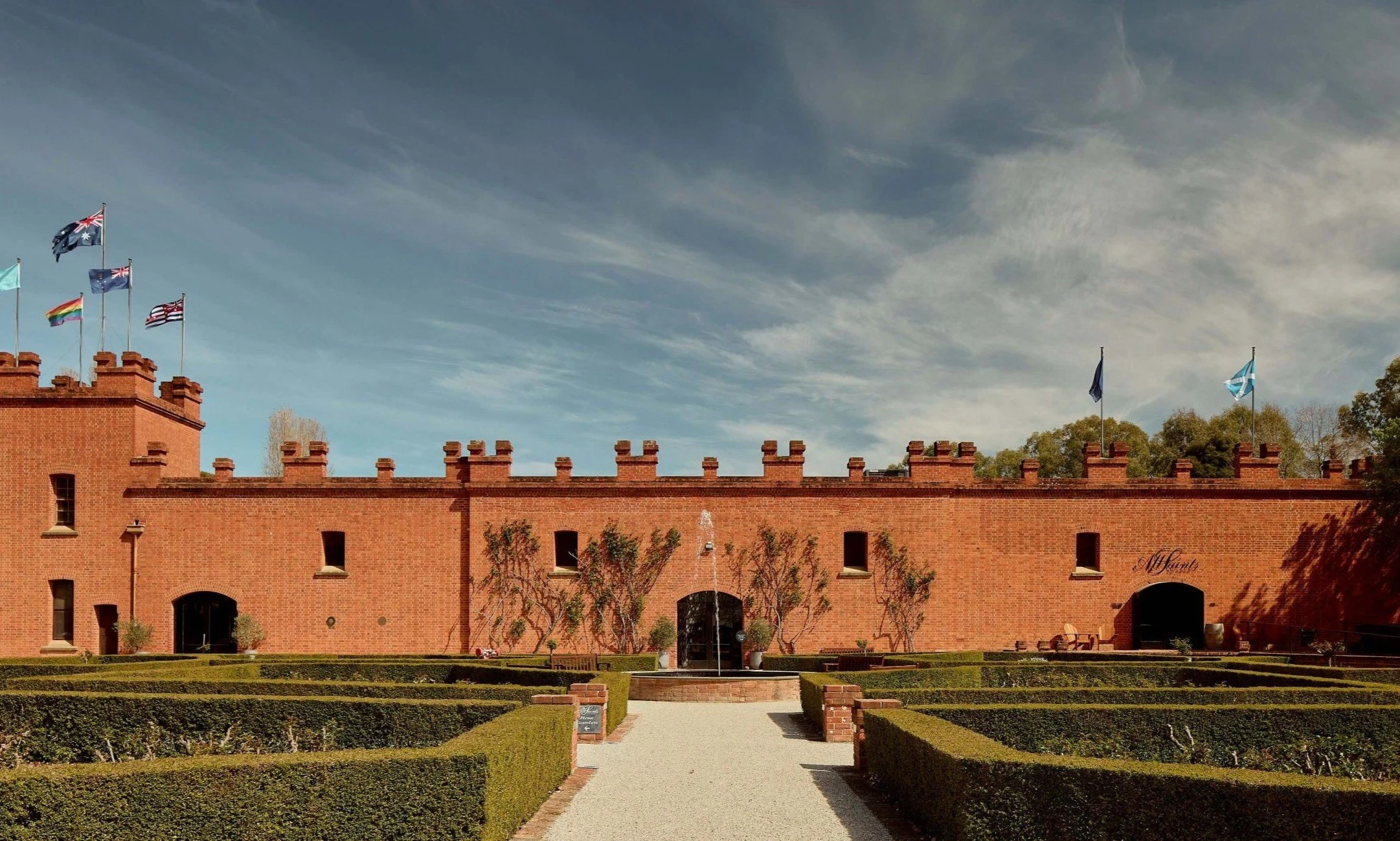
One of Rutherglen's most historically grounded estates, All Saints holds a Pearl 3 Star Prestige rating (2025) and sits at the serious end of the region's fortified wine tradition. The castellated brick winery on All Saints Road in Wahgunyah is among northeastern Victoria's most recognisable heritage wine sites, drawing visitors who come specifically to understand what Rutherglen Muscat and Topaque look like at their deepest expression.
<h2>Where the Soil Speaks in Decades, Not Vintages</h2><p>Approach All Saints Estate along the flat river country of the Wahgunyah floodplain and the landscape tells you something before you reach the cellar door. The Murray River system has been depositing and redistributing alluvial material across this corner of northeastern Victoria for millennia, creating sandy loam profiles of variable depth that drain fast and warm quickly in summer. That combination of heat accumulation and water-holding tension in the subsoil is, in simplified terms, why Rutherglen produces fortified wines with a density and persistence that other Australian regions have struggled to replicate. All Saints Estate, at 205 All Saints Road in Wahgunyah, sits within that thermal and geological context, and its Pearl 3 Star Prestige rating from EP Club (2025) marks it out in the region.</p><h2>Rutherglen's Fortified Tradition and Where All Saints Sits Within It</h2><p>The fortified wine category in Rutherglen has a classification system specific to the region: Rutherglen, Classic, Grand, and Rare tiers for both Muscat and Topaque (formerly Tokay), each defined by average solera age, complexity, and concentration. This is not a generic appellation framework; it was developed by the region's producers in collaboration with wine authorities specifically because no other Australian classification adequately described what was happening in these barrels. The Rare tier, at the top of the hierarchy, represents material with an average age measured in decades, sometimes longer, blended from old fractional systems where evaporation concentrates flavour year on year.</p><p>Within the Rutherglen peer group, All Saints sits alongside <a href="https://www.enprimeurclub.com/wineries/campbells-wines-rutherglen-winery">Campbells Wines</a>, <a href="https://www.enprimeurclub.com/wineries/chambers-rosewood-rutherglen-winery">Chambers Rosewood</a>, and <a href="https://www.enprimeurclub.com/wineries/morris-wines-rutherglen-winery">Morris Wines</a> as one of the estates working with multi-generational solera stock. Chambers Rosewood in particular is frequently cited by critics as holding some of the oldest blending material in the region. The competitive set, in other words, is narrow and serious, and a Pearl 3 Star Prestige recognition places All Saints firmly within it rather than at the fringes.</p><p>For context across Australian wine regions more broadly, the level of terroir-anchored specificity here compares instructively to <a href="https://www.enprimeurclub.com/wineries/bass-phillip-gippsland-winery">Bass Phillip in Gippsland</a>, where cool-climate Pinot Noir site expression drives a similarly committed producer focus, or to <a href="https://www.enprimeurclub.com/wineries/bests-wines-great-western-winery">Leading's Wines in Great Western</a>, where historic vine age and regional specificity create a comparable producer identity rooted in place rather than trend.</p><h2>The Architecture as Evidence</h2><p>The castellated brick structure at All Saints is not decorative heritage branding; it is the physical record of what confidence in this wine region looked like in the 1860s. The original owners built in the style of a Scottish castle because they were building to last, because they believed the fortified wines coming from this ground warranted a permanent home. That kind of institutional seriousness about a wine style, before classifications, before export markets, before trophy competitions, is part of what makes the Rutherglen fortified tradition legible as something more than a regional curiosity. The building functions as a trust signal in the way that old stone cellars function in Burgundy or Rioja: it says that people committed to this place over generations.</p><p>The cellar door and associated facilities at All Saints extend the experience beyond tasting into food service. Visitors coming from Albury-Wodonga or travelling the Rutherglen wine trail from further afield will find the estate a strong anchor for a day visit.</p><h2>What Terroir Expression Means in a Solera Context</h2><p>Standard vocabulary of terroir, borrowed from still wine production, applies differently here. In a young table wine, minerality, site-specific aromatics, and vintage expression are the terroir markers. In a Rutherglen Muscat aged through a fractional blending system, terroir expresses itself through the accumulated character of the site over time: the quality of fruit produced year after year by vines growing in this specific heat and drainage environment, layered into older and older material. The result is a wine that does not express a single growing season or even a single decade but rather the consistent character of this soil and climate over a long accumulation period.</p><p>Brown Muscat (Muscat à Petits Grains Rouge) and Muscadelle are the varieties at the core of the Rutherglen system. Both reach sugar levels in this climate that would be extreme elsewhere in Victoria, and both carry aromatic intensity that survives fortification and extended oxidative ageing in a way that less expressive varieties would not. The regional specificity is not incidental; it is the product of a particular combination of variety, site, and technique that has been refined over 150-plus years of production in this corner of the state.</p><p>Visitors specifically interested in the mechanics of solera ageing and old blending material will find Rutherglen a more instructive destination than many better-publicised Australian wine regions. <a href="https://www.enprimeurclub.com/wineries/brokenwood-hunter-valley-winery">Brokenwood in Hunter Valley</a> and <a href="https://www.enprimeurclub.com/wineries/bird-in-hand-adelaide-hills-winery">Bird in Hand in Adelaide Hills</a> both offer strong producer experiences, but neither operates in a category with the regional classification depth that Rutherglen's fortified system provides.</p><h2>Beyond Rutherglen: Placing It in the Broader Australian Producer Map</h2><p>The level of commitment to place and production tradition at estates like All Saints is easier to appreciate when mapped against the wider Australian wine and spirits producer spectrum. <a href="https://www.enprimeurclub.com/wineries/angove-family-winemakers-renmark-winery">Angove Family Winemakers in Renmark</a> and <a href="https://www.enprimeurclub.com/wineries/brown-brothers-king-valley-winery">Brown Brothers in King Valley</a> represent multi-generational family operations at significant scale; <a href="https://www.enprimeurclub.com/wineries/blue-pyrenees-estate-pyrenees-winery">Blue Pyrenees Estate in Pyrenees</a> shows how a Victorian region can develop a distinct producer identity outside its more publicised neighbours. For spirits, <a href="https://www.enprimeurclub.com/wineries/archie-rose-distilling-co-sydney-winery">Archie Rose Distilling Co in Sydney</a> and <a href="https://www.enprimeurclub.com/wineries/bundaberg-rum-distillery-bundaberg-winery">Bundaberg Rum Distillery in Bundaberg</a> illustrate how a different production tradition, distilled and aged spirits, builds a comparable regional identity around provenance and time. Even internationally, the logic of patient production appears in places as different as <a href="https://www.enprimeurclub.com/wineries/aberlour-aberlour-winery">Aberlour in Aberlour</a> and <a href="https://www.enprimeurclub.com/wineries/accendo-cellars">Accendo Cellars in St. Helena</a>: the commitment to accumulating quality over time is what separates estates that hold their ground from those that follow market cycles.</p><p>For visitors planning a comprehensive Rutherglen itinerary, our full Rutherglen restaurants and venues guide covers the broader scene including dining, accommodation considerations, and how to structure time across the region's producers.</p><h2>Planning Your Visit</h2><p>All Saints Estate is located at 205 All Saints Road, Wahgunyah VIC 3687, in the southern arc of the Rutherglen wine region. Wahgunyah sits just across the Murray from Corowa in New South Wales, and the drive from central Rutherglen township takes under fifteen minutes. The estate's scale, heritage buildings, and food service options make it a logical anchor for a Rutherglen day visit rather than a quick tasting stop; arriving with two or more hours allows proper engagement with the cellar door range across classification tiers. Booking food components in advance for the June Rutherglen Winery Walkabout weekend is practical.</p>
All Saints Estate has received recognition including: Pearl 3 Star Prestige (2025).
All Saints Estate is located at 205 All Saints Rd, Wahgunyah VIC 3687, Rutherglen.
The Muscat and Topaque range, tasted progressively across the Rutherglen classification tiers — Rutherglen, Classic, Grand, and Rare — gives the clearest picture of what the estate's solera stock actually represents. Each tier differs in average barrel age and concentration, not just in price. If the Rare tier is available for tasting on your visit, it is the reference point for understanding how fractional blending accumulates complexity across decades.
Continuous operation since the 1860s means the estate holds solera stock with generational depth — a material advantage in fortified wine production that cannot be replicated by a newer producer. The Rutherglen regional classification system, which applies specifically to Muscat and Topaque, gives that depth a structured, verifiable context. All Saints' Pearl 3 Star Prestige rating in 2025 reflects where it sits within that framework.
Cellar doors in the Rutherglen region, including All Saints Estate at 205 All Saints Road, Wahgunyah, generally accommodate walk-in visitors during standard opening hours. For visits tied to specific events, private tastings, or peak periods, confirming availability in advance is sensible. Contact details are not currently listed in this record, so checking directly via the estate is advisable before travelling.
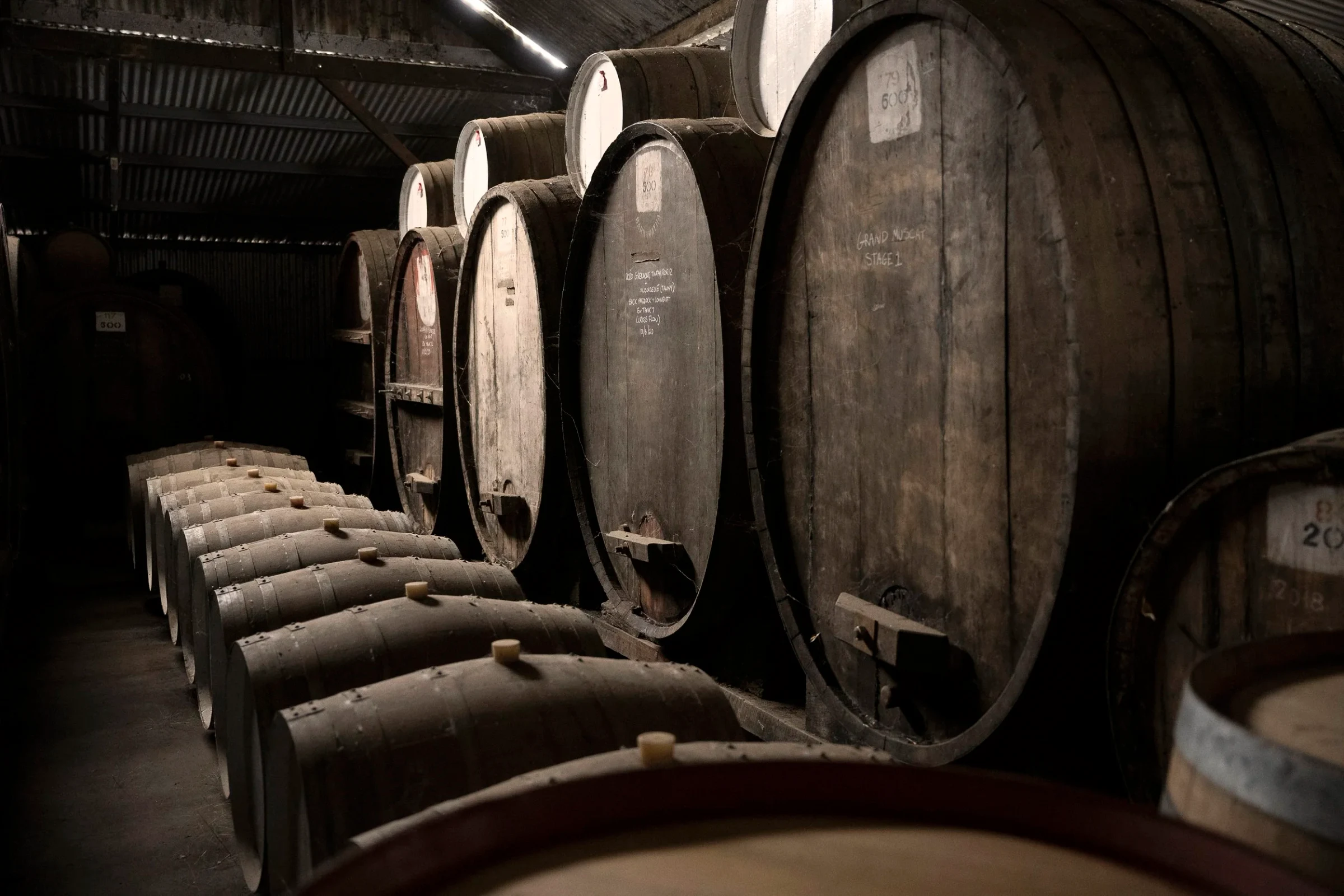
All Saints Estate has operated continuously since the 1860s, meaning the oldest fractional blending stock in its Rare-tier fortifieds carries components aged across multiple generations. In a solera system, a portion of older wine is retained each year and blended with younger material, so the average age of a Rare Muscat or Topaque at an estate of this vintage is substantially greater than the minimum legal requirement for the classification. That accumulated stock is the direct reason All Saints holds a Pearl 3 Star Prestige rating in 2025 — it represents something no new producer in the Rutherglen region can replicate from scratch.
Visitors who arrive with specific interest in fortified wine production, solera ageing, or the Rutherglen classification system get the most traction here. The estate's Pearl 3 Star Prestige (2025) draws collectors and producers alongside casual cellar door visitors, but the depth of the tasting range rewards those who take the tiered progression seriously. It is less suited to visitors primarily looking for sparkling wine or contemporary table wine styles.
205 All Saints Rd, Wahgunyah VIC 3687
Wahgunyah