Made ByRestaurant
Almazen Salinas
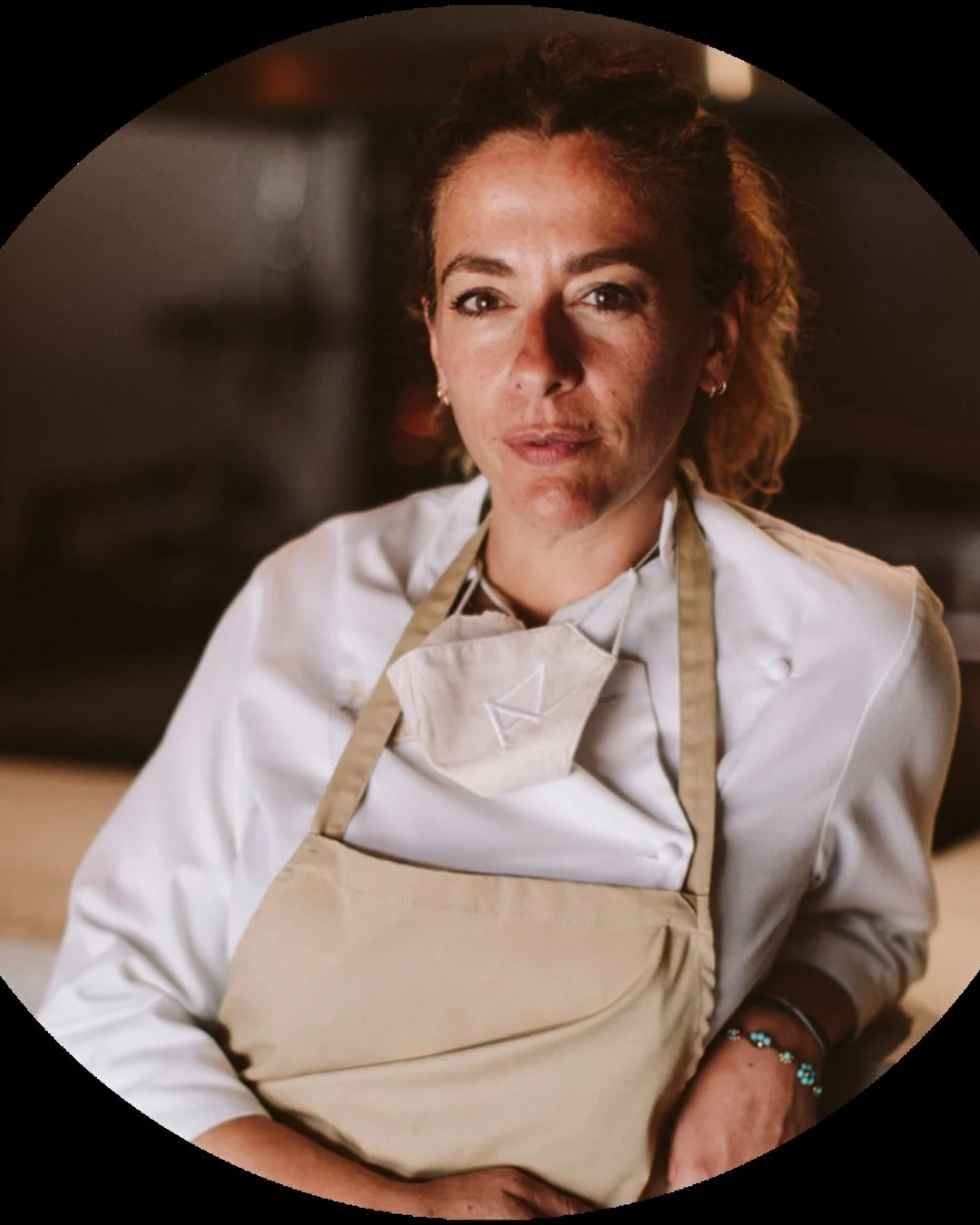
Chef in Residence
Beatriz Pascual
Chef
- 01CuisineModern Basque Fusion
- 02CitySalinas de Añana, Spain
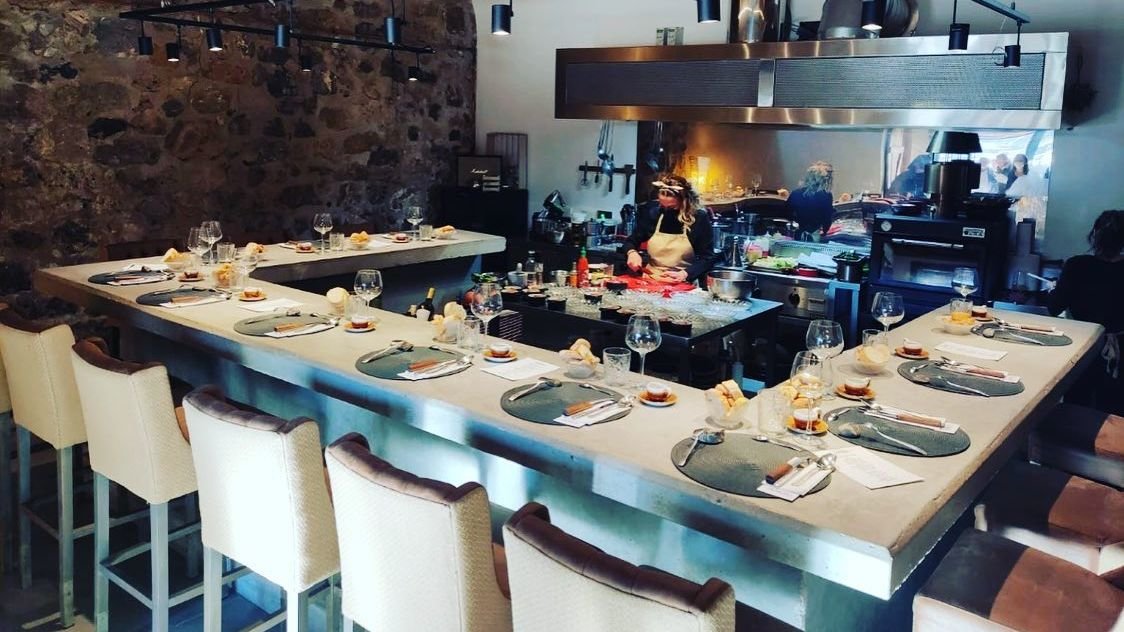
Inside a restored salt warehouse overlooking the ancient pans of Valle Salado de Añana, Almazen Salinas operates around a central open kitchen and bar counter where chef Beatriz Pascual works with locally sourced organic produce and the valley's native salt, muera, across a seasonal tasting menu. A Michelin Plate holder since 2024, it is one of Spain's more unexpected addresses for serious regional cooking.
At a glance
- Cuisine
- Modern Basque Fusion
- Price
- $$$$
- Per person
- $80
- Hours
- Mon: Closed; Tue: Closed; Wed: Closed; Thu: 2:30–5:30 PM; Fri: 2:30–5:30 PM; Sat: 2:30–5:30 PM; Sun: 2:30–5:30 PM
- Neighborhood
- Salinas de Añana
- Rating
- 4.8 (260)
<h2>Where the Kitchen Is the Room</h2><p>The Valle Salado de Añana sits in the Basque interior of Álava province, a protected saltscape of timber-framed salt pans that have been harvested continuously for at least a thousand years. You arrive through rolling agricultural countryside, and the valley reveals itself gradually, a geometry of wooden channels and brine pools that produces one of the oldest commercially harvested salts in Europe. The building that now houses Almazen Salinas was part of that working history: a former salt warehouse, its walls and proportions carrying the plainness of functional rural architecture rather than the manufactured rusticity of a converted barn repurposed for tourism.</p><p>Inside, the kitchen occupies the physical and conceptual centre of the dining room, with a bar counter arranged around it so that the cooking is not something happening behind a partition but the primary visual and spatial fact of the room. That format places Almazen Salinas in a category of restaurants where the relationship between guest and kitchen is deliberately immediate, closer to a counter-focused Japanese omakase sensibility than to the conventional dining-room-plus-pass arrangement that most tasting-menu restaurants in Spain use. Chef Beatriz Pascual works in front of the room, and that visibility is built into the design rather than added as a theatrical flourish.</p><h2>Beatriz Pascual and the Case for Rooted Cooking</h2><p>Spanish fine dining has produced some of the most internationally recognized restaurants of the past three decades. The country's critical mass of high-end tasting-menu cooking runs from <a href="https://www.enprimeurclub.com/restaurants/arzak-san-sebastian-restaurant">Arzak in San Sebastián</a> and <a href="https://www.enprimeurclub.com/restaurants/azurmendi-larrabetzu-restaurant">Azurmendi in Larrabetzu</a> to <a href="https://www.enprimeurclub.com/restaurants/mugaritz-errenteria-restaurant">Mugaritz in Errenteria</a> and <a href="https://www.enprimeurclub.com/restaurants/diverxo-madrid-restaurant">DiverXO in Madrid</a>, with <a href="https://www.enprimeurclub.com/restaurants/el-celler-de-can-roca-girona-restaurant">El Celler de Can Roca in Girona</a>, <a href="https://www.enprimeurclub.com/restaurants/martin-berasategui-lasarte-oria-restaurant">Martin Berasategui in Lasarte-Oria</a>, <a href="https://www.enprimeurclub.com/restaurants/quique-dacosta-denia-restaurant">Quique Dacosta in Dénia</a>, <a href="https://www.enprimeurclub.com/restaurants/aponiente-el-puerto-de-santa-maria-restaurant">Aponiente in El Puerto de Santa María</a>, <a href="https://www.enprimeurclub.com/restaurants/cocina-hermanos-torres-barcelona-restaurant">Cocina Hermanos Torres in Barcelona</a>, <a href="https://www.enprimeurclub.com/restaurants/ricard-camarena-valencia-restaurant">Ricard Camarena in València</a>, and <a href="https://www.enprimeurclub.com/restaurants/atrio-caceres-restaurant">Atrio in Cáceres</a> representing the breadth of that map. But the broader pattern those restaurants collectively reflect, which is that serious Spanish cooking tends to express a specific place rather than an abstract idea of excellence, is exactly the pattern Pascual follows in Álava.</p><p>Her approach at Almazen Salinas is built around locally sourced organic fruits and vegetables, seasonal rotation, and a single tasting menu that changes to reflect what the land around the valley produces at a given time. The horse meat steak tartare that appears on the menu is a signal of that regional anchoring: horse meat has a quiet, persistent presence in Basque and Navarrese food culture that rarely appears in modernist Spanish restaurants targeting international visitors. Serving it here, in tartare form, applies contemporary technique to a local material that most chefs working at this price point would bypass entirely.</p><p>The ingredient that defines the kitchen most specifically, however, is muera: the salt harvested from the Valle Salado de Añana itself. This is not table salt purchased from a regional supplier. Muera is the concentrated brine of the valley's ancient springs, harvested through the same timber-channel system visible from the restaurant windows. Using it in the kitchen collapses the distance between the dining room and the landscape outside to nothing. It is the kind of sourcing decision that cannot be replicated elsewhere, because the ingredient is tied to a specific geology. Comparable in logic, if not in product, to how <a href="https://www.enprimeurclub.com/restaurants/fahr-kunten-sulz-restaurant">Fahr in Künten-Sulz</a> and <a href="https://www.enprimeurclub.com/restaurants/gannerhof-innervillgraten-restaurant">Gannerhof in Innervillgraten</a> root their cooking in hyper-local alpine materials, Pascual's use of muera gives Almazen Salinas a sourcing specificity that is genuinely tied to place rather than assembled from a radius of approved suppliers.</p><h2>Recognition and Where It Sits</h2><p>Almazen Salinas has held a Michelin Plate in both 2024 and 2025. The Michelin Plate sits below star level in the Guide's recognition hierarchy, but it signals that inspectors have visited and found cooking of consistent quality worth flagging to readers. For a restaurant in a village of this size, in a valley that most food travelers would not encounter without actively seeking it out, sustained Michelin attention across consecutive years is a meaningful indicator of intent and execution. The venue's Google rating of 4.8 from 260 reviews supports that reading at a different scale.</p><p>At an estimated $80 per person, Almazen Salinas sits below the highest-priced tasting-menu rooms in Spain. That gap makes it accessible to a broader group of travelers without positioning it as a casual option. A seasonal tasting menu at this price point, from a kitchen with consecutive Michelin recognition, in a UNESCO-protected landscape, represents a value equation that is hard to replicate in a major Spanish city at the same spend.</p><h2>Planning a Visit</h2><p>Salinas de Añana lies in the province of Álava, roughly equidistant from Vitoria-Gasteiz and Miranda de Ebro, and is most easily reached by car. The Valle Salado itself is a managed heritage site, and visiting the restaurant is naturally paired with time at the salt pans, which are open to the public and include guided routes. For those building a longer itinerary in the Basque Country, Almazen Salinas functions well as an anchor point for a day trip from Vitoria-Gasteiz or as part of a route through rural Álava. The tasting menu format means the meal is the occasion rather than a stop within one, so building time around it rather than treating it as a quick lunch is the more considered approach.</p>
Know before you go
- Dress code
- smart_casual
- Reservations
- essential
Frequently asked
Is Almazen Salinas child-friendly?
The format is a single tasting menu at a €€€ price point, built around an extended meal at an open kitchen counter where diners watch Beatriz Pascual cook. That structure suits adults and older teenagers who can engage with a multi-course format, but it is not designed for young children who may find a long, seated tasting progression difficult.
What is the atmosphere like at Almazen Salinas?
The room is a converted salt warehouse in the Valle Salado de Añana, a protected saltscape whose timber-framed pans date back millennia. The kitchen sits at the centre of the space with a bar counter arranged around it, so the cooking is the focal point of the room rather than a backdrop. The setting combines rustic warehouse architecture with the focused intimacy of a counter-kitchen format.
Is Almazen Salinas award-winning?
Almazen Salinas has received recognition including: Amid the surprising landscapes of the Valle Salado de Añana, overlooking its salt pans that date back millennia, you’ll find this rustic-style former salt warehouse that now features the kitchen at its very heart with a bar counter arranged….
What should I eat at Almazen Salinas?
The kitchen runs a single seasonal tasting menu, so the choice is made for you. Beatriz Pascual, recognised in the Michelin Guide for both 2024 and 2025, builds the menu around locally sourced organic produce and works with muera, a salt exclusive to the Valle Salado de Añana. Documented dishes include horse meat steak tartare, reflecting the kitchen's regionally rooted approach presented in a contemporary style.
Address
Real Kalea, 57, 01423 Salinas de Añana / Gesaltza Añana, Araba, Spain
Salinas de Añana
How it compares
- Cuisine
- Modern Basque Fusion
- Price
- $$$$
- Awards
- Michelin Plate
- Notes
- Salinas de Añana
- Cuisine
- Modern Spanish Fine Dining with French and Basque Influences
- Price
- $$$$
- Awards
- Michelin Plate
- Notes
- Samaniego
- Cuisine
- Traditional Rioja Cuisine
- Price
- $$$
- Awards
- Michelin Plate
- Notes
- Casalarreina
- Cuisine
- Updated Traditional Basque Cuisine
- Price
- $$$
- Awards
- Michelin Plate
- Notes
- Valle de Carranza
- Cuisine
- Traditional Basque Seafood
- Price
- $$$
- Awards
- Michelin Plate
- Notes
- Bakio
- Cuisine
- Traditional Basque Seafood
- Price
- $$$
- Awards
- Michelin Plate
- Notes
- Abando
In residence
Similar places
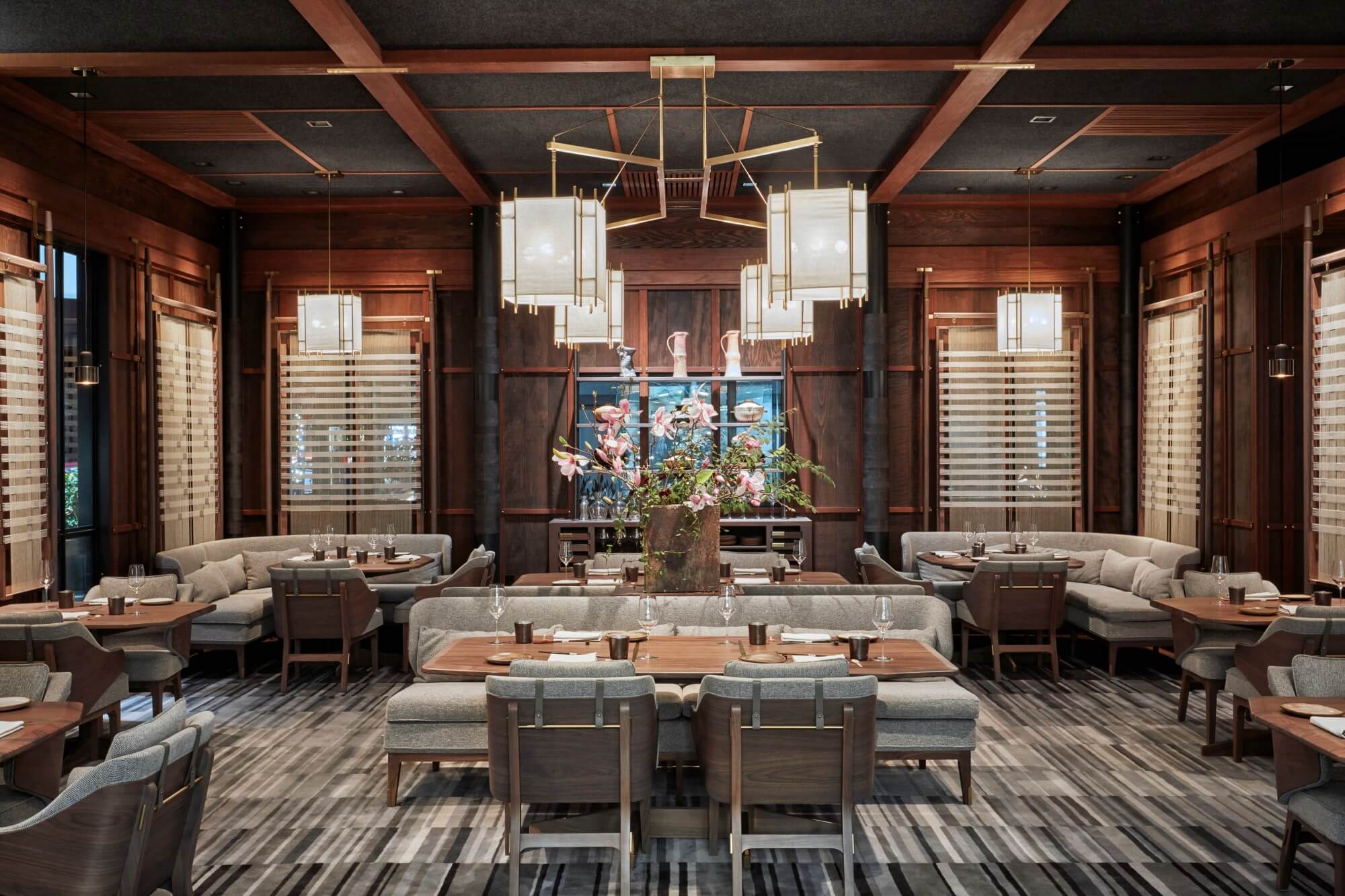
Japanese-influenced Californian Kaiseki
Single Thread Farm
Healdsburg, United States
★★★ · 50 Best
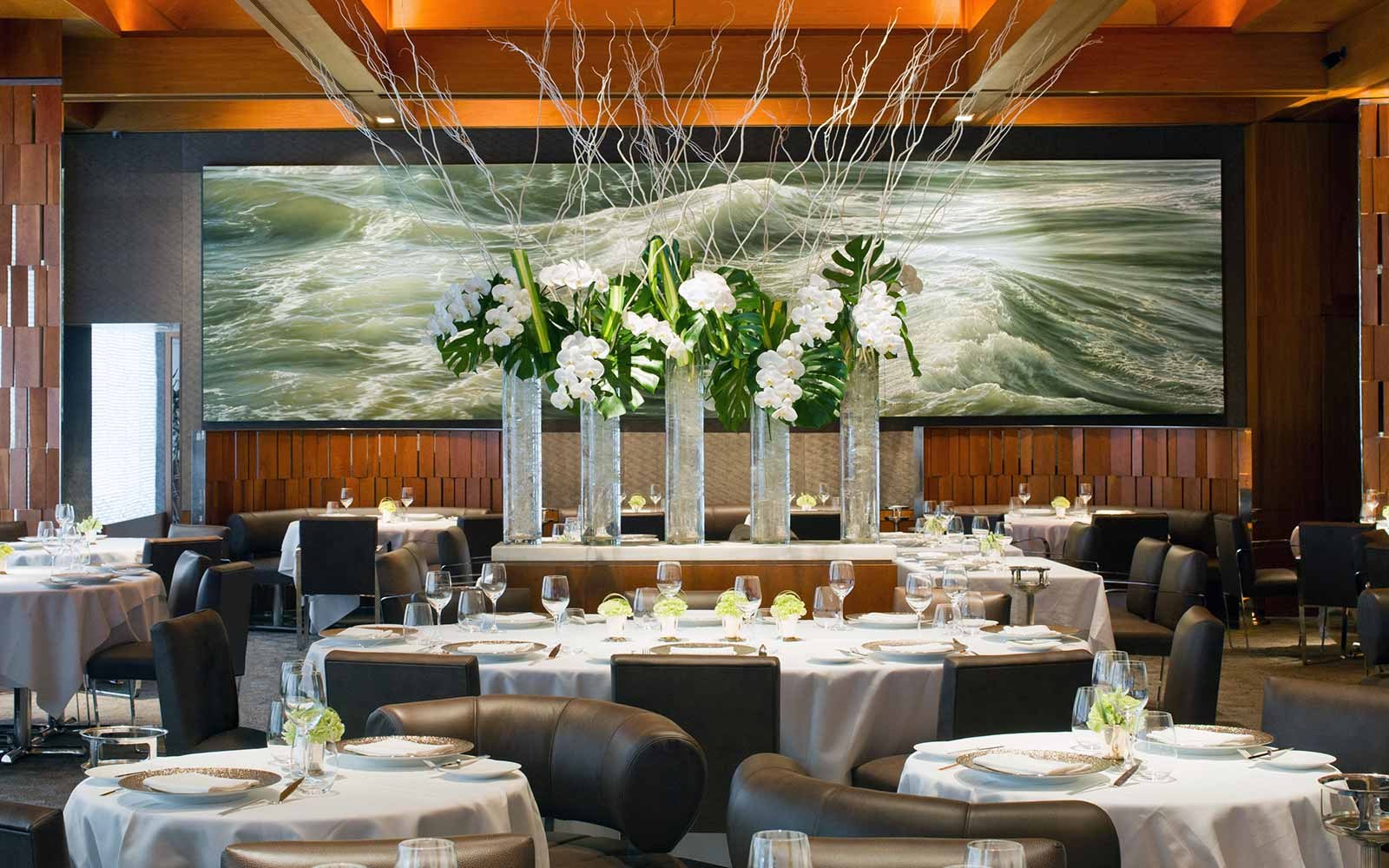
French Seafood Fine Dining
Le Bernardin
New York City, United States
★★★ · 50 Best
Modern Korean Tasting Menu
Atomix
New York City, United States
★★ · 50 Best
French
Sézanne
Tokyo, Japan
★★★ · 50 Best
Modern Seafood Fine Dining
Providence
Los Angeles, United States
★★★ · 50 Best
Contemporary Plant-Based Fine Dining
Eleven Madison Park
New York City, United States
★★★ · 50 Best