Ankyu
- 01CuisineSeasonal Kaiseki
- 02CityKyoto, Japan
- Opinionated About Dining Top Restaurants in Japan Highly Recommended · 2026
- Tabelog Bronze · 2025
- Opinionated About Dining Top Restaurants in Japan Ranked #171 · 2025
- Tabelog 100 #25: 3.9pts · 2025
- Opinionated About Dining Top Restaurants in Japan Ranked #186 · 2024
- Opinionated About Dining Top Restaurants in Japan Highly Recommended · 2023
Miyagawasuji and the Higashiyama Counter
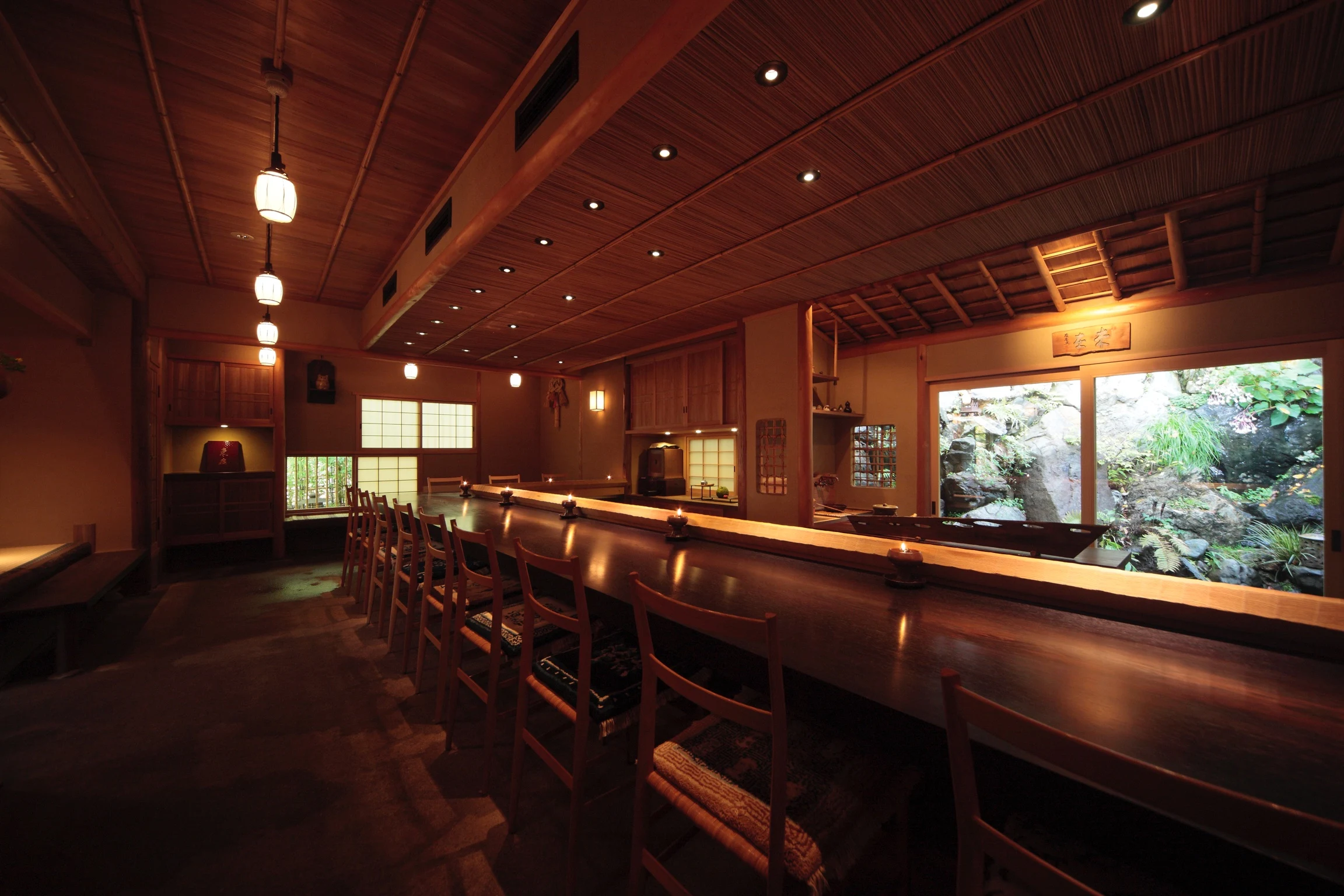
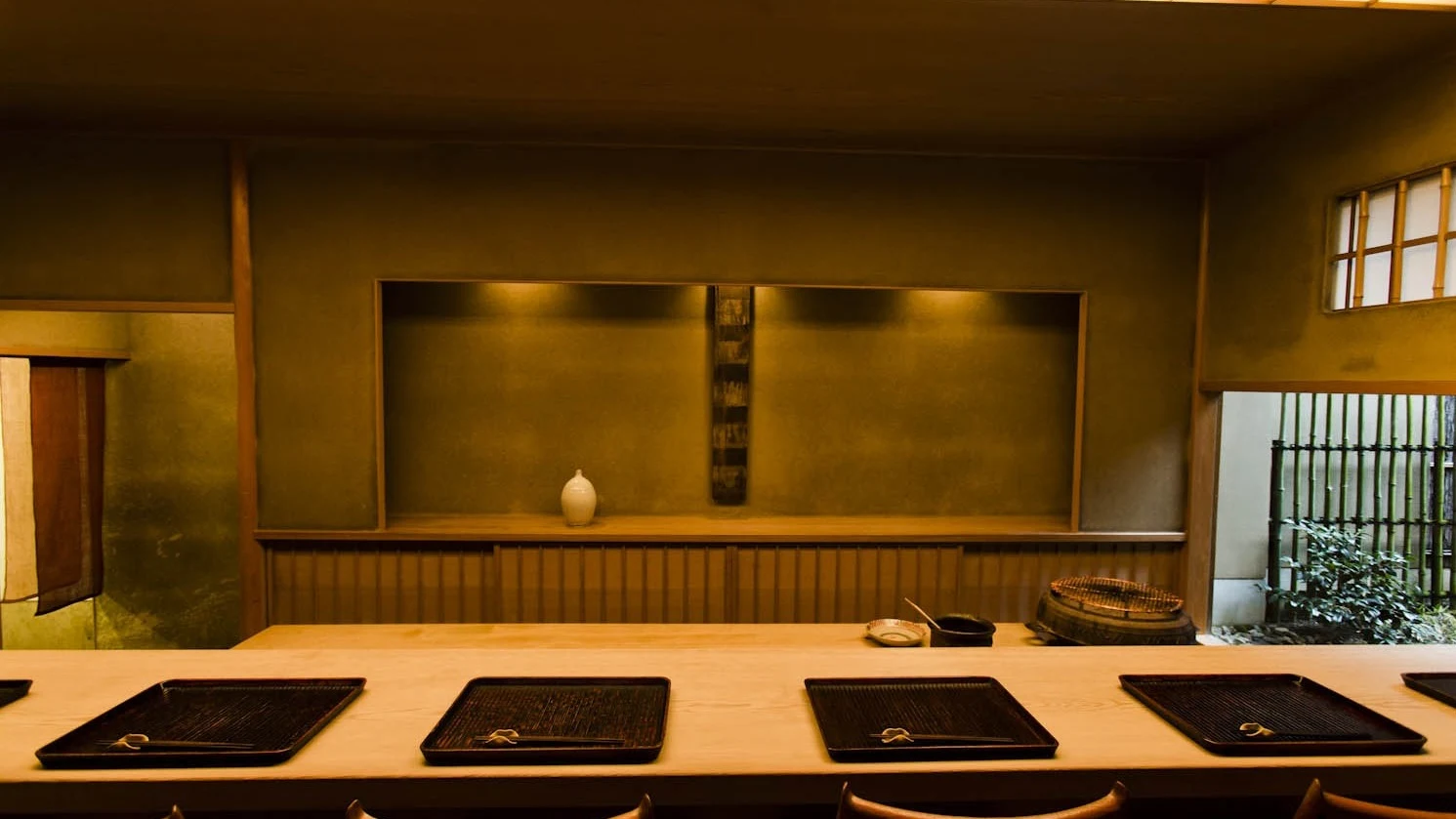
Ankyu is a Kyoto restaurant serving seasonal kaiseki in Higashiyama Ward. The neighbourhood sits at a remove from the tourist-heavy lanes around Kiyomizudera, close enough to feel the city's historical grain but operating on a quieter frequency. Arriving at the address on Miyagawasuji 3-chome in the evening, when the lanterns of the hanamachi district cast low light across the narrow road, establishes an expectation that kaiseki in this part of the city tends to keep: one of ceremony conducted at close quarters, where the distance between kitchen and guest is deliberately small.
Ankyu occupies that register. The setting in the Hakuyu Miyagawa building places it within a part of Higashiyama Ward that has historically supported ochaya teahouse culture, and the evening format (service runs 18:00 to 22:00, Monday through Saturday) positions the restaurant squarely in the dinner-only tier that Kyoto's more considered kaiseki houses tend to occupy. There are no lunch sittings, no walk-in concessions. The structure signals intent before a single dish arrives.
Where Ankyu Sits in Kyoto's Kaiseki Tier
Kyoto's kaiseki scene has always occupied a wider range than outside observers assume. At the leading, houses like Ifuki and Chihana carry Michelin recognition and operate with the logistical formality that implies. Further along, restaurants like Hassun and Doujin work within the same tradition but at a different scale of profile. Ankyu's trajectory through Opinionated About Dining's Japan rankings, Highly Recommended in 2023, #186 in 2024, #171 in 2025, places it in a rising cohort: houses that are gaining recognition within specialist critical circles.
That positioning matters because it shapes who the restaurant is for. A Google rating of 4.6 from 61 reviews suggests a clientele that already knows what it is looking for. This is not an introductory kaiseki experience. The consistent upward movement in OAD rankings signals that critics who visit repeatedly are returning with a stronger opinion each time, which in the tight-margin world of kaiseki assessment is itself a form of institutional endorsement.
For comparison, Gion Suetomo operates in a similar neighbourhood radius and within the same traditional format, while nationally, the kaiseki conversation extends to houses like Kikunoi in Tokyo and Hirosaku, both of which represent the form's adaptation to different urban contexts. Kyoto, however, remains the axis around which serious kaiseki rotates, and Higashiyama's proximity to the traditions that shaped the cuisine gives houses in this ward a contextual authority that is difficult to replicate elsewhere in Japan.
Sake, Shochu, and the Beverage Logic of Kaiseki
In kaiseki, the beverage programme is not supplementary to the food, it is structurally integrated with it. The format's architecture, built around courses that move from light to rich, from raw to cooked, from delicate to assertive, demands a drink pairing logic that mirrors that progression. Sake is the conventional instrument for this, but the range within sake is wide enough that a thoughtful selection changes the character of a meal significantly.
Kyoto's kaiseki counters have historically favoured sake from Fushimi, the brewing district in the city's southern quarter, whose soft water produces a style that is clean, slightly sweet, and accommodating to the subtle flavours of dashi-forward cooking. That regional affinity is a starting point rather than a fixed rule: many serious Kyoto houses now reach beyond Fushimi to draw on Niigata's elegant junmai, Hiroshima's approachable brews, or the more assertive nama (unpasteurised) sakes from smaller regional producers that have found critical favour in the last decade. Where a restaurant sits on that spectrum says something about its approach to tradition versus exploration.
Shochu occupies a quieter role in kaiseki pairing but is not absent from the conversation. Barley and sweet potato shochus, served on the rocks or with water, work alongside earthier mid-course elements where sake's sweetness would compete rather than complement. The pairing logic here is less codified than sake's relationship with the menu, which gives the house more interpretive latitude, and makes the sommelier's or chef's choices more legible as statements of taste.
Ankyu's beverage approach treats drinks as integral to the kaiseki structure rather than as a separate commercial layer. Houses operating at this level of specialist recognition, OAD top 200 in Japan, Tabelog Bronze, are not known for treating the beverage side as an afterthought.
Chef Hiromi Ueda and the Kitchen's Orientation
Chef Hiromi Ueda heads the kitchen at Ankyu. In the context of Kyoto kaiseki, where the tradition of kyo-ryori shapes both technique and seasonal vocabulary, the chef's role is as much curatorial as creative: the cuisine's framework is established by centuries of protocol around ingredient sourcing, presentation sequence, and vessel selection. What distinguishes one house from another within that framework is the precision of execution, the quality of ingredient access, and the coherence of the experience across courses.
Ueda's rising OAD placement across three consecutive assessment cycles suggests that the kitchen's consistency is being read positively by critics making repeat visits. Nationally, the conversation around kaiseki at this level includes houses as far afield as Goh in Fukuoka and akordu in Nara, both of which demonstrate that Japan's most considered dining extends well beyond Tokyo and its immediate orbit.
Planning a Visit to Ankyu
Ankyu operates Monday through Saturday, with service from 18:00 to 22:00, which means the rhythm of a visit is dinner-only and evening-anchored. The Higashiyama Ward address places it within reach of Kyoto's central hotel corridor, and the Miyagawasuji location sits close enough to Gion's preserved streetscape that arriving on foot from that direction makes practical sense. Reservations are essential.
Visitors should approach Ankyu as one node in a broader Kyoto itinerary. For those extending a Japan trip beyond Kyoto, the kaiseki and high-end Japanese dining conversation connects to HAJIME in Osaka, Harutaka in Tokyo, and 1000 in Yokohama.
What Regulars Order at Ankyu
Ankyu's kaiseki format is a set menu, so regulars focus on the pace of the meal and the beverage pairings. In kaiseki, the most informed visitors tend to follow the house's sake recommendations closely, treating the progression of pours as an extension of the coursework rather than a separate decision. Those who know the format also tend to arrive with enough time to sit with the early courses, particularly the sakizuke and hassun, rather than treating them as a preamble to the mains. The Tabelog Bronze Award and 3.9 score reflect a house where the full structure rewards attention, arriving with that orientation rather than a specific dish preference is the most useful preparation a first-time visitor can make.
Questions
Frequently asked
How expensive is Ankyu?
Ankyu is listed at a price level of $$$$.
Where is Ankyu and what does it serve?
Ankyu is in Higashiyama, Kyoto, serving Seasonal Kaiseki.
The field
How it compares
| Place | Cuisine | Notes | Awards |
|---|---|---|---|
| Ankyu | Seasonal Kaiseki | Higashiyama, $$$$ | · |
| Gion Sasaki | Modern Kaiseki | Kyoto | Michelin 3 Stars |
| Hyotei | Traditional Kaiseki | Kyoto | Michelin 3 Stars |
| Isshisoden Nakamura | Traditional Kyoto Kaiseki | Kyoto | Michelin 3 Stars |
| Kikunoi Honten | Kyoto Kaiseki Ryotei | Kyoto | Michelin 3 Stars |
| Mizai | Traditional Kaiseki | Kyoto | Michelin 3 Stars |
| Ogata | Kaiseki Omakase | Kyoto | Michelin 2 Stars |