Bodega Otazu
- 01CityEtxauri, Spain
- Falstaff Winery - 3 Stars · 2026
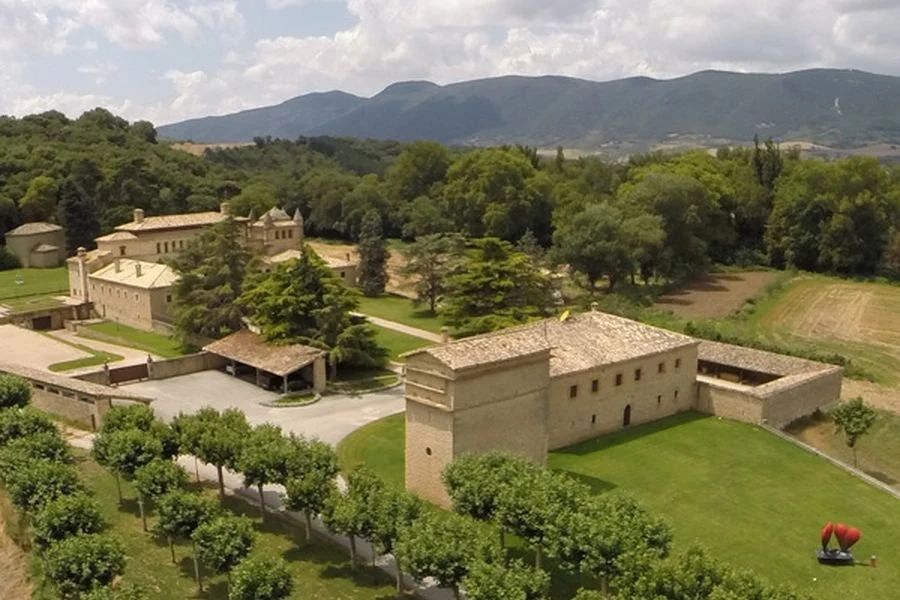
Approach Bodega Otazu and the first impression is spatial, not ornamental: vineyard, mountain edge, historic stone, then descent into the underground barrel cellar known as the Wine Cathedral. Navarra is often read through freshness, rosado and regional value, but this estate argues for a narrower kind of Spanish wine tourism, where terroir, architecture and collection-level contemporary art carry equal weight.
The useful lens is Pago de Otazu DOP. Spain’s Vino de Pago classification is built around a single estate rather than a broad regional identity, and here that matters. The wines come from 116 hectares of estate vineyard in Etxauri, planted with Tempranillo, Cabernet Sauvignon, Merlot, Cabernet Franc, Pinot Noir, Chardonnay and Berués. Red wine forms the largest share of production, while rosé and white wines give the visit more range than a Cabernet-heavy estate tasting would suggest.
For travellers building a Navarra itinerary, Bodega Otazu belongs in the wine column before the sightseeing column, even if the setting distracts from the glass. Start with Our full Etxauri wineries guide, then use Our full Etxauri restaurants guide, Our full Etxauri hotels guide, Our full Etxauri bars guide and Our full Etxauri experiences guide to turn the tasting into a tighter local stay.
A northern Spanish estate where Pago status keeps the focus on origin
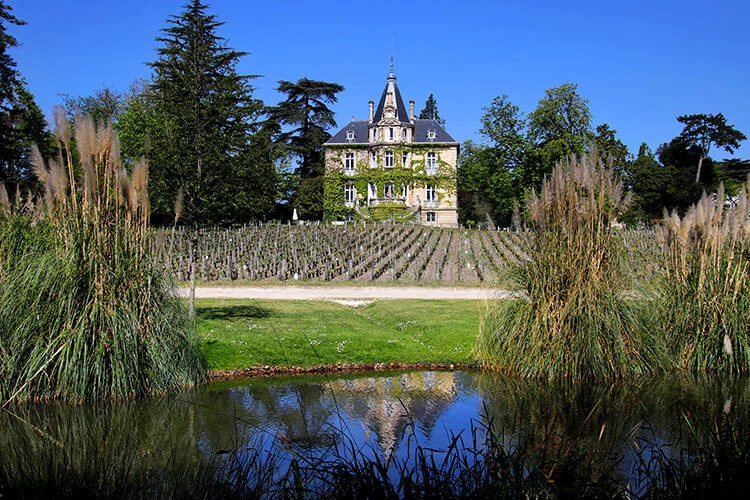
Navarra sits at a crossroads of Spanish and French influence, and Otazu makes that tension visible. The original château-style winery dates to 1840, an early French-style architectural move in the region; modern production resumed in 1989 before the estate’s open year in 1990. The result is a useful double identity: old bones, modern cellar discipline and a tourism format that avoids a simple pour-and-exit tasting.
The terroir story is unusually legible. The estate sits in a small valley near Pamplona, bordered by the Arga River and framed by the Sierra del Perdón and Sierra del Sarbil. The Cantabrian Sea and the Pyrenees influence the wider climate, and Otazu is noted as Spain’s northernmost red-wine producer. That matters for ripening and style: its reds are not framed as sun-heavy Mediterranean wines, but as Navarra wines shaped by a cooler northern edge and a single-vineyard model.
The varietal mix tells the same story. Tempranillo gives the Spanish anchor, while Cabernet Sauvignon, Merlot, Cabernet Franc and Pinot Noir point to the Bordeaux-and-beyond vocabulary long threaded through Navarra. Chardonnay and Berués broaden the white-wine argument. The point is not novelty; it is how a classified estate can use several varieties while keeping the source fixed.
Art, cellars and a tasting format built for context
Spanish winery visits often split into production-led tours for serious drinkers and visually generous estates designed for hospitality. Bodega Otazu sits between those camps. The 19th-century building serves as a wine museum and contemporary art gallery, while more than 150 works are placed across the estate and facilities. The Romanesque church and subterranean cellar add historical depth without turning the experience into a heritage costume piece.
The Wine Cathedral is the strongest physical argument for the visit. Underground barrel rooms can be theatrical, but here the cellar clarifies the estate’s positioning: aging, architecture and tourism are one program. ACEVIN named the property Spain’s “Best Winery Open to Tourism” in 2020, a trust signal aligned with the format, not just the label. It is built for visitors who want wine education, art and architecture in one controlled sequence.
The standard experience is guided and can include estate touring, tasting, art and architecture, private tastings, vertical formats and food-and-wine pairing. Spanish and English are offered, and the listed duration runs 120 to 180 minutes, making it closer to a half-day cultural appointment than a quick cellar stop. Food pairing is part of the offer, and groups are a natural fit, especially corporate events, celebrations and wine education.
Practically, this is not for travellers seeking a spontaneous bar-style tasting counter. The format is structured, quiet and estate-led. That discipline is part of the appeal: it gives the vineyard, historic buildings, cellar and art collection time to read as one environment rather than separate tourism pieces.
How to place Otazu in a wider wine itinerary
For readers mapping Spain through estates rather than appellation headlines, Otazu is useful because it does not ask to be understood as Rioja, Ribera del Duero or Priorat. It is a Navarra estate with Pago status, a fixed vineyard source and a cultural program that makes the land visible through more than viticulture. That makes it especially strong for travellers who care about place: mountain influence, river valley, single-estate control and a portfolio spanning red, white, rosé, sparkling and dessert styles.
The cellar also belongs in the wider conversation about European wine tourism moving beyond the tasting room. Estates now compete on architecture, collection quality, education depth and hospitality flow as much as on the pour. Otazu has the ingredients that matter: historic construction, a contemporary art collection, an underground barrel room, private formats and a classified production identity. The visit rewards attention to context before labels.
To broaden the itinerary beyond Navarra, use Spanish winery references such as 3 Ases Bodegas y Viñedos in Quintanilla De Arriba, 4Kilos Vinícola in Felanitx, Aalto Bodegas y Vinedos in Quintanilla De Onesimo Valladolid, Abadia de Aribayos in Moraleja Del Vino, Abadía Retuerta in Sardón de Duero, Abel Mendoza Monge in San Vicente de la Sonsierra, Acústic Celler in Els Guiamets and Adega Algueira in Sober. For a wider European contrast, file »der Steiner« Hans Steiner in Podersdorf am See and & Handwein in Mannheim as different expressions of small-place wine culture.
The final read is clear: Bodega Otazu is strongest as a terroir visit with serious cultural architecture attached. The Pago classification, 116-hectare estate model, northern red-wine position and contemporary art program give enough substance for seasoned wine travellers, while the guided format keeps the estate accessible to guests who want structure rather than technical cellar talk alone.
Questions
Frequently asked
How expensive is Bodega Otazu?
Bodega Otazu is listed at a price level of $$$.
The field
How it compares
| Place | Notes | Awards |
|---|---|---|
| Bodega Otazu | Otazu / Señorío de Otazu, Etxauri, $$$ | · |
| Ardbeg | Port Ellen | · |
| Ata Rangi | Martinborough | World's 50 Best |
| Biondi-Santi Tenuta Greppo | Montalcino | · |
| Château d'Yquem | Sauternes | World's 50 Best |
| Château Les Carmes Haut-Brion | Bordeaux | · |
| Domaine du Comte Liger-Belair | Vosne-Romanée | · |