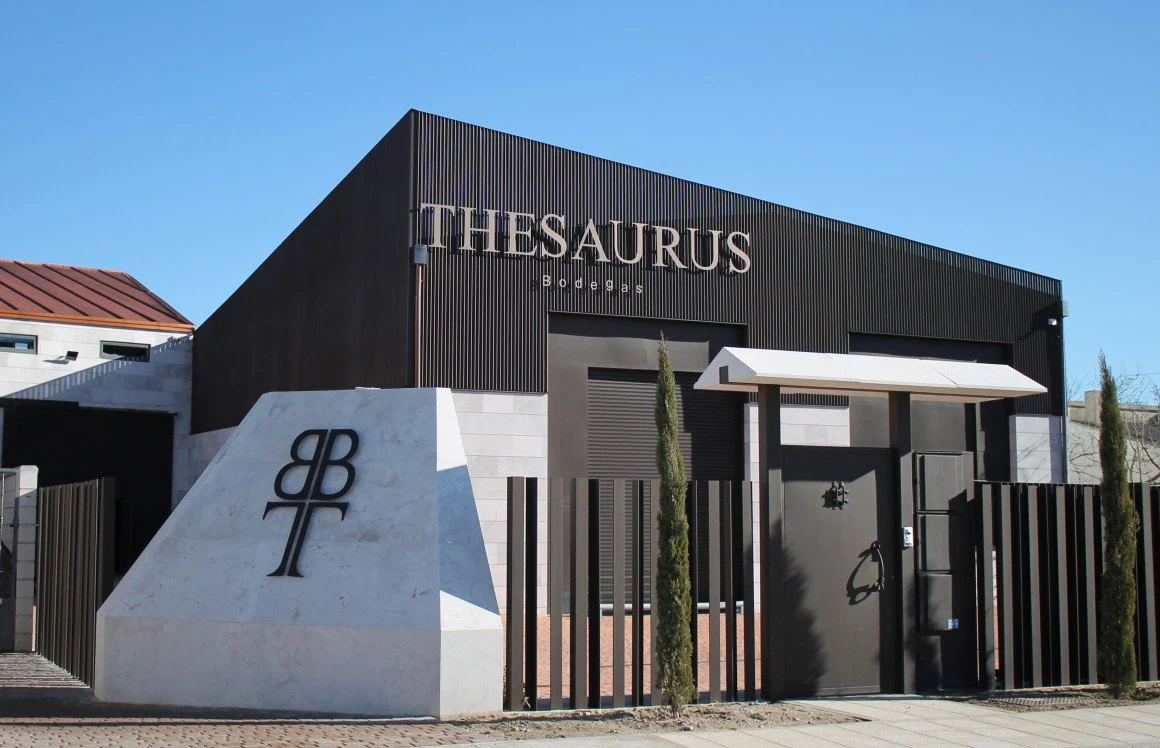
Bodegas Thesaurus
- 01CityOlivares De Duero, Spain
- Falstaff Winery - 2 Stars · 2026
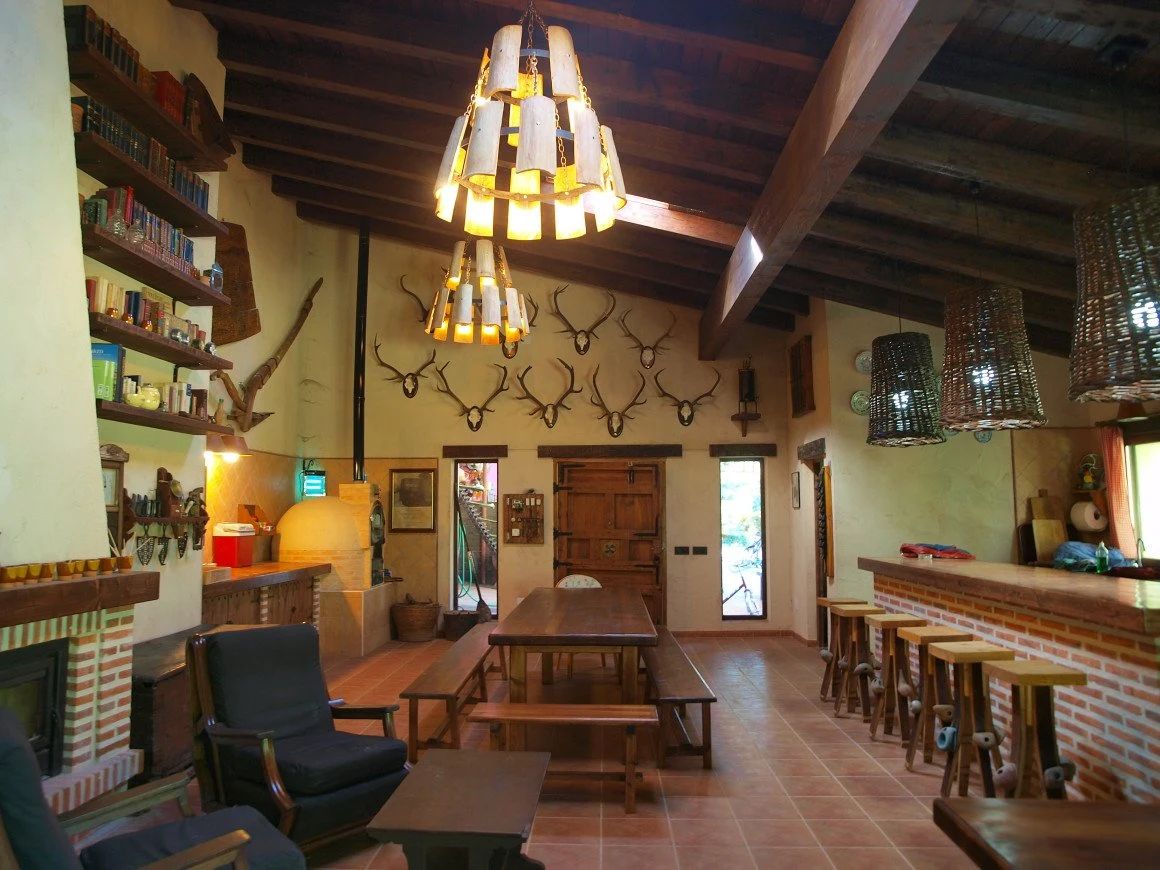
In Olivares de Duero, wine tourism is shaped as much below ground as above it. The contemporary winery hall, tasting room, barrel cellar, and rural Ribera del Duero setting show a region explaining itself through architecture as well as Tempranillo. Bodegas Thesaurus fits that newer model: not an old estate trading only on age, and not a showroom detached from place, but a production-led visit where modern equipment and preserved traditional elements share one narrative.
Ribera del Duero’s identity rests on structured still reds, with Tempranillo as reference point. The region’s high-altitude continental conditions give the grape its familiar tension: ripeness, firmness, and capacity to handle oak without losing shape. Here, the emphasis stays close to that grammar. The winery works within the Ribera del Duero appellation and focuses on still red wine, while its wider production language also draws on the neighbouring Spanish denominational map of Cigales and Rueda. The visitor is therefore not just tasting a brand; the format explains how Castilla y León’s adjoining wine zones can pull a cellar in different directions.
Modern Ribera facilities, with the cellar doing the heavy lifting
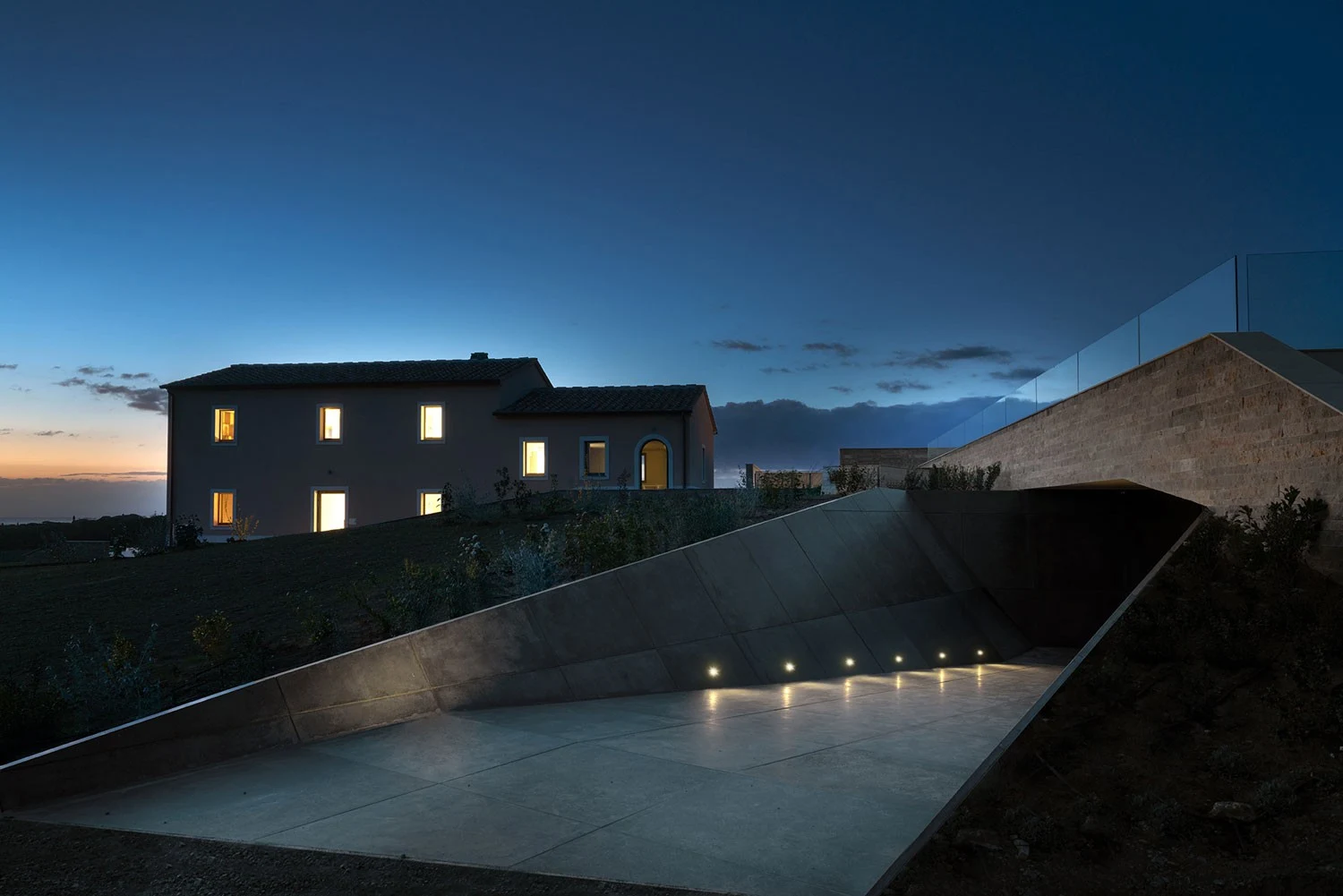
The contemporary side of Ribera del Duero can feel over-polished when the visitor route detaches from production. Here, the argument is operational: stainless steel deposits, a dedicated tasting room, and an underground cellar with capacity for 600 barrels give the experience a clear production spine. The barrel cellar carries the visit. In a region where oak ageing has long shaped the public language of quality, seeing barrel infrastructure on that scale gives context to why Ribera reds are so often discussed through structure, maturation, and release timing.
The mood is quiet, rural, and cellar-focused rather than theatrical, suited to drinkers who want to connect the tasting glass to process: fermentation, barrel ageing, and the decisions that turn Tempranillo into a finished wine. Preserved traditional elements keep the visit from feeling like a laboratory tour, while modern facilities show contemporary Ribera is not frozen in a heritage pose. It is a working region with tourism attached, not tourism with a token tank room.
That distinction matters in Olivares de Duero, where winery visits can become a checklist of caves, barrels, and views. Stronger visits explain why those elements matter. An underground cellar is not just atmosphere; it belongs to a wider regional logic around temperature stability and patient ageing. A tasting room is not just hospitality space; it translates a cellar’s choices into something a visitor can read in the glass.
Tempranillo as the anchor, with Castilla y León in the background
The terroir story begins with Ribera del Duero’s familiar counterpoint to Rioja. Both regions built international reputations on Tempranillo, but Ribera’s higher-altitude, more continental profile tends to produce wines discussed for density, tannic frame, and ageing potential. Bodegas Thesaurus sits inside that conversation. Its listed varietal focus is Tempranillo, and its hospitality format shows how a red-wine cellar handles that grape through production and barrel work.
The broader portfolio adds another layer. The winery is associated with THESAURUS, DORIUM, and CASTILLO DE PEÑAFIEL labels, and the named Dorium Roble points to the Spanish category of oak-touched reds below longer Crianza or Reserva ageing in the public hierarchy. That helps visitors enter the region: not every serious Ribera bottle needs extended ageing, and a roble style can show young fruit and oak influence meeting earlier in a wine’s life.
There is also a regional lesson behind it. Cigales is often associated with rosado traditions and red-wine production, while Rueda is Spain’s reference point for Verdejo-led whites. When a Ribera-based winery speaks across those denominational lines, the story becomes less about a single postcard version of the Duero and more about how Castilla y León producers use nearby wine identities to broaden range and balance. The strongest reason to visit is educational: the tasting compactly shows how Ribera’s red-wine confidence sits alongside neighbouring zones with different reputations.
For travellers mapping a wine day in and around Olivares de Duero, the local winery circuit rewards contrast. Use Our full Olivares De Duero wineries guide to place this cellar-focused visit alongside other local options, including Bodegas La Cepa Alta, S.L, Garmón Continental, and Pago de Ina. For a wider Duero comparison beyond the town, look toward Aalto Bodegas y Vinedos in Quintanilla De Onesimo Valladolid, Abadía Retuerta in Sardón de Duero, and 3 Ases Bodegas y Viñedos in Quintanilla De Arriba.
Who the visit suits, and how to fold it into Olivares de Duero
This is a winery for visitors who prefer production context over lifestyle gloss. The format includes guided tasting and barrel tasting, and the experience tags point to cave tasting, a barrel room, historic-building character, and private tasting formats. Groups are a natural fit, especially when the aim is wine education rather than a casual drop-in. The absence of food pairing keeps the focus on wine and cellar interpretation, right for a visit built around Tempranillo and barrel ageing.
The price signal sits in the mid-range bracket, so value depends less on luxury cues than on how much the visitor wants to understand Ribera del Duero from inside a working facility. Dress can stay casual, and the atmosphere is quiet rather than social-club loud. This is not the stop for travellers seeking a terrace lunch or broad hospitality programming; treat it as a focused cellar appointment in a rural wine region.
Build the day around the town, not only the tasting room. Our full Olivares De Duero restaurants guide, Our full Olivares De Duero hotels guide, Our full Olivares De Duero bars guide, and Our full Olivares De Duero experiences guide help turn a cellar visit into a coherent stay. For readers comparing Spanish winery culture more broadly, Abadia de Aribayos in Moraleja Del Vino and 4Kilos Vinícola in Felanitx show different regional registers, while European outliers such as »der Steiner« Hans Steiner in Podersdorf am See and & Handwein in Mannheim underline how varied the modern winery visit has become.
Questions
Frequently asked
How expensive is Bodegas Thesaurus?
Bodegas Thesaurus is listed at a price level of $$.
The field
How it compares
| Place | Notes | Awards |
|---|---|---|
| Bodegas Thesaurus | Olivares de Duero, $$ | · |
| Bodegas La Cepa Alta, S.L | Olivares De Duero | · |
| Cloudy Bay Vineyards | Blenheim | World's 50 Best |
| Garmón Continental | Olivares De Duero | · |
| La Rioja Alta | Haro | · |
| Masseto | Castagneto Carducci | · |
| Pago de Ina | Olivares De Duero | · |