Bungalow
In Residence
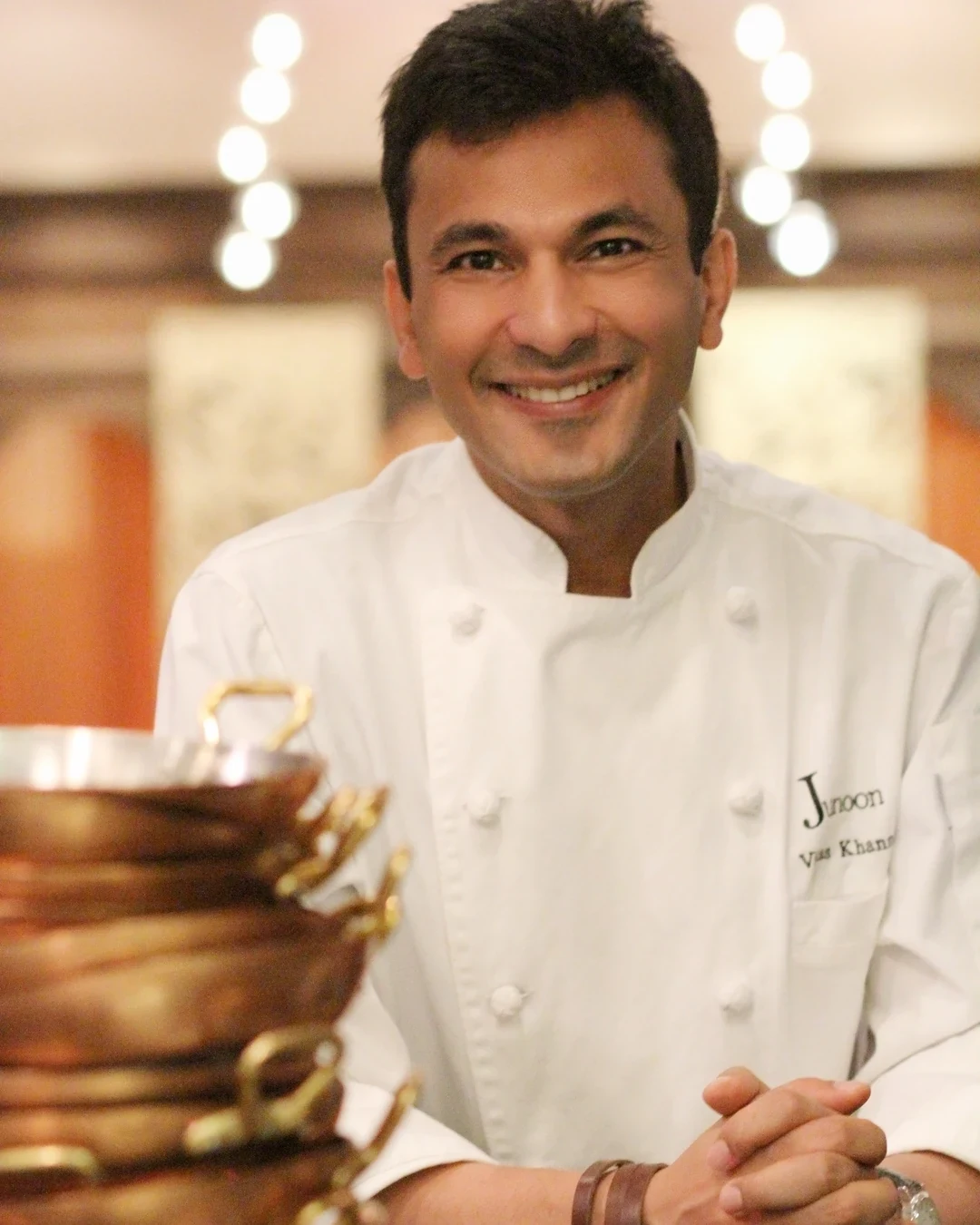
Vikas Khanna
Chef
- 01CuisineModern Indian Fine Dining
- 02CityNew York City, United States
- 03RecognitionJames Beard Award
From the people index
Recommended by
2 trusted voices point here.

- Michelin Bib Gourmand · Michelin Guide
- James Beard Winner · James Beard Foundation
- James Beard Award Semi Finalist · 2026
- Opinionated About Dining Casual in North America Recommended · 2026
- New York Times Best Restaurants in New York City · 2025
- Esquire Best New Restaurants · 2025
- Michelin Bib Gourmand · 2025
- Michelin Bib Gourmand · 2024
East Village's Shifting Indian Dining Scene
New York's Indian restaurant tier has long been divided between the midtown corridor's banquet-scale operators and a more recent wave of chef-led rooms pursuing regional specificity. The East Village sits closer to the latter tradition, where smaller dining rooms and more considered menus have attracted a different kind of attention from critics and the Michelin Guide alike. In that context, 24 First Avenue has become one of the more closely watched addresses in the city's Indian dining circuit. aRoqa, Cardamom, and Chola each represent different facets of how the city's Indian dining has diversified, from spice-forward regional cooking to refined tasting formats. Bungalow occupies a specific niche inside that broadening field: it frames Indian cooking through the lens of the subcontinent's country club heritage, a register that remains largely unexplored in the American market.
The Room Itself
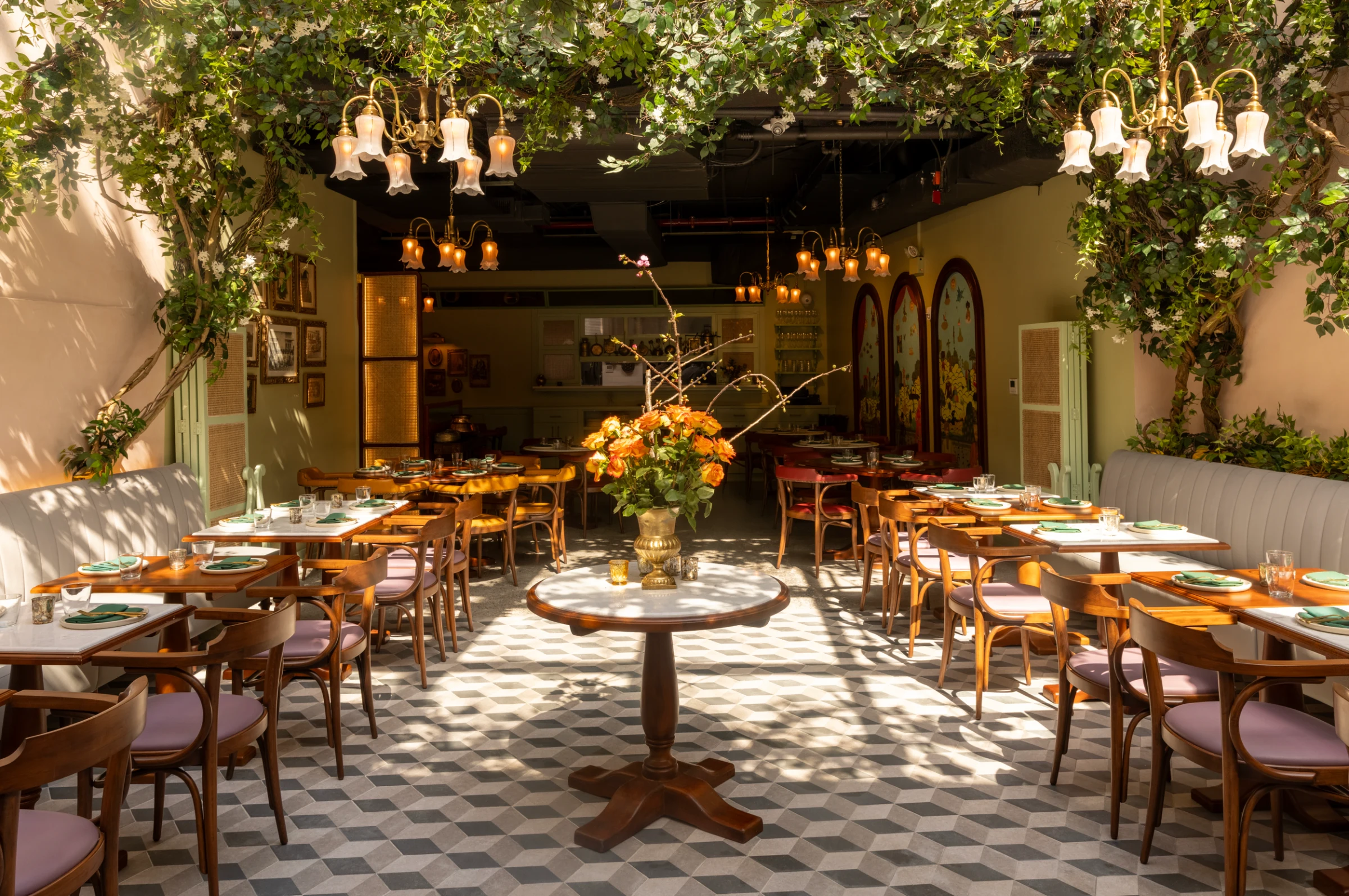
The physical environment at Bungalow establishes the culinary argument before the first dish arrives. Pale pink walls carry the faded elegance associated with colonial-era interiors, while colorful murals animate the space with something less formal. A bar defined by carved wooden panels runs as the architectural centrepiece, its craftsmanship referencing a decorative tradition that predates the postmodern maximalism common in contemporary restaurant design. The dining room operates at a register somewhere between stately and convivial, which is precisely the tension the country club framing requires. It is a room that communicates that the cooking will be confident without being austere.
The Sunday letter
Find new places through the people who run them.
Our Sunday email brings you the chefs, winemakers and hoteliers behind our newest stories. See a sample before you subscribe.
See a sample of the Sunday emailOne email a week. Unsubscribe from any issue.
That physical warmth has practical consequences: the room consistently draws crowds. Diners line up early to secure walk-in spots, and the ambient energy reads as sustained rather than performative. The 2024 Michelin Bib Gourmand, which the guide awards for notable cooking at moderate prices, has only reinforced that demand. At a price range of $$$, Bungalow sits at a more accessible point than the city's trophy Indian addresses.
What the Menu Is Actually Doing
The editorial framing around Indian cuisine in Western cities tends to flatten the subcontinent's regional diversity into a single, homogenised register. The more interesting restaurant programmes push against that flattening by treating India's 28 states as distinct culinary sources with their own ingredient logic, technique, and historical context. That is the framework operating at Bungalow, where the kitchen draws on regional traditions rather than synthesising them into a generic curry-house vocabulary.
The cocktail programme extends this regional thinking into the drinks: turmeric-infused tequila and chili-infused mezcal bring the kitchen's spice logic into the bar format, a move that positions the drinks not as an independent offering but as part of a coherent flavour argument running through the whole experience. Among the dishes that have drawn consistent critical attention, the five-cheese kulcha demonstrates how a familiar Indian bread format can be reworked through technical ambition without losing its essential character. The yogurt kebabs, made by encasing thick tart yogurt in kataifi pastry and serving alongside pickled cabbage puree and mango coulis, are a more precise example of the kitchen's method: a traditional Indian protein format reframed through a contrast of textures and a color range that is deliberate rather than incidental. The Goan shrimp mixture in puff-pastry cones follows a similar logic, using a familiar pastry format as a vehicle for a curry-leaf-inflected filling that signals regional specificity.
Vikas Khanna carries Michelin-starred credentials into this project, and the cooking reflects technical competence rather than relying on nostalgia alone. His presence in the dining room, moving between tables to check spice levels, maintains the country club host register that the space establishes architecturally.
Regional Ethics and Sourcing in Modern Indian Cooking
The sustainability conversation in Indian cooking tends to arrive through a different door than it does in, say, the Nordic or Californian farm-to-table traditions. Indian cuisine has always been deeply seasonal in its logic, driven by agricultural calendars that vary dramatically between states. A menu that genuinely engages with the diversity of India's 28 regional traditions is, by structural necessity, engaging with that seasonal and geographic specificity. Ingredients like curry leaf, tamarind, and regional spice blends have origin geographies that connect directly to small-scale agricultural producers, and programmes that trace those origins honestly are doing something more rigorous than those that simply import a generic spice palette.
The global Indian restaurant scene has seen this kind of regionally specific, sourcing-conscious approach gain traction in recent years. Trèsind Studio in Dubai and Opheem in Birmingham both operate within a framework that treats Indian regional diversity as a sourcing and ethics argument as much as a flavour one. In New York, where Indian dining has historically been less aligned with that conversation, Bungalow's regional specificity positions it closer to that international comparable set than to the city's legacy Indian dining rooms.
Where It Sits in the New York Fine Dining Conversation
Bib Gourmand places Bungalow in a different competitive tier from the city's highest-ceremony rooms. The four-star French establishments and multi-Michelin-starred Japanese counters, venues like those that appear in any serious account of New York's dining upper bracket, occupy a different price and format register. Nationally, ambitious chef-driven projects such as Lazy Bear in San Francisco, Alinea in Chicago, Single Thread Farm in Healdsburg, The French Laundry in Napa, Providence in Los Angeles, and Emeril's in New Orleans each represent the format at a different scale and price point. Bungalow does not compete with them on ceremony. It competes on the strength of its regional Indian argument at a price point where the Bib Gourmand signal carries real weight.
Within New York's Indian dining specifically, Bungalow's East Village address puts it alongside a cluster of newer operators rethinking what the cuisine can do in the city. Ishq and Hyderabadi Zaiqa each approach the regional question from different starting points. The diversity of approaches is evidence that the city's Indian dining is in a productive phase of development rather than a settled one.
Know Before You Go
- Address: 24 1st Ave, New York, NY 10009 (East Village, Manhattan)
- Price range: $$$ (moderate to mid-range; Michelin Bib Gourmand 2024)
- Reservations: Strongly advised; walk-in spots are available but competition is high, with diners lining up early 4 from 2,041 reviews
- Cuisine focus: Contemporary Indian cooking drawing on regional traditions across India's 28 states
- Chef: Vikas Khanna
Questions
Frequently asked
What recognition does Bungalow hold?
Bungalow holds a Michelin Bib Gourmand and a James Beard award.
Who works at Bungalow?
Made By profiles Vikas Khanna (Chef) at Bungalow.
How expensive is Bungalow?
Bungalow is listed at a price level of $$$.
Where is Bungalow and what does it serve?
Bungalow is in East Village, New York City, serving Modern Indian Fine Dining.
The field
How it compares
| Place | Awards | Cuisine | Notes |
|---|---|---|---|
| Bungalow | James Beard | Modern Indian Fine Dining | East Village, $$$ |
| Atomix | Michelin 2 Stars, World's 50 Best | Modern Korean Tasting Menu | New York City |
| Daniel | Michelin 1 Star, World's 50 Best | Modern French Fine Dining | New York City |
| Eleven Madison Park | Michelin 3 Stars, World's 50 Best | Contemporary Plant-Based Fine Dining | New York City |
| Jungsik New York | Michelin 3 Stars, World's 50 Best | Modern Korean Fine Dining | New York City |
| Kabawa | World's 50 Best | Modern Caribbean Prix Fixe | New York City |
| Le Bernardin | Michelin 3 Stars, World's 50 Best | French Seafood Fine Dining | New York City |
In residence
Similar places
Modern Korean Tasting Menu
Atomix
New York City, United States
★★ · 50 Best
Modern French Fine Dining
Daniel
New York City, United States
★ · 50 Best
Contemporary Plant-Based Fine Dining
Eleven Madison Park
New York City, United States
★★★ · 50 Best
Modern Korean Fine Dining
Jungsik New York
New York City, United States
★★★ · 50 Best
Modern Caribbean Prix Fixe
Kabawa
New York City, United States
50 Best
French Seafood Fine Dining
Le Bernardin
New York City, United States
★★★ · 50 Best
The Sunday letter
Get the next Made By story in your inbox.
We send one email every Sunday morning with the places and people we covered that week.
See a sample of the Sunday emailOne email a week. Unsubscribe from any issue.