Made ByWinery

Odilon de Varine, Winemaker at Champagne Gosset in Épernay, works a chalk-cellar style built on tension, lees ageing and restraint.
At a glance
- Price
- $$$
- Per person
- $83
- Neighborhood
- Épernay
A blank page in the cellar
The blend begins again each time, not from a recipe. Odilon de Varine, Winemaker at Champagne Gosset in Épernay, works from that premise inside a house whose name reaches back to 1584. Born in Reims and raised around vineyard work, he came to the bench with the habits Champagne asks for: timing, observation, restraint. He trained at the University of Reims in 1989, then worked as winemaker at his family’s domaine in Burgundy and as Cellar Master at an Alsatian domaine before returning to the cadence of Champagne. The longer public line of his career runs through Champagne Deutz, where he was Cellar Master from 1991-2003, and Champagne Henriot, where he was Technical Director from 2003-2006. At Gosset, he held deputy managing director responsibility from 2006-2016, then became Cellar Master in 2016. The authority matters, but so does the sentence he uses for the work: “One can never make the exact same wine twice: every wine is unique, and winemaking cannot rely on any recipe.” At this house, lineage is not treated as repetition. It is a discipline of beginning again with the fruit in front of him.
Tension kept in the wine
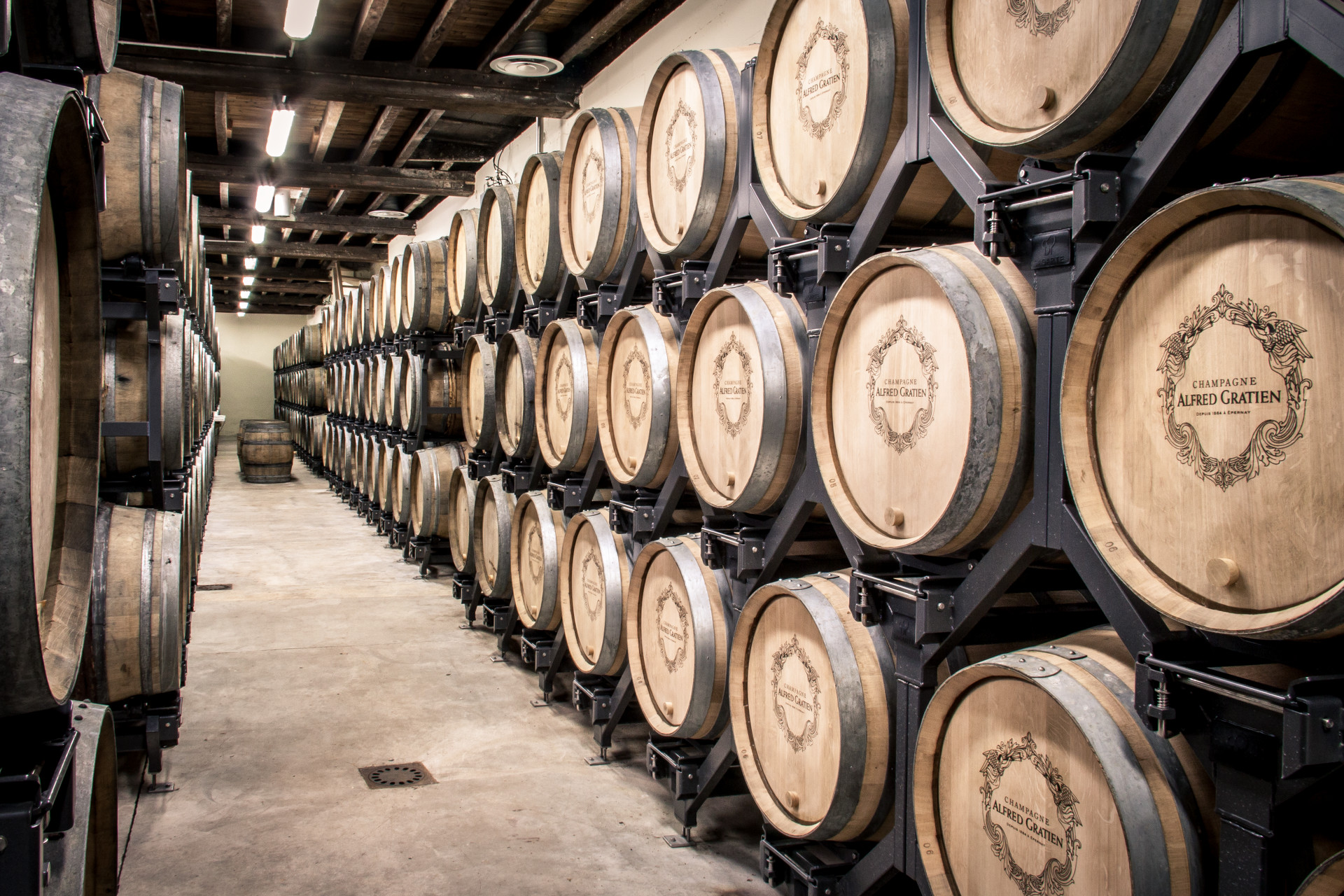
Gosset’s method holds to a firm Champagne grammar: Chardonnay, Pinot Noir and Pinot Meunier, worked for sparkling wine under Champagne AOC, with freshness kept central. The house is known for avoiding malolactic fermentation, preserving malic tension rather than softening it into lactic roundness. That choice asks more of the cellar, because acidity has to be held with judgment, not hidden. The wines then age in the chalk cellars beneath the domaine, a 19th century network extending 1.7 km, where cool darkness steadies the work. Non-vintage wines are aged for 4-5 years, and the house also uses double ageing, first on lees, then in bottle without lees. These are not decorative details. They shape texture, bubble, and the line of the wine across the palate. Gosset Grande Réserve carries that house signature most visibly, with de Varine’s hand set toward vinosity and mineral freshness rather than simple fruit.
The winter garden and the chalk
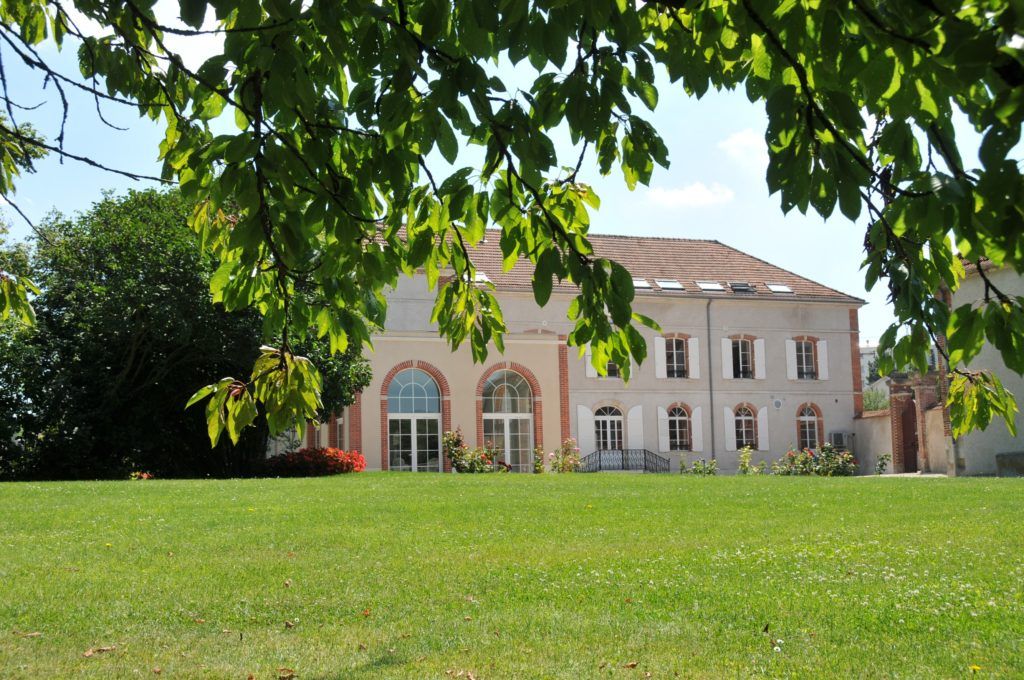
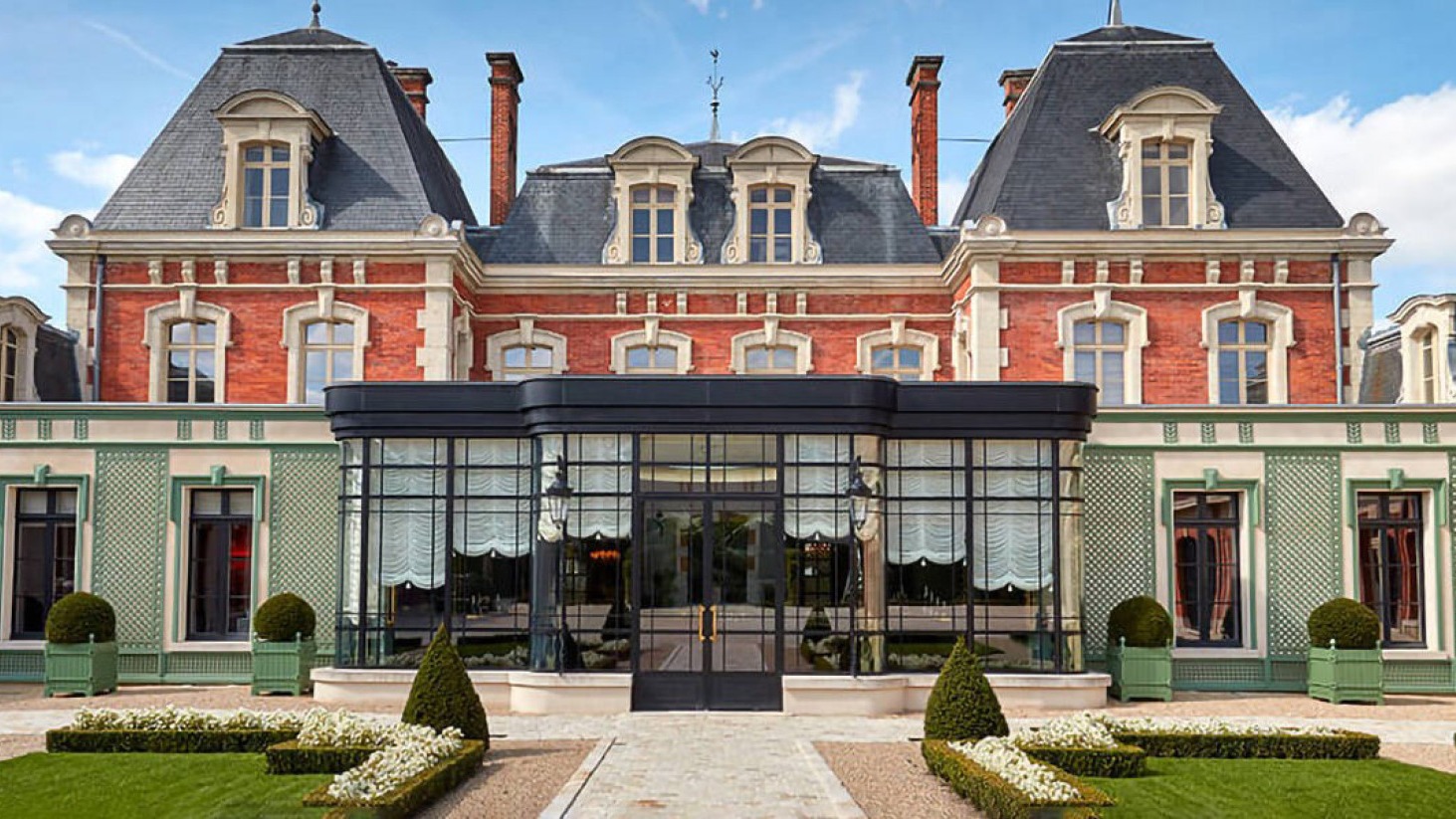
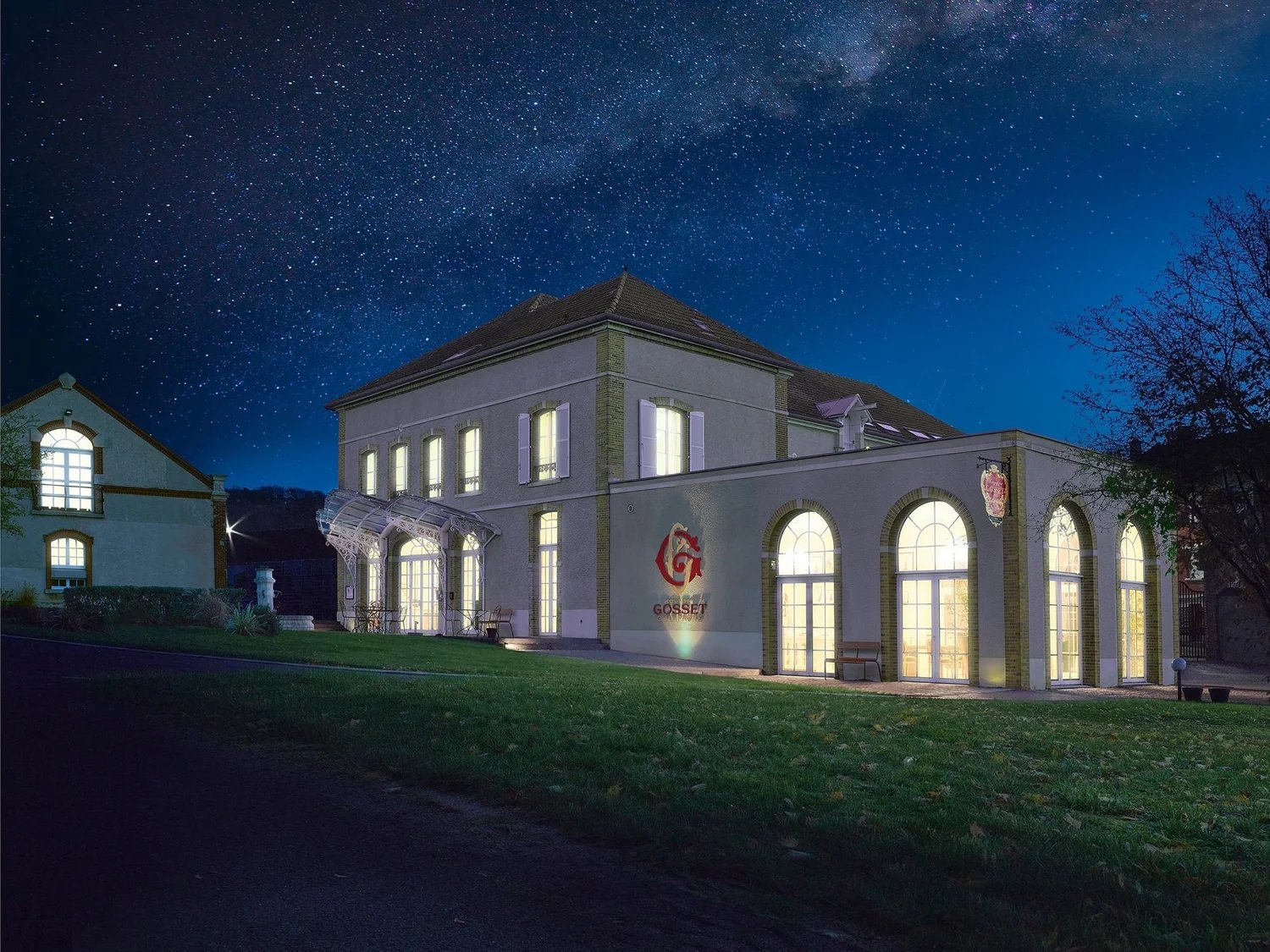
The Épernay domaine gives the cellar a quiet face above ground. Gosset bought the historic 2-hectare estate in 2009 and opened it to visitors in July 2021, placing tastings within a wooded park, a winter garden bar, reception rooms, and a terrace looking over the trees. The room does not need to announce itself. The work below it has already done that. Chalk sits under the house, the park carries old greenhouse glass and bee hives, and the Champagne moves between technical tasting, private tasting, and masterclass without losing the sense that this remains a working cellar first. In the tasting room, the detail that matters is still the same one de Varine names: each cuvée begins from the season, not from a fixed formula.
Old house, current hand
Gosset’s age can flatten into a date if it is left alone, so the useful substance is what the current hand does with it. Pierre Gosset founded the house in 1584 in Aÿ, before Champagne’s sparkling identity became the dominant story, and that older idea of wine still matters here: grape variety, terroir, acidity, ageing. De Varine’s own phrasing stays close to that scale. “My winemaking philosophy is quite basic and humble; there is no pre-set recipe, and one must start from a blank page again, every time.” The close of the work is not abstraction, but a bottle made for the table, and de Varine has said as much: “Wine is made to be shared.” At Gosset, that thought lands in Gosset Grande Réserve.
Know before you go
- Reservations
- recommended
- Parking
- street
- Payment
- cash, credit_card
- Outdoor seating
- Yes
- Groups
- Welcomed
Address
Epernay, Grand Est, Frankreich
Épernay