Made ByWinery

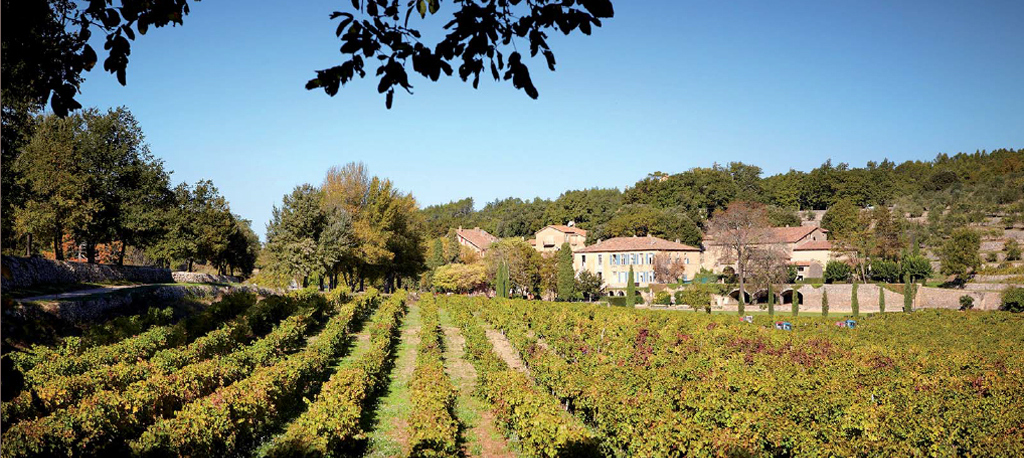
Château Miraval sits in the limestone hills above Correns, Provence's first certified organic village, and has been producing wine since 1970. Under winemaker Marc Perrin, it holds a Pearl 2 Star Prestige rating for 2025. The estate occupies a different tier from Provence's high-volume rosé producers, with output shaped by elevation, calcareous soils, and a production philosophy oriented toward restraint.
At a glance
- Price
- $$$$
- Neighborhood
- Correns
<h2>Where Provençal Terroir Sets the Terms</h2><p>The Var department's interior plateau operates at a different register from the coastal Provence that fills supermarket shelves. Villages like Correns sit higher, cooler, and further from tourist infrastructure than the Côtes de Provence appellations nearer the Riviera. The limestone and clay soils of this inland arc have a mineral tension that coastal vineyards rarely replicate, and estates that have worked the land here for decades carry geological credibility that newer, brand-driven operations cannot shortcut. Château Miraval, with a first vintage documented in 1970, belongs to that longer arc of Provençal wine history, a history measured in soil amendments and harvest decisions across more than fifty years.</p><p>Correns itself occupies an instructive position in the regional story. Certified as France's first fully organic village, it sets a baseline expectation for agricultural practice that filters through to the estates operating within its boundaries. For wine, that certification translates into a specific pressure on viticulture: no systemic pesticides, no synthetic herbicides, and a consequent reliance on soil health and biodiversity to carry the vines through difficult vintages. Inland Var is not always forgiving. The garrigue scrubland that surrounds the vineyards moderates temperature and contributes to the aromatic register of wines made here, but it also signals terrain that demands careful canopy management and yield discipline.</p><h2>What Marc Perrin's Involvement Signals About the Wine</h2><p>In French wine, winemaker lineage functions as a credentialing system. The Perrin family's base is Château de Beaucastel in Châteauneuf-du-Pape, a property associated with long-aging, Grenache-dominant blends and a generational commitment to biodynamic farming. When Marc Perrin took the winemaking lead at Miraval, that background imported a specific technical vocabulary into the Var: respect for native yeasts, attention to oxygen management during élevage, and a preference for wines that develop rather than peak immediately on release. These are not universal values in Provençal rosé production, where industrial throughput and fresh-fruit accessibility dominate the commercial mainstream.</p><p>The contrast with that mainstream is worth holding in mind. Much of Provence's volume rosé, produced in large-format négociant operations or coastal cooperatives, is optimised for immediate drinking, light colour, and neutral aromatic profiles that work across wide distribution. The inland estates working with calcareous soils and organic protocols produce wines with more textural grip, longer aromatic development, and a capacity to age that sits outside the dominant regional template. Miraval's Pearl 2 Star Prestige rating for 2025 positions it within the upper tier of that specialist cohort, alongside producers for whom Provence rosé is a serious structural proposition rather than a seasonal commodity. For broader reference across French wine production at this level of ambition, the range runs from Alsatian precision houses like <a href="https://www.enprimeurclub.com/wineries/albert-boxler-niedermorschwihr-winery">Albert Boxler in Niedermorschwihr</a> to Left Bank châteaux such as <a href="https://www.enprimeurclub.com/wineries/chateau-batailley-pauillac-winery">Château Batailley in Pauillac</a> and <a href="https://www.enprimeurclub.com/wineries/chateau-branaire-ducru-st-julien">Château Branaire Ducru in St-Julien</a>.</p><h2>The Terroir Argument: Limestone, Elevation, and the Garrigue Effect</h2><p>Provençal wine quality is increasingly understood through the lens of soil type and altitude rather than appellation name alone. The calcareous subsoils of inland Var, chalk, limestone, and clay combinations that drain efficiently while retaining mineral complexity, produce wines with a different structural profile from the sandy coastal soils further south. Elevation brings cooler nights, slower ripening, and higher natural acidity, all of which translate into wines with more definition and aging potential. The garrigue that covers the scrubland between vineyards is not merely picturesque: thyme, rosemary, and wild lavender contribute to a volatile aromatic environment that, through complex soil microbiome interactions, influences the character of grapes grown nearby.</p><p>Grenache and Cinsault, the dominant varieties in Provençal rosé, express these conditions differently depending on how they are harvested and handled. At lower elevations with warmer soils, both varieties produce generous, soft, immediately appealing wines. At higher altitudes with limestone drainage, the same varieties yield tighter structures, more pronounced minerality, and a saline finish that serious wine drinkers associate with top-end rosé production globally. Miraval's position in Correns places it in the latter category. Comparing that orientation to peer estates in the south of France, producers like <a href="https://www.enprimeurclub.com/wineries/chateau-desclans">Château d'Esclans in Courthézon</a> have demonstrated that Provençal rosé can hold its own against fine white Burgundy in terms of structural complexity and cellar-worthiness, a benchmark that changes how the category is evaluated at the higher end.</p><h2>Reading the 2025 Rating in Context</h2><p>A Pearl 2 Star Prestige rating from the guide for 2025 is not a routine designation. Within the the guide framework, Prestige-level ratings reflect wines assessed against international comparable venues, not just within their appellation. For a Provençal estate, achieving that recognition requires standing comparison with precision-focused producers across France and beyond. It also implies a consistency of quality that a single outstanding vintage cannot establish: the rating reflects accumulated evidence of technical execution, terroir expression, and stylistic coherence across multiple assessments.</p><p>For context on what that tier of recognition means across different French wine categories, it is worth noting that Bordeaux estates at similar recognition levels, from <a href="https://www.enprimeurclub.com/wineries/chateau-clinet-pomerol">Château Clinet in Pomerol</a> to <a href="https://www.enprimeurclub.com/wineries/chateau-belair-monange-saint-emilion-winery">Château Bélair-Monange in Saint-Emilion</a> and <a href="https://www.enprimeurclub.com/wineries/chateau-cantemerle-haut-medoc">Château Cantemerle in Haut-Médoc</a>, operate within appellations that have centuries of critical scaffolding behind them. Provence, by comparison, is still establishing its critical vocabulary for serious wine. That Miraval occupies a Prestige-level position within a category still building its critical consensus is a more significant marker than the same rating would be in a fully codified appellation. Sauternes estates like <a href="https://www.enprimeurclub.com/wineries/chateau-d-arche-sauternes-winery">Château d'Arche</a> and <a href="https://www.enprimeurclub.com/wineries/chateau-bastor-lamontagne">Château Bastor-Lamontagne in Preignac</a>, along with <a href="https://www.enprimeurclub.com/wineries/chateau-boyd-cantenac-cantenac-winery">Château Boyd-Cantenac in Cantenac</a> and <a href="https://www.enprimeurclub.com/wineries/chateau-dauzac-labarde-winery">Château Dauzac in Labarde</a>, share the same the guide evaluation framework, which makes cross-category comparison possible even where stylistic overlap is minimal.</p><h2>Planning a Visit to Correns and the Var Interior</h2><p>The village of Correns sits inland from the coast between Toulon and Draguignan. Visitors to the estate should expect an agricultural working environment rather than a structured visitor experience: the Var interior operates differently from the polished château tourism infrastructure of the Médoc or Champagne. The address, Miraval, 83570 Correns, places the property within the village boundary, but the access road and specific arrival logistics are best confirmed in advance directly with the estate. The most reliable approach is to contact Miraval through official channels before planning travel specifically around a visit. Correns itself is worth the detour regardless: as France's first organic-certified village, it carries a coherent agricultural identity that extends beyond wine to olive oil, honey, and local produce. Those interested in comparing distilled spirits produced with similar terroir-focused methodology might also find <a href="https://www.enprimeurclub.com/wineries/chartreuse-voiron-winery">Chartreuse in Voiron</a> and <a href="https://www.enprimeurclub.com/wineries/aberlour-aberlour-winery">Aberlour in Aberlour</a> instructive points of reference for how place shapes production philosophy in French artisan contexts, and <a href="https://www.enprimeurclub.com/wineries/accendo-cellars">Accendo Cellars in St. Helena</a> represents a useful international comparison for estate-scale ambition at the prestige tier.</p>
Know before you go
- Dress code
- smart_casual
- Reservations
- appointment_only
- Parking
- on_site_lot
Frequently asked
Is Château Miraval more low-key or high-energy?
Miraval operates at a deliberate, agricultural pace consistent with the Var interior village of Correns rather than the coastal Provence tourist circuit. The estate's focus is the wine itself, evidenced by its Pearl 2 Star Prestige rating from the guide in 2025, and the environment reflects that priority: production-forward rather than event-driven.
Where is Château Miraval located?
Château Miraval is located at Miraval, 83570 Correns, Correns.
What awards has Château Miraval received?
Château Miraval has received recognition including: Pearl 2 Star Prestige (2025).
What should I taste at Château Miraval?
The wines produced under Marc Perrin's direction are the reason to visit. Perrin's base at Château de Beaucastel in Châteauneuf-du-Pape brings southern Rhône discipline to Miraval's Var terroir, and the estate's Pearl 2 Star Prestige designation from the guide for 2025 signals wines operating above the appellation median. Prioritise whatever the estate is currently releasing directly.
What makes Château Miraval worth visiting?
The combination of winemaker credentials and terroir position is difficult to replicate elsewhere in Provence. Marc Perrin brings Châteauneuf-du-Pape experience to a calcareous inland plateau that consistently outperforms coastal Var in quality potential, and the guide awarded the estate a Pearl 2 Star Prestige rating for 2025. Correns itself is among the few French villages certified entirely organic, which shapes the agricultural context around the estate.
What's the best way to book Château Miraval?
Direct contact with the estate at its Correns address — Miraval, 83570 Correns — is the most reliable approach.
How does Château Miraval's EP Club Pearl 2 Star Prestige rating compare to other Provence wine estates?
Within the the guide framework, a Pearl 2 Star Prestige designation for 2025 places Château Miraval among a small tier of estates whose wines are assessed as exceeding regional benchmark quality. For context, Prestige-level ratings are not awarded on volume or reputation alone, making this a meaningful credential for an interior Var estate in Correns that sits outside the high-profile coastal appellations. Marc Perrin's involvement as winemaker connects the estate directly to the Perrin family's documented track record at Château de Beaucastel.
Address
Miraval, 83570 Correns
Correns · Provence
How it compares
- Cuisine
- Grenache, Cinsault
- Price
- $$$$
- Awards
- 1 recognition
- Notes
- Correns
- Cuisine
- Grenache, Syrah
- Price
- $$$
- Awards
- 1 recognition
- Notes
- Les Arcs-sur-Argens
- Cuisine
- Grenache, Cinsault
- Price
- $$$$
- Awards
- 1 recognition
- Notes
- Taradeau
Domaine de la Vieille Julienne
- Cuisine
- Grenache, Syrah
- Price
- $$$
- Awards
- 1 recognition
- Notes
- Orange
- Cuisine
- Syrah, Marsanne
- Price
- $$$
- Awards
- 1 recognition
- Notes
- Mauves
- Cuisine
- Chardonnay, Aligoté
- Price
- $$$$
- Awards
- 1 recognition
- Notes
- Puligny-Montrachet