Compañia de Vinos Telmo Rodriguez, S.L.
In Residence
Telmo Rodríguez
Winemaker
- 01CityLanciego Alava, Spain

Concrete tanks for village Rioja
- Falstaff Winery - 5 Stars · 2026
Concrete before the barrel
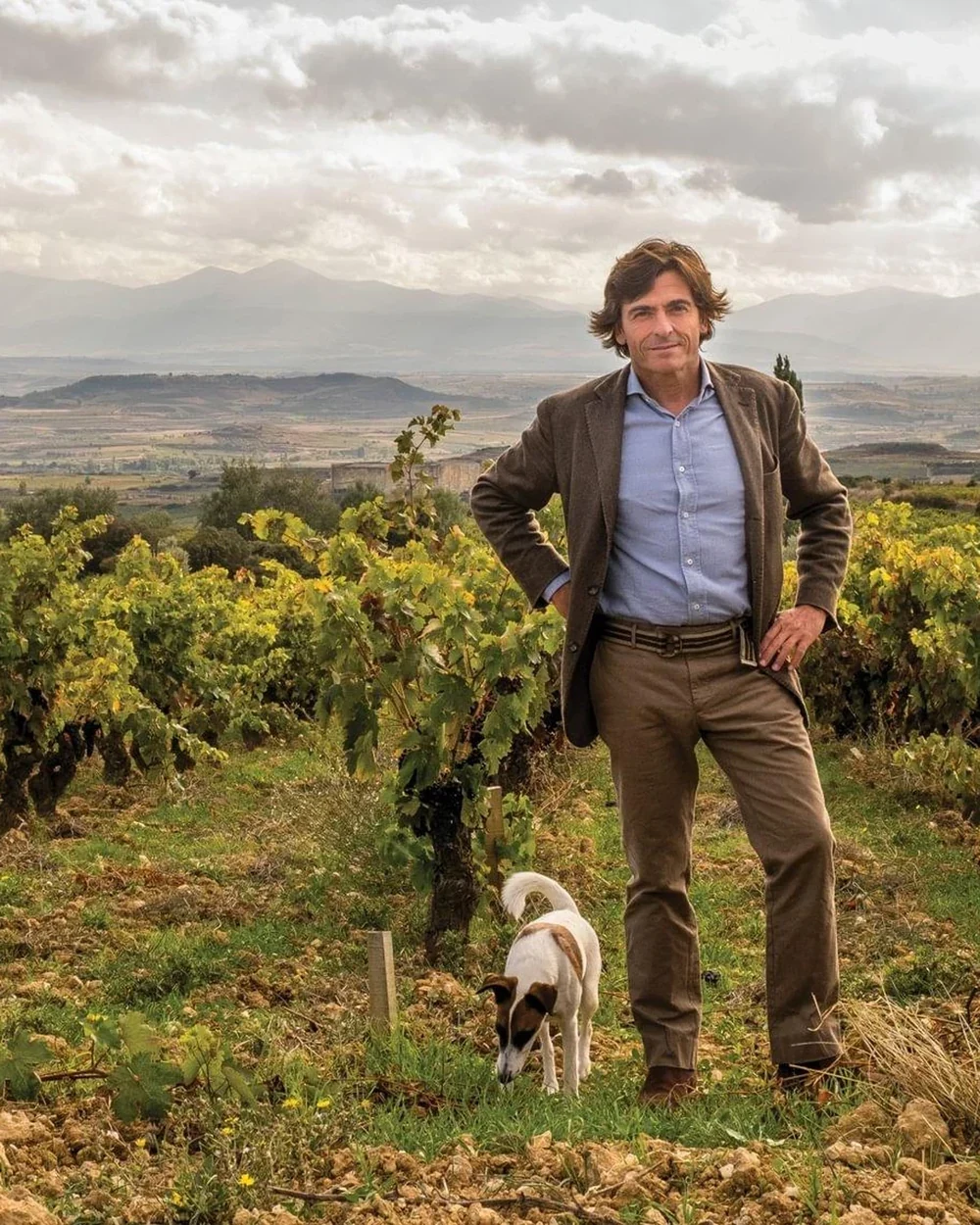
Small concrete tanks take the ferment first for Telmo Rodríguez, winemaker at Compañia de Vinos Telmo Rodríguez, S.L. in Lanciego Alava, Spain. The choice says much about the house: fruit, village and old vineyard before cellar signature. Rodríguez co-founded the company in 1994, making regional recovery the method rather than a side project. From its base outside Lanciego in Rioja Alavesa, the work extends across Spain’s historic wine regions, with attention to parcels and varieties that had slipped from commercial view. His stated ambition reaches backward, not as nostalgia but as discipline: “We dream of making the best Rioja wine of the 18th century.” The line belongs naturally to a project built around inherited taste, local material and wines that keep their differences intact. In 1998, the Bodega Lanzaga project gave that thinking a sharper village form in the north, tying small-production work to the voice of Rioja rather than a generalized regional profile. In 2009, Rodríguez also became co-leader at Remelluri, placing the same argument for tradition and origin inside an established estate context.
Old vineyards across many denominations
The company works as a small to medium Spanish producer, drawing from numerous parcels and old vineyards across multiple denominations of origin. Its varietal range is broad because the map is broad: Tempranillo, Garnacha Tinta, Graciano, Mencía, Verdejo, Godello, Monastrell and Viura all sit within the program. In Rioja Alavesa, the frame narrows to village expression. LZ comes from organic vineyards in the municipality of Lanziego, with vines trained in the traditional vaso system and grapes harvested by hand in boxes. The blend is Tempranillo, Graciano and Garnacha. Fermentation happens in small concrete tanks with indigenous yeasts, then the wine rests for 6-7 months in concrete deposits. Those vessels matter because they do not pull the wine toward a wood profile before the vineyard has spoken. The company’s vineyard holding is about 80 hectares, though the work also reaches beyond owned land into other regions where old vineyards and local varieties still carry recoverable memory.
The cellar follows the village
The place is a working winery rather than a visitor-shaped estate. The quiet is practical: cellar movement, vineyard decisions, distribution, the slow coordination of wines made across more than one Spanish region. Lanciego gives the project its Rioja Alavesa anchor, but the house does not behave like a single-address monument. It operates more like a disciplined map, with each site asked to keep its own accent. The room belongs to production, not performance. Concrete, boxes, bush-trained vines and old parcels do the speaking. Even the name Lanzaga keeps company with local memory, honoring the viticultors of the village from the 1920s. That is the texture here: not polish after the fact, but precedent held close enough to shape Rodríguez’s next tank of LZ.
Questions
Frequently asked
Who is behind Compañia de Vinos Telmo Rodriguez, S.L.?
Telmo Rodríguez co-founded the company in 1994 and is the winemaker behind it.
What is the winery known for?
The winery is known for working with old vineyards, village expression and regional recovery, with small concrete tanks used before barrel influence takes hold.
What kind of wines does the house make?
The company works across several Spanish wine regions and draws on a broad range of varieties, including Tempranillo, Garnacha Tinta, Graciano, Mencía, Verdejo, Godello, Monastrell and Viura.
How does a visit work?
The winery takes visits by appointment only.
The field
How it compares
| Place | Notes | Awards |
|---|---|---|
| Compañia de Vinos Telmo Rodriguez, S.L. | Lanciego / Rioja Alavesa, $$$ | · |
| Champagne Salon | Le Mesnil-sur-Oger | · |
| Château Rieussec | Fargues | · |
| Clos Apalta (Casa Lapostolle) | Santa Cruz | World's 50 Best |
| La Rioja Alta | Haro | · |
| Masi | Sant'Ambrogio di Valpolicella | · |
| Michter's | Louisville | · |