Culler de Pau
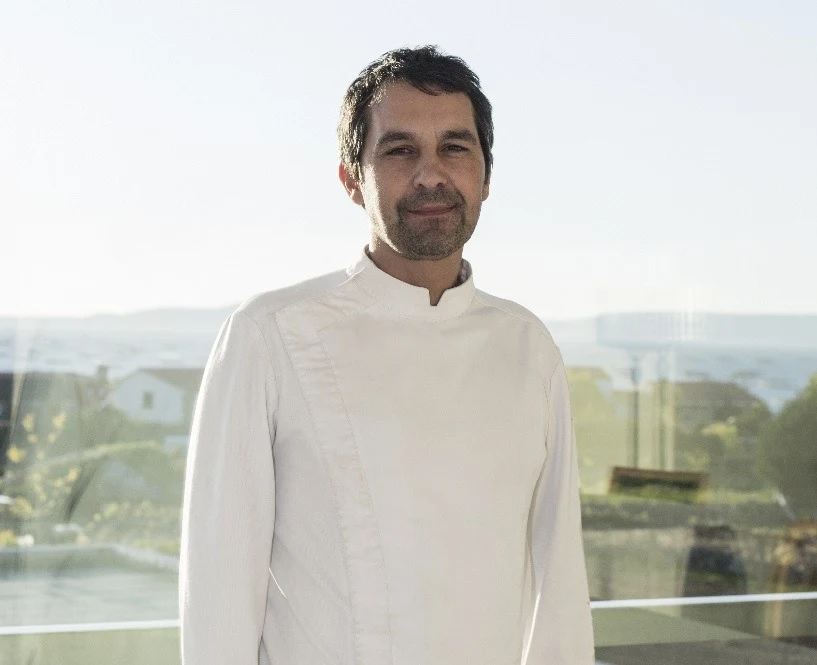
In Residence
Javier Olleros
Chef
- 01CuisineContemporary Galician Fine Dining
- 02CityO Grove, Spain
- 03RecognitionTwo Michelin Stars
- 2 Michelin Stars · Michelin Guide
- Opinionated About Dining Top Restaurants in Europe Ranked #19 · 2026
- Michelin 2 Stars · 2026
- La Liste Top Restaurants: 90pts · 2026
- Guía Repsol 3 Soles · 2026
- Macarfi 9.4 Food Rating · 2026
- The Best Chef Two Knives · 2025
- Michelin 2 Stars · 2025
- La Liste Top Restaurants: 91.5pts · 2025
- Opinionated About Dining Top Restaurants in Europe Ranked #34 · 2025
- Opinionated About Dining Top Restaurants in Europe Ranked #247 · 2024
- Michelin 2 Stars · 2024
- Opinionated About Dining Top New Restaurants in Europe Highly Recommended · 2023
Where Galicia's Atlantic Edge Meets Spain's Creative Cooking Tradition
Spain's avant-garde restaurant movement took root in the Basque Country and Catalonia, cities where industrial infrastructure, culinary schools, and concentrated media attention gave ambitious chefs the conditions to experiment publicly. Venues like Arzak in San Sebastián and El Celler de Can Roca in Girona defined what progressive Spanish cooking could look like when it had access to those networks. What followed, over the past two decades, has been a quiet dispersal of that tradition outward, with chefs applying the same rigour to radically different raw material, in radically different places. The results are often more interesting than what happens in the cities.
Galicia's northwest Atlantic coast is about as far from the San Sebastián school's original infrastructure as you can get within Spain. The O Grove peninsula, a narrow strip of land overlooking the Arousa estuary and its dense shellfish beds, is not a place that announces itself as a fine-dining address. Cornfields, small orchards, and fishing villages characterise the terrain. Yet this is precisely where Culler de Pau, holding two Michelin stars since at least 2024 and ranked 34th in Opinionated About Dining's Europe list for 2025, has established itself as among the more closely watched creative restaurants in the country.
The Setting and What It Signals
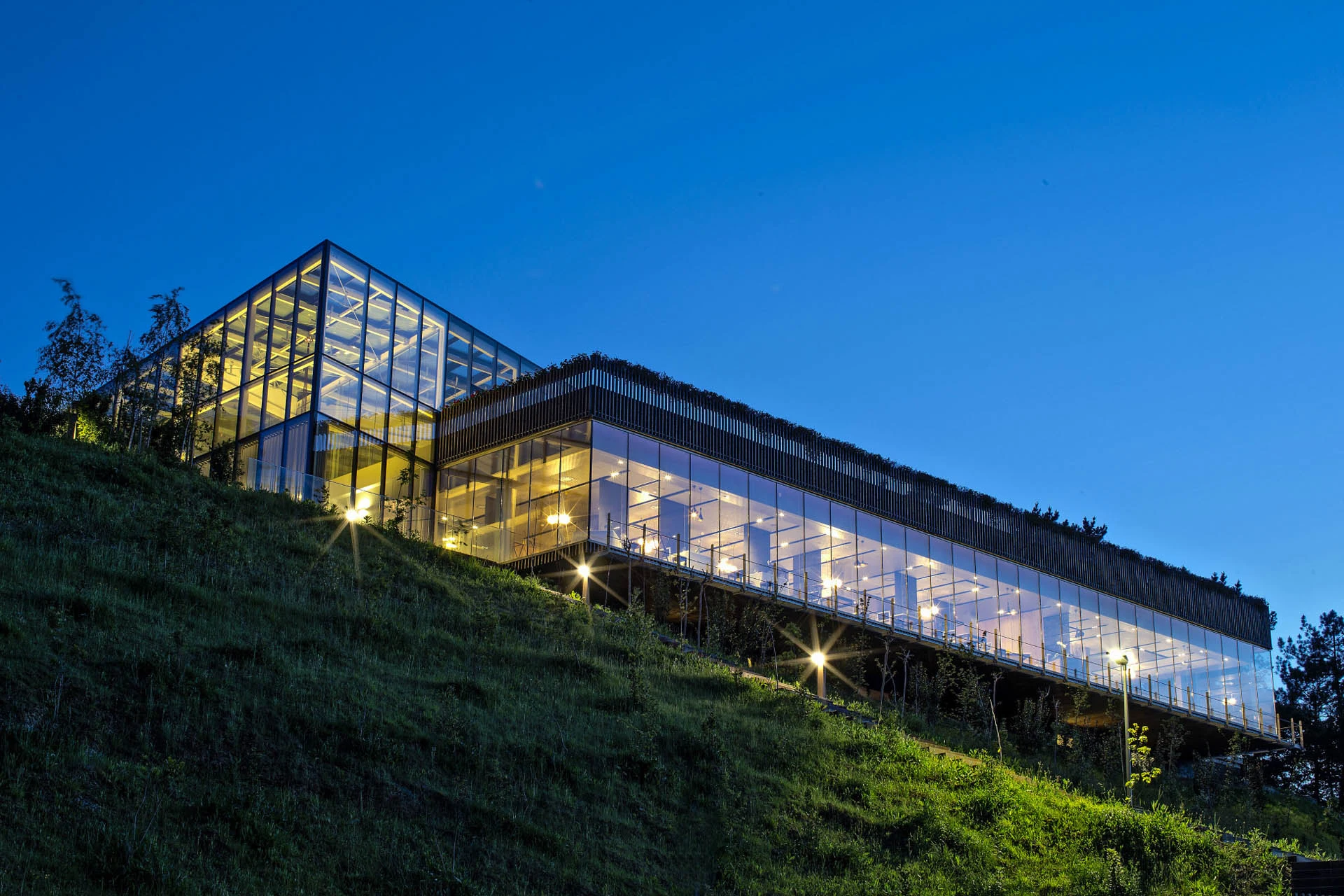
Approaching the restaurant through a valley dense with crops and hedgerows, the physical context does the editorial work that a city address never could. The Arousa estuary, one of Spain's most productive shellfish-growing environments, sits within direct sight. The vegetable garden that supplies the kitchen is on the same property. The relationship between raw material and plate, which so many creative Spanish restaurants perform conceptually, is here a matter of simple geography.
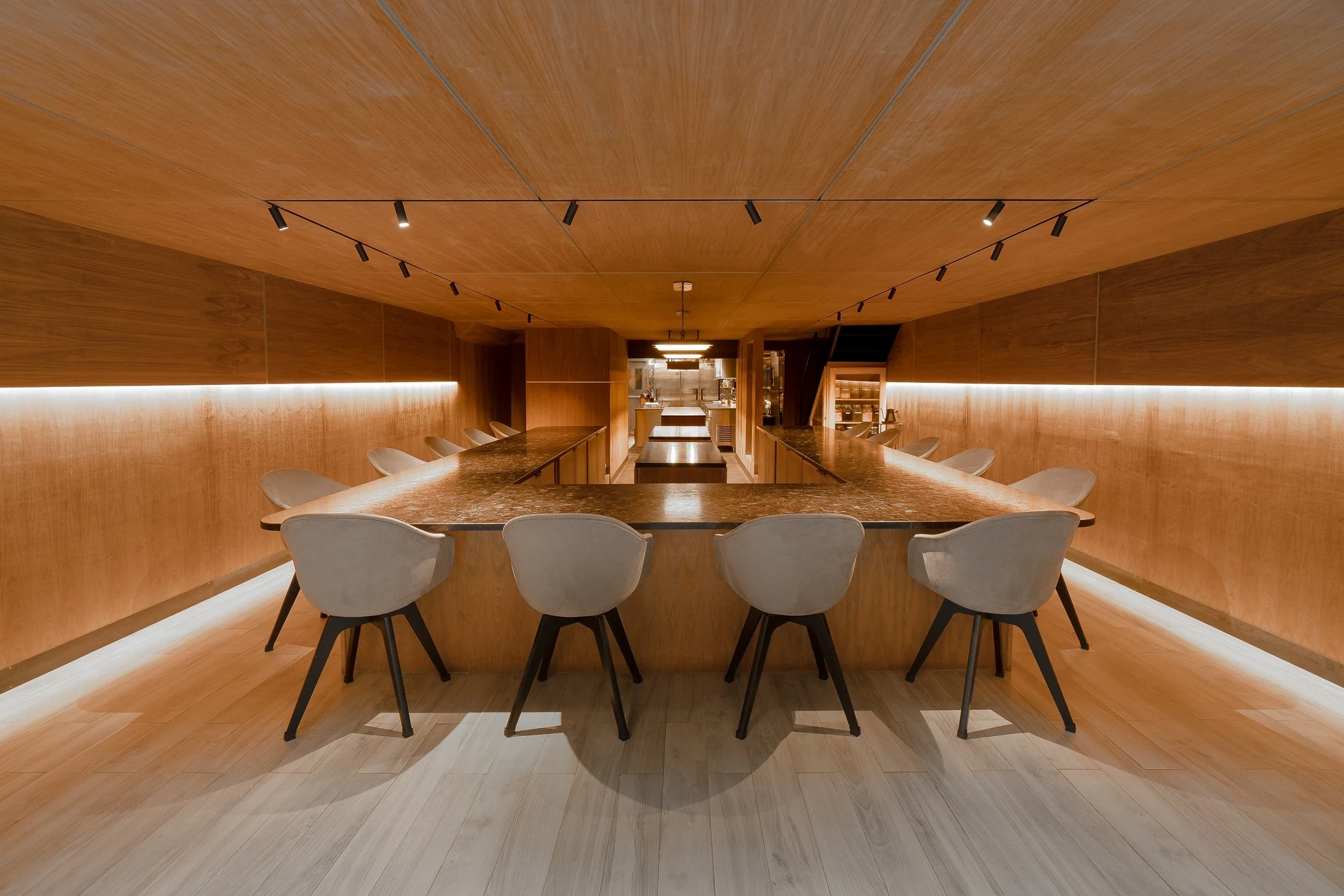
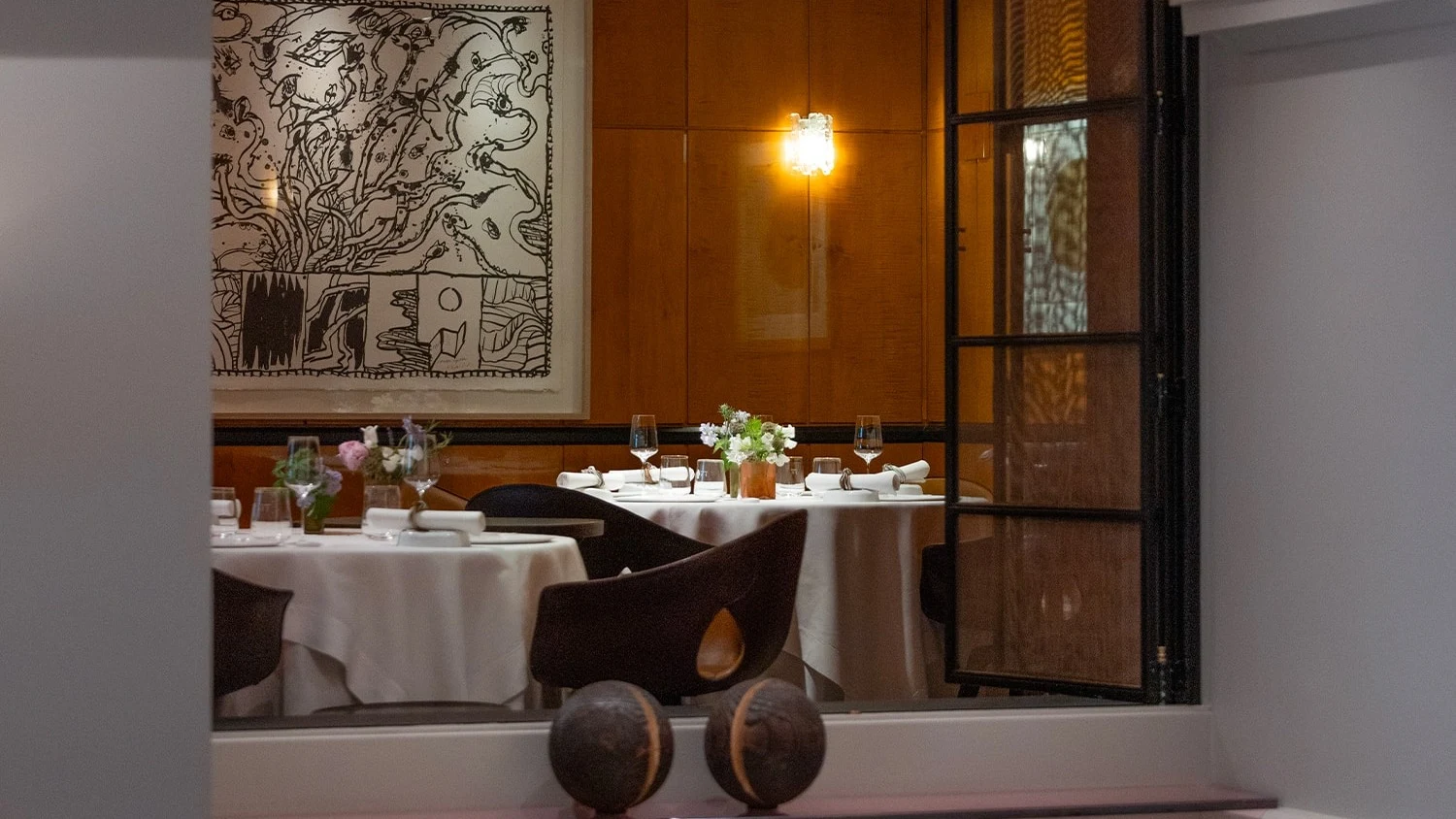
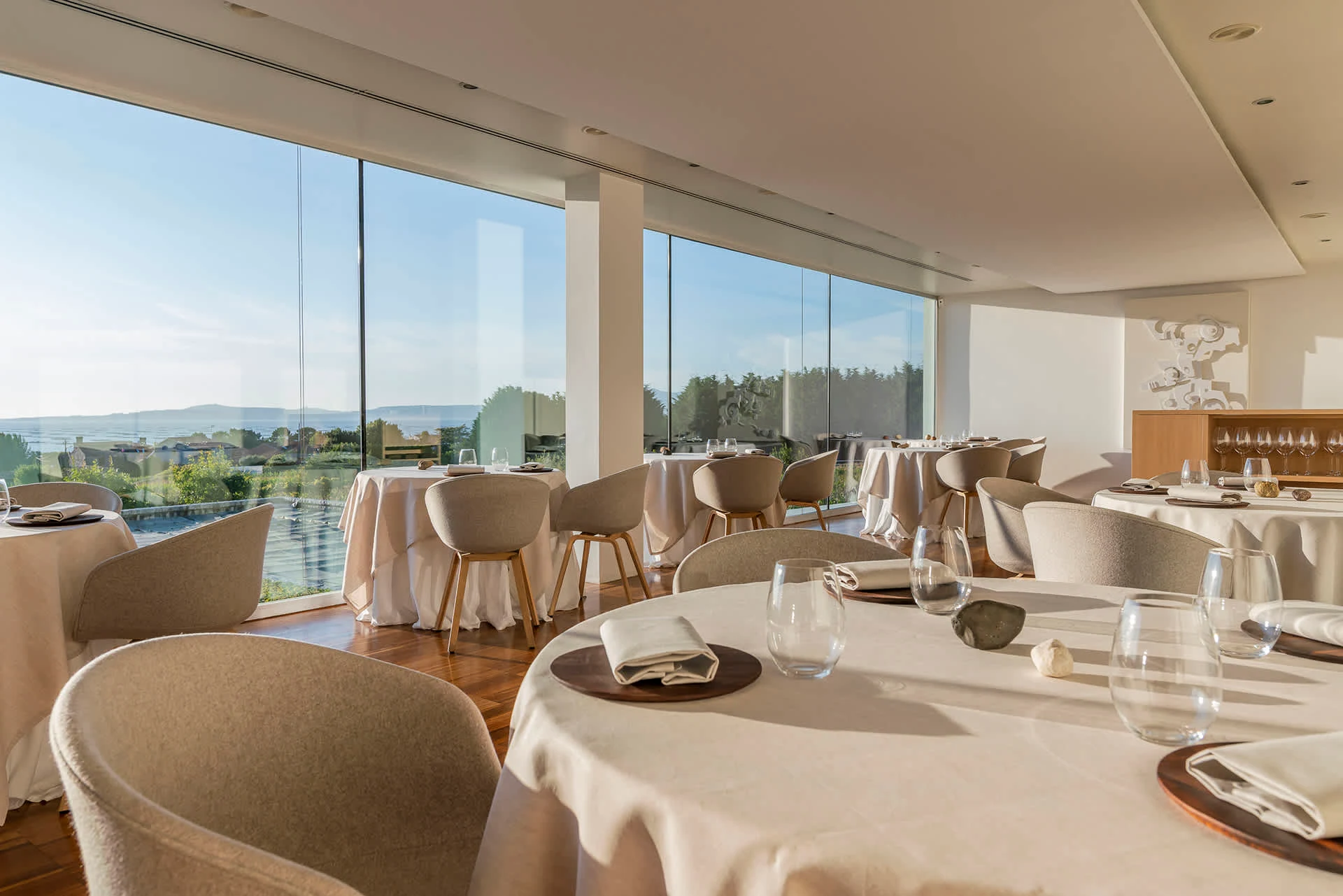
Inside, the dining room takes a minimalist register, with sculptural works punctuating a space that reads as spare rather than cold. The restraint in the room matches the broader logic of the kitchen: nothing is there for spectacle alone. This is a considered distance from the high-production theatrics that define some of Spain's more urban creative addresses, such as DiverXO in Madrid, where sensation and provocation are part of the proposition.
The Kitchen's Position in the Progressive Spanish Canon
The progressive Spanish tradition that emerged from San Sebastián and the Costa Brava in the 1990s was defined by a few shared principles: technical transformation of local ingredients, the application of scientific method to traditional recipes, and a philosophical break with the French-dominated fine-dining hierarchy. Martin Berasategui in Lasarte-Oria and Azurmendi in Larrabetzu extended that tradition while incorporating stronger commitments to local ecology. Culler de Pau sits in that second generation of thinking, though its geographic remove from the Basque axis gives it a different flavour entirely.
Where the Basque and Catalan avant-garde often worked with the full spectrum of Spanish and global ingredient libraries, the kitchen at Culler de Pau operates under a strict proximity constraint. The zero-mile philosophy is not a marketing position here; it is a structural limit that shapes every menu decision. The Arousa estuary's shellfish, the vegetables from the property's own garden, the herbs harvested immediately before service: these form the primary vocabulary. The result is a type of creative cooking that is disciplined rather than maximalist, and that distinguishes it from peers like Quique Dacosta in Dénia or Cocina Hermanos Torres in Barcelona, both of which operate with broader ingredient reach.
The comparison with Aponiente in El Puerto de Santa María is instructive. Ángel León's kitchen applies similar ecological rigour to a different Atlantic coastline, focusing on marine ingredients with near-obsessive depth. Culler de Pau's approach is analogous in its commitment to place, but draws from both sea and land in roughly equal measure, with the kitchen's own garden functioning as a counterweight to the estuary's abundance.
Three Menus, One Argument
The restaurant offers three tasting menus: Ronsel, Marexada, and Descuberta. Each engages the same ingredient logic at different depths, allowing the format to function as a kind of graduated argument about the Galician Atlantic rather than simply a sequence of courses. This is consistent with how the broader progressive Spanish tradition has evolved since the early 2000s, when tasting menus shifted from being primarily technical showcases to becoming more explicitly narrative in structure. The menu at Lasarte in Barcelona and the format at Lab by Sergi Arola in Sintra both reflect this trajectory.
O Grove as a Dining Address
Peninsula's broader food culture is rooted in direct, unadorned seafood: grilled fish, shellfish pulled from the estuary, preparations that treat the ingredient as the point rather than the starting material for transformation. Beiramar represents the direct seafood register at a more accessible price point, while Brasería Sansibar moves into the grill-led mid-range. Meloxeira Praia extends the options further along the peninsula. Culler de Pau operates at a different register entirely, with a price point (€€€€) that places it in the tier of destination restaurants rather than local dining. That gap is the point: it is a restaurant that justifies travel to a place that most international visitors would not otherwise route through.
Wider O Grove area repays exploration beyond the restaurant itself.
Planning a Visit
Culler de Pau operates a compressed service schedule that reflects both the kitchen's philosophy and the realities of a small, family-run operation. Lunch (1:30 to 3:00 pm) runs Thursday through Sunday, with dinner (9:00 to 10:00 pm) on Friday and Saturday only. The restaurant is closed Tuesday and Wednesday, and observes two annual closures: January 30 to March 4, and May 9 to 18. Given the restaurant's awards profile and limited sittings, advance booking is strongly recommended, particularly for weekend dinner slots. The address is Lugar Reboredo, 73, 36980 O Grove, Pontevedra.
Questions
Frequently asked
What recognition does Culler de Pau hold?
Culler de Pau holds 2 Michelin stars.
Who works at Culler de Pau?
Made By profiles Javier Olleros (Chef) at Culler de Pau.
How expensive is Culler de Pau?
Culler de Pau is listed at a price level of $$$$.
Where is Culler de Pau and what does it serve?
Culler de Pau is in O Grove, O Grove, serving Contemporary Galician Fine Dining.
The field
How it compares
| Place | Awards | Cuisine | Notes |
|---|---|---|---|
| Culler de Pau | Michelin 2 Stars | Contemporary Galician Fine Dining | O Grove, $$$$ |
| Atomix | Michelin 2 Stars, World's 50 Best | Modern Korean Tasting Menu | New York City |
| Azurmendi | Michelin 3 Stars, World's 50 Best | Modern Basque Fine Dining | Larrabetzu |
| Jaan by Kirk Westaway | Michelin 2 Stars, World's 50 Best | Modern British Fine Dining | Singapore |
| Paco Roncero | Michelin 2 Stars | Avant-Garde Spanish Fine Dining | Madrid |
| Pierre Gagnaire | Michelin 3 Stars, World's 50 Best | Avant-Garde French Fine Dining | Paris |
| The Modern | Michelin 2 Stars | Contemporary American Fine Dining | New York City |
In residence
Similar places
Modern Korean Tasting Menu
Atomix
New York City, United States
★★ · 50 Best
Modern Basque Fine Dining
Azurmendi
Larrabetzu, Spain
★★★ · 50 Best
Modern British Fine Dining
Jaan by Kirk Westaway
Singapore, Singapore
★★ · 50 Best
Avant-Garde Spanish Fine Dining
Paco Roncero
Madrid, Spain
★★
Avant-Garde French Fine Dining
Pierre Gagnaire
Paris, France
★★★ · 50 Best
Contemporary American Fine Dining
The Modern
New York City, United States
★★