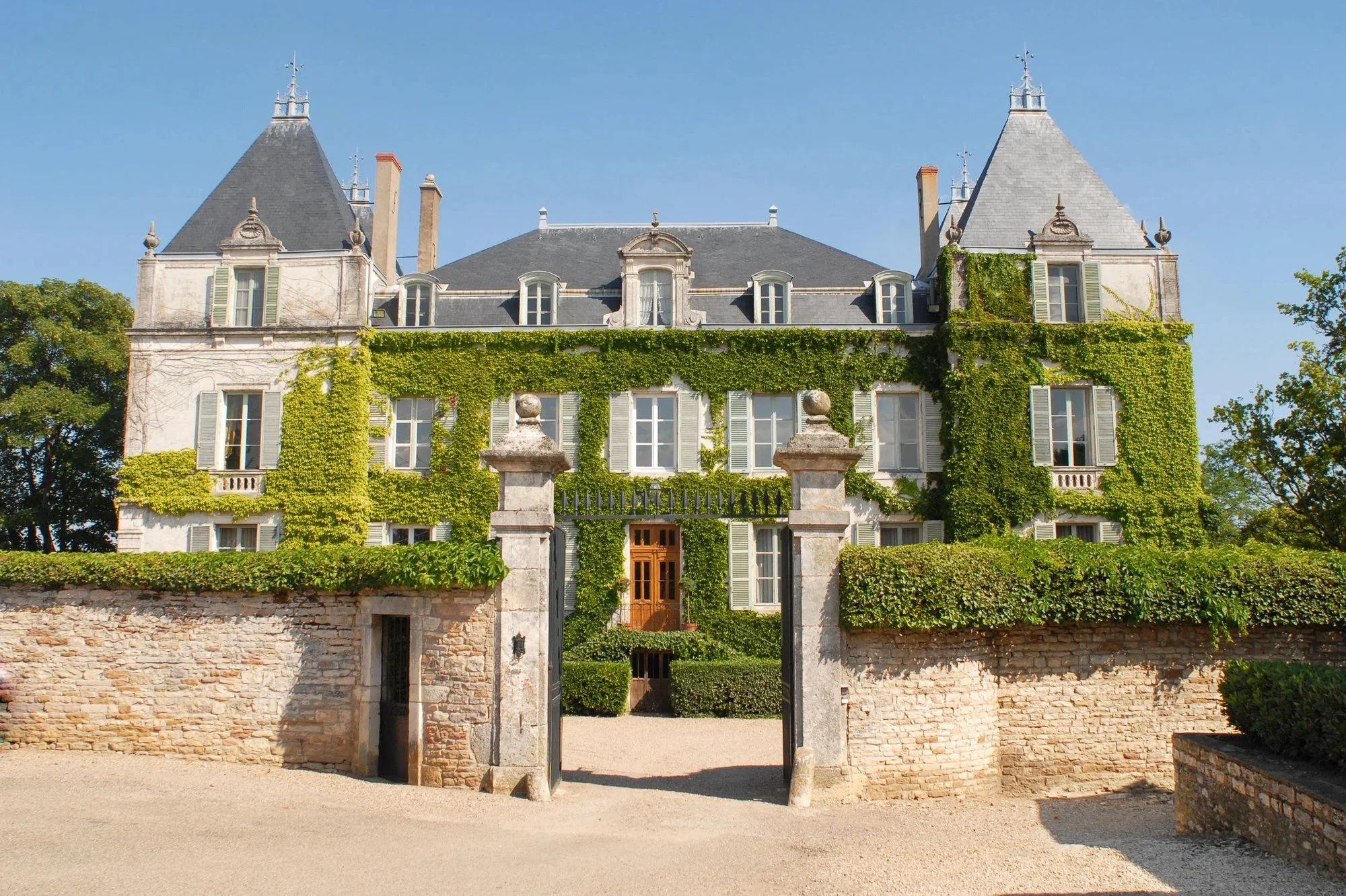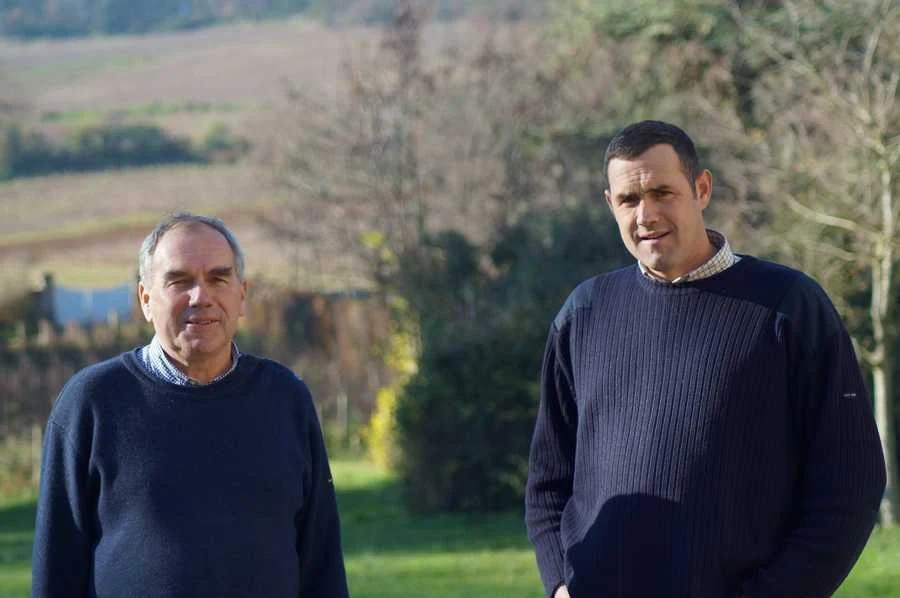
Yves de Suremain, winemaker at Domaine de Suremain in Mercurey, works a seven-generation estate rooted at Château du Bourgneuf.
The fruit comes in by hand, in small crates, before Yves de Suremain, winemaker at Domaine de Suremain in Mercurey, takes it toward the cuve. The work belongs to a family line that has held its Burgundian roots in Mercurey for seven generations, with the domaine formally gathered at Château du Bourgneuf in 1870. Yves took over the whole estate in 1993 after first settling on a small holding in 1979, and the place still reads as a family domain rather than a cellar built around spectacle.
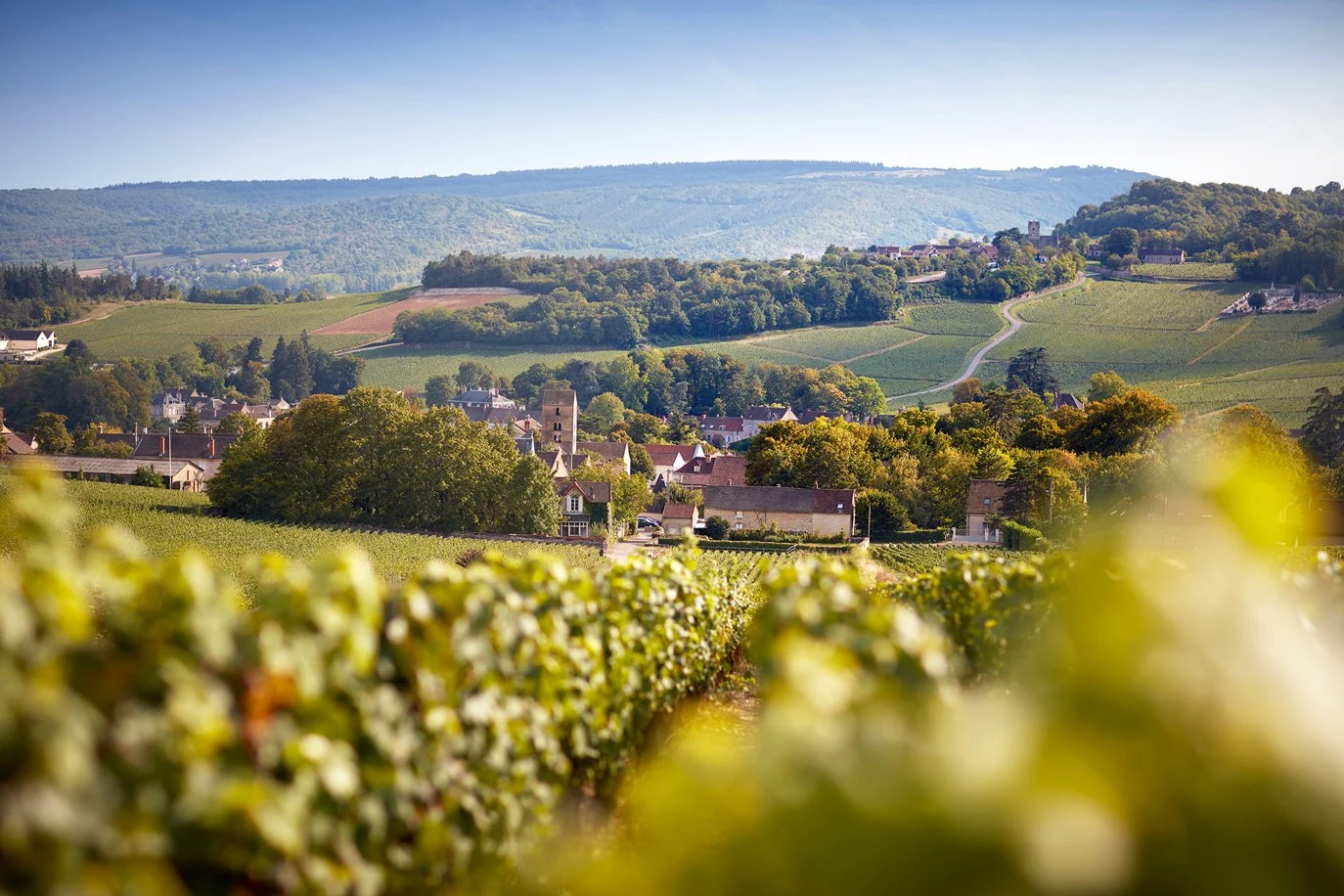
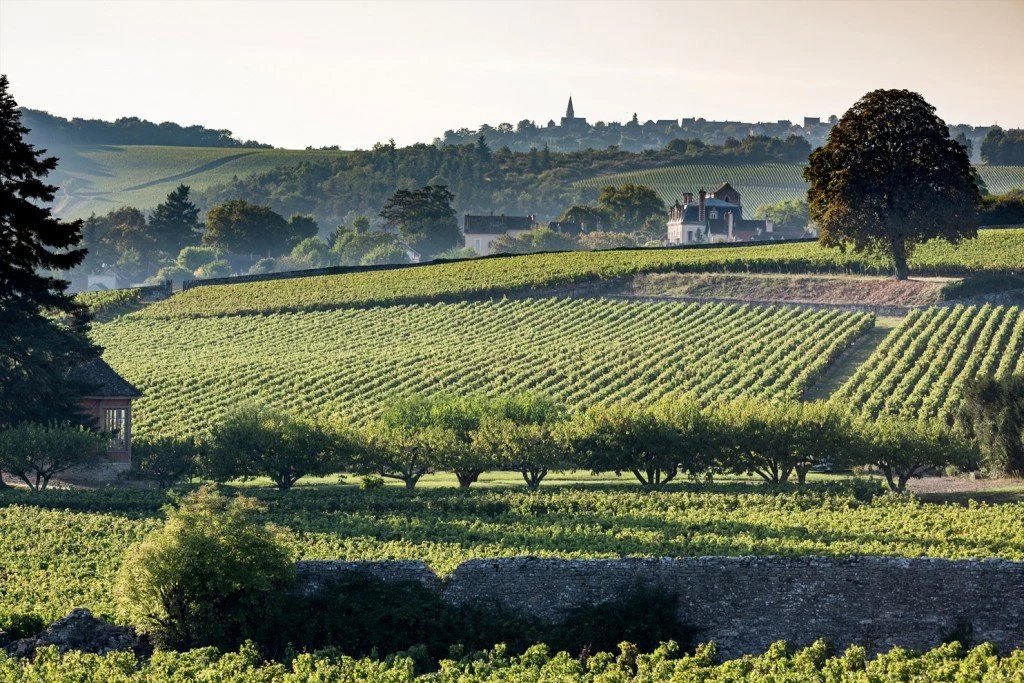
Here the inheritance is practical. The holdings sit around the château and in Mercurey’s red wine country, where Pinot Noir carries the estate’s main argument. The domaine farms 18 hectares, including village and premier cru sites, and it does not buy fruit for the wines. That choice keeps the line between vineyard, cellar, and bottle short. Yves has described the family’s task as moving forward while keeping the “droiture et la noblesse” given by each generation to the domaine and to Mercurey. The sentence has the weight of a house rule, not a caption.
In the cellar, each cru keeps its own course. Fermentation takes place in open oak cuves of 50–100 hectolitres, a scale large enough for a serious Burgundian cellar and still close enough for the hands to matter. Pigeage happens twice daily over a 15-day period, drawing colour, tannin, and structure from Pinot Noir without turning the method into force. The gesture is old, physical, and exacting.
The barrel program stays measured. The wines mature in French oak barriques for 14–18 months, with 10–15% new oak, enough to frame the fruit without asking the wood to speak first. The vineyard differences are kept legible: En Sazenay comes from a 2-hectare premier cru contiguous to the domaine, with clay giving it more structure; Les Crêts comes from 1.3 hectares with more chalk, carrying a finer line. The method is not variety for its own sake. It is separation, patience, and return.
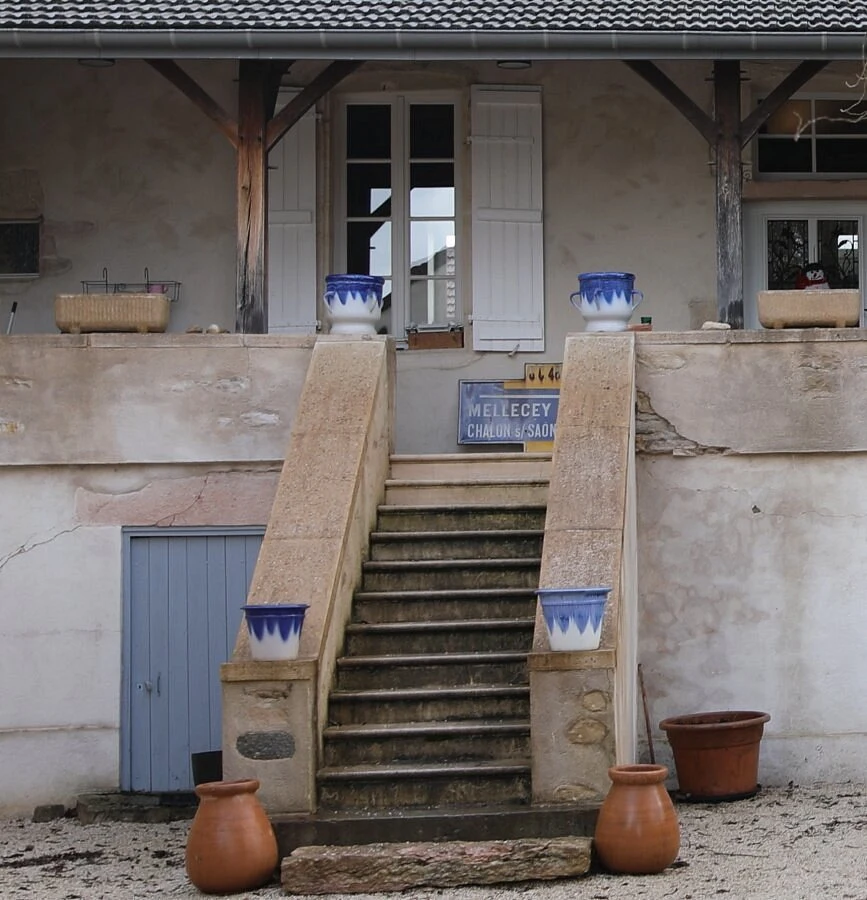
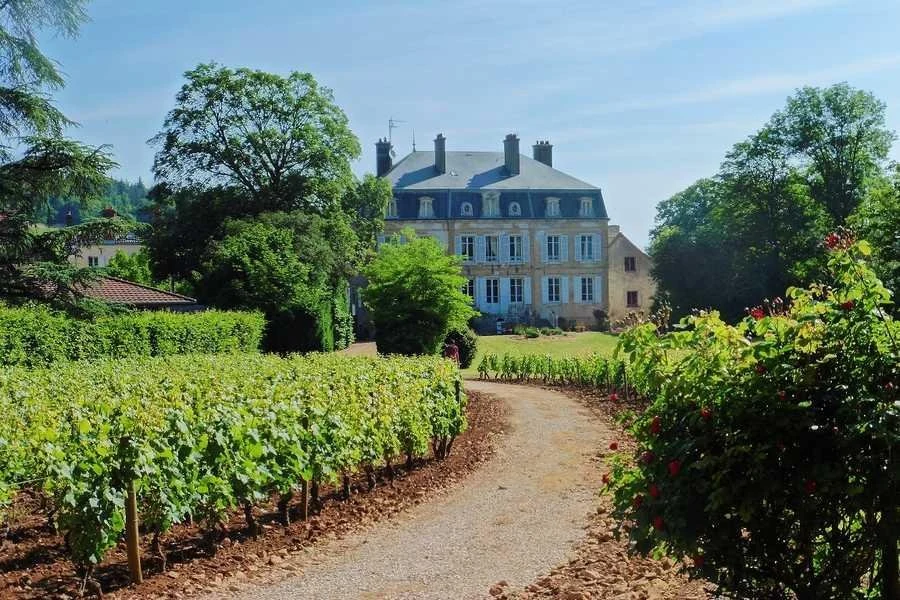
Château du Bourgneuf gives the domaine its center of gravity. The cellar and the vineyard are not abstract pieces of a brand; they sit in relation to one another, with the estate vines close enough to make the place feel held together by daily passage. Mercurey is quiet here, more worked than polished. The tasting room belongs to the same rhythm as the cellar, with the wines carrying the names of slopes and parcels rather than a house vocabulary invented after the fact.
The room’s luxury is continuity. Crates, cuves, barriques, and bottles form the sequence, and the château holds the sequence in view. When the work narrows to a single glass, the place is still present: clay in En Sazenay, chalk in Les Crêts, Pinot Noir from Mercurey.
The family has bottled wine at Château du Bourgneuf since 1947, a decision that kept more of the craft inside the house and closer to the people farming the vines. That matters at a domaine built on contiguous holdings, separate fermentations, and named crus. The next bottle to understand here is not a novelty; it is the next reading of Clos l’Eveque or Les Croichots from Mercurey.
Mercurey, Cote Chalonnaise, Bourgogne-Franche-Comté, Frankreich
Mercurey