- Falstaff Winery - Listed · 2026
Approaching Trausse Minervois, the Minervois reads less like postcard wine country than working southern France: scrubby garrigue, limestone-clay ground, heat held in the stones, and the dark line of the Montagne Noire pulling cooler air into the vineyards. That tension is the point. The stronger case for Domaine Jean‐Baptiste Sénat is not luxury theatre, but the way a small family estate uses this climate edge to argue for a different Minervois: less heavy-handed, more direct, with Grenache, Carignan, Cinsault, Syrah and Mourvèdre treated as regional grammar rather than branding.
Montagne Noire cooling gives Minervois a leaner argument
Minervois has long carried a reputation for generous, sun-fed reds. The appellation’s scale, roughly 3,400 hectares with annual production around 140,000 hectoliters, explains part of that identity: this is not a tiny enclave built around scarcity, but a broad southern zone where climate can easily push wine toward weight. The more interesting producers work against that default without pretending the Mediterranean has disappeared.
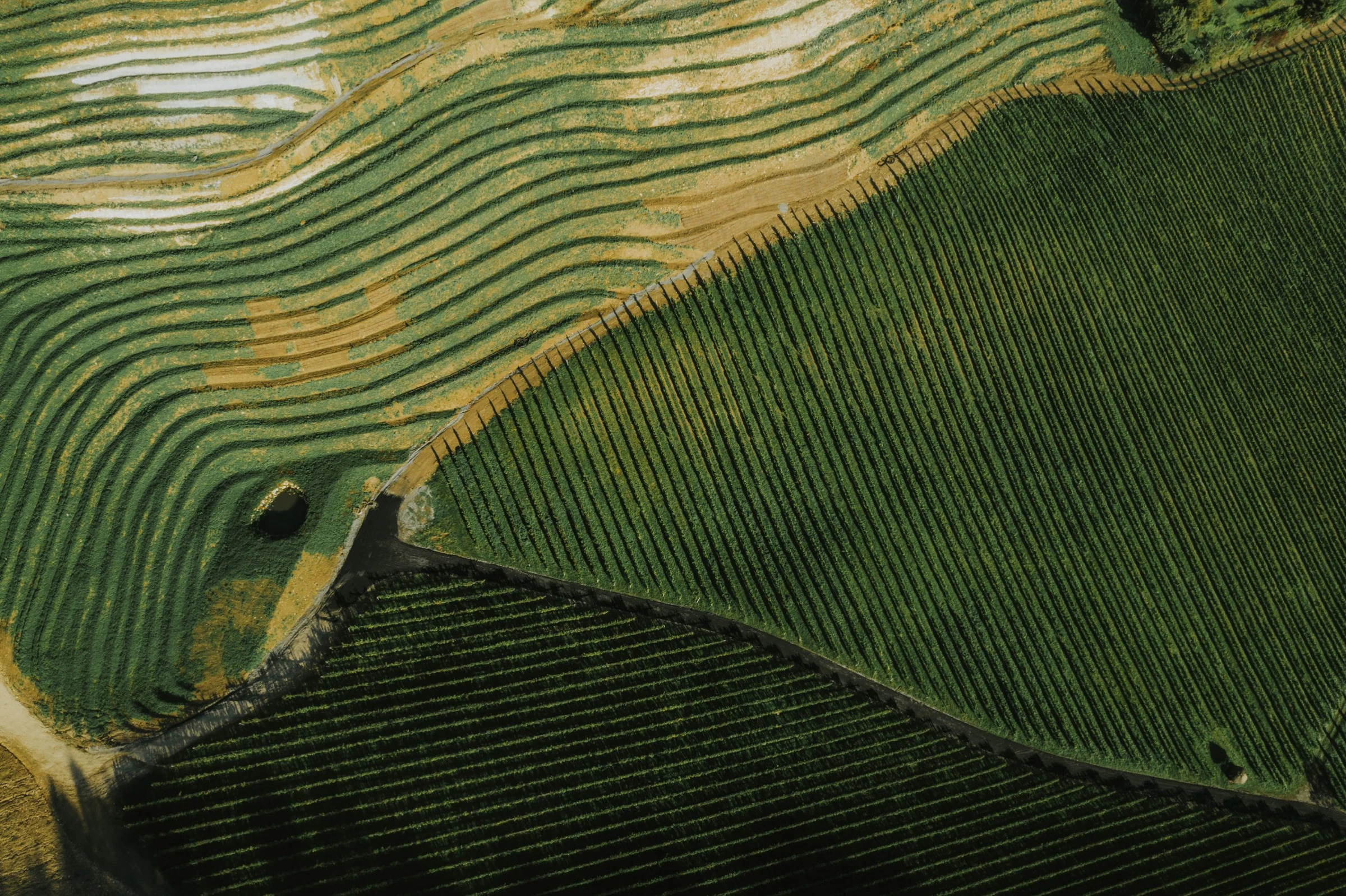
Here, the vineyards sit around the foothills of the Montagne Noire, with parcels spread across different communes rather than treated as a single, uniform block. Two soil registers matter: clay over limestone, and garrigue-influenced sites described locally as lentilles silencieuses de garrigue. The estate’s view that climate can speak louder than soil is useful in this part of France. Cooling influence, hand farming and picking decisions become as important as geological vocabulary.
The farming and cellar choices sharpen that reading. The domaine converted to Ecocert-certified organic farming in 1996, the same year as its first vintage, and later carried AB/Eurofeuille organic certification from 2005. Fruit is estate-grown, harvest is by hand, fermentation is spontaneous with indigenous yeasts, and the wines are made without fining, filtration or added sulfur. Those details matter because natural wine can become a loose aesthetic label; here it is tied to viticulture, grape source and a long-running regional position.
Natural wine without the city-bar costume
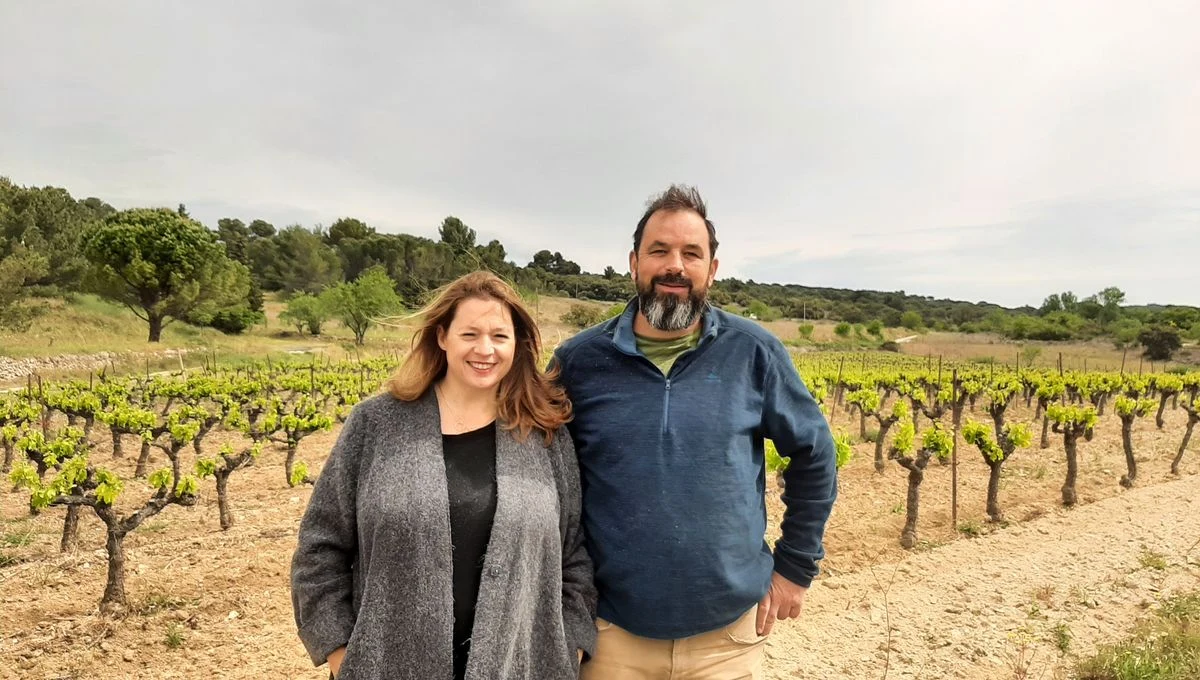
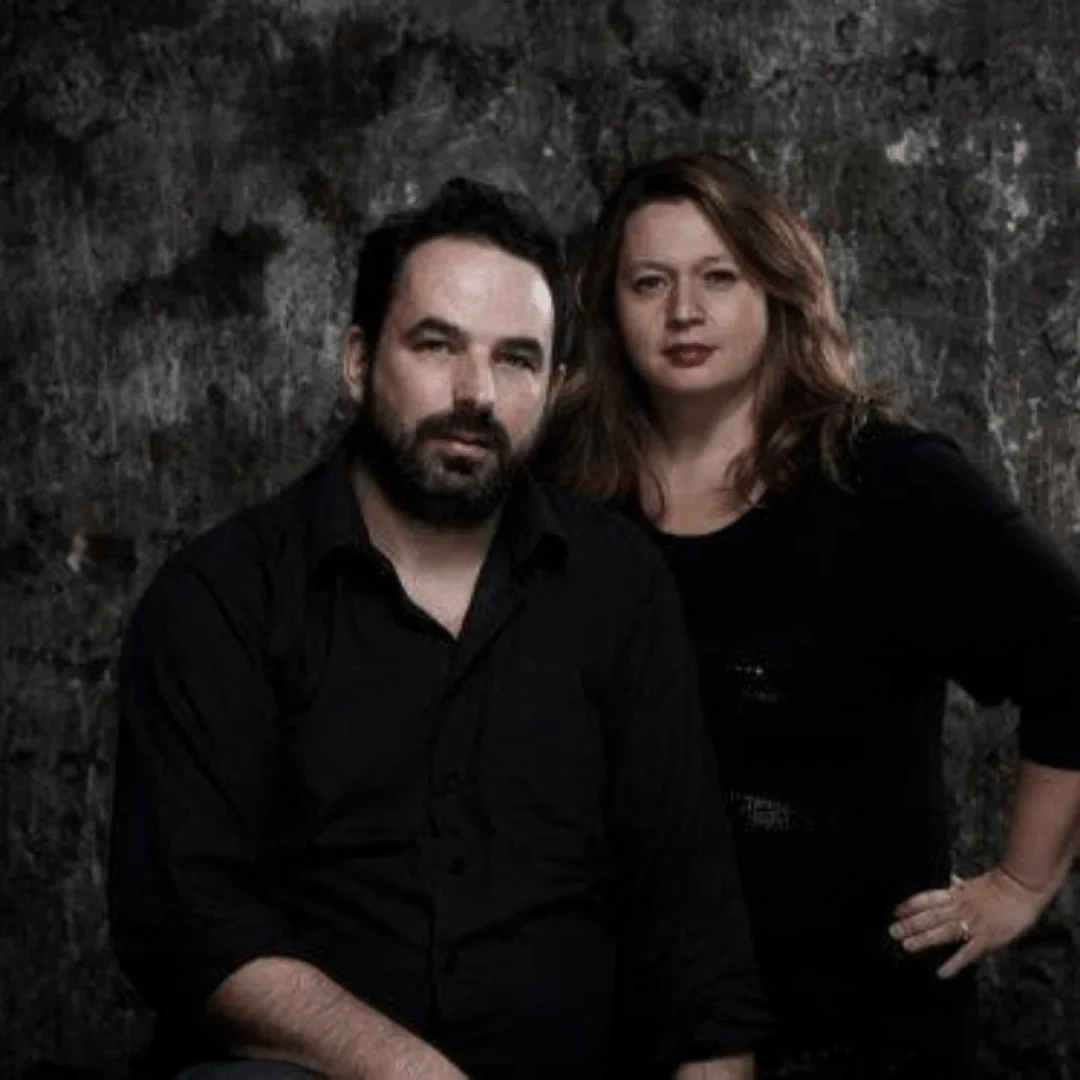
The contemporary natural-wine market often filters rural production through urban taste: cloudy labels, small allocations, and a certain bar-counter shorthand. Domaine Jean‐Baptiste Sénat sits closer to the agricultural source of that movement. Jean-Baptiste and Charlotte Sénat returned to family land in 1995, and the cellar was restructured as the estate moved away from the cooperative model that had shaped earlier generations in the village. The personal history is less interesting as romance than as a regional shift: Minervois growers taking control of farming, vinification and export identity rather than remaining anonymous suppliers.
Production of about 100,000 bottles a year puts the domaine above micro-cuvée obscurity but well below industrial scale. That middle position is often where serious southern French estates become useful to drinkers: there is enough wine to form a house style, but not so much that the work detaches from its parcels. The portfolio includes cuvées such as La Nine, L’enclos de l’ane, Amalgame, Hors Champs, Arbalète, Coquelicots and Le Bois des Merveilles, with Grenache often central and Carignan, Cinsault, Syrah and Mourvèdre contributing structure, lift and regional depth.
The estate’s natural-wine authority also extends beyond its own cellar. Charlotte Sénat organizes Le Vin de Mes Amis in Montpellier at the end of January, a fair that has become part of the wider conversation around low-intervention wine in southern France. That matters as a trust signal: the domaine is not merely adopting a fashionable vocabulary, it is embedded in the community that helped define the category in Languedoc.
How to place it in a Trausse Minervois itinerary
This is a winery to understand through place rather than hospitality spectacle. The draw is the connection between garrigue, limestone-clay soils, older bush vines, native varieties and a cellar regime that avoids cosmetic correction. Visitors building a wine-focused route through the village should treat it as part of a broader Minervois study, then use meals, hotels and local drinking rooms around it to read the area in full.
For wider planning, start with Our full Trausse Minervois wineries guide, then cross-reference Our full Trausse Minervois restaurants guide, Our full Trausse Minervois hotels guide, Our full Trausse Minervois bars guide and Our full Trausse Minervois experiences guide. For a wider French and European cellar map, compare regional approaches through A. Margaine in Villers-Marmery, Abbaye de Fontfroide in Narbonne, Abbotts & Delaunay in Marseillette, Advini in Saint Felix De Lodez, Agrapart & Fils in Avize, Alain Brumont in Castelnau Riviere Basse, Alain Gras in Saint-Romain, Albert Boxler in Niedermorschwihr, »der Steiner« Hans Steiner in Podersdorf am See and & Handwein in Mannheim.
The editorial case is clear: Domaine Jean‐Baptiste Sénat is for drinkers who want Minervois stripped back to farming, climate and grape material. Its price tier sits in accessible-premium territory, but the more meaningful value is interpretive. It shows how a warm southern appellation can produce wines framed by freshness and site without abandoning the region’s native red-grape core.
Questions
Frequently asked
Who works at Domaine Jean‐Baptiste Sénat?
Made By profiles Charlotte Sénat (Winemaker) and Jean-Baptiste Sénat (Winemaker) at Domaine Jean‐Baptiste Sénat.
How expensive is Domaine Jean‐Baptiste Sénat?
Domaine Jean‐Baptiste Sénat is listed at a price level of $$.
The field
How it compares
| Place | Notes | Awards |
|---|---|---|
| Domaine Jean‐Baptiste Sénat | Trausse-Minervois, $$ | · |
| Château La Conseillante | Pomerol | · |
| Chateau Leoville Las Cases | Saint-Julien-Beychevelle | · |
| Familienweingut Tement | Ehrenhausen | World's 50 Best |
| Klein Constantia | Cape Town | World's 50 Best |
| Ruinart | Reims | World's 50 Best |
| Vieux Château Certan | Pomerol | · |