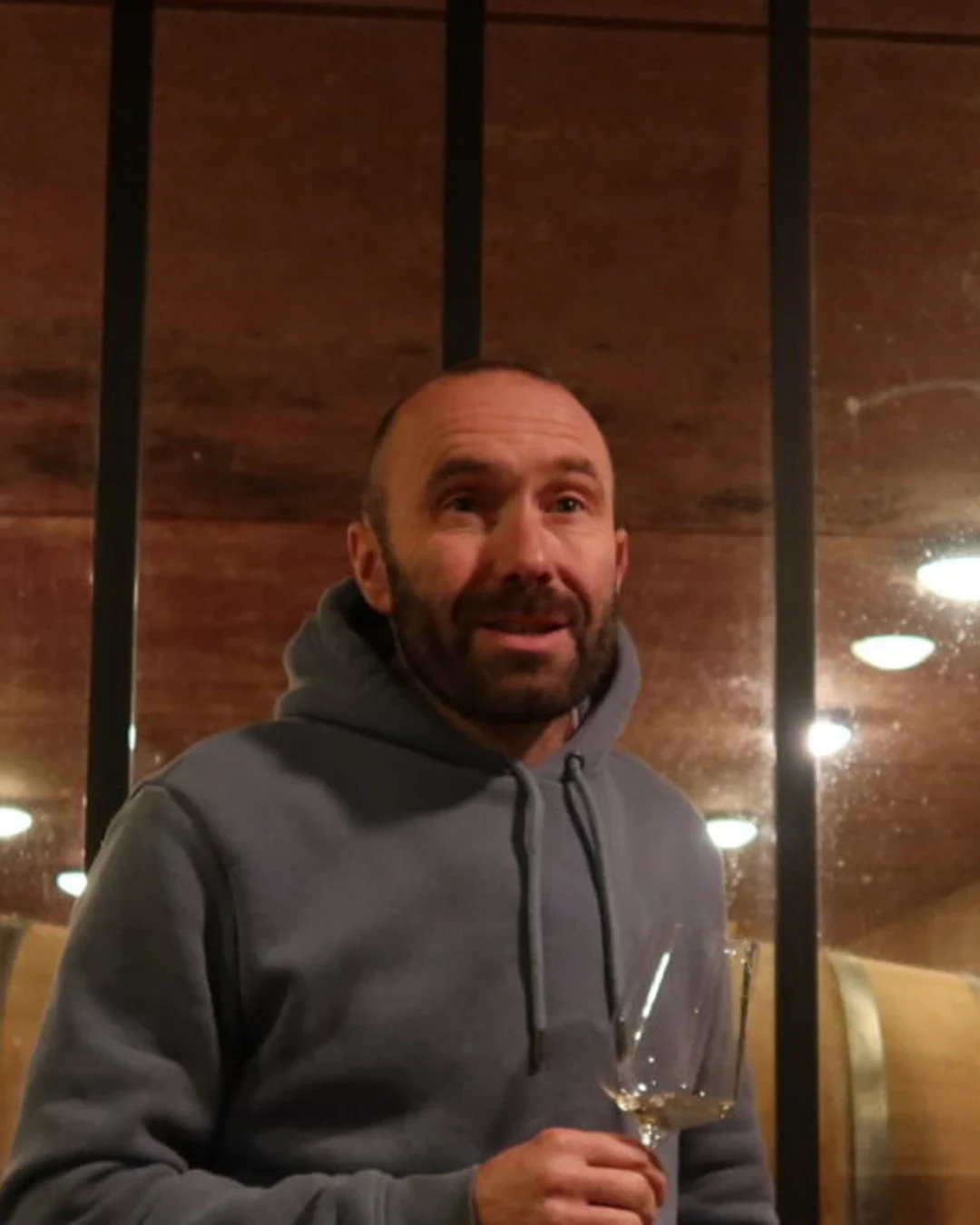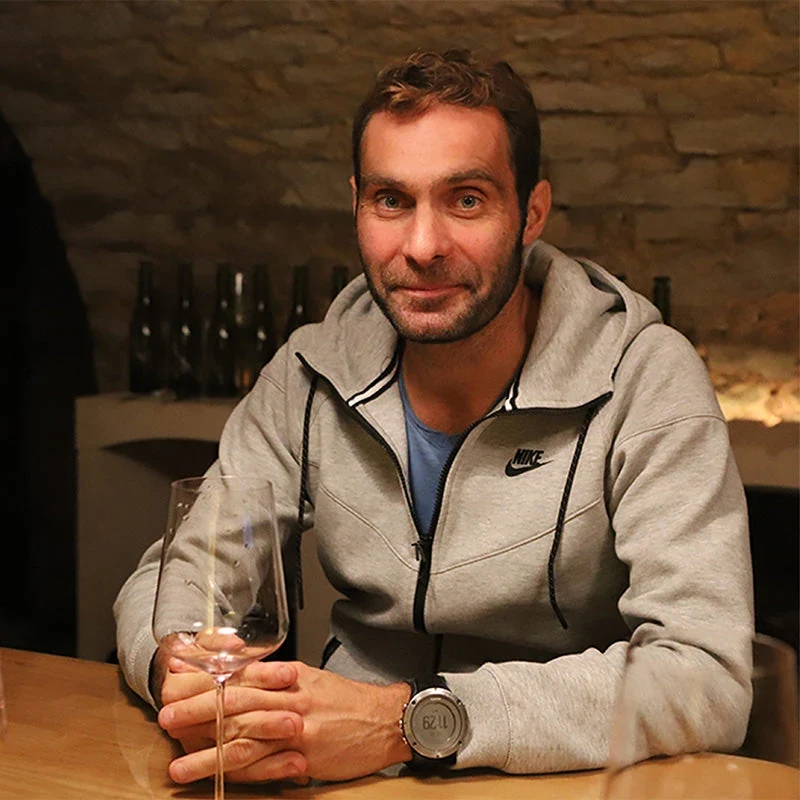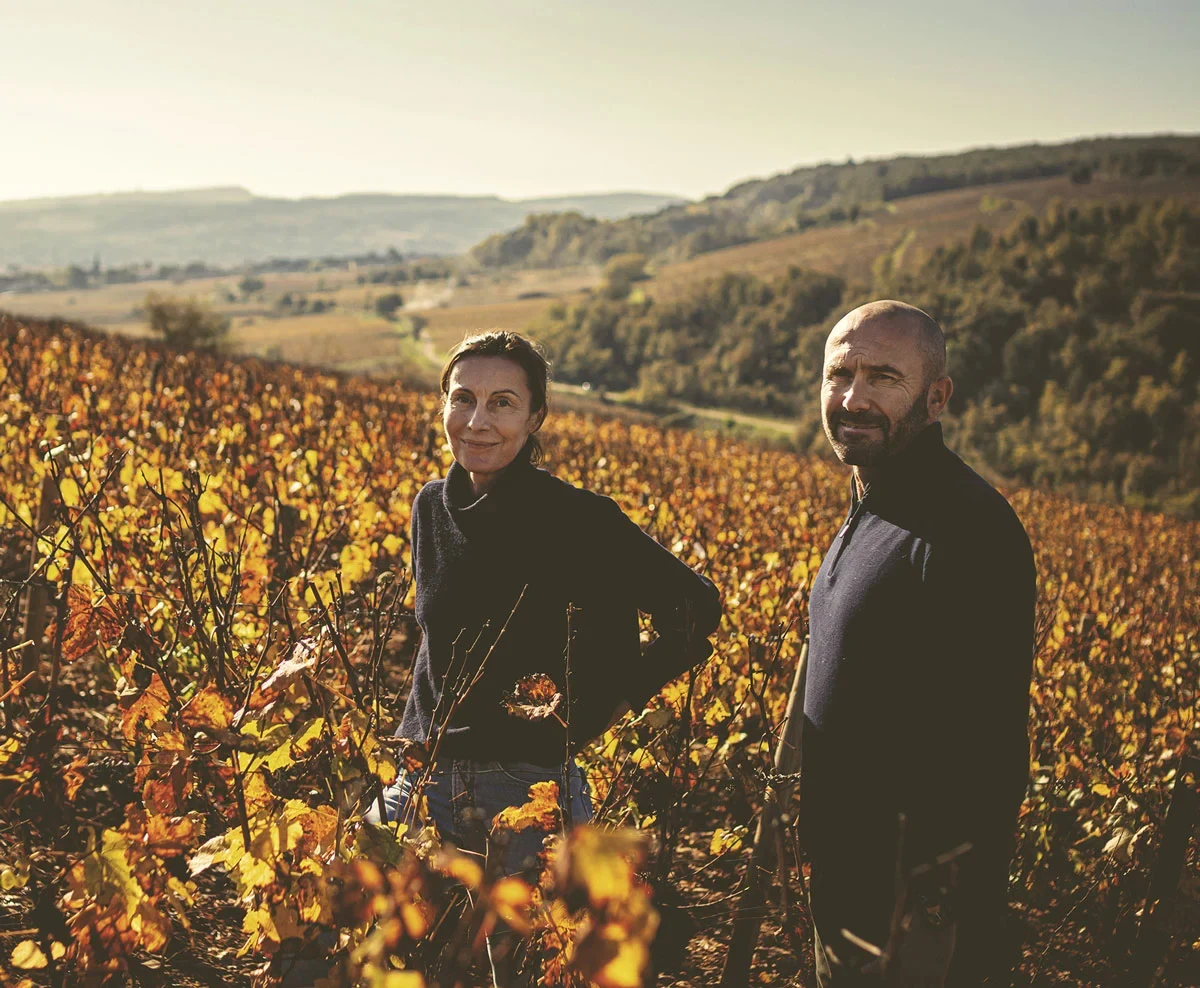
Damien Colin, winemaker at Domaine Marc Colin et Fils in Saint-Aubin, keeps Chardonnay led by freshness, site and restrained oak.
The choice not to chaptalise came before élevage. Damien Colin, winemaker at Domaine Marc Colin et Fils in Saint-Aubin, held the 2024 wines to their natural line after a season of frost and mildew. “I did not chaptalise the wines because I wanted to preserve their freshness,” he said of that vintage. The decision sits cleanly inside the family method: cellar work used to clarify the vineyard, not to enlarge it. The domaine was created in 1970 by Marc Colin and Michèle Colin, beginning with 6 hectares inherited from the Colin and Ponavoy families. Its succession has kept the name close to Saint-Aubin, with Damien overseeing winemaking and aging and Caroline Colin handling the commercial side of the house. Their work belongs to a family estate now farming about 11.5 hectares across Saint-Aubin, Puligny-Montrachet, Chassagne-Montrachet and Santenay. White Burgundy remains the center of gravity. The register is not built on breadth alone, though the portfolio spans 24 appellations. It is built on the discipline of keeping Chardonnay transparent enough for its site to stay legible.
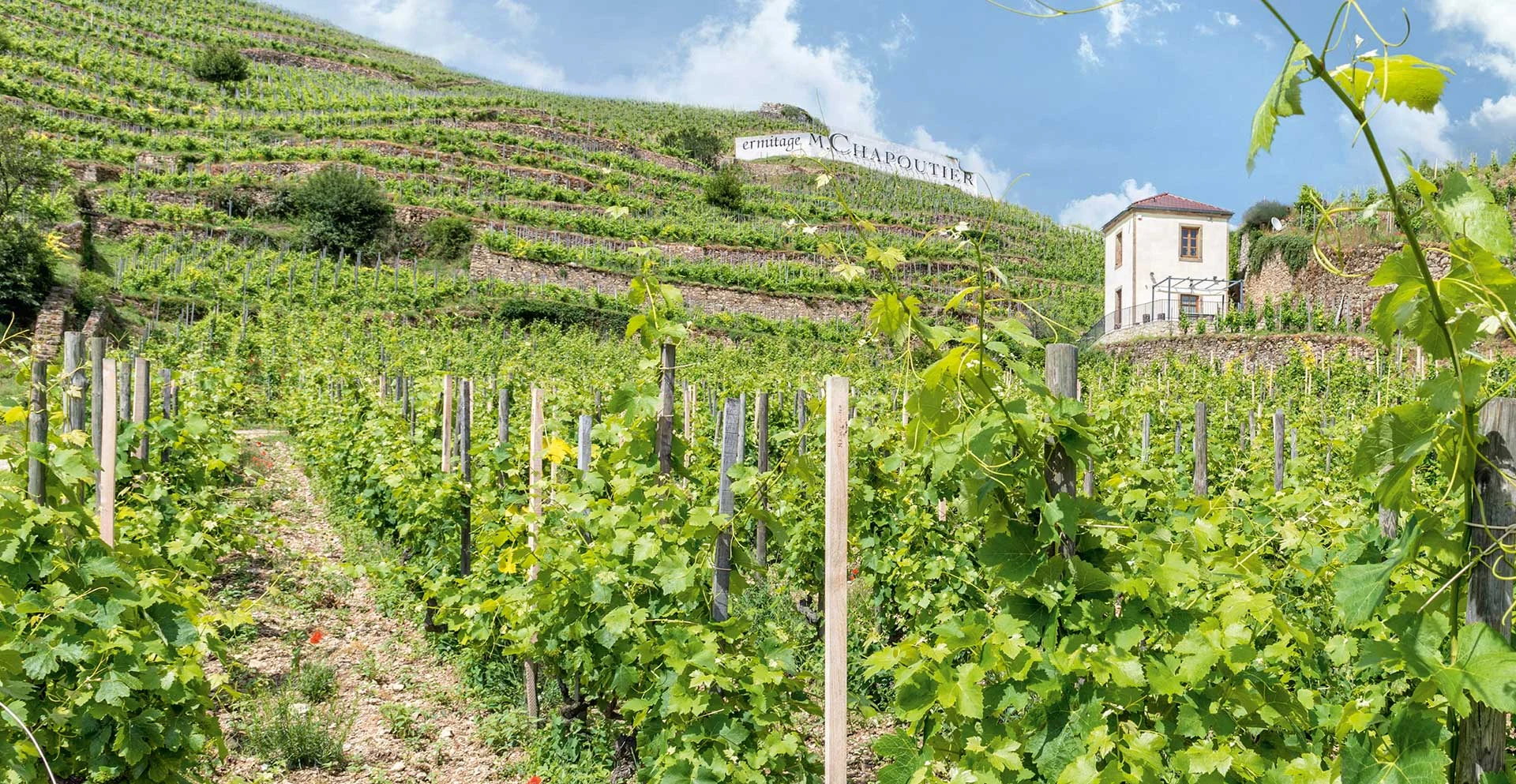
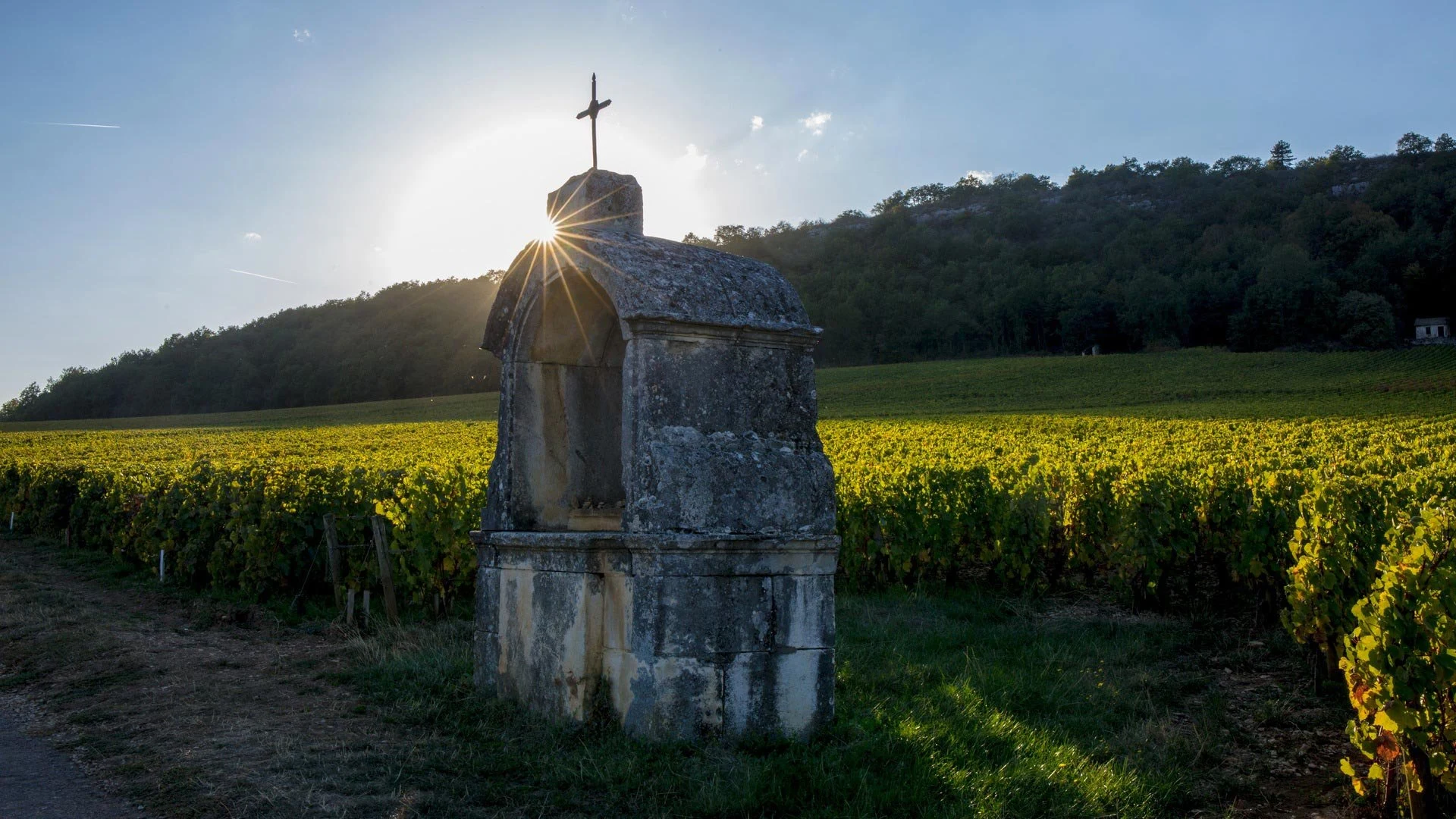
Saint-Aubin 1er Cru En Remilly gives the domaine one of its clearest signatures. The parcel sits just above Le Montrachet and is associated here with citrus, oyster shell and salinity, a profile that asks for cut rather than weight. Damien and Caroline Colin work under viticulture raisonnable, with soil work, manual harvests and a minimal cellar imprint. Fermentations rely on wild yeast from each vineyard. Lees stirring is avoided. Oak remains restrained, with new barrels typically between 10 and 30% depending on the cuvée, and recent cellar direction has moved some wines toward older large barrels in place of new small ones. Those choices do not make the wines neutral. They set the order of influence: argilo-calcaires, white marl, gravelly cailloutis and rocky substrates first; barrel second. Chardonnay accounts for 70% of production, with Pinot Noir at 30%, and 10.50 hectares are planted to white grapes. The method favors freshness and balance, but not thinness. The best cuvées are intended for age, carried by mineral line, acidity and texture held in proportion.
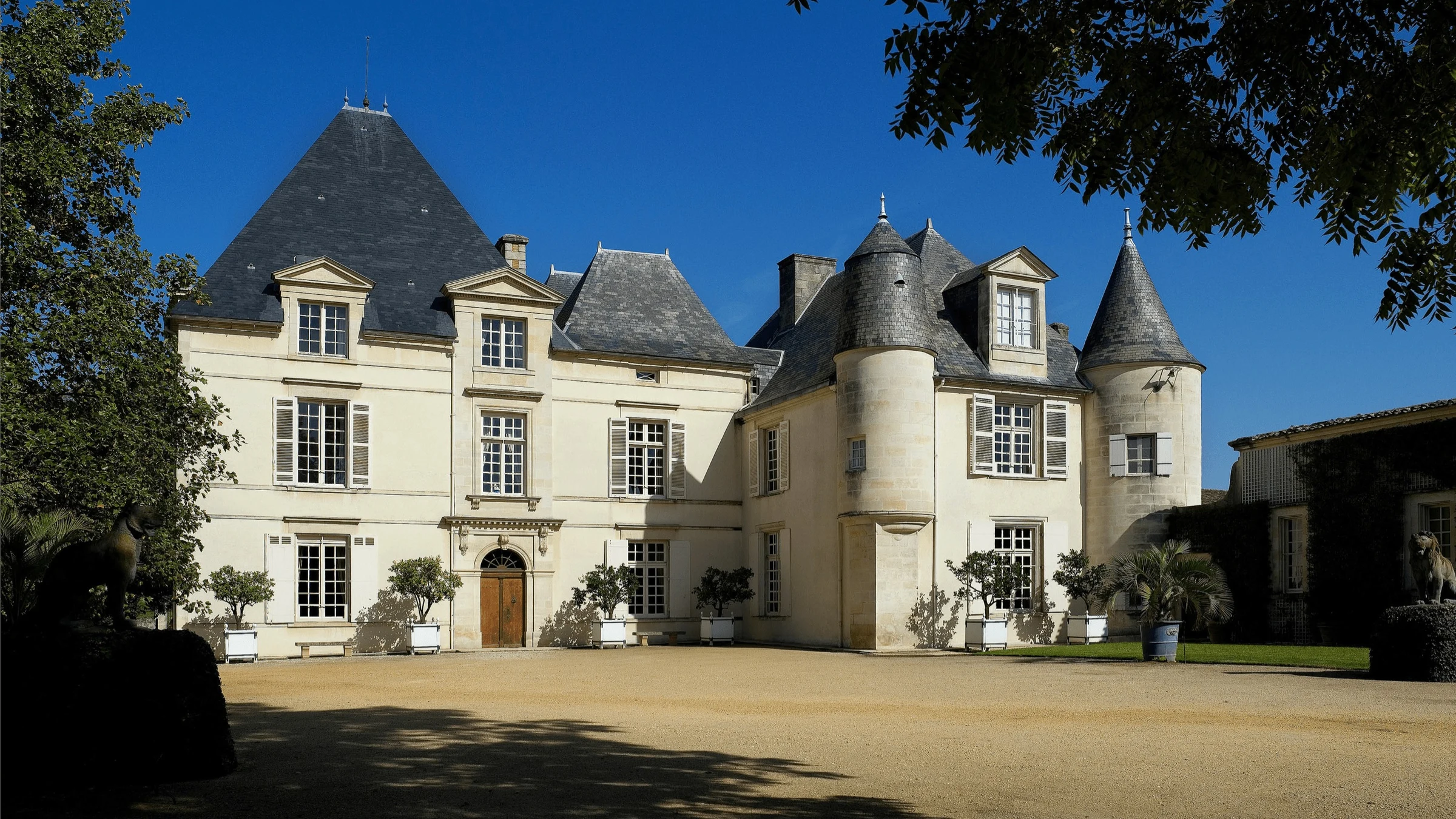
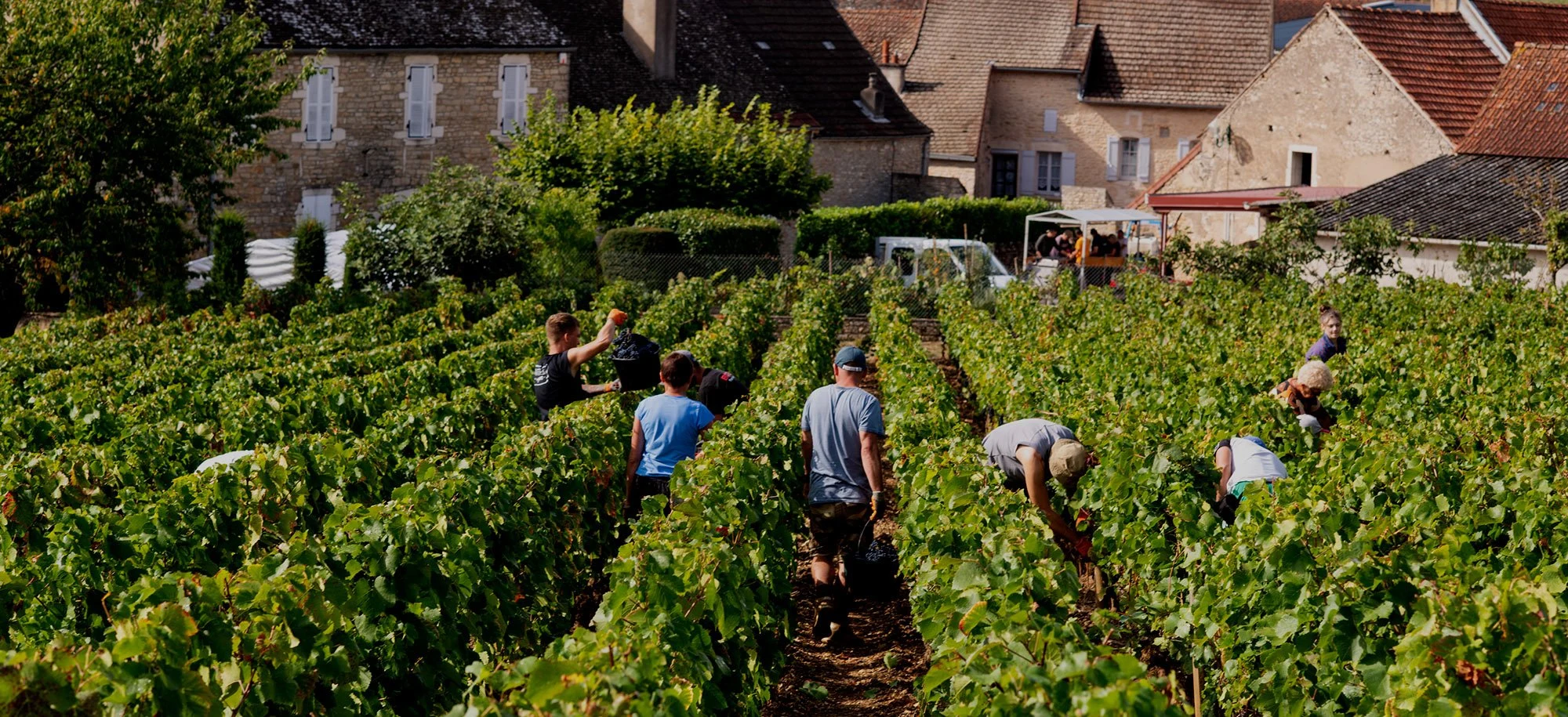
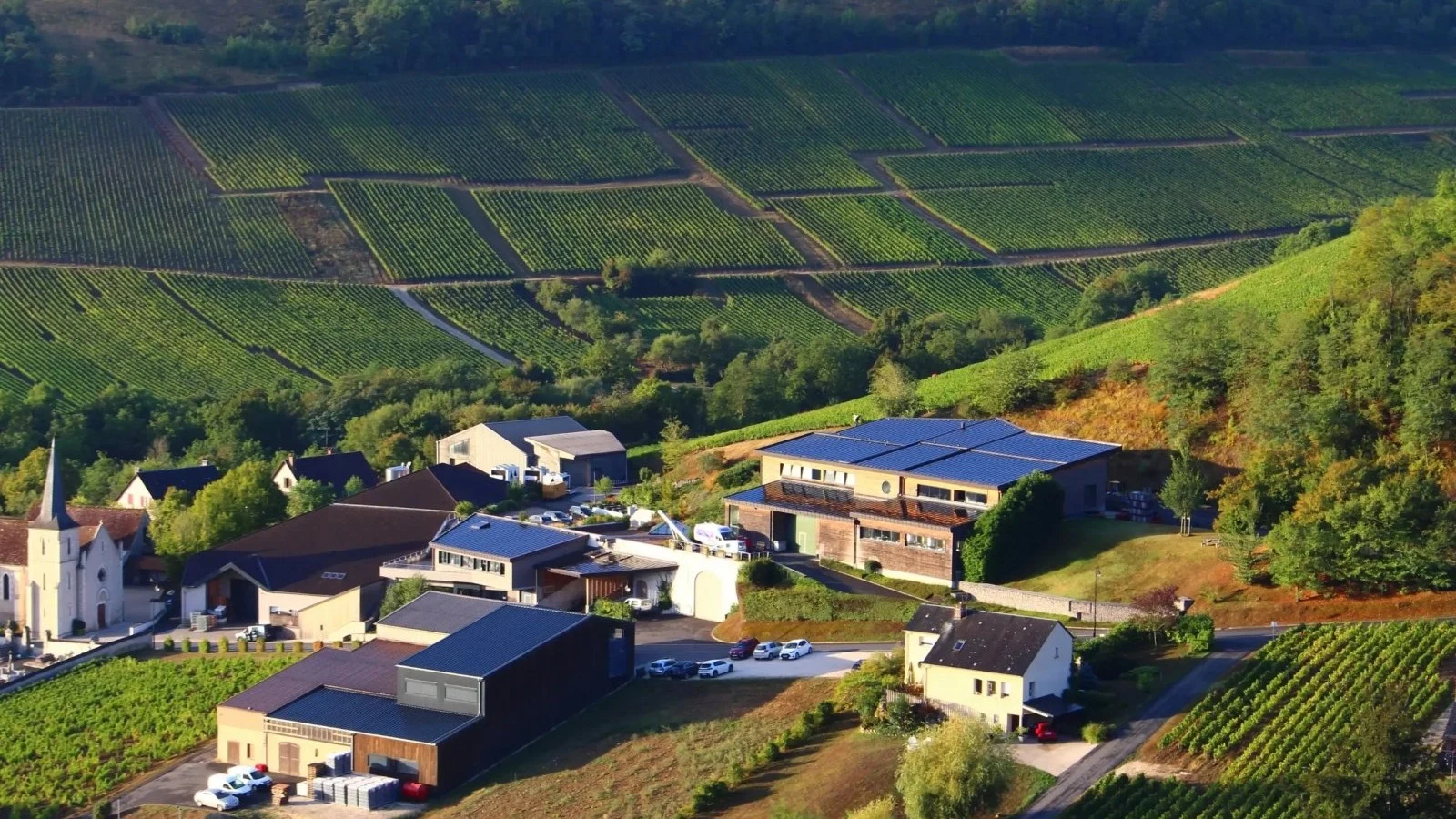
The house feels like a Burgundy domaine before it feels like a destination: village scale, family name, vineyard work coming into the cellar without theatre. Saint-Aubin is the fixed point, but the holdings reach into Chassagne-Montrachet, Puligny-Montrachet and Santenay, giving the cellar a map of neighboring limestone, marl and slope exposure. In the cellar, the important movements are small ones. Fruit comes in from hand harvest, ferments with its own yeasts, then rests in oak chosen not to dominate the wine. The tasting room language, if there is one, is the language of site: En Remilly, Montrachet, Bâtard-Montrachet, Bourgogne Aligoté, Pinot Noir. Nothing in the room needs to hurry. The wines ask for attention to edge and contour, especially where Saint-Aubin keeps its brightness under the fruit.
The most concrete next chapter is already in barrel and bottle: the 2024 vintage, made after mildew pressure and a loss of 5 to 10% of volume in Saint-Aubin from frost. Harvest began on September 19, with maturity around 11% to 12% natural alcohol. Damien Colin called the vintage finer than he expected, and the point to hold is the one he protected first: freshness in Saint-Aubin 1er Cru En Remilly.
Saint-Aubin, Cote de Beaune, Bourgogne-Franche-Comté, Frankreich
Saint-Aubin