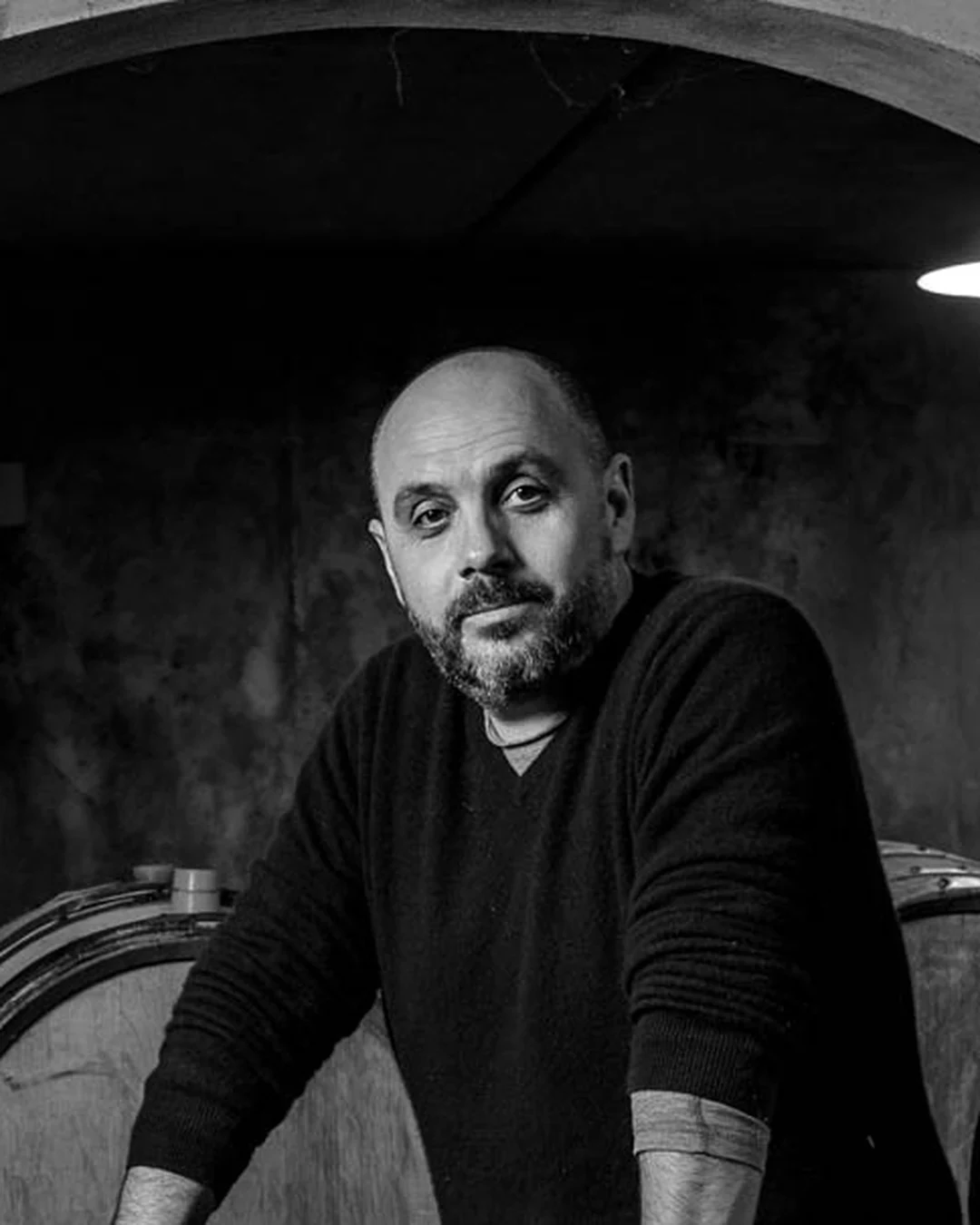
Sylvain Morey, winemaker at Domaine Sylvain Morey in Chassagne-Montrachet, carefully works less than 3 hectares with long élevage.
Since 2014, the same small cellar has asked for restraint. Sylvain Morey, winemaker at Domaine Sylvain Morey in Chassagne-Montrachet, works there with less than 3 hectares to read. The domaine began that year after the split of Domaine Jean-Marc Morey, when the family holdings passed to Sylvain and his sister Caroline. What remained for him was not breadth, but precision: fragmented Burgundian parcels, a concentrated range, and the obligation to let each place keep its own edge.
Morey arrived at this bench with two lines of formation behind him. Beaune and Dijon gave him the technical ground; Bastide du Claux in the Luberon gave him another climate, another cadence, and a vigneron’s habit of looking first at the plant. His own sentence holds the method plainly: “We are looking for a healthy plant that is perfectly integrated into its environment and can give us ripe grapes of the highest quality.” At Domaine Sylvain Morey, that thought narrows into Chassagne-Montrachet, Chardonnay, Pinot Noir, Aligoté and Gamay, handled at a scale where a parcel is not an abstraction.
The work here stays close to traditional Burgundian practice, but the decisions are not inherited whole. The fruit is estate grown, with no purchased grapes, and the domaine works sustainably across its very small holding. Grapes are de-stemmed, fermentations rely on natural yeasts, and the cellar program favors patience over correction. For the whites, Morey extended aging to 18 months rather than the more usual 12 months, giving the wines more time to settle before bottling. New wood remains modest, at 20%, for both reds and whites.
The reds take their own slower course, with élevage sur lies for 20 months. Morey does not lean on batonage; the wines are left with less movement, a choice that suits his stated words, “simplicity, respect and transparency.” The range is tightly focused around Chassagne-Montrachet and nearby appellations, including Chassagne-Montrachet 1er Cru Champs Gains, Saint Aubin 1er Cru Les Charmois, and Santenay 1er Cru Grand Clos Rousseau. The last comes from 0.40 hectares, which is enough to make the scale legible without turning it into theatre.
The cellar is old, mold-lined, and quiet in the Burgundian way: stone, barrels, damp air, the sense that nothing needs to be made new to be made carefully. This was the room where Jean-Marc Morey worked, and its continued use matters because the wines are still shaped by the same family ground, though not by the same hand. The atmosphere is rustic rather than staged. It suits a domaine that does not have the sweep of a large estate and does not pretend to.
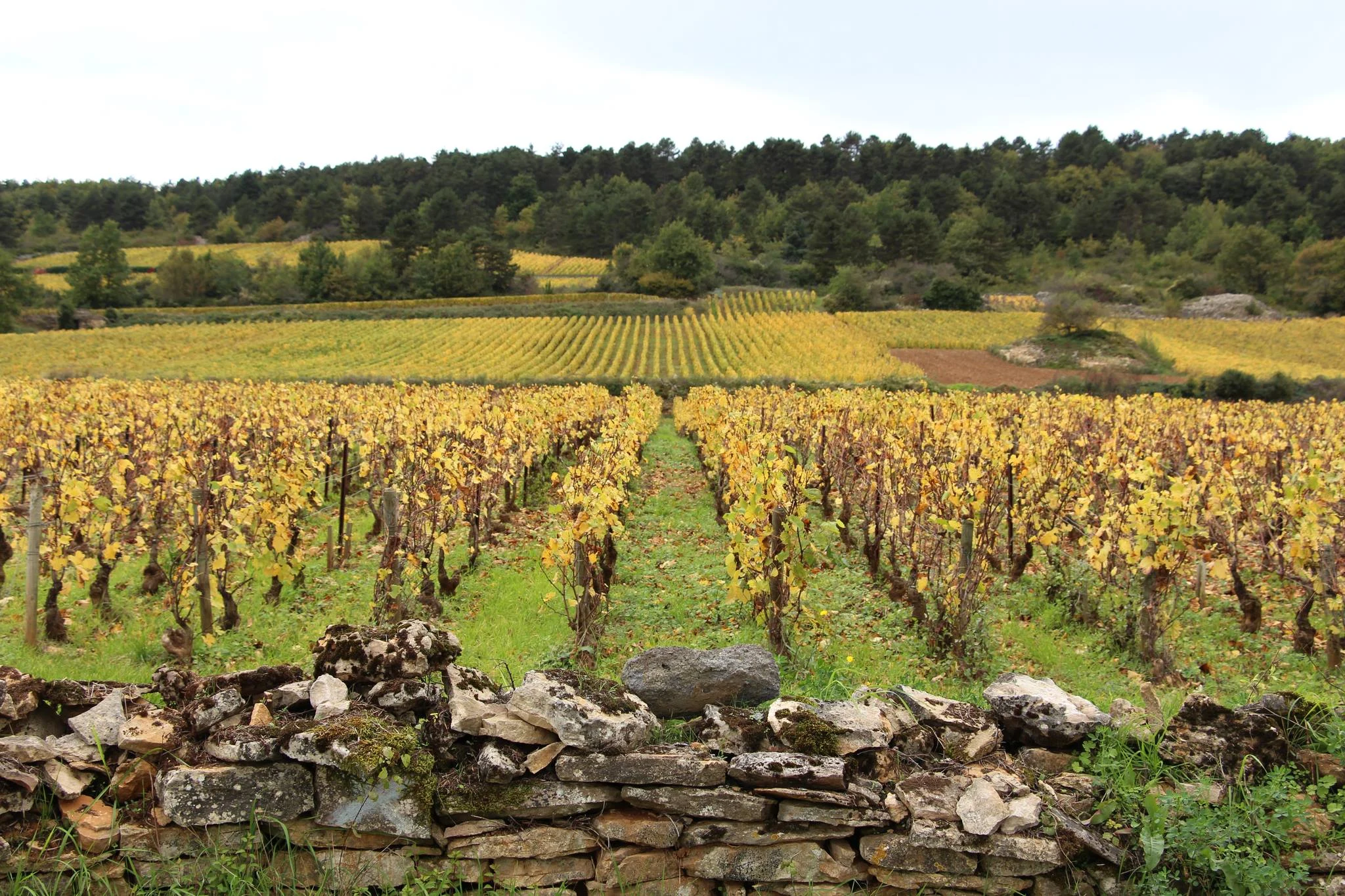
Chassagne-Montrachet gives the place its pressure. Limestone soils, cool nights, moderate summers, and divided holdings make the work exacting before a barrel is filled. Morey’s wines are often described through texture and mineral structure, with more power and richness than the previous generation, but the cellar keeps that power on a short lead. It is not volume. It is whether Champs Gains, Les Charmois, or Grand Clos Rousseau still tastes like its own parcel after the long months in fûts de chêne.
Chassagne-Montrachet, Auvergne-Rhône-Alpes, Frankreich
Chassagne-Montrachet