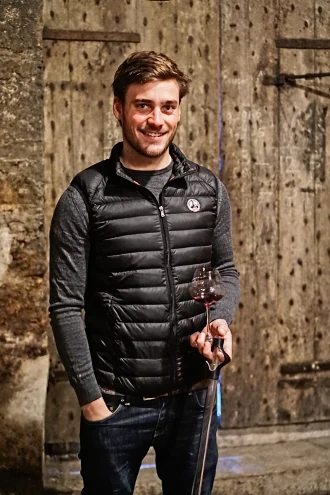
Thibaud Clerget, winemaker at Domaine Y. Clerget in Volnay, works six hectares of Burgundy through restrained cellar choices.
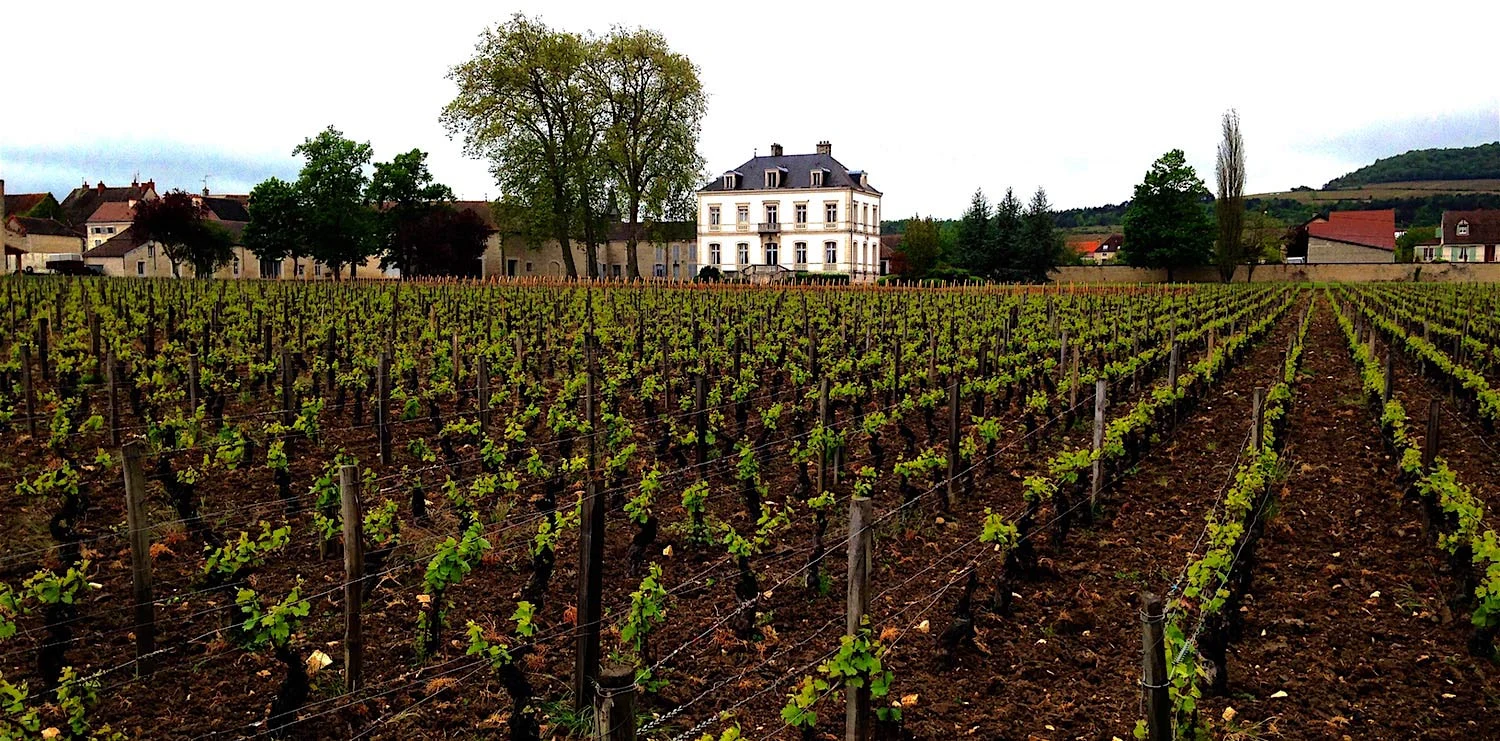
The canes sit higher now, with more leaf left over the bunches. Thibaud Clerget, winemaker at Domaine Y. Clerget in Volnay, makes that decision before the cellar has anything to correct. Since 2015, he has managed the family vineyards and returned the domaine to bottling under its own name, carrying a Volnay lineage that reaches back to 1268 and is now in its 28th generation. His grammar is Burgundian, formed at Beaune's Lycée Viticole, then widened through vintages with Pinot Noir specialists in New Zealand, Oregon, and the Côte de Nuits. The point was never to make Volnay taste traveled. It was to give one grape several readings before bringing the hand back to the family rows. The domaine had slept through a period when Yvon Clerget, his father, retired from winemaking and sold grapes from the family's better terroirs. Thibaud returned at 24, after apprenticeship under Henri Boillot and Domaine Hudelot-Noellat, and the first modern vintage came in 2015. The estate is small by design, just under six hectares across Volnay, Pommard, Meursault, and Clos Vougeot, with Pinot Noir carrying most of the work and Chardonnay appearing in limited measure.
In the vines, Clerget ploughs all parcels, trains higher in warmer vintages, and keeps more leaf coverage to shield Pinot Noir from heat. These are not decorative choices; they set the terms for fruit that can lose detail quickly when pushed. The cellar follows that restraint. Since 2019, he has limited yields, moved toward a more delicate vinification, and stopped pigeage completely. Whole bunch use changes by cuvée rather than rule: some wines sit around 50% whole bunch, while others are completely destemmed. New oak also moves by site, from 10% for Volnay Village to 30% for Clos du Verseuil, with many wines resting in older barrels. Clos de Vougeot Grand Cru receives a defined sequence, 6 months in new oak at 30%, then 6 months in neutral oak. One trial leaves conventional barrels aside entirely, a special cuvée of Clos Vougeot aged completely in wine globes. The method keeps pressure on the vineyard rather than the cooperage.
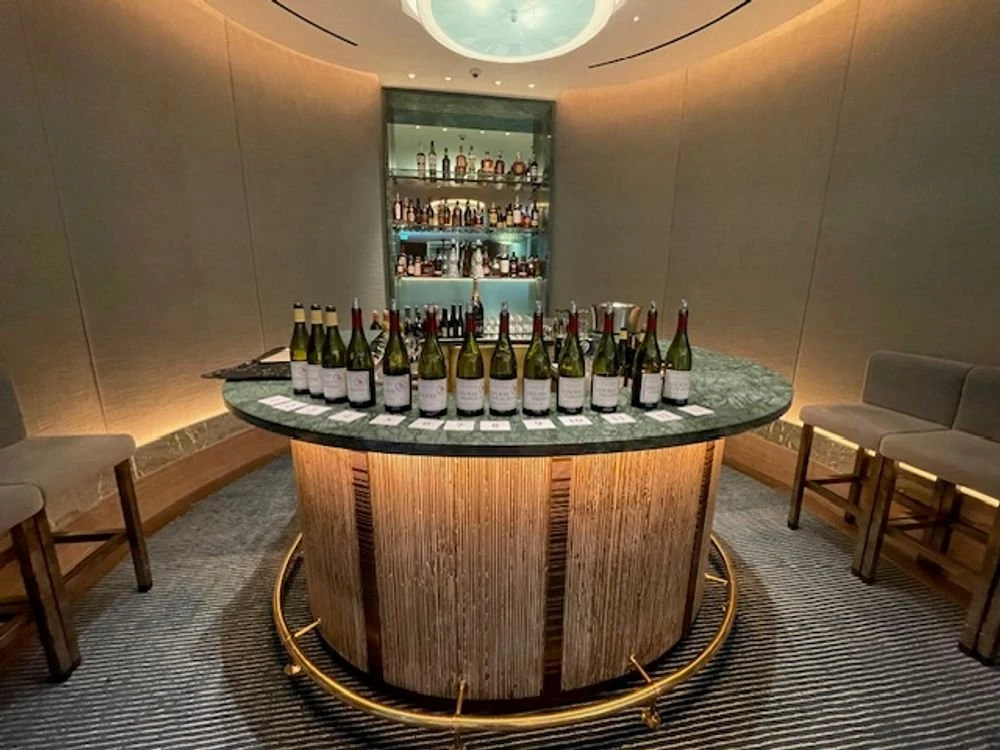
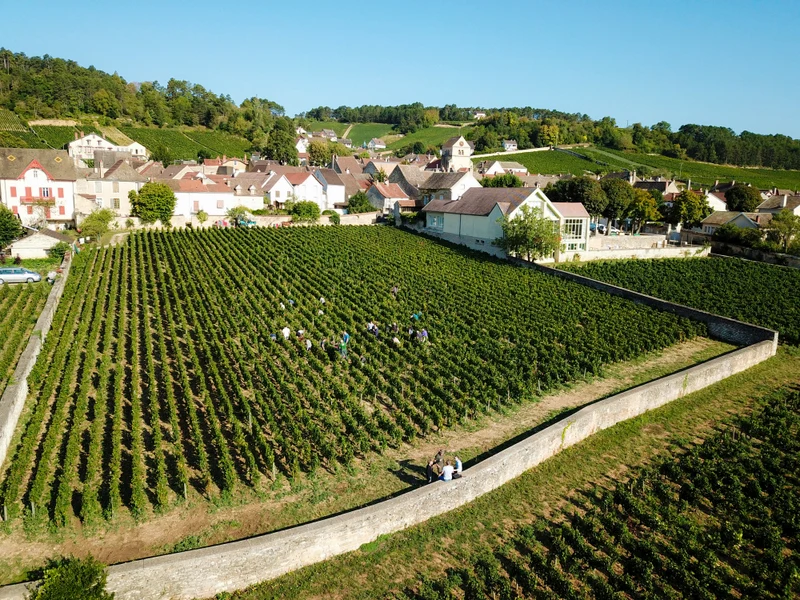
The place feels closer to a family domaine than a public house, with the cellar and tasting room answering to the parcels rather than to spectacle. Volnay is the address, but the working map runs wider: Volnay Santenots, Volnay Premier Cru Les Caillerets, Carelle sous la Chapelle, Clos du Verseuil, Pommard Premier Cru Les Rugiens-Hauts, Meursault Les Chevalières, and Clos de Vougeot. The texture is quiet because the scale is quiet. There is no sense of a large visitor center grafted onto a vineyard story. The bottles carry the evidence instead, with clay, limestone, red rocky soil, wall-side Grand Cru ground, and old vines doing the naming. In that room, the program reads as a set of decisions made parcel by parcel, not a house style pressed onto every fruit.
The domaine's most precise anchor is Volnay 1er Cru Clos du Verseuil, a 0.68-hectare monopole acquired by the Clerget family in 1936. It gives the return to bottling a named site, a surface area, and a family date rather than a general claim of continuity. Clerget's next work is still the same work: reading the row before the vat, then letting the cuvée hold its line. Clos du Verseuil remains the fixed point at Domaine Y. Clerget.
Volnay, Bourgogne-Franche-Comté, Frankreich
Volnay