- Falstaff Winery - 4 Stars · 2026
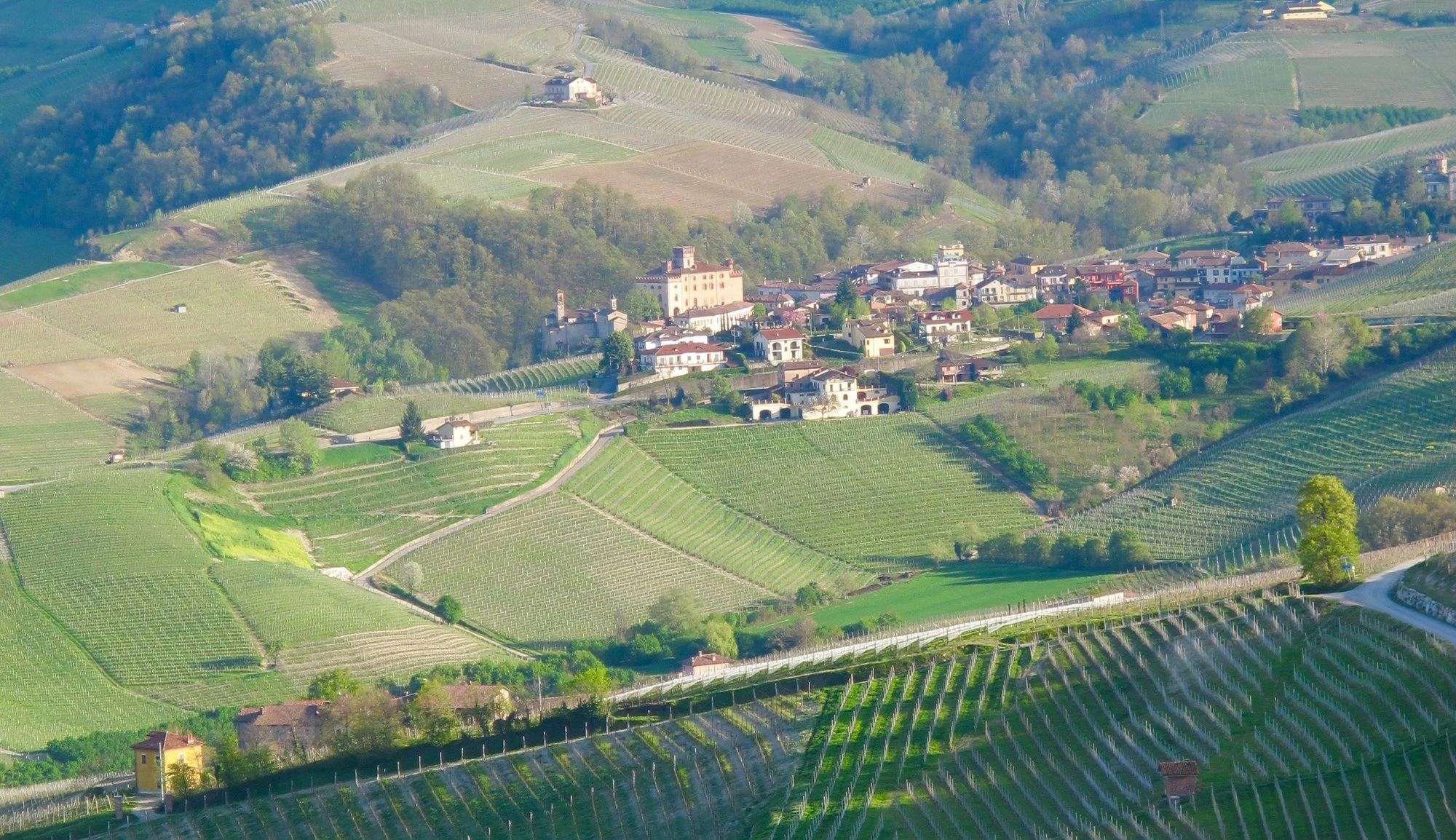
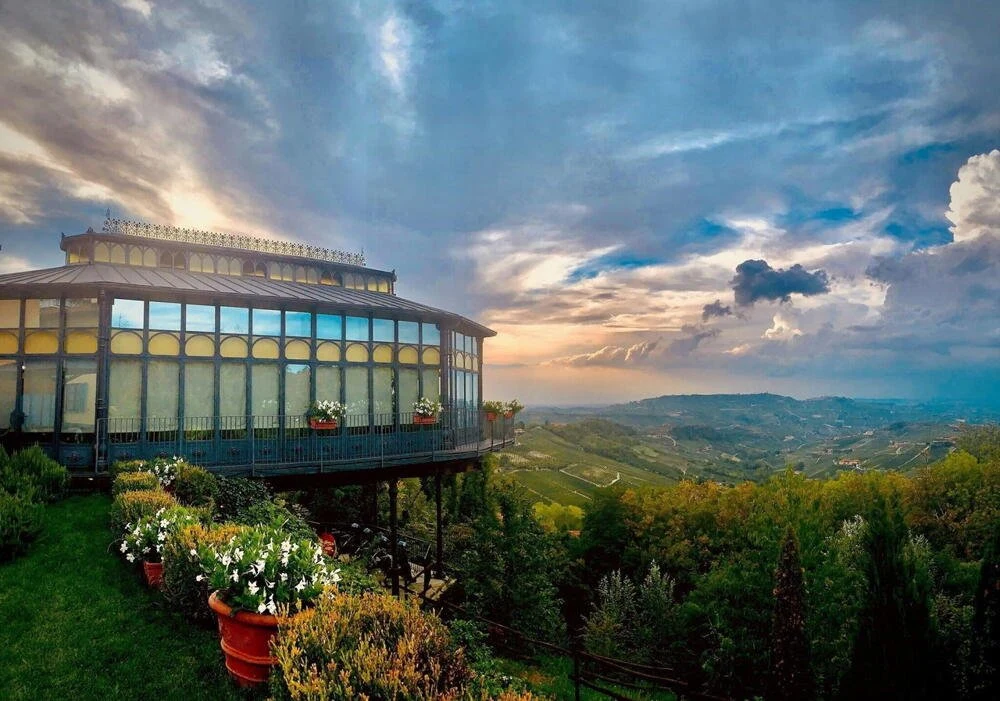
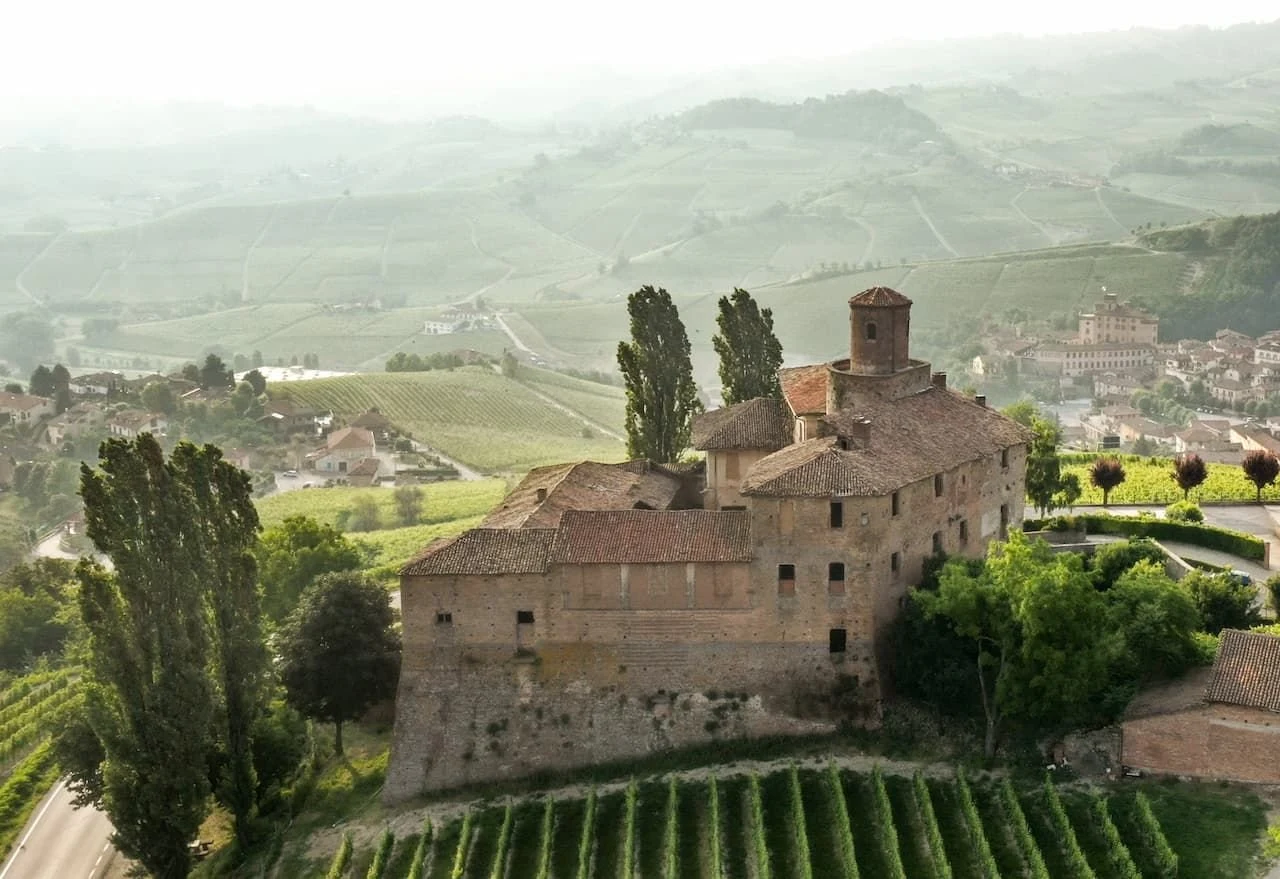
Approaching a Barolo winery with vineyard views sets a different rhythm from tasting-room theater. The point is not volume, spectacle, or polished hospitality choreography; it is the slower read of place, where slope, altitude, farming choices, and family continuity matter before a glass is poured. G.D. Vajra belongs to that quieter side of the Langhe, a producer whose own language favors wines that do not need to “talk out loud or flex their muscles.” In a region often sold through power, cellar prestige, and collectible Nebbiolo, that restraint is not a soft position. It is a clear stylistic argument.
High-altitude Barolo through a quieter Langhe lens
Barolo’s international reputation tends to compress the area into Nebbiolo, tannin, and long aging. That shorthand is useful, but incomplete. The Langhe is also a farming culture of mixed grapes, inherited parcels, and family labor, and Vajra’s identity makes more sense inside that broader pattern. The estate’s high-altitude vineyard work and organic farming since 1971 place the wines in a cooler, more measured register than the caricature of Barolo as sheer force. Altitude in this zone usually means slower ripening and more aromatic definition; organic farming pushes attention back into soil health and vineyard balance rather than cellar correction.
The portfolio reinforces that reading of the land. Barolo DOCG Albe® sits beside Barolo DOCG Coste di Rose, Ravera, and Bricco delle Viole, giving Nebbiolo several site-based expressions rather than a single house bottling. But the range does not stop at Barolo. Langhe Nebbiolo, Freisa, Barbera, Dolcetto, Pinot Nero, Riesling, Moscato d’Asti, rosato, and Barolo Chinato all appear in the estate’s orbit. That breadth matters because it resists the export-market habit of treating the Langhe as a one-grape trophy zone. Here, Barolo remains the center of gravity, but the supporting grapes explain the region’s actual drinking culture.
The family thread is relevant because it anchors the farming story rather than replacing it. Aldo and Milena Vaira are central to the estate’s modern identity, with Giuseppe, Francesca, Isidoro, and Sophie Vaira among the current family faces. In editorial terms, the useful point is not biography for its own sake; it is continuity. Barolo rewards producers who understand small differences in exposure, elevation, and vintage behavior over decades. A family-run structure can preserve that memory when it is tied to land rather than branding.
A portfolio that treats Nebbiolo as the start, not the whole conversation
Barolo DOCG Albe® is the clearest gateway wine in the lineup, partly because it is visible beyond the cellar door and partly because it represents the estate’s stated preference for finesse over mass. The site-labeled Barolos, including Coste di Rose, Ravera, and Bricco delle Viole, indicate a higher-resolution look at Nebbiolo within the appellation. For serious Barolo drinkers, that distinction matters: a regional or blended expression can introduce the house grammar, while cru-linked bottlings test how that grammar changes with place.
The supporting wines are not filler. Freisa keeps the estate connected to a grape with deep Piedmontese roots and a more local following than Nebbiolo. Dolcetto and Barbera speak to the everyday red-wine culture that historically surrounded Barolo rather than followed it. Moscato d’Asti and Barolo Chinato widen the frame again, pulling in sweet and aromatized traditions that often get sidelined in prestige conversations. Riesling and Pinot Nero are less expected in the zone, but their presence fits the estate’s high-altitude, precision-led identity better than a purely muscular reading of Barolo would.
This is where Vajra’s competitive position is clearest. It does not need formal award language to make its case. The trust signals are more structural: organic farming since 1971, a Barolo DOCG focus, high-altitude vineyards, a multi-generational family operation, and a range that reaches across classic Langhe categories. In a market crowded with labels selling seriousness through scarcity and weight, this is a producer arguing for elegance, breadth, and agricultural memory.
How to place Vajra inside a Barolo trip
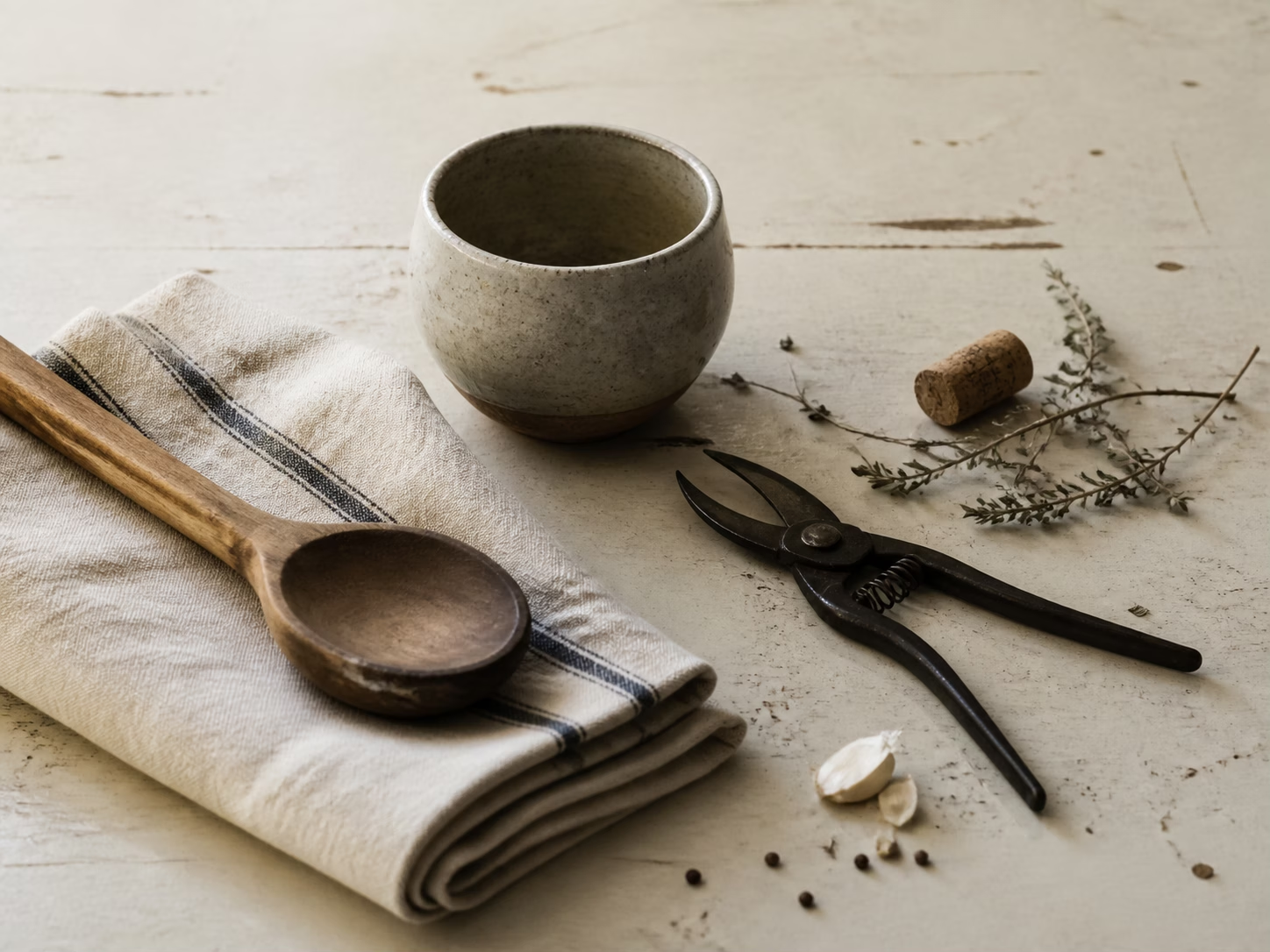
The visit format is built around guided tasting and winery context, which suits travelers who want more than a quick pour of Nebbiolo. The atmosphere is quiet, rustic, and sophisticated in the old agricultural sense: not glossy, not high-energy, and not designed around a restaurant-style service arc. It works especially well for wine education, group tastings, and special-occasion itineraries where the draw is understanding Barolo through farming and family continuity rather than chasing a badge wall.
For a wider Barolo itinerary, use Our full Barolo wineries guide as the main planning spine, then layer in restaurants, hotels, bars, and local experiences through Our full Barolo restaurants guide, Our full Barolo hotels guide, Our full Barolo bars guide, and Our full Barolo experiences guide. Other Barolo winery pages worth using for route-building include Azienda Agricola E. Pira E Figli, Azienda Agricola Veglio Giovanni & Figli, Barale Fratelli, Bartolo Mascarello, and Bergadano Cav. Enrico Azienda Agricola. For broader wine-country context beyond Barolo, the Italian and European winery archive also includes 3GP SRL in Treviso, 47 Anno Domini in Trebaseleghe, A Mano Wine in Noci, »der Steiner« Hans Steiner in Podersdorf am See, and & Handwein in Mannheim.
The editorial case for G.D. Vajra is strongest for travelers who want Barolo without theatrical luxury codes. The estate’s farming history, high-altitude sites, and broad Langhe portfolio make it a useful lens on how Piedmont can express restraint without feeling minor. Come for Nebbiolo, but pay attention to the wines around it; they explain why this corner of Italy is a living agricultural culture, not simply an appellation printed on expensive labels.
Questions
Frequently asked
Who works at G.D. Vajra?
Made By profiles Giuseppe Vaira (Winemaker) at G.D. Vajra.
How expensive is G.D. Vajra?
G.D. Vajra is listed at a price level of $$$.
The field
How it compares
| Place | Notes | Awards |
|---|---|---|
| G.D. Vajra | Vergne, $$$ | · |
| Bartolo Mascarello | Barolo | · |
| Bric Cenciurio | Barolo | · |
| Fratelli Serio & Battista Borgogno | Barolo | · |
| Luca Marenco Viticoltore | Barolo | · |
| Luciano Sandrone | Barolo | · |
| Marchesi di Barolo | Barolo | World's 50 Best |