Gaya par Pierre Gagnaire
- 01CuisineModern French Seafood by Pierre Gagnaire
- 02CityParis, France
- 03RecognitionOne Michelin Star
From the people index
Recommended by
One trusted voice points here.
The Blue Door on Rue de Saint-Simon
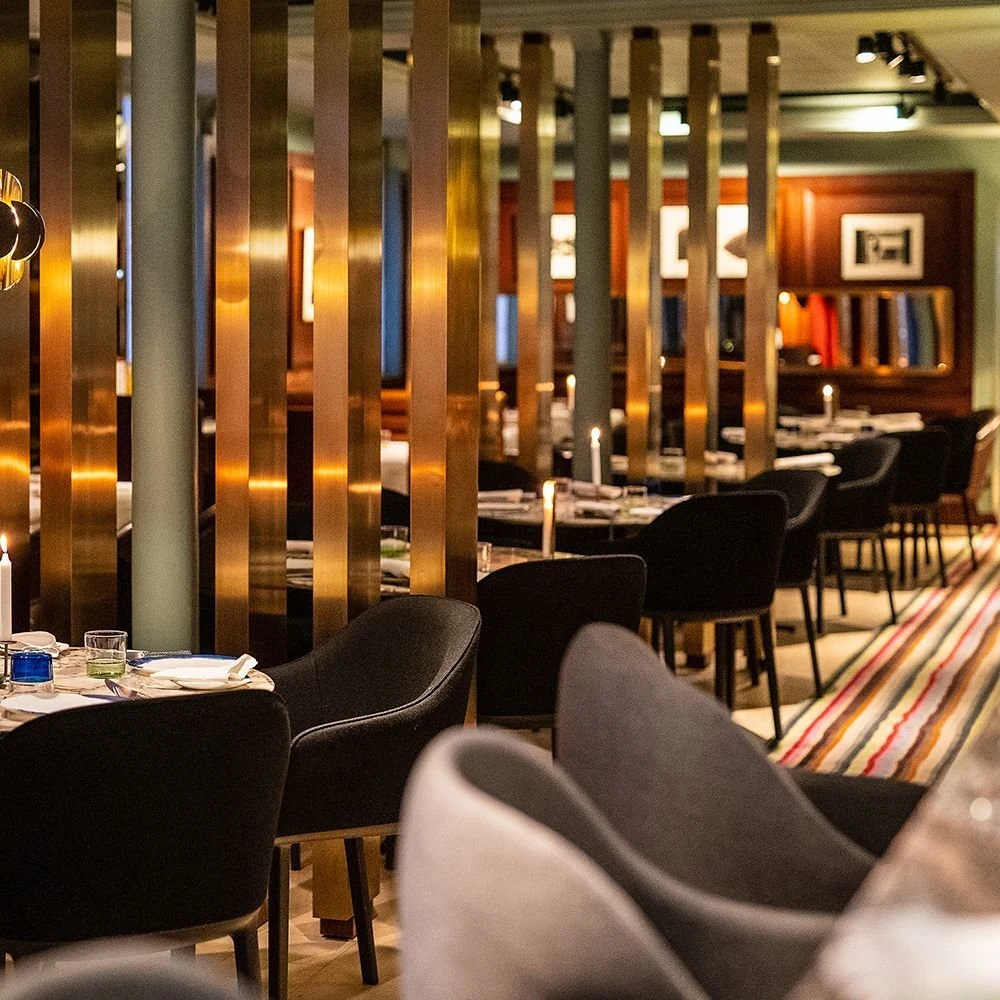
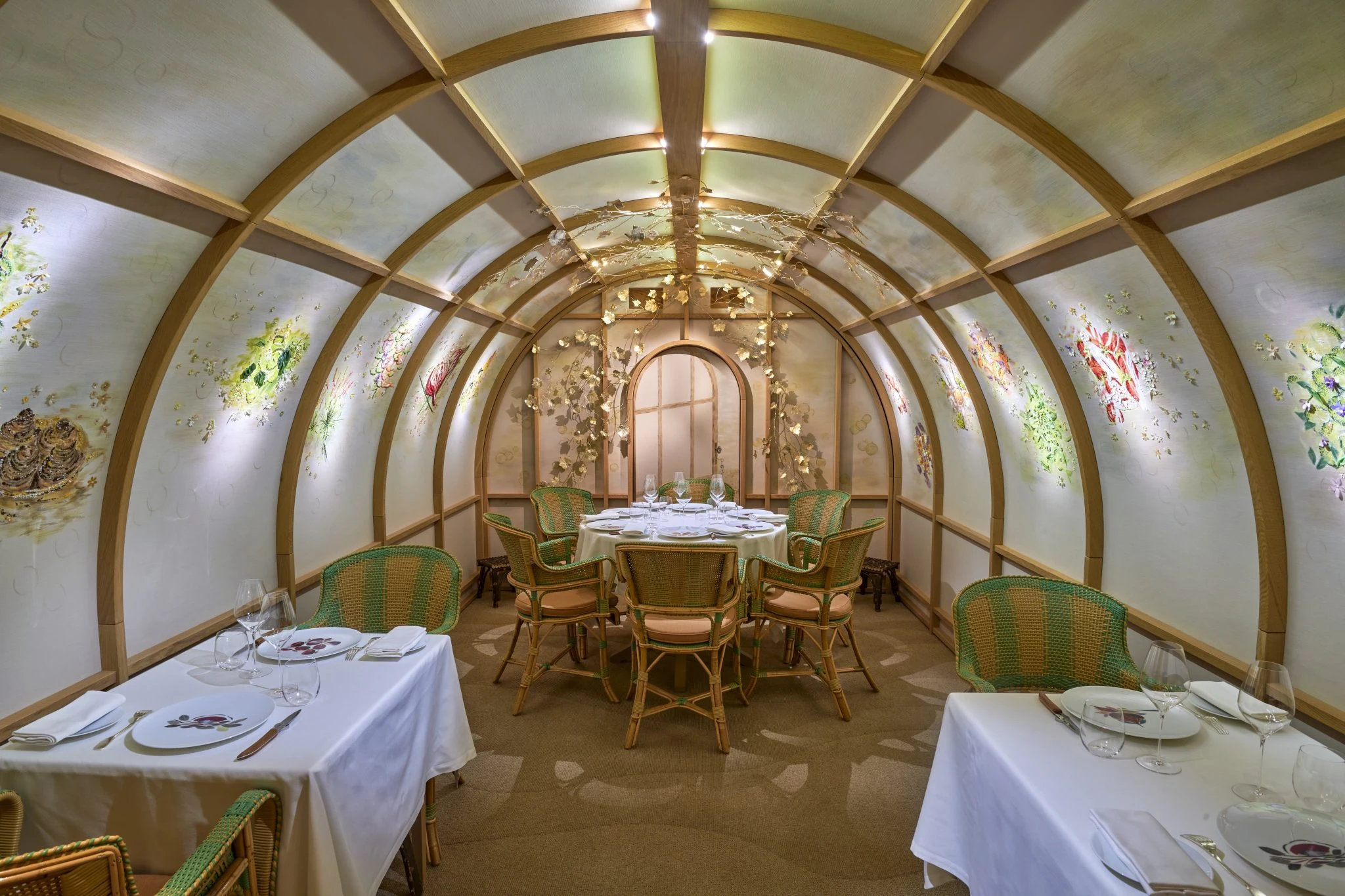
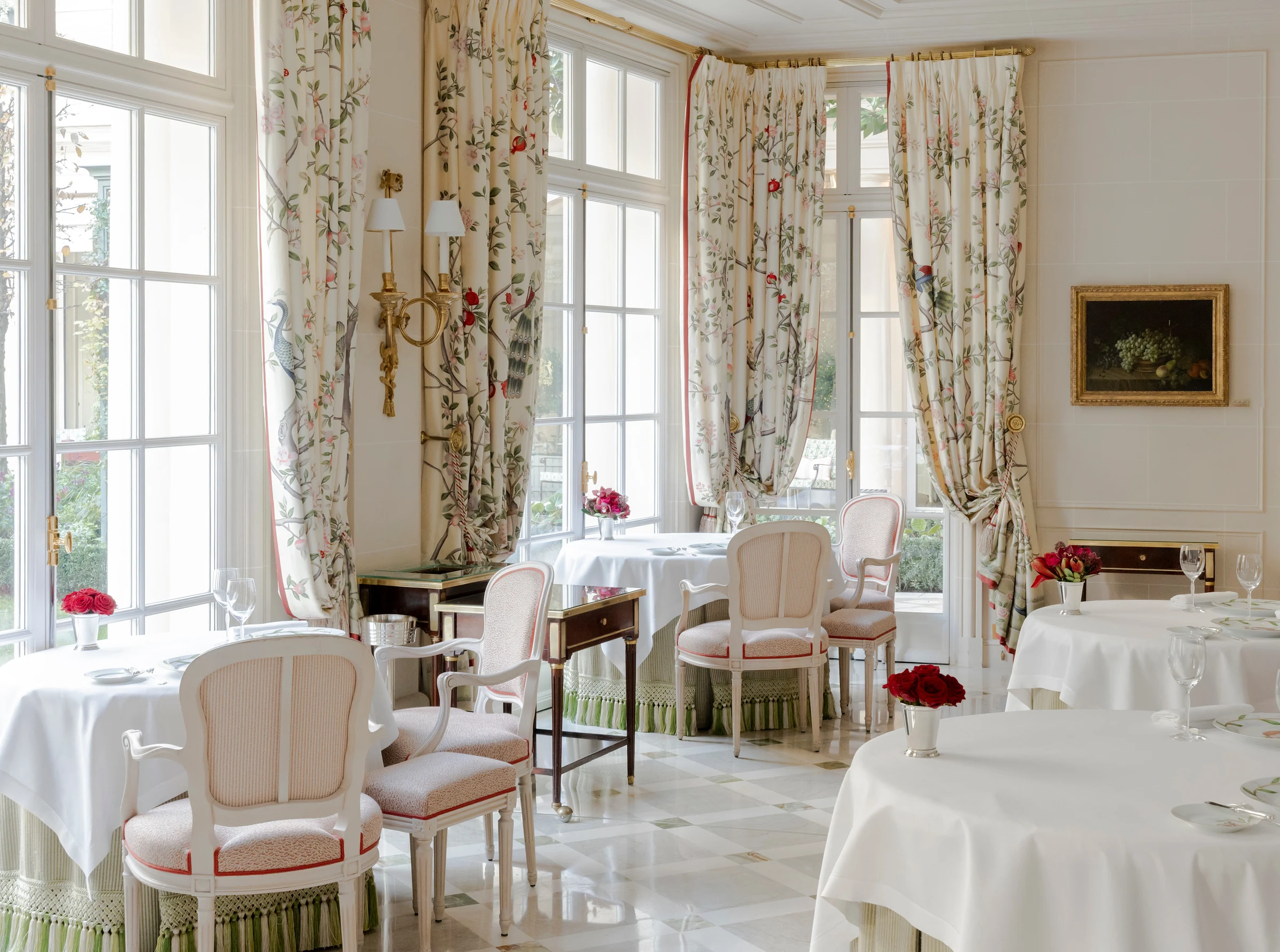
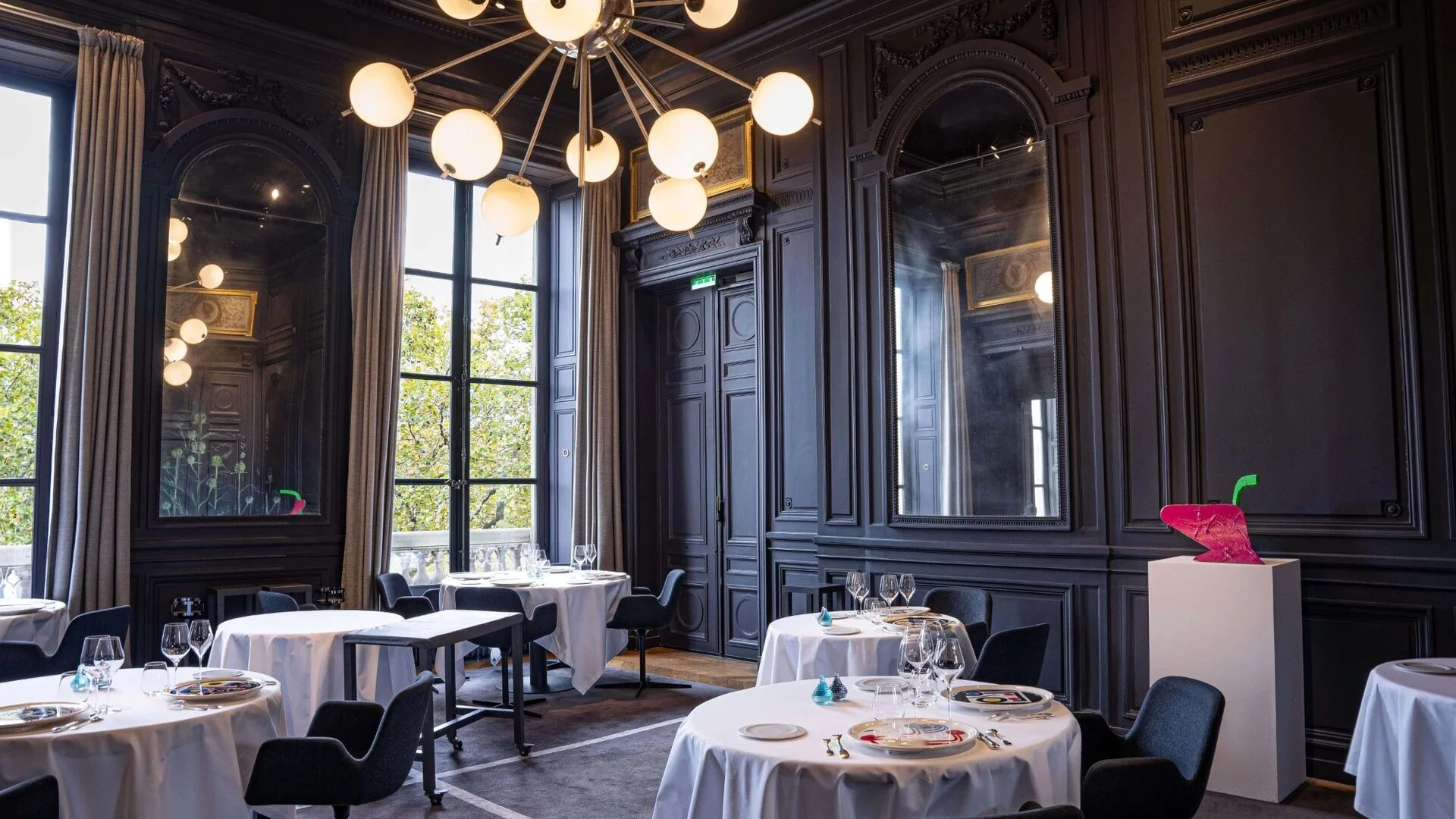
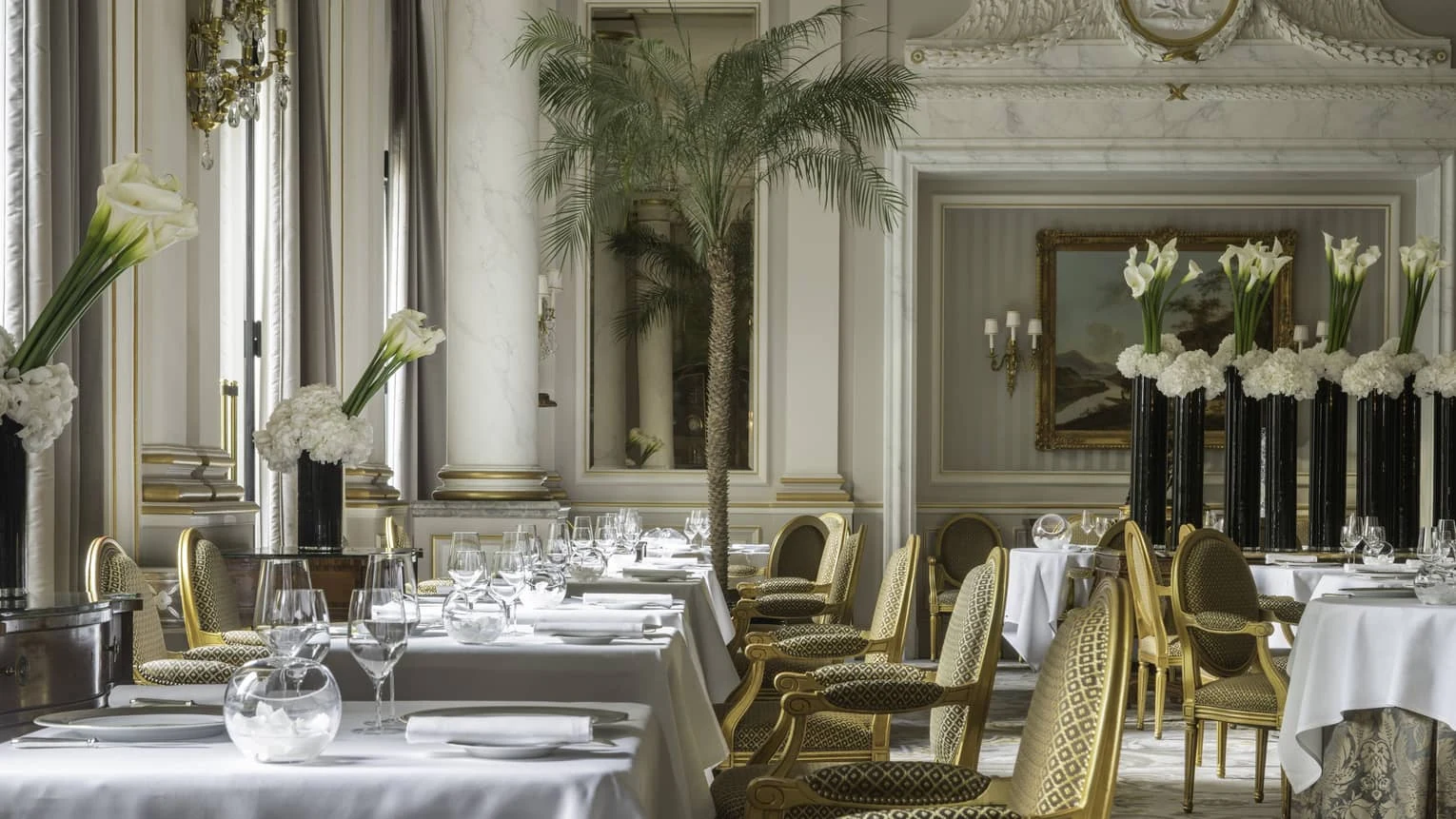
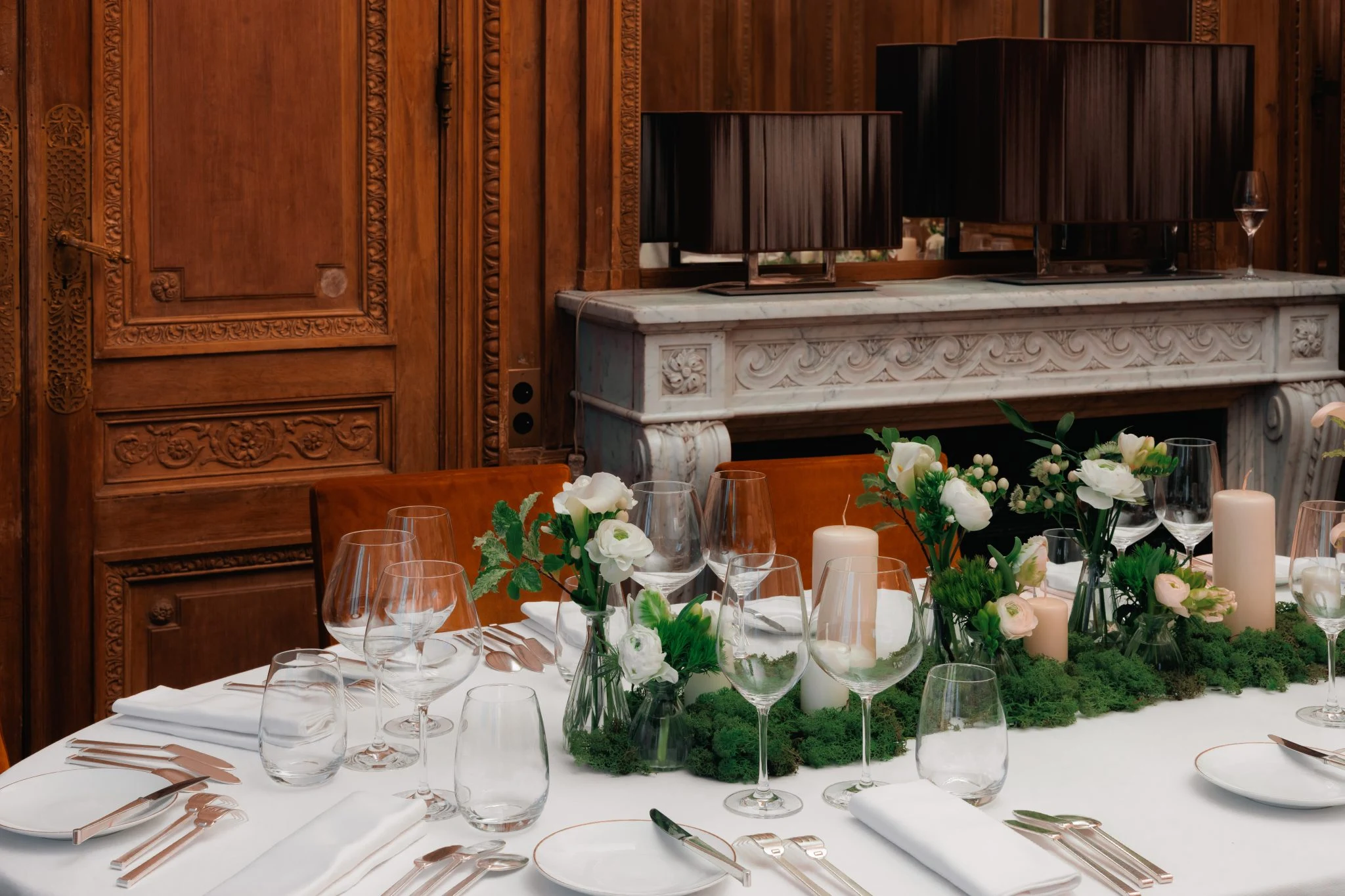
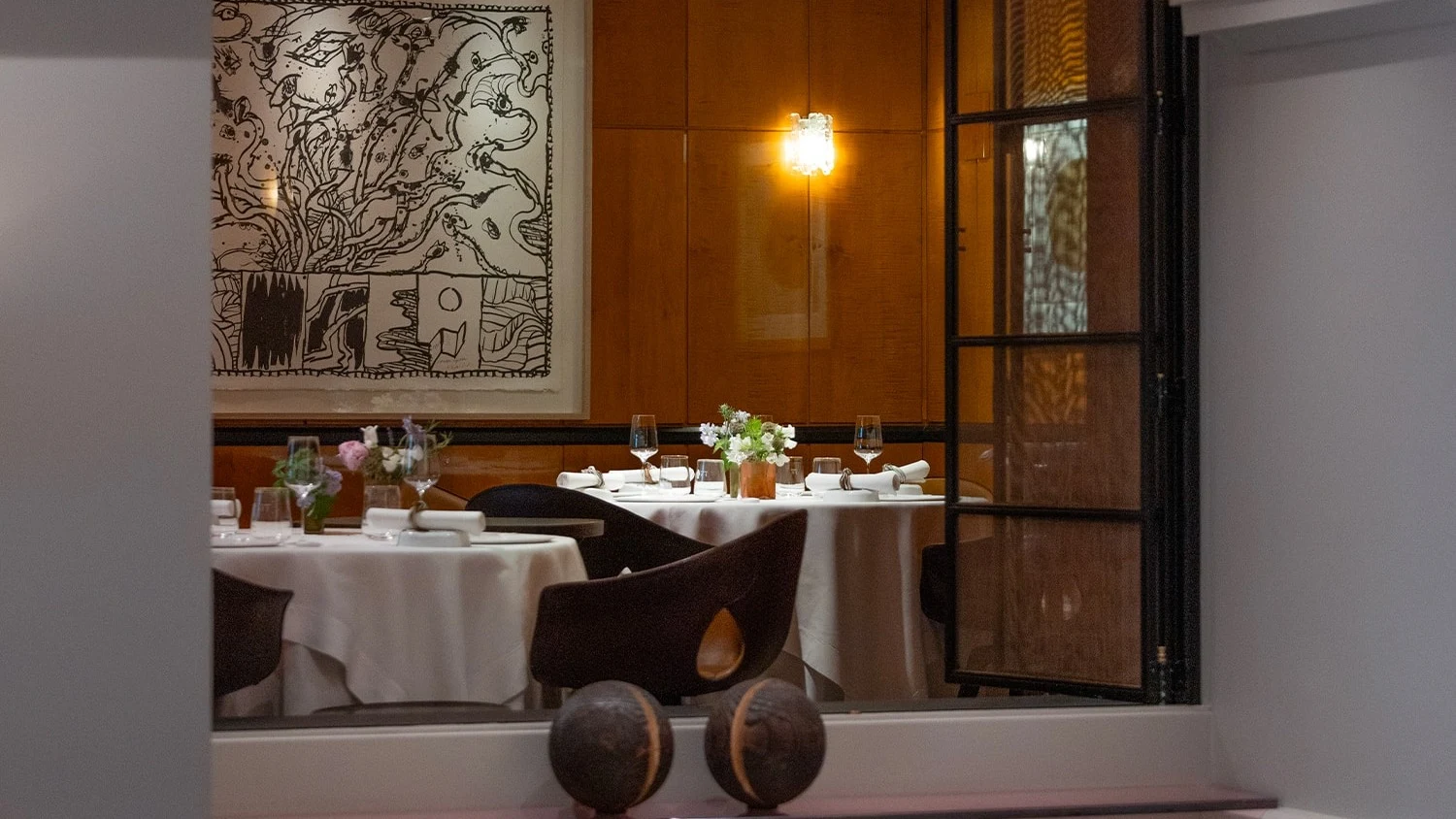
In a neighbourhood where most restaurant fronts compete in shades of cream and grey, Gaya par Pierre Gagnaire announces itself through a bright blue façade that has become one of the more recognisable exteriors in the 7th arrondissement. The awnings, the colour, the relative restraint of the signage, it reads less as a formal temple and more as a room that has earned confidence without needing to broadcast it. Step inside and the logic holds: the interior is fashionably stark, the lines clean, the comfort quietly considered. This is not the theatrical dining-room architecture of the grands restaurants a few arrondissements north. It is a room designed for the act of eating well rather than the performance of dining ceremonially.
That distinction matters in Paris, where the spectrum between neighbourhood bistro and three-Michelin-star palace has filled in considerably over the past decade. Gaya occupies a considered middle position: a one-star address with a brasserie register, where the formality is in the kitchen rather than the tablecloth. The room attracts an exclusive, largely regular clientele who arrive to eat with focus, not occasion.
The Sunday email
Read about the people behind restaurants like Gaya par Pierre Gagnaire in the Sunday email.
Every Sunday we send a lead story and up to four more about the chefs, winemakers, sommeliers and hoteliers behind the restaurants, bars, wineries and hotels we cover.
Recent stories
Free. One email a week, and you can unsubscribe from any issue.
A Menu That Moves Through the Ocean
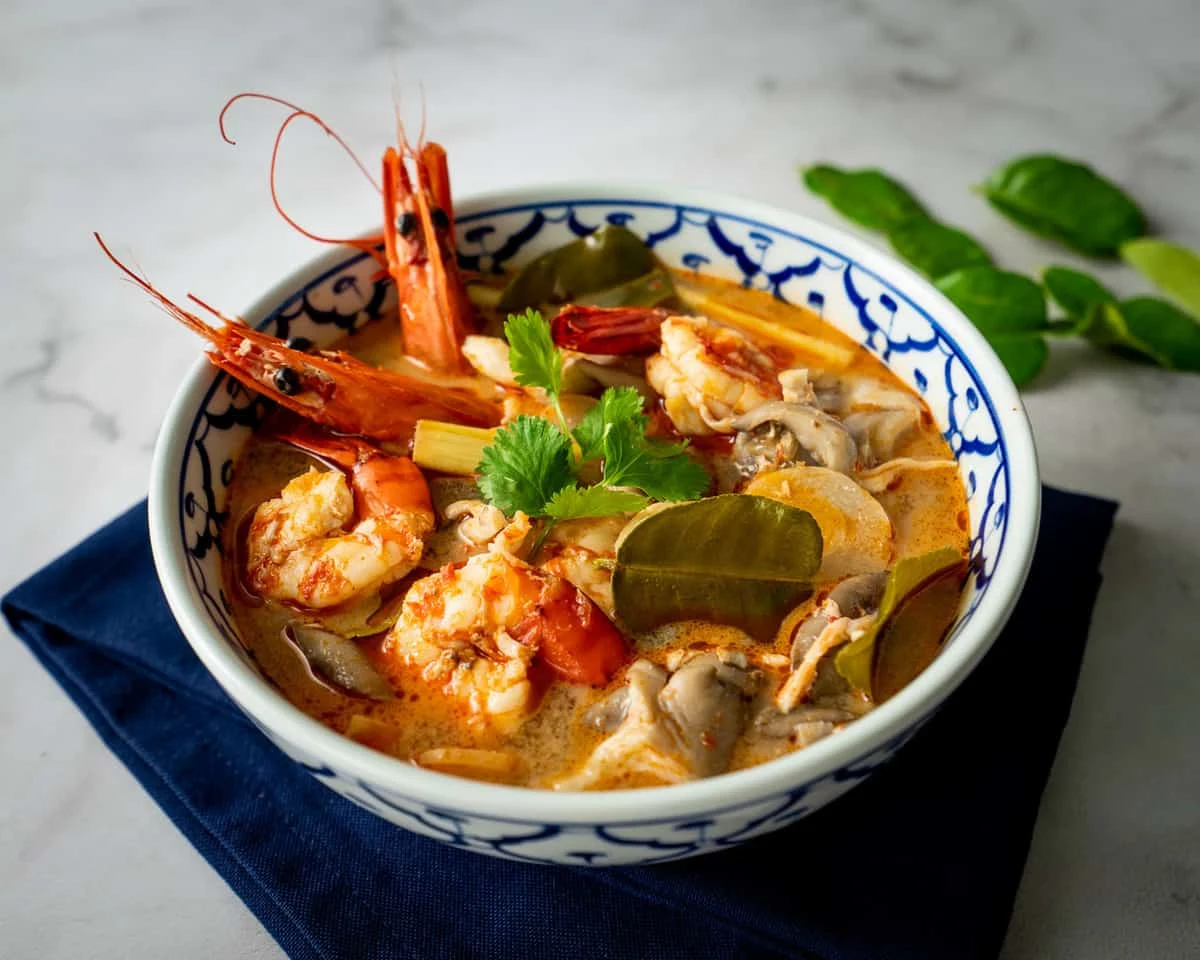
Paris is not a port city, yet its top-tier kitchens have always found ways to handle seafood with authority. Gaya par Pierre Gagnaire leans further into that tradition than almost any other address in the 7th: the menu has a seafaring orientation that runs from the first courses through to dessert, though it never becomes a single-note exercise. Dishes documented in the Michelin citation include carpaccio of seabream, sake-perfumed salmon roe, and seafood ice cream on one plate, a combination that threads precision and curiosity through what could otherwise be direct raw preparation. Terre de Sienne langoustines arrive with creamy coconut milk squash and yellow mango, a pairing that places the cooking somewhere between classical French discipline and a willingness to draw flavour logic from outside Europe. Even the dessert course contains a nod to the marine register: the Gaya apple tart is finished with a poppy-perfumed chantilly, which keeps a familiar format from closing the meal on a conventional note.
The kitchen's stated intent, framed in their own words as pursuing "tenderness" rather than either tradition or modernity, is a useful shorthand for the cooking's register. Technically precise without being demonstrative, the dishes work through restraint rather than through complexity stacked on complexity. In the broader context of creative French cooking, where addresses like Accents Table Bourse and Anona have built reputations on highly personal, research-led menus, Gaya's approach registers as more compositionally classical, even when the individual combinations read as adventurous.
Pierre Gagnaire's Paris: Two Registers, One Name
Understanding Gaya requires understanding how it sits relative to Pierre Gagnaire's main address. The flagship on Rue Balzac in the 8th holds three Michelin stars and prices at €€€€, positioning it alongside addresses like 114, Faubourg, Alléno Paris au Pavillon Ledoyen, and Le Cinq at the Four Seasons Hôtel George V. Gaya, at €€€, is the more accessible expression, in price, in formality, and in conceptual focus. Where the flagship deploys a sprawling, multi-part menu built around Gagnaire's improvisational style, Gaya focuses that energy through a seafood lens and delivers it in a format closer to a refined brasserie than a grand dégustation experience.
Flocons de Sel in Megève and Troisgros - Le Bois sans Feuilles in Ouches both operate within legacies where the name carries weight across multiple projects. Gaya is the Gagnaire project where the cooking has a tighter brief and the room is less imposing, which for many diners is the more useful table.
The 7th Arrondissement Context
Rue de Saint-Simon sits in a part of the 7th that is residential and politically connected, close to the National Assembly and the ministries that line the Left Bank. The restaurant addresses in this pocket tend toward the discreet: this is not the Marais or Saint-Germain, where dining has a visible social energy and tables are full of people tracking each other. Here, the room functions more privately. A weekday lunch in this neighbourhood has a different register than lunch in the 1st or the 2nd, where addresses like Amâlia draw a more mixed midday crowd. The 7th's dining culture has always skewed toward the established, the repeat visitor, the person who knows what they want before they arrive.
That character suits Gaya. The bright blue exterior is a statement within a streetscape that tends to understate, but inside, the room does not play to spectacle. The Michelin one-star distinction confirms what the regular clientele already knew: the cooking has the technical level to compete with far more formal addresses at higher price points, but the experience is calibrated for comfort rather than ceremony.
Where Gaya Sits in the Paris One-Star Field
Paris one-star restaurants now occupy a wide range. The category spans small bistronomic addresses with short menus and natural wine lists, technically rigorous neo-French rooms, and, at the more formal end, addresses that could plausibly hold a second star with a different Michelin panel on a different year. Gaya sits toward the formal-but-accessible end of that range. The seafood focus gives it a clearer identity than many one-star contemporaries, and the price point at €€€ makes it accessible to diners who want Michelin-starred cooking without the three-hour commitment or the €300-per-head floor of the palace restaurants.
Comparable addresses in Paris suggest the range of choices at this tier. Auberge de Montfleury works in a different register entirely. Internationally, kitchens like Frantzén in Stockholm and FZN by Björn Frantzén in Dubai demonstrate how a named chef's identity can sustain multiple formats across geographies, the same dynamic that makes Gaya legible as a Gagnaire project while being entirely its own thing.
Questions
Frequently asked
What recognition does Gaya par Pierre Gagnaire hold?
Gaya par Pierre Gagnaire holds 1 Michelin star.
How expensive is Gaya par Pierre Gagnaire?
Gaya par Pierre Gagnaire is listed at a price level of $$$$.
Where is Gaya par Pierre Gagnaire and what does it serve?
Gaya par Pierre Gagnaire is in 75007, Paris, serving Modern French Seafood by Pierre Gagnaire.
The field
How it compares
| Place | Awards | Cuisine | Notes |
|---|---|---|---|
| Gaya par Pierre Gagnaire | Michelin 1 Star | Modern French Seafood by Pierre Gagnaire | 75007, $$$$ |
| Arpège | Michelin 3 Stars, 50 Best | Vegetable-Focused French Fine Dining | Paris |
| Epicure | Michelin 3 Stars | Contemporary French Fine Dining | Paris |
| Guy Savoy | Michelin 2 Stars, 50 Best | Classic French Fine Dining | Paris |
| Le Cinq | Michelin 3 Stars, 50 Best | Modern French Fine Dining | Paris |
| Le Taillevent | Michelin 2 Stars, 50 Best | Classic and Modern French Fine Dining | Paris |
| Pierre Gagnaire | Michelin 3 Stars, 50 Best | Avant-Garde French Fine Dining | Paris |
Similar places
Vegetable-Focused French Fine Dining
Arpège
Paris, France
★★★ · 50 Best
Contemporary French Fine Dining
Epicure
Paris, France
★★★
Classic French Fine Dining
Guy Savoy
Paris, France
★★ · 50 Best
Modern French Fine Dining
Le Cinq
Paris, France
★★★ · 50 Best
Classic and Modern French Fine Dining
Le Taillevent
Paris, France
★★ · 50 Best
Avant-Garde French Fine Dining
Pierre Gagnaire
Paris, France
★★★ · 50 Best
The Sunday email
Read about the people behind restaurants like Gaya par Pierre Gagnaire in the Sunday email.
Every Sunday we send a lead story and up to four more about the chefs, winemakers, sommeliers and hoteliers behind the restaurants, bars, wineries and hotels we cover.
Recent stories
Free. One email a week, and you can unsubscribe from any issue.