Ginza Fukuju
In Residence
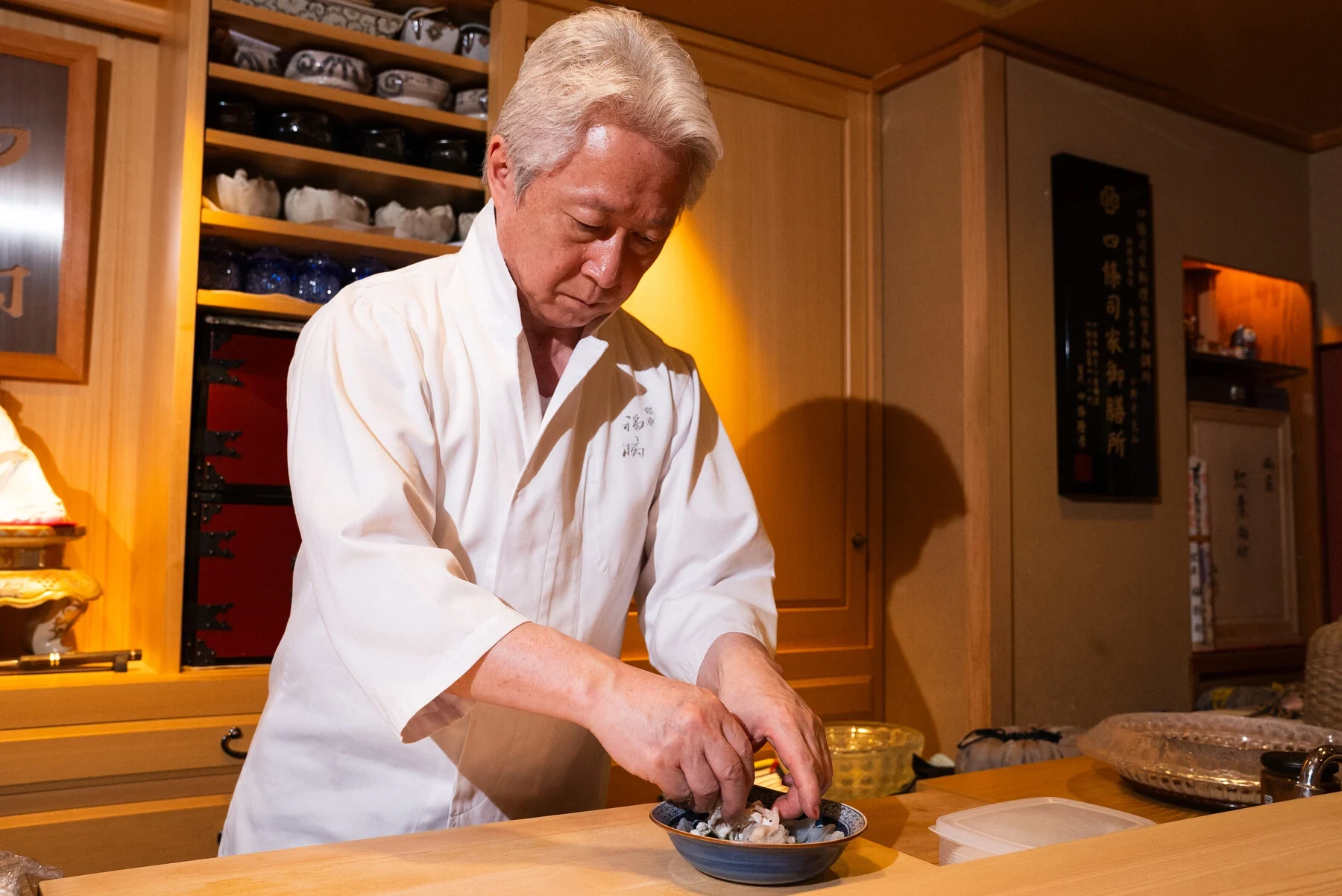
Katsuhiro Onodera
Chef
- 01CuisineSeasonal Kaiseki Omakase
- 02CityTokyo, Japan
- 03RecognitionTwo Michelin Stars
- 2 Michelin Stars · Michelin Guide
- Michelin 2 Stars · 2026
- Michelin 2 Stars · 2025
- Michelin 2 Stars · 2024
The Fifth Floor Above Ginza's Grid
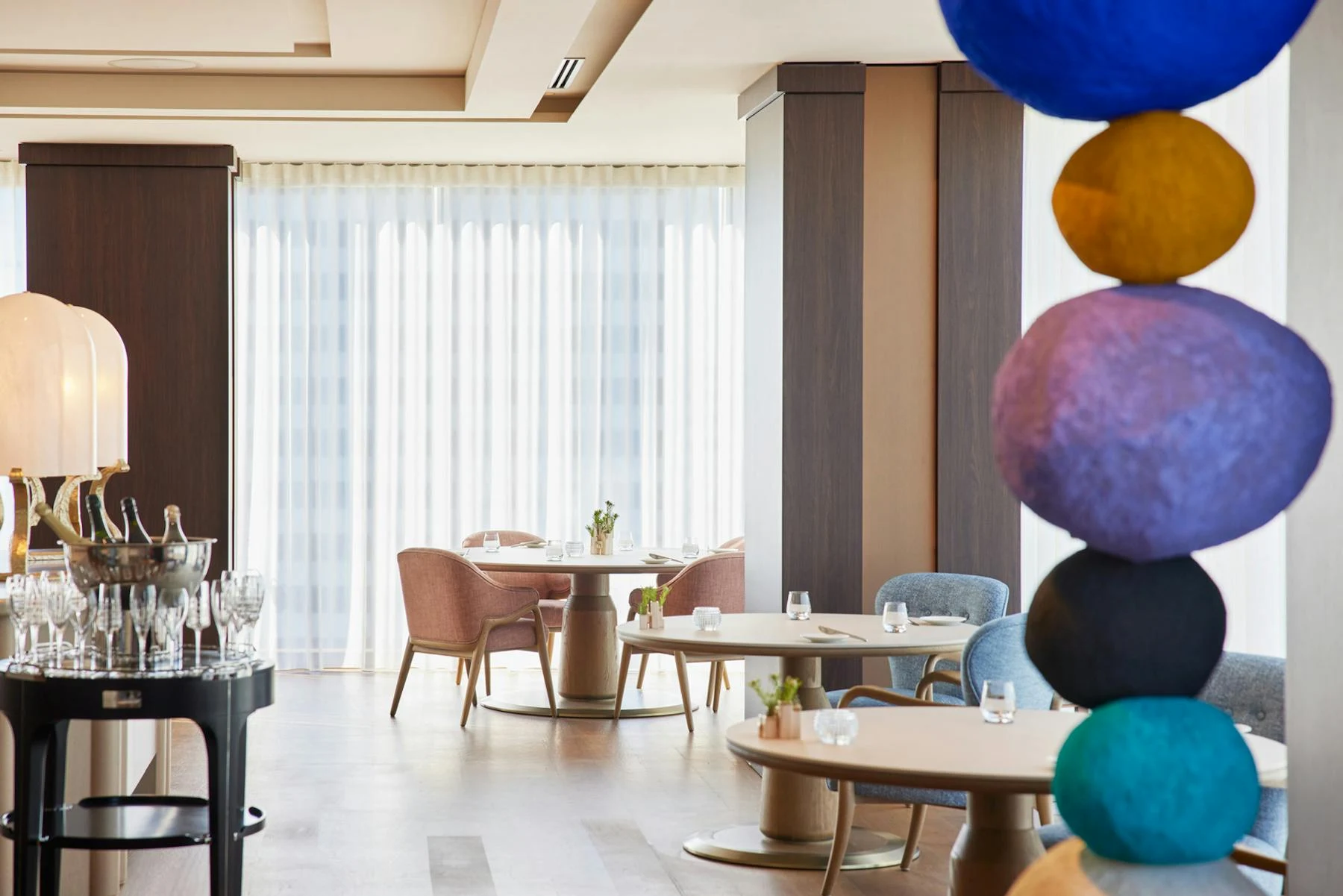
Ginza's restaurant floor plates stack vertically in a way that has no real parallel outside Tokyo. Descend from the main boulevard, and within a few city blocks you pass sushi counters, tempura rooms, and kaiseki tables layered across narrow building footprints, each floor operating as its own self-contained world. Ginza Fukuju occupies the fifth floor of a building on Chome 8. The approach itself, a lift ride rather than a street entrance, functions as a kind of decompression before the meal begins.
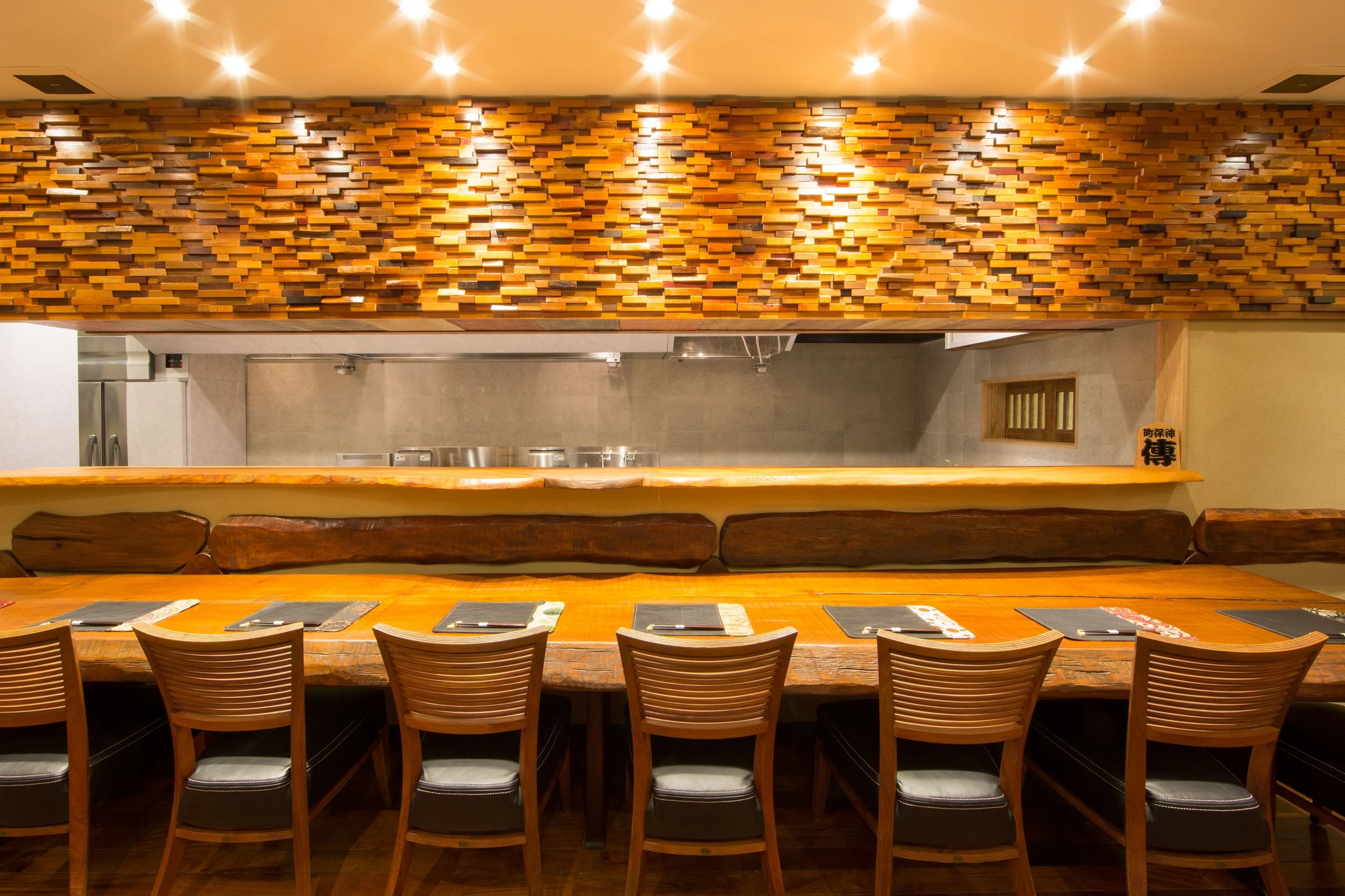
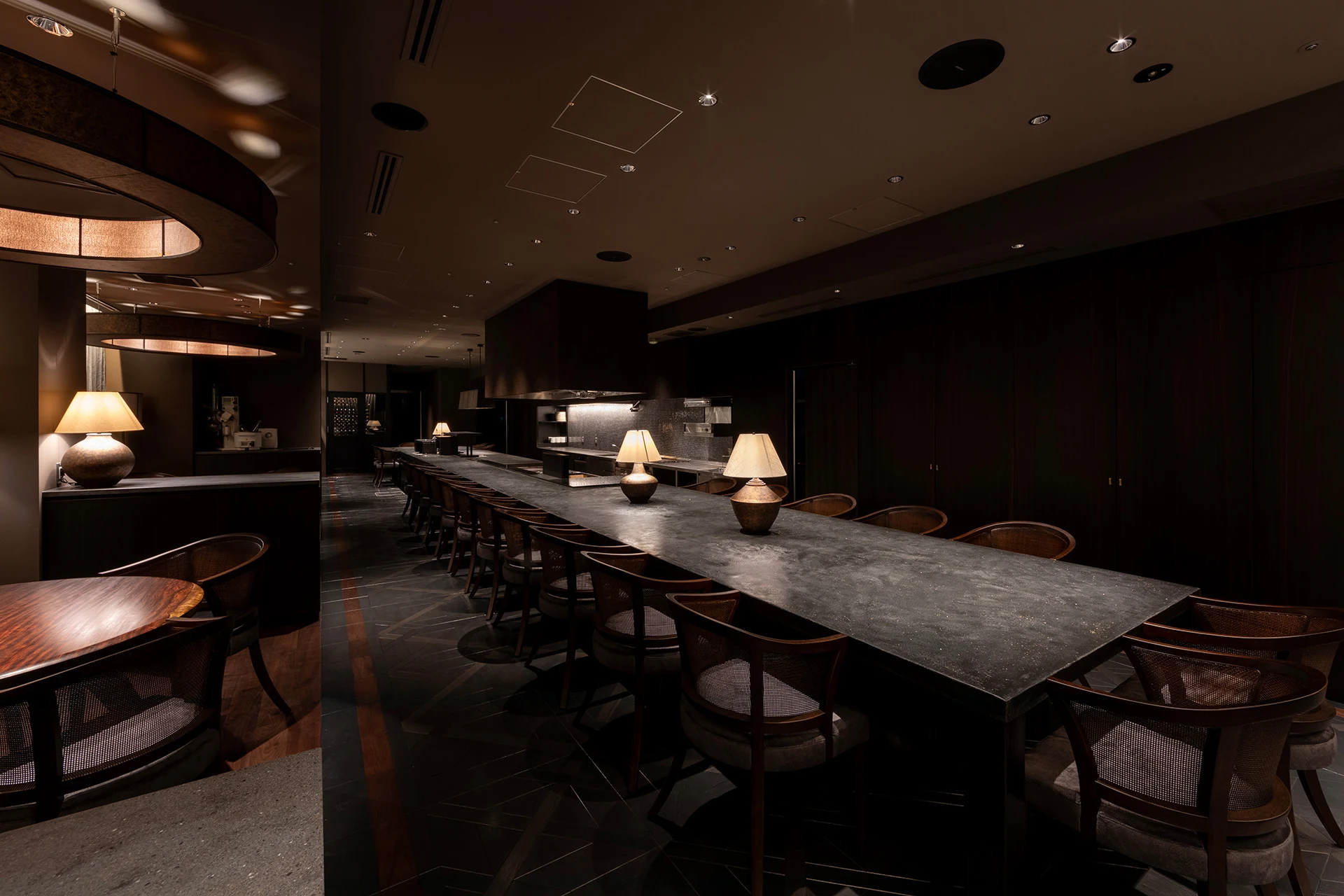
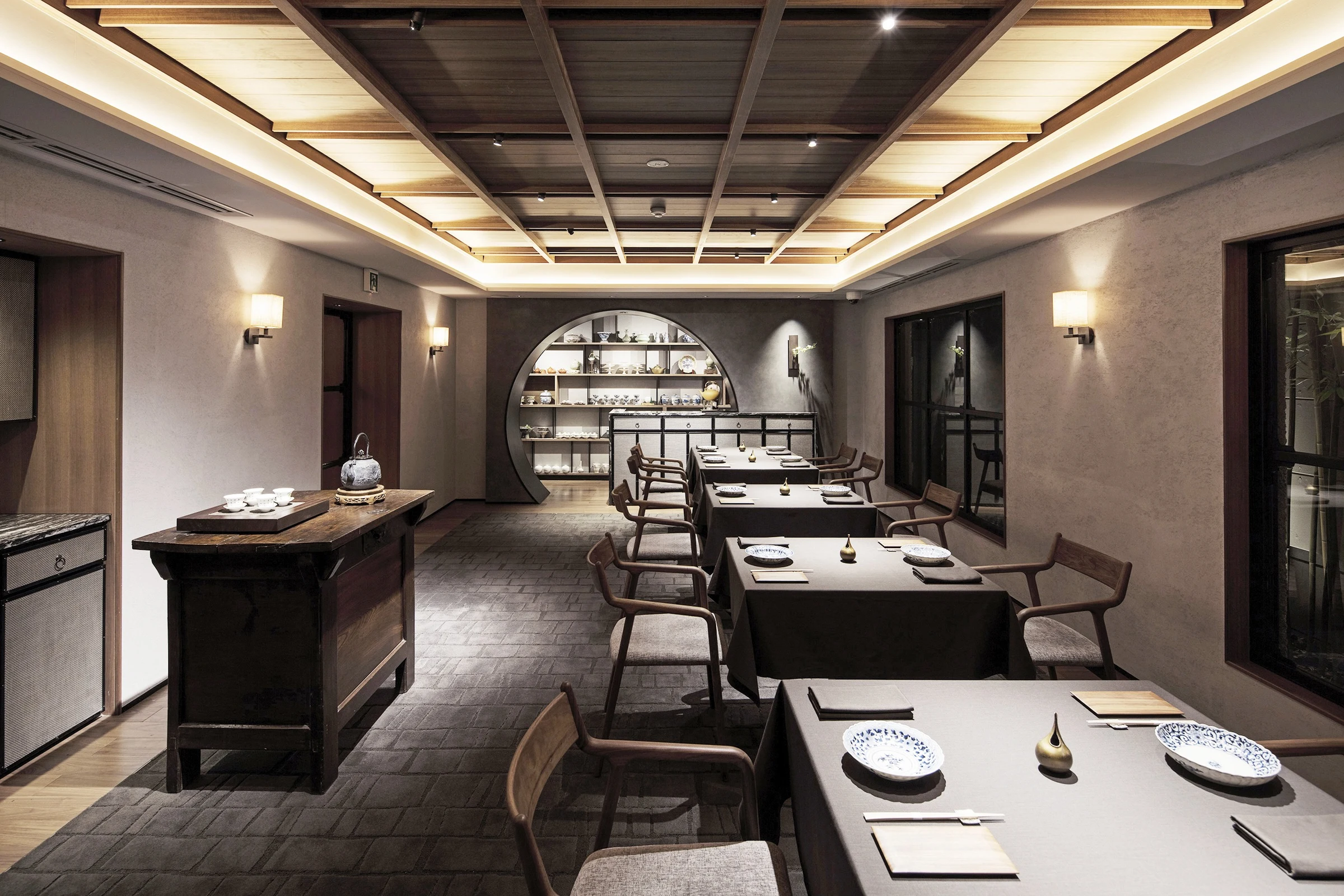
That spatial remove matters at this price tier. Ginza's leading Japanese rooms have coalesced around a formula where physical scale is deliberately constrained, and the room's atmosphere is calibrated to make the ingredients the loudest thing present. Fukuju operates in that register: the experience arrives structured and unhurried, with the kitchen's material choices doing the communicating.
Tohoku Geography as Culinary Logic
The ingredient-first tradition in Japanese fine dining has always required a geographic anchor. A chef working in that tradition without a clear regional identity tends to produce something technically accomplished but editorially diffuse. Chef Katsuhiro Onodera's anchor is Kesennuma, a coastal city in Miyagi Prefecture where the Pacific meets the Kitakami mountains. That dual geography, ocean on one side, mountains on the other, gives the kitchen's seasonal logic a specificity that goes beyond calendar-based sourcing.
The significance of that provenance becomes clearer when you consider what Tohoku's coastline actually produces. Kesennuma sits in waters where cold Oyashio and warmer Tsugaru currents converge, a thermal boundary that makes the surrounding sea exceptionally productive for shellfish, shark fin, and deep-water fish. The mountains immediately inland contribute bamboo shoots, mountain vegetables, and fresh water that define the region's spring and summer character. Onodera's cooking treats that geography not as nostalgic material but as a working ingredient logic: the raw material has a reason to be there.
This is where Fukuju diverges from the broader pattern of Ginza kaiseki, where sourcing tends to pull from Kyoto vegetable traditions and Osaka fish markets as default reference points. A Tohoku frame pushes the kitchen toward ingredients with less established fine-dining precedent, which requires a different kind of confidence. The Michelin Guide awarded two stars in both 2024 and 2025.
Economy of Means, Precision of Result
Fukuju's Michelin recognition cites the approach of uncovering flavour through minimal ingredient combinations. In kaiseki, that economy is both an aesthetic position and a technical demand. Reducing the number of ingredients in a dish removes every buffer between the cook's judgment and the ingredient's quality. A dashi pulled from single-origin kombu and one variety of katsuobushi has nowhere to hide; neither does a broth built around a single shellfish.
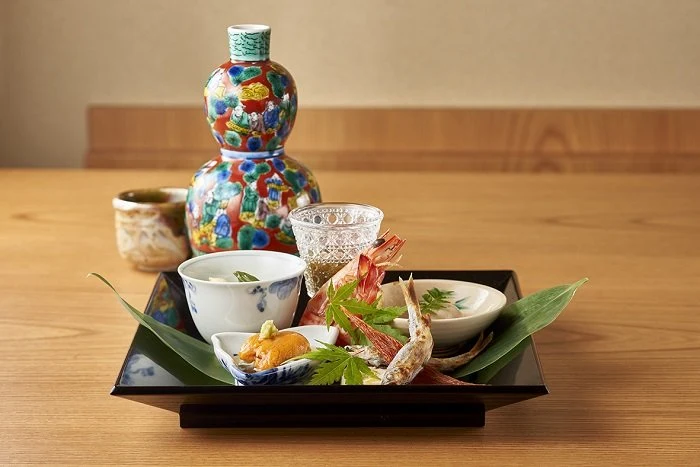
That minimalism is hardest to execute in the soup course, where the temptation to layer flavours produces results that are technically competent but lack definition. The turban shell and bamboo shoot soup served in the shell itself, cited in the award notes as a spring greeting, applies that constraint to the most legible seasonal pairing in Tohoku's calendar: coastal shellfish at the moment bamboo shoot season opens in the foothills. Serving both together in the shell is a presentational choice that reinforces the geographic logic: these two things come from the same place and arrive at the same time.
The crab preparation noted in the award record, baked in its own shell with hot pot formats that achieve simultaneous heartiness and delicacy, reflects a similar structural thinking. The shell functions as a cooking vessel that concentrates rather than dilutes, and the contrast between robustness and refinement within a single dish is a technical marker that Michelin assessors tend to track carefully across multiple visits.
Where Fukuju Sits in Ginza's Two-Star Field
Ginza carries a disproportionate share of Tokyo's top-tier Japanese restaurants, and the two-star bracket within that is competitive enough to make positioning meaningful. At ¥¥¥¥, Fukuju prices at the same level as rooms chasing the three-star tier. For comparison, Kagurazaka Ishikawa and Azabu Kadowaki operate in adjacent fine-dining registers where seasonal Japanese cooking meets sustained Michelin recognition, each with its own neighbourhood identity. Myojaku represents another tier of the city's kaiseki field, and Jingumae Higuchi and Kioicho Fukudaya each bring distinct geographic and ingredient logic of their own.
The distinguishing factor at Fukuju is the Tohoku specificity, which places it outside the Kyoto-lineage mainstream that defines much of Ginza's kaiseki conversation. Against the comparison set, RyuGin works within a more technical modernist kaiseki frame at three stars; Den operates at ¥¥¥ with a more playful, accessible register. Fukuju's two-star position at ¥¥¥¥ suggests a kitchen that has chosen depth of regional identity over broader accessibility or technical spectacle.
Beyond Tokyo, the conversation about Japanese fine dining with strong regional provenance extends to Gion Sasaki in Kyoto, Isshisoden Nakamura, and Kashiwaya Osaka Senriyama, each grounded in different regional ingredient traditions. HAJIME in Osaka and Goh in Fukuoka represent still other directions the form has taken across Japan, and akordu in Nara, 1000 in Yokohama, and 6 in Okinawa round out a national picture of how Japanese fine dining has diversified by region.
Planning a Visit
Ginza Fukuju is located at 8-8-19 Ginza, Chuo City, Tokyo, on the fifth floor. The address places it in the southern section of Ginza, within walking distance of Shimbashi and Ginza stations. At ¥¥¥¥ pricing and two Michelin stars retained across consecutive years, booking windows are likely to be competitive; advance reservation is advisable.
| Venue | Stars | Price | Register |
|---|---|---|---|
| Ginza Fukuju | Michelin 2 (2024, 2025) | ¥¥¥¥ | Kaiseki, Tohoku-anchored |
| Kagurazaka Ishikawa | Michelin recognised | ¥¥¥¥ | Seasonal Japanese, Kagurazaka |
| Azabu Kadowaki | Michelin recognised | ¥¥¥¥ | Japanese fine dining, Azabu |
| RyuGin | Michelin 3 | ¥¥¥¥ | Kaiseki, technical modernist |
| Den | Michelin 2 | ¥¥¥ | Innovative Japanese, accessible |
, , , , and our full Tokyo experiences guide.
Questions
Frequently asked
What recognition does Ginza Fukuju hold?
Ginza Fukuju holds 2 Michelin stars.
Who works at Ginza Fukuju?
Made By profiles Katsuhiro Onodera (Chef) at Ginza Fukuju.
How expensive is Ginza Fukuju?
Ginza Fukuju is listed at a price level of $$$$.
Where is Ginza Fukuju and what does it serve?
Ginza Fukuju is in Chūō, Tokyo, serving Seasonal Kaiseki Omakase.
The field
How it compares
| Place | Awards | Cuisine | Notes |
|---|---|---|---|
| Ginza Fukuju | Michelin 2 Stars | Seasonal Kaiseki Omakase | Chūō, $$$$ |
| Den | Michelin 2 Stars, World's 50 Best | Modern Japanese Kaiseki | Tokyo |
| Florilège | Michelin 2 Stars, World's 50 Best | Modern French-Japanese Plant-Based Fine Dining | Tokyo |
| Narisawa | Michelin 2 Stars, World's 50 Best | Modern Japanese Satoyama Fine Dining | Tokyo |
| Quintessence | Michelin 3 Stars | Modern French Fine Dining | Tokyo |
| Sazenka | Michelin 3 Stars, World's 50 Best | Modern Chinese Fine Dining | Tokyo |
| Sézanne | Michelin 3 Stars, World's 50 Best | Modern French Fine Dining | Tokyo |
In residence
Similar places
Modern Japanese Kaiseki
Den
Tokyo, Japan
★★ · 50 Best
Modern French-Japanese Plant-Based Fine Dining
Florilège
Tokyo, Japan
★★ · 50 Best
Modern Japanese Satoyama Fine Dining
Narisawa
Tokyo, Japan
★★ · 50 Best
Modern French Fine Dining
Quintessence
Tokyo, Japan
★★★
Modern Chinese Fine Dining
Sazenka
Tokyo, Japan
★★★ · 50 Best
Modern French Fine Dining
Sézanne
Tokyo, Japan
★★★ · 50 Best