Hakuun
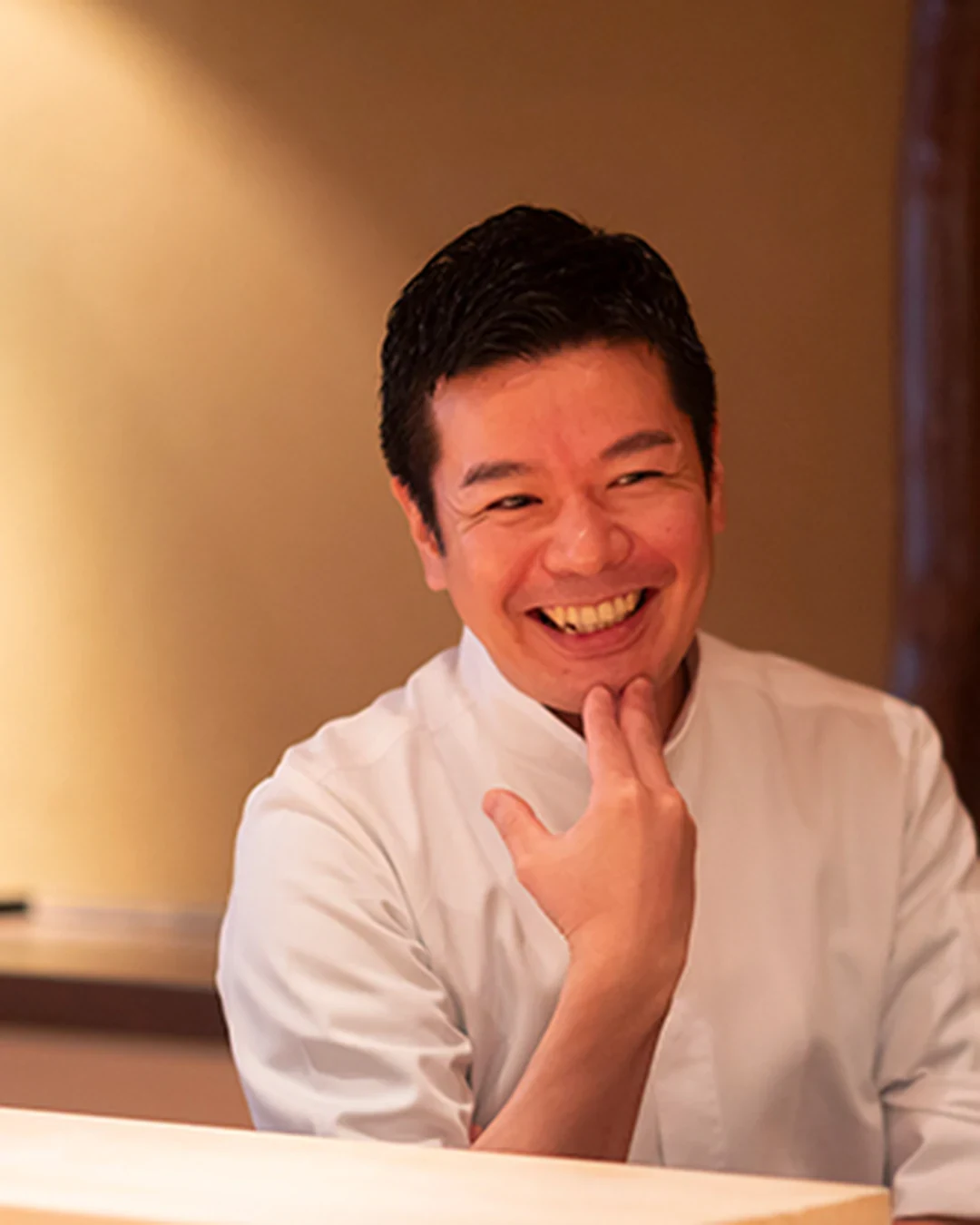
In Residence
Shingo Sakamoto
Chef
- 01CuisineModern Kaiseki Omakase
- 02CityTokyo, Japan
- 03RecognitionTwo Michelin Stars
- 2 Michelin Stars · Michelin Guide
- Michelin 2 Stars · 2026
- Tabelog Bronze #93: 4.2pts · 2026
- Opinionated About Dining Top Restaurants in Japan Recommended · 2026
- Tabelog Bronze · 2025
- Opinionated About Dining Top Restaurants in Japan Ranked #432 · 2025
- Tabelog 100 #56: 4.2pts · 2025
- Michelin 1 Star · 2024
The Counter at Minami-Aoyama
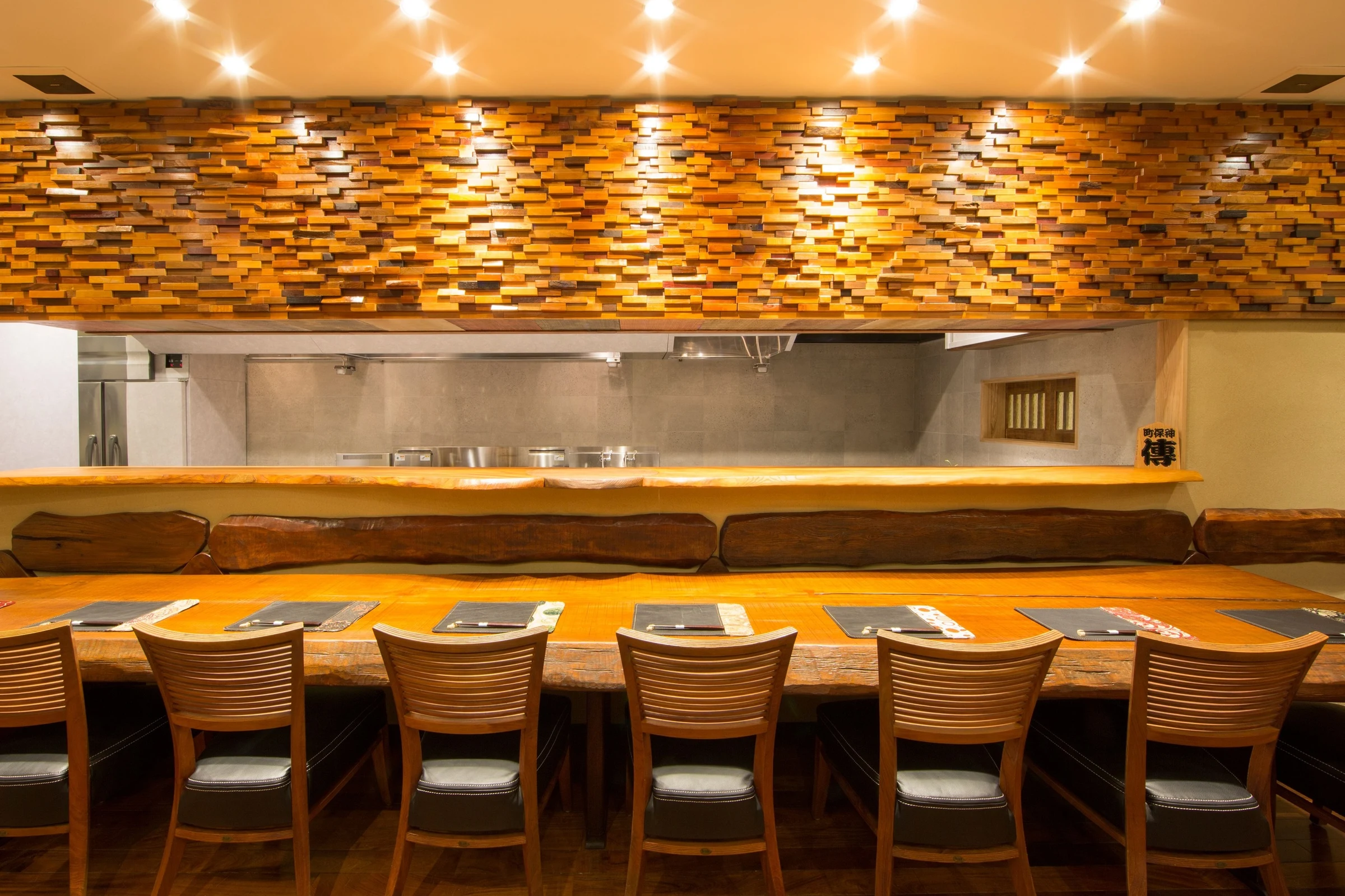
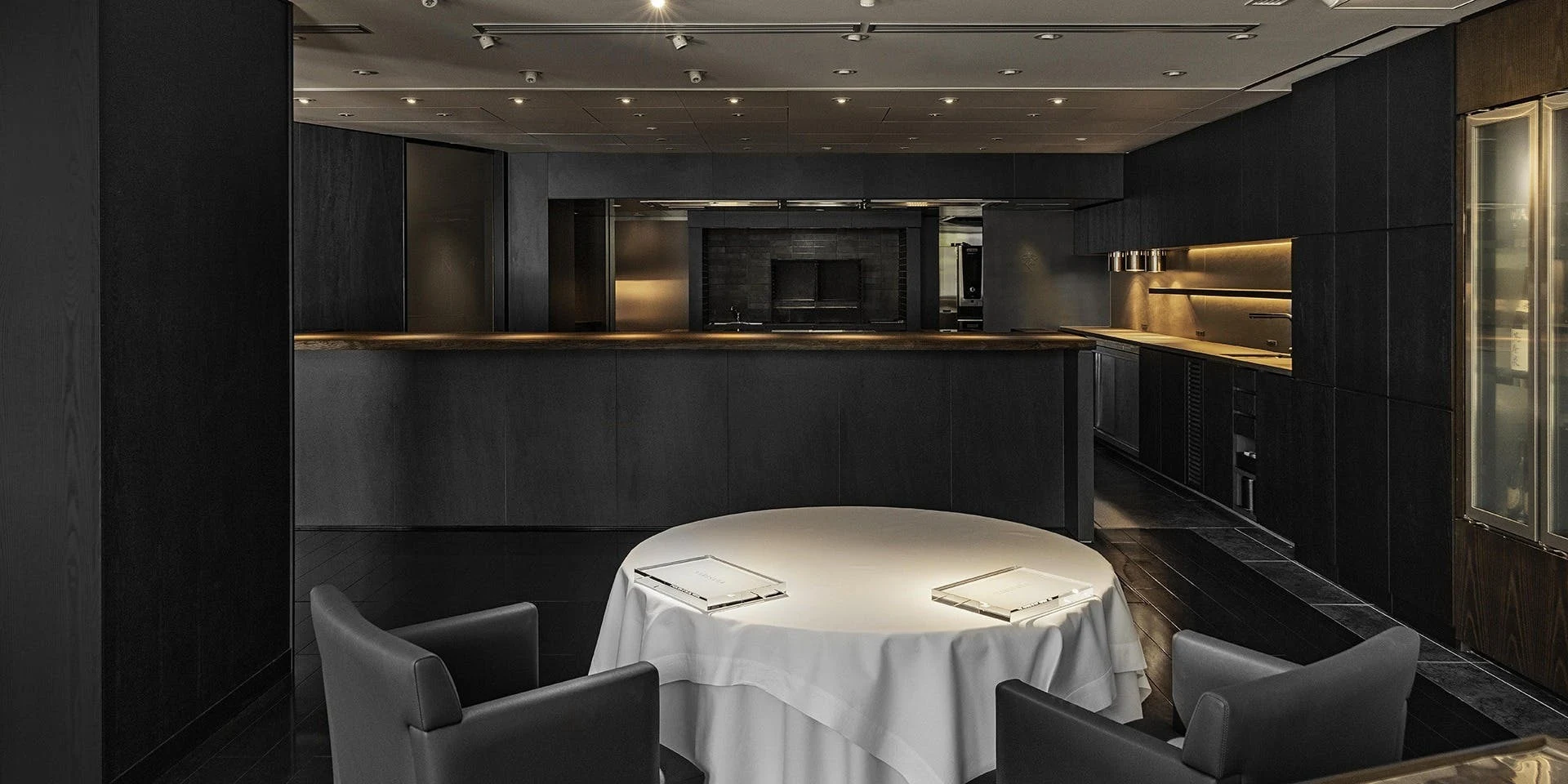
Tokyo's kaiseki tier has fractured into distinct sub-categories over the past decade. At the upper end, a cluster of small-counter restaurants, most running fewer than ten seats, most operating dinner-only with fixed sessions, has pulled away from the broader Japanese cuisine market on both price and recognition. Hakuun occupies precisely that position: eight counter seats in a ground-floor space on Minami-Aoyama's quieter residential edge, a seven-minute walk from Omotesando Station, running two evening sessions nightly from 17:30. The room is built around proximity. Everything that happens in the kitchen is visible, audible, and in certain moments, the drawing of dashi, the shaving of bonito, olfactory too. That sensory immediacy is not incidental; it is the format.
Opened in January 2021, a difficult moment for any new restaurant, Hakuun has accumulated recognition at a pace that reflects the counter's standing in a competitive neighbourhood. The venue holds a Michelin star (2024), Tabelog Bronze Awards for both 2025 and 2026, and has been selected for the Tabelog Japanese Cuisine Tokyo "100" list in both 2023 and 2025. Its current Tabelog score of 4.22 places it in the upper bracket of the platform's Tokyo Japanese cuisine rankings. Opinionated About Dining ranked it 432nd among restaurants in Japan in 2025, a meaningful position in a country with this density of serious tables.
The Sunday letter
Find new places through the people who run them.
Our Sunday email brings you the chefs, winemakers and hoteliers behind our newest stories. See a sample before you subscribe.
See a sample of the Sunday emailOne email a week. Unsubscribe from any issue.
Sake, Shochu, and the Logic of Pairing at This Price Point
At the JPY 50,000 to 59,999 dinner price point (review data suggests actual spend often reaches JPY 60,000 to 79,999 with beverages), the beverage programme at a kaiseki counter of this calibre is not supplementary, it is structural. The format at Hakuun places fragrance and temperature at the centre of every course decision, and both of those qualities interact directly with what is poured alongside them.
Japanese fine dining at this level typically approaches sake pairing through a logic of regional dialogue: a wanmono broth course, for example, where harmony between the dashi and the main ingredient is treated as the pivot point of the meal, often calls for a sake with enough restraint to extend rather than interrupt that harmony. Junmai daiginjo selections, particularly those from Niigata or Akita breweries with cooler-fermentation profiles, tend to appear in this role at comparable counters. The distinction between a sake list assembled for broad appeal and one curated to track the temperature and fragrance progressions of a specific kaiseki sequence is considerable, and at eight seats with a fixed-menu format, the latter is achievable in a way that larger rooms cannot replicate.
Shochu, less frequently addressed in Western coverage of Tokyo's kaiseki counters, enters the picture most naturally around courses involving char-grilling and straw-roasting, techniques that Hakuun applies to beef and game. Barley shochu (mugi), with its lighter aromatic profile, or sweet potato shochu (imo) from Kagoshima, can carry the smoke registers of those preparations without competing. What the counter's format and price point make structurally plausible is the depth required to execute it well.
For international visitors less familiar with sake categorisation, Tokyo's top-tier kaiseki counters at this price bracket have increasingly offered abbreviated pairing explanations at the counter, a function the eight-seat format makes natural. The proximity of chef and guest at a counter like Hakuun's creates a different kind of beverage conversation than a dining room of forty covers ever could.
What Defines the Menu's Logic
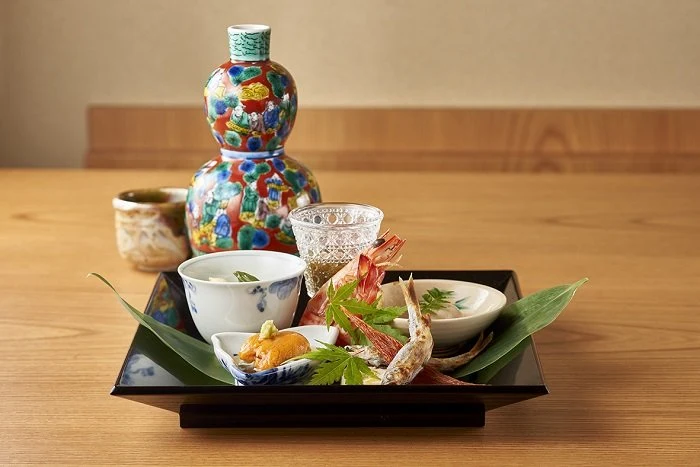
The name Hakuun, a Zen term translating as "white cloud," evoking a spirit of flowing without worldly attachment, gives a direct signal about the kitchen's temperament. The stated approach holds tradition and evolution in deliberate tension: norms are observed, but the boundaries of Japanese cuisine are treated as flexible. Beef and game, prepared over charcoal and straw, sit alongside the classical wanmono sequence where dashi is drawn and bonito shaved in front of guests. This is not fusion, but it is also not strict reconstructionism. It is a counter where a chef trained in Japanese culinary tradition is actively extending that tradition rather than preserving it.
Fragrance and temperature as organising principles mean that timing is not merely logistical but expressive. The wanmono arrives at the moment when the relationship between broth and main ingredient reaches what the kitchen considers its fullest expression, which in practice means courses are paced by the kitchen's judgement, not a clock. At eight seats and two sessions (17:30 and 20:30), that level of timing control is operationally possible. It would not be at thirty.
Hakuun's Place in Tokyo's Premium Japanese Cuisine Tier
The relevant comparison is the sub-tier of eight-to-twelve-seat kaiseki and Japanese cuisine counters operating in the JPY 50,000+ range with Tabelog scores above 4.0 and sustained award recognition.
Within that sub-tier, several Minato and Minami-Aoyama area tables occupy similar positions. Jingumae Higuchi operates in the same neighbourhood corridor. Azabu Kadowaki sits in the adjacent Azabu district with a longer track record and three Michelin stars. Kagurazaka Ishikawa, also three-starred, represents the upper ceiling of the kaiseki counter format in Tokyo. Myojaku and Ginza Fukuju sit in comparable recognition brackets. What distinguishes Hakuun within this group is its relative youth, open since January 2021, and the pace at which it has closed the credentialing gap with counters that have operated for a decade or more.
For travellers mapping Japan's kaiseki circuit beyond Tokyo, the broader context includes Gion Sasaki in Kyoto, Kashiwaya Osaka Senriyama and HAJIME in Osaka, Isshisoden Nakamura in Kyoto, and, for a different register entirely, akordu in Nara. Outside the major centres, Goh in Fukuoka, 1000 in Yokohama, and 6 in Okinawa offer distinct regional perspectives on Japanese fine dining at serious price points.
Planning Your Visit
Reservations at Hakuun are available by phone (+81-3-6812-9613) or through the OMAKASE platform. Given the eight-seat format and consistent award recognition, advance booking is advisable, the counter's Tabelog profile and Michelin status mean demand runs well ahead of capacity most weeks. The two-session structure (17:30 and 20:30) makes the dinner timing predictable, though which session is available on a given date will depend on booking lead time.
A 10% service charge applies. Major credit cards are accepted (Visa, Mastercard, JCB, Amex); electronic money and QR payment are not. The restaurant is non-smoking throughout. Private rooms are not available, but private hire of the full eight-seat counter is. The Minami-Aoyama address puts it inside a seven-minute walk of Omotesando Station and eight minutes from Gaienmae Station.
Quick Comparison: Tokyo Premium Japanese Cuisine Counters
| Venue | Seats | Price Range (Dinner) | Michelin | Tabelog Score |
|---|---|---|---|---|
| Hakuun | 8 | JPY 50,000 to 59,999 | 1 Star (2024) | 4.22 |
| Azabu Kadowaki | Counter | ¥¥¥¥ | 3 Stars | , |
| Kagurazaka Ishikawa | Counter | ¥¥¥¥ | 3 Stars | , |
| RyuGin | , | ¥¥¥¥ | 3 Stars | , |
| Den | , | ¥¥¥ | 2 Stars | , |
Questions
Frequently asked
What recognition does Hakuun hold?
Hakuun holds 2 Michelin stars.
Who works at Hakuun?
Made By profiles Shingo Sakamoto (Chef) at Hakuun.
How expensive is Hakuun?
Hakuun is listed at a price level of $$$$.
Where is Hakuun and what does it serve?
Hakuun is in Minato, Tokyo, serving Modern Kaiseki Omakase.
The field
How it compares
| Place | Awards | Cuisine | Notes |
|---|---|---|---|
| Hakuun | Michelin 2 Stars | Modern Kaiseki Omakase | Minato, $$$$ |
| Den | Michelin 2 Stars, World's 50 Best | Modern Japanese Kaiseki | Tokyo |
| Florilège | Michelin 2 Stars, World's 50 Best | Modern French-Japanese Plant-Based Fine Dining | Tokyo |
| Narisawa | Michelin 2 Stars, World's 50 Best | Modern Japanese Satoyama Fine Dining | Tokyo |
| Quintessence | Michelin 3 Stars | Modern French Fine Dining | Tokyo |
| Sazenka | Michelin 3 Stars, World's 50 Best | Modern Chinese Fine Dining | Tokyo |
| Sézanne | Michelin 3 Stars, World's 50 Best | Modern French Fine Dining | Tokyo |
In residence
Similar places
Modern Japanese Kaiseki
Den
Tokyo, Japan
★★ · 50 Best
Modern French-Japanese Plant-Based Fine Dining
Florilège
Tokyo, Japan
★★ · 50 Best
Modern Japanese Satoyama Fine Dining
Narisawa
Tokyo, Japan
★★ · 50 Best
Modern French Fine Dining
Quintessence
Tokyo, Japan
★★★
Modern Chinese Fine Dining
Sazenka
Tokyo, Japan
★★★ · 50 Best
Modern French Fine Dining
Sézanne
Tokyo, Japan
★★★ · 50 Best
The Sunday letter
Get the next Made By story in your inbox.
We send one email every Sunday morning with the places and people we covered that week.
See a sample of the Sunday emailOne email a week. Unsubscribe from any issue.