Hitching Post
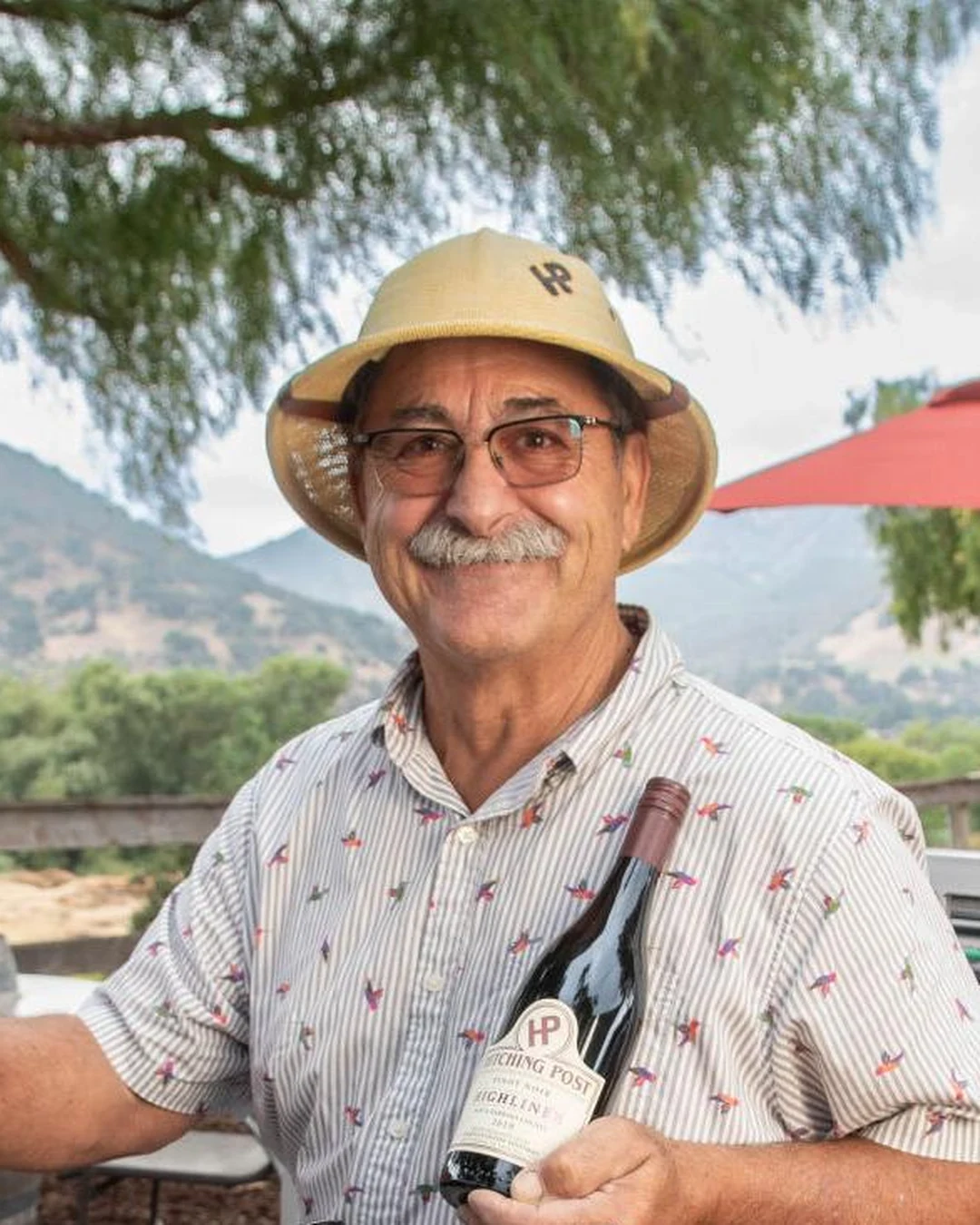
In Residence
Frank Ostini
Chef
- 01CuisineSanta Maria Style BBQ Steakhouse
- 02CityCasmalia, United States
- Opinionated About Dining Casual in North America Recommended · 2026
Where the Central Coast Feeds Itself
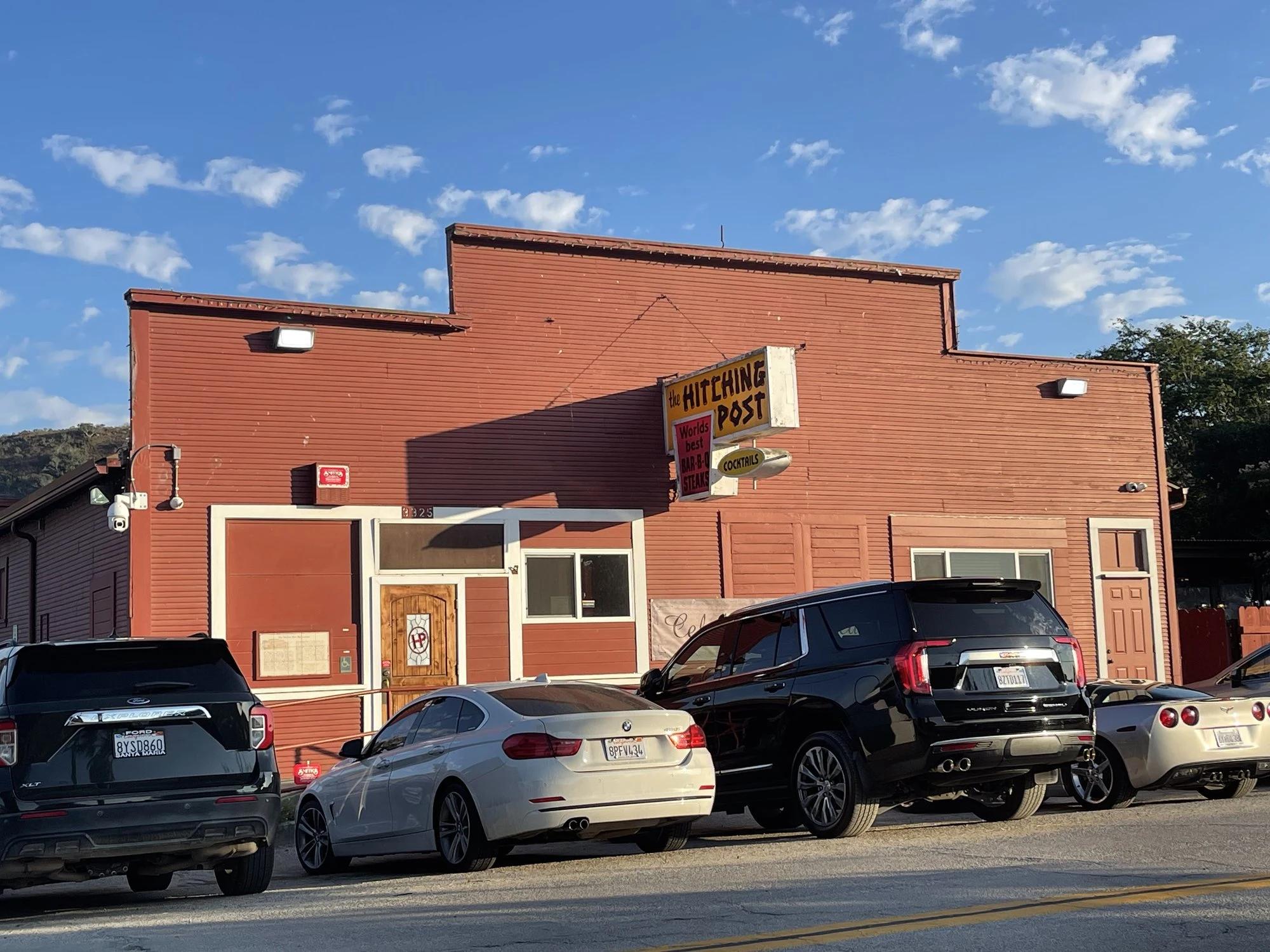
The drive into Casmalia prepares you for what follows. Point Sal Road cuts through open rangeland, past fence lines and dry-grass hills that roll toward the Pacific without ever quite reaching it. What you find at the end of that road in Casmalia is Hitching Post, a casual Santa Maria Style BBQ Steakhouse with a recommended reservation policy and an average price of about $50 per person.
Santa Barbara County occupies an unusual position in California's food geography. The coast produces world-class Pinot Noir and Chardonnay, the valleys run cattle and sheep, and the agricultural infrastructure between Lompoc and Santa Maria supports a localized food economy that rarely exports its leading work to the cities. Hitching Post sits inside that economy rather than observing it from the outside, and that placement shapes everything about the experience.
The Sourcing Argument, Made in Smoke and Fire
Central Coast barbecue in the Santa Maria tradition is one of the more specifically regional cooking formats in American food. It is not Texas brisket, not Carolina pulled pork, and not the backyard-competition style that dominates national media coverage of the form. Santa Maria-style barbecue is defined by red oak, open pit grills, and cuts associated with local ranching rather than national commodity supply chains. Tri-tip, pinquito beans cooked low and long, and salsa fresca built from local tomatoes are not marketing choices here; they are the legacy of a cattle-ranching economy that developed its own festive food culture in relative geographic isolation.
The ingredient sourcing argument that underlies any serious conversation about place-based cooking is, in Hitching Post's case, almost impossible to separate from the cooking method itself. Red oak fires burn differently from other hardwoods, imparting a flavor that is less aggressive than mesquite and more complex than fruitwood. When the protein on the grill comes from the same ranching corridor that also supplies the fuel tradition, the connection between land and plate is structural rather than aspirational. This is the kind of sourcing relationship that restaurants like Blue Hill at Stone Barns in Tarrytown and Single Thread Farm in Healdsburg construct with considerable deliberateness and communicate at length. Hitching Post arrived at the same place through historical accident and geographic circumstance, which is a different kind of credential.
For context, compare this to what high-budget farm-to-table programs in urban markets actually require: sourcing teams, signed supply agreements with farms hours away, and menu engineering that must account for price volatility in specialty-producer markets. Lazy Bear in San Francisco and Alinea in Chicago operate at the far end of that model, where the sourcing relationship is real but mediated by considerable operational infrastructure. Hitching Post's version is more compressed: the agricultural supply lives nearby, the cooking format was shaped by the same ranching community that produced the supply, and the restaurant has not needed to reinvent that relationship.
Sideways Country
The film Sideways, released in 2004, brought the Santa Ynez Valley into the international imagination as wine country. Hitching Post appeared in the film not as a prop but as a functioning location, which reflected its actual status in the community. The restaurant's wine program, built around the region's Pinot Noir production, had real depth before the film created demand for it. That sequence matters: the film found something that existed rather than creating the thing it depicted.
The more relevant comparable set for Hitching Post is the tier of regionally anchored American restaurants that operate with genuine local roots: places like Bacchanalia in Atlanta and Frasca Food and Wine in Boulder, which have built sustained reputations through consistency within a specific regional context rather than through national press cycles.
The Wine Program as Regional Document
Santa Barbara County's wine identity has evolved considerably since the early 1980s, when Pinot Noir plantings in the Santa Maria and Santa Ynez valleys began demonstrating that California's Central Coast could produce something distinct from Napa and Sonoma. The fog patterns that push inland through the transverse mountain ranges create a diurnal temperature range that slows ripening and preserves acidity in ways that the warmer valleys to the north cannot replicate. This is the climatic condition that makes Santa Barbara Pinot Noir structurally different, not merely stylistically different, from Russian River or Carneros expressions.
A restaurant wine program built on this regional production is, at minimum, a useful document of what the local growers have been doing. The broader California wine conversation involves reference points like The French Laundry in Napa and Providence in Los Angeles, where wine programs operate at a different price tier and with different ambitions. Hitching Post's wine identity is narrower in scope but more specifically rooted in the county's own production, which for a visitor trying to understand what Santa Barbara grows and why, is a more direct education.
Planning a Visit
Casmalia is a small community in Santa Barbara County, roughly equidistant between Santa Maria to the north and Lompoc to the south. Travelers based in Santa Barbara should allow approximately 45 minutes to an hour by car; those coming from San Luis Obispo face a similar drive south on US-101. There is no meaningful public transit option for this stretch of Central Coast, and no adjacent hotel infrastructure in Casmalia itself, so this is a destination visit rather than a walk-in one. Given the restaurant's film association and regional reputation, advance contact before visiting is advisable, particularly on weekends. Those planning broader Central Coast itineraries can reference our full Casmalia restaurants guide for additional context on the area.
Addison in San Diego and Le Bernardin in New York City represent a different register entirely; likewise Atomix in New York City and ITAMAE in Miami operate in the contemporary tasting-menu format that Hitching Post does not. What Hitching Post offers is a specific argument about a specific place, made through fire, ranching-corridor beef, and a wine program built from the vineyards visible on the drive over.
Questions
Frequently asked
Who works at Hitching Post?
Made By profiles Frank Ostini (Chef) at Hitching Post.
How expensive is Hitching Post?
Hitching Post is listed at a price level of $$$.
Where is Hitching Post and what does it serve?
Hitching Post is in Casmalia, Casmalia, serving Santa Maria Style BBQ Steakhouse.
The field
How it compares
| Place | Cuisine | Notes | Awards |
|---|---|---|---|
| Hitching Post | Santa Maria Style BBQ Steakhouse | Casmalia, $$$ | · |
| Arca | Modern Yucatan Fire-Cooked Small Plates | Tulum | World's 50 Best |
| Benu | Modern Asian Fusion Fine Dining | San Francisco | Michelin 3 Stars, World's 50 Best |
| Hiša Franko | Modern Slovenian Fine Dining | Kobarid | Michelin 3 Stars, World's 50 Best |
| Kitchen Table | Modern British Fine Dining | London | Michelin 2 Stars |
| Ricard Camarena | Modern Vegetable-Focused Mediterranean Fine Dining | València | Michelin 2 Stars, World's 50 Best |
| Robuchon au Dôme | Contemporary French Fine Dining | Macau | Michelin 3 Stars |
In residence
Similar places
Modern Yucatan Fire-Cooked Small Plates
Arca
Tulum, Mexico
50 Best
Modern Asian Fusion Fine Dining
Benu
San Francisco, United States
★★★ · 50 Best
Modern Slovenian Fine Dining
Hiša Franko
Kobarid, Slovenia
★★★ · 50 Best
Modern British Fine Dining
Kitchen Table
London, United Kingdom
★★
Modern Vegetable-Focused Mediterranean Fine Dining
Ricard Camarena
València, Spain
★★ · 50 Best
Contemporary French Fine Dining
Robuchon au Dôme
Macau, Macau
★★★