Honke Owariya
- 01CuisineTraditional Kyoto Soba
- 02CityKyoto, Japan
Well water for every bowl
- Opinionated About Dining Casual in Japan Ranked #102 · 2026
- Opinionated About Dining Casual in Japan Ranked #87 · 2025
- Opinionated About Dining Casual in Japan Ranked #54 · 2024
- Opinionated About Dining Casual in Japan Ranked #57 · 2023
Water first, then the noodles
The well water touches the flour before service begins. Ariko Inaoka, owner and Chef at Honke Owariya in Karasuma-oike, Kyoto, keeps that sequence close to the house’s identity: kneading, boiling, and dashi all depend on the same Kyoto groundwater. Since 2014, she has run the restaurant as the 16th owner, following her father, the 15th owner, and her grandfather, the 14th. The inheritance is not only a name on a noren. It is a way of deciding what may change and what must stay on the bench.
The family line began in 1465, when ancestors came from Owari Province to Kyoto and worked first as confectioners. Their craft was buckwheat before it was soba in the modern restaurant sense: soba rice cakes, sweet red bean paste, dough made with buckwheat flour, eggs, and sugar. The same hands that kneaded, rolled, and cut sweets later supplied noodles to Zen temples. In 1702, under the professional name Denzaemon, the restaurant formally opened. Successive generations carried that name until Inaoka’s tenure under her own.
Horai soba in layers
Honke Owariya’s method still reads through confectionery discipline. Buckwheat is kneaded, stretched, cut, boiled, and set into a Kyoto idiom that values clarity over display. The dashi depends on mineral-rich well water from the original house; even later Kyoto branches were opened only with access to comparable groundwater, including water drawn from 50-meter-deep sources for the Takashimaya branch.
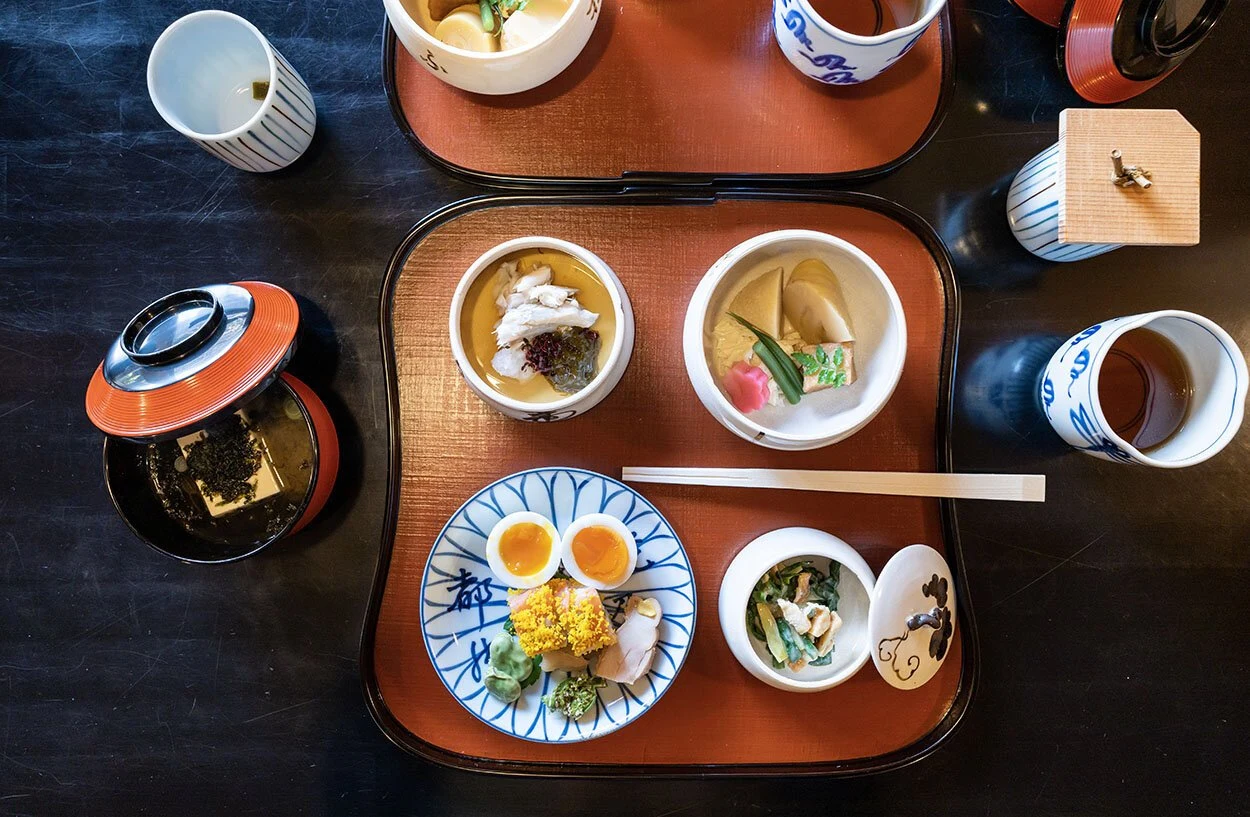
Horai Soba, developed by the 14th generation after the war, arrives as a tower of buckwheat noodles with eight toppings: shiitake mushrooms, nori, sliced egg, sesame seeds, wasabi, leeks, shrimp tempura, and grated daikon. The guest seasons the bowl with dashi and sauce, building each mouthful rather than receiving a finished composition. Kake soba is plainer, broth and leeks, which makes the water harder to hide. Soba mochi reaches further back, to the 13th generation and the late Edo to early Meiji period: azuki beans wrapped in a soba-flavored crust, finished with black sesame seeds.
Paper screens and small rooms
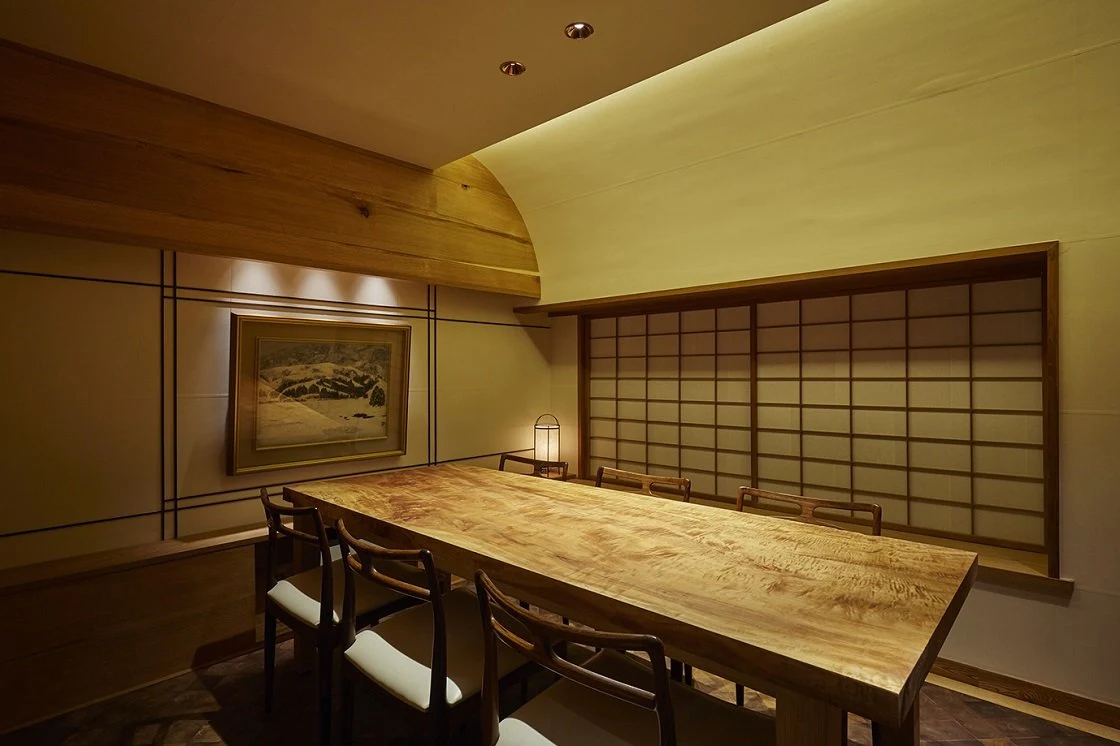
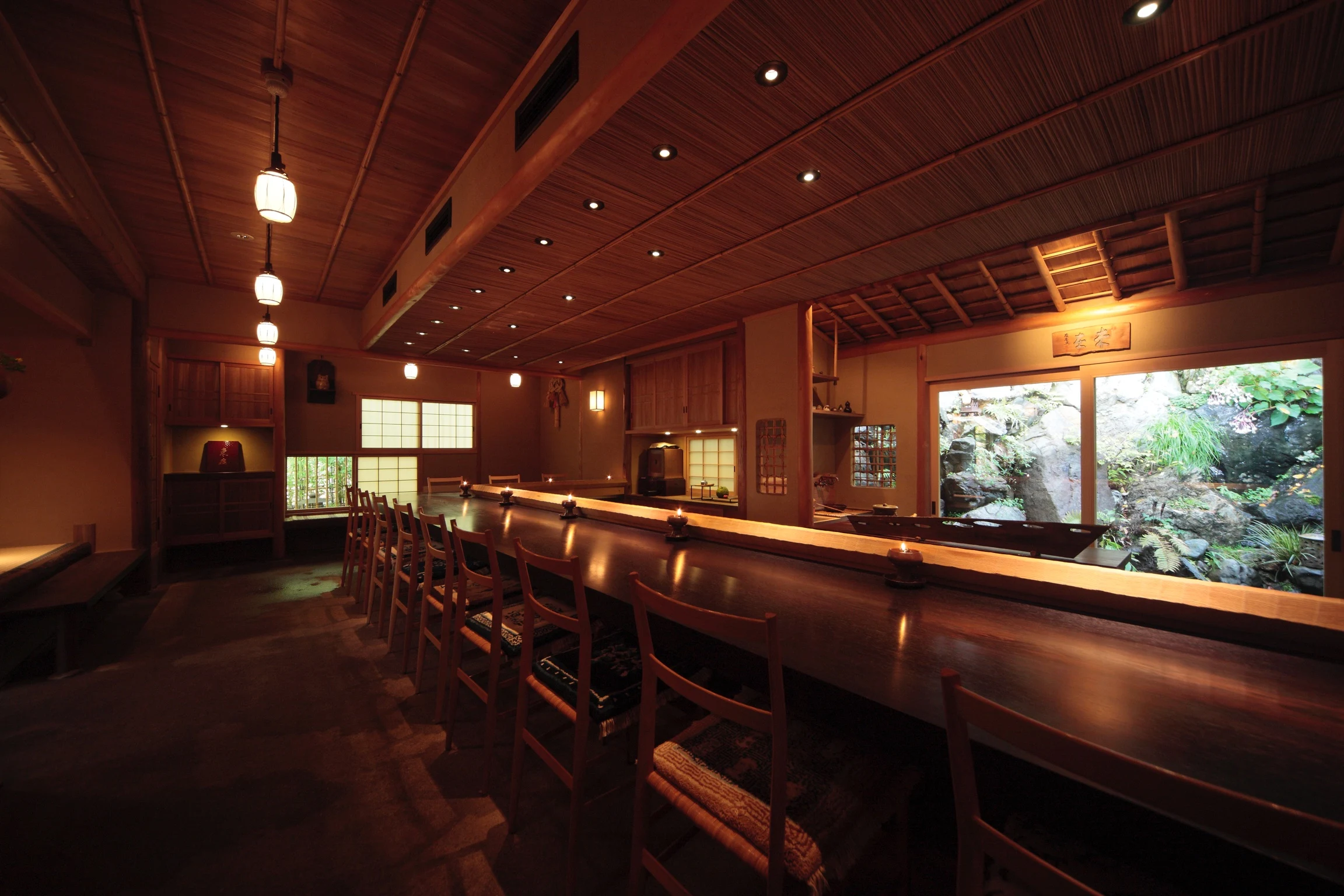
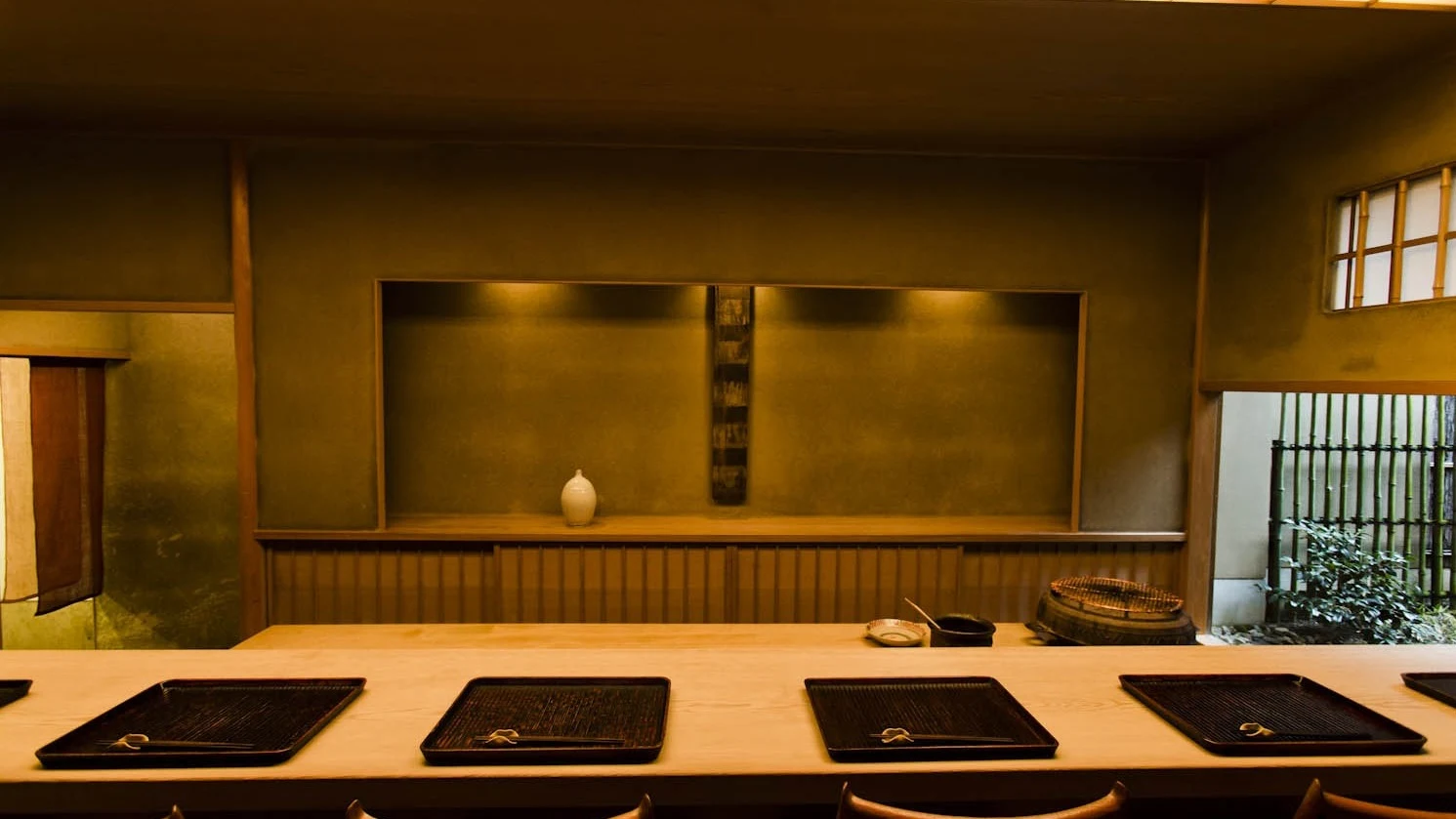
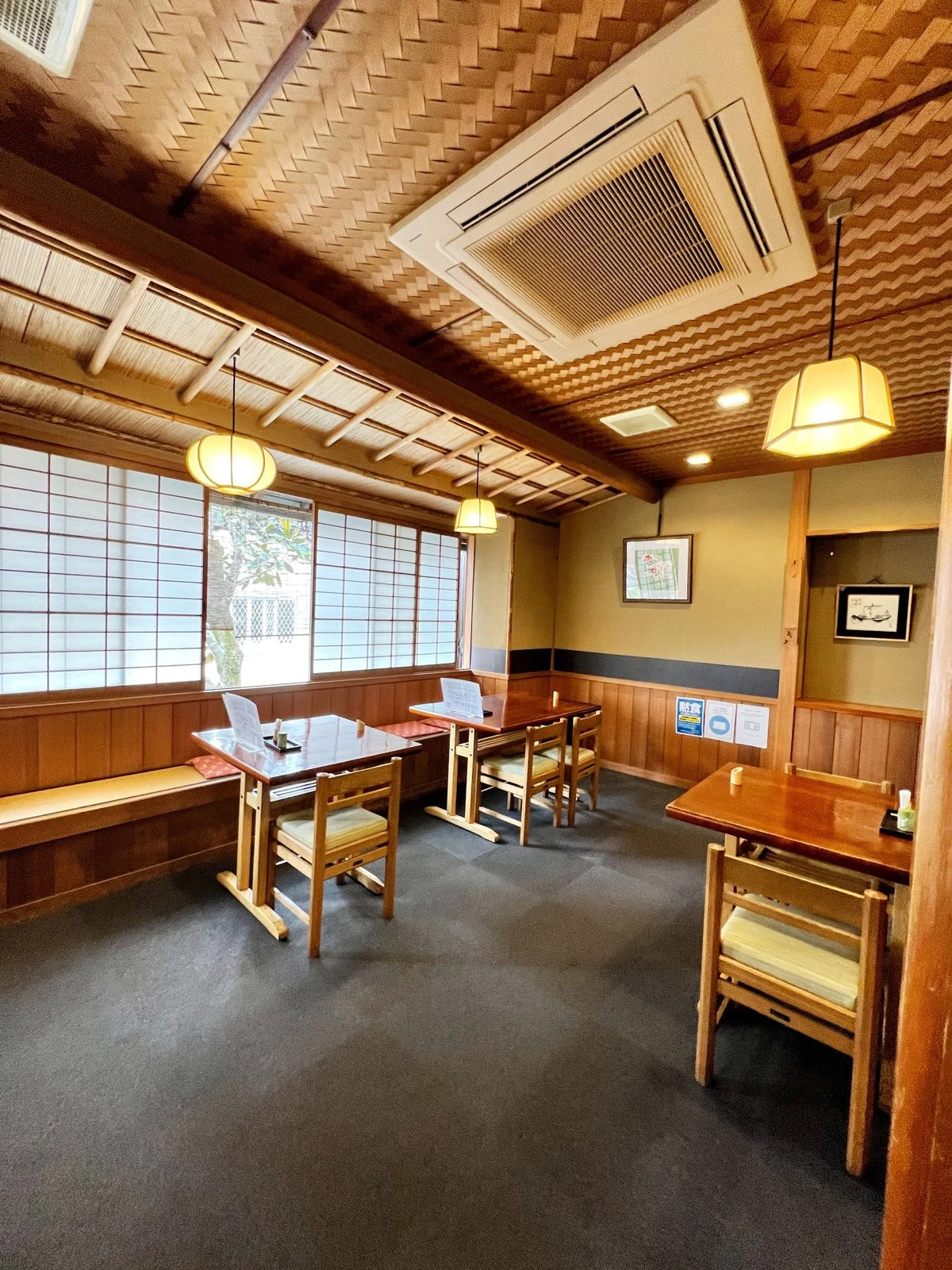
The room keeps the pace low. Honke Owariya occupies an early Meiji-period wooden townhouse on the original plot, near Nijo Castle and Kyoto Imperial Palace, with a simple facade that still reads Sobamochi. Guests pass beneath a magnolia tree and by a Buddhist sutra before the counter and tatami alcoves divide the house into small, quiet rooms. Paper screens soften the light. Wood carries the age without asking to be admired.
The restaurant’s temple ties have not been left as decoration. A Zen monk still visits monthly to chant sutras and eat soba, a small continuity with the period when Owariya supplied Kennin-ji, Shokoku-ji, Myoshin-ji, and the Imperial Palace. In the final three days of the year, the house produces over 15,000 noodle dishes for dining and takeout. The close of the calendar is counted in Horai Soba.
Questions
Frequently asked
What is Honke Owariya known for?
Honke Owariya is known for traditional Kyoto soba, especially Horai Soba, along with soba with tempura, cold soba, and warabi mochi.
Who runs Honke Owariya?
Ariko Inaoka is the owner and chef, and she has run the restaurant since 2014 as the 16th owner in the family line.
What is the setting like?
The restaurant occupies an early Meiji-period wooden townhouse on its original plot in Karasuma-oike, with small rooms, paper screens, and tatami alcoves.
Is booking advised?
Reservations are recommended.
What are the opening hours?
Honke Owariya is open daily from 11am to 7pm, with last order at 6:30pm, and it is closed on January 1 and 2.
The field
How it compares
| Place | Cuisine | Notes | Awards |
|---|---|---|---|
| Honke Owariya | Traditional Kyoto Soba | Nakagyō, $$ | · |
| Gion Sasaki | Modern Kaiseki | Kyoto | Michelin 3 Stars |
| Hyotei | Traditional Kaiseki | Kyoto | Michelin 3 Stars |
| Isshisoden Nakamura | Traditional Kyoto Kaiseki | Kyoto | Michelin 3 Stars |
| Kikunoi Honten | Kyoto Kaiseki Ryotei | Kyoto | Michelin 3 Stars |
| Mizai | Traditional Kaiseki | Kyoto | Michelin 3 Stars |
| Ogata | Kaiseki Omakase | Kyoto | Michelin 2 Stars |