Skip to Content
    Made ByRestaurant

    Hunan Slurp

    Chao Wang

    In Residence

    Chao Wang

    Chef

    1. 01CuisineChinese Noodles
    2. 02CityManhattan, United States
    Hunan Slurp (restaurant)

    Chao Wang, chef at Hunan Slurp in Manhattan, shapes Hunan rice noodles with an artist’s eye and daily-meal memory.

    • Opinionated About Dining Casual in North America Recommended · 2026

    Rice noodles held in the frame

    The bowl arrives with heat rising first, then the line of rice noodles beneath it. Chao Wang, chef and owner at Hunan Slurp in Manhattan, builds that moment from Hunan memory and a painter’s sense of proportion. He has led the East Village kitchen since 2018, after studying at China’s Central Academy of Fine Arts and the New York Academy of Art, and the route matters because the food here is composed without losing its appetite. Hometown Lu Fen is his signature dish, named with the directness of a place carried into a bowl. Wang has spoken of rice noodle shops as part of daily rhythm, the sound of slurping in alleyways, warm soup after long nights of drinking and talking. At this counter, that memory is not treated as nostalgia. It becomes a working method: broth, noodle, chile, garnish, color, negative space. The plate has to land as food before it lands as image. Wang’s own sentence for the connection is plain: “Cooking, for me, is like an extension of art.”

    Broth, chile, and the mifen line

    The program turns on mifen, the Hunan rice noodles that give the restaurant its name and its sound. Fish Fillet Mifen carries a milky pork bone broth simmered overnight, wok-fried fish, and seasonal greens, a bowl built from softness, oil, steam, and a clean lift of heat. Other versions move through Braised Beef Lu Fen and Pepper & Pork rice noodles, keeping the noodle at the center rather than treating it as a carrier. Hunan cooking gives Wang a wide chile register: hot, sharp, aromatic, sometimes layered through different peppers rather than delivered as one blunt note. The kitchen also reaches beyond bowls into Hunan Charcuterie, Stir-Fried Young Chicken, Hunan Salad, frog, smoked pork, skewered beef, and a General Tso’s Chicken reset with fresh chile, haw flakes, and pineapple. The gesture is consistent across the pass. Wang keeps grassroots meals close to their everyday origin, then adjusts form, spacing, and finish so the dish reads clearly in a Manhattan dining room.

    Wood slats around the room

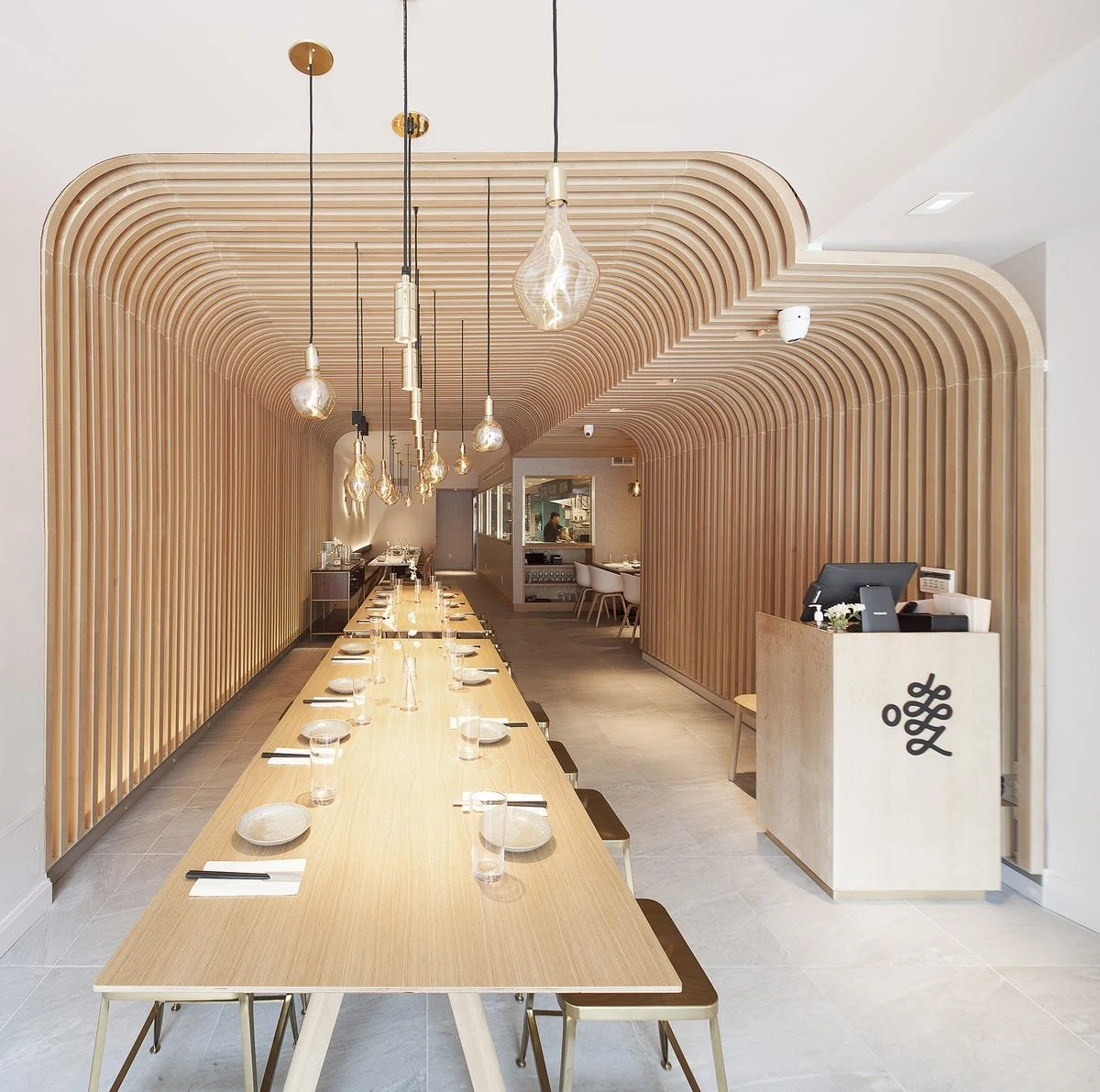
    The room gives the noodle its own architecture. New Practice Studio shaped the dining space with a cocooning wooden tunnel, thin slats running overhead and along the walls in a way that recalls strands of rice noodle without turning the reference into decoration alone. Large communal tables sit near the front, with marble-topped tables and banquette seating farther back. The East Village street remains close to the room, visible in the bright, warm exchange between the door, the counter, and the tables. While bowls move from the pass, the space holds two tempos at once: the quick pull of soup and noodles, and the slower looking that Wang’s background invites. Nothing in the room asks the diner to be quiet. The sound belongs here.

    A daily meal with a drawn line

    Hunan Slurp's bowls are disciplined. Wang’s work here keeps returning to the daily meal, sharpened by visual training and by the memory of noodle shops as social infrastructure. The next measure of the place is already on the table: Hometown Lu Fen, broth hot, rice noodles gathered, a Hunan name intact.

    Questions

    Frequently asked

    Who is behind Hunan Slurp?

    Chao Wang is the chef and owner at Hunan Slurp in Manhattan. He has led the East Village kitchen since 2018, after studying at China’s Central Academy of Fine Arts and the New York Academy of Art.

    What is the restaurant known for?

    The menu turns on mifen, the Hunan rice noodles that give the restaurant its name and its sound. Bowls such as Fish Fillet Mifen, Braised Beef Lu Fen, and Pepper & Pork rice noodles keep the noodle at the center.

    What is the signature dish?

    Hometown Lu Fen is the signature dish. The name is used with the directness of a place carried into a bowl.

    What is the dining room like?

    New Practice Studio shaped the dining room with a cocooning wooden tunnel, thin slats along the walls and overhead, communal tables near the front, and marble-topped tables with banquette seating farther back.

    The field

    How it compares

    PlaceCuisineNotesAwards
    Hunan SlurpChinese NoodlesEast Village, $$·
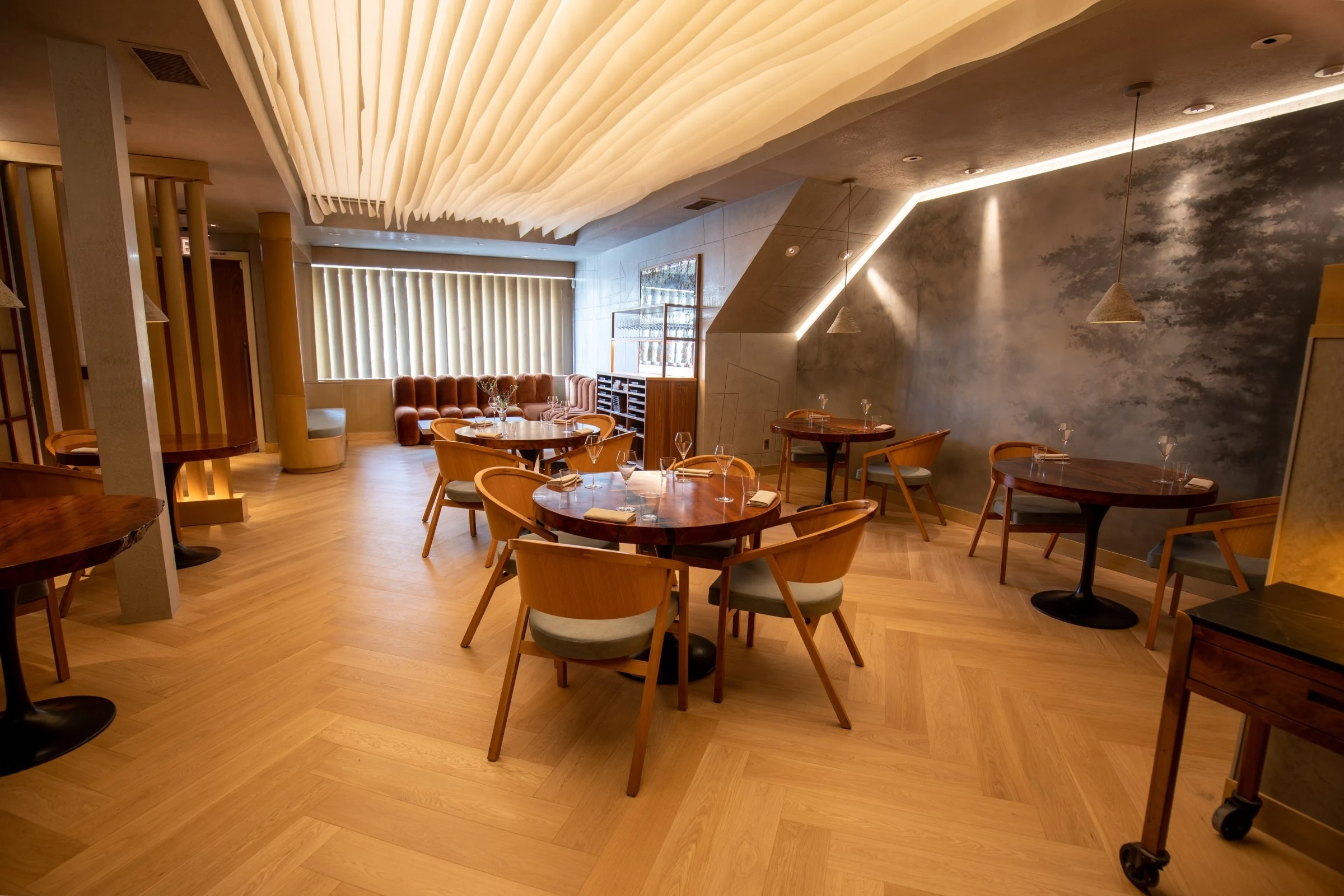
    Atelier CrennfrenchSan FranciscoMichelin 3 Stars, World's 50 Best
    AzurmendiModern Basque Fine DiningLarrabetzuMichelin 3 Stars, World's 50 Best
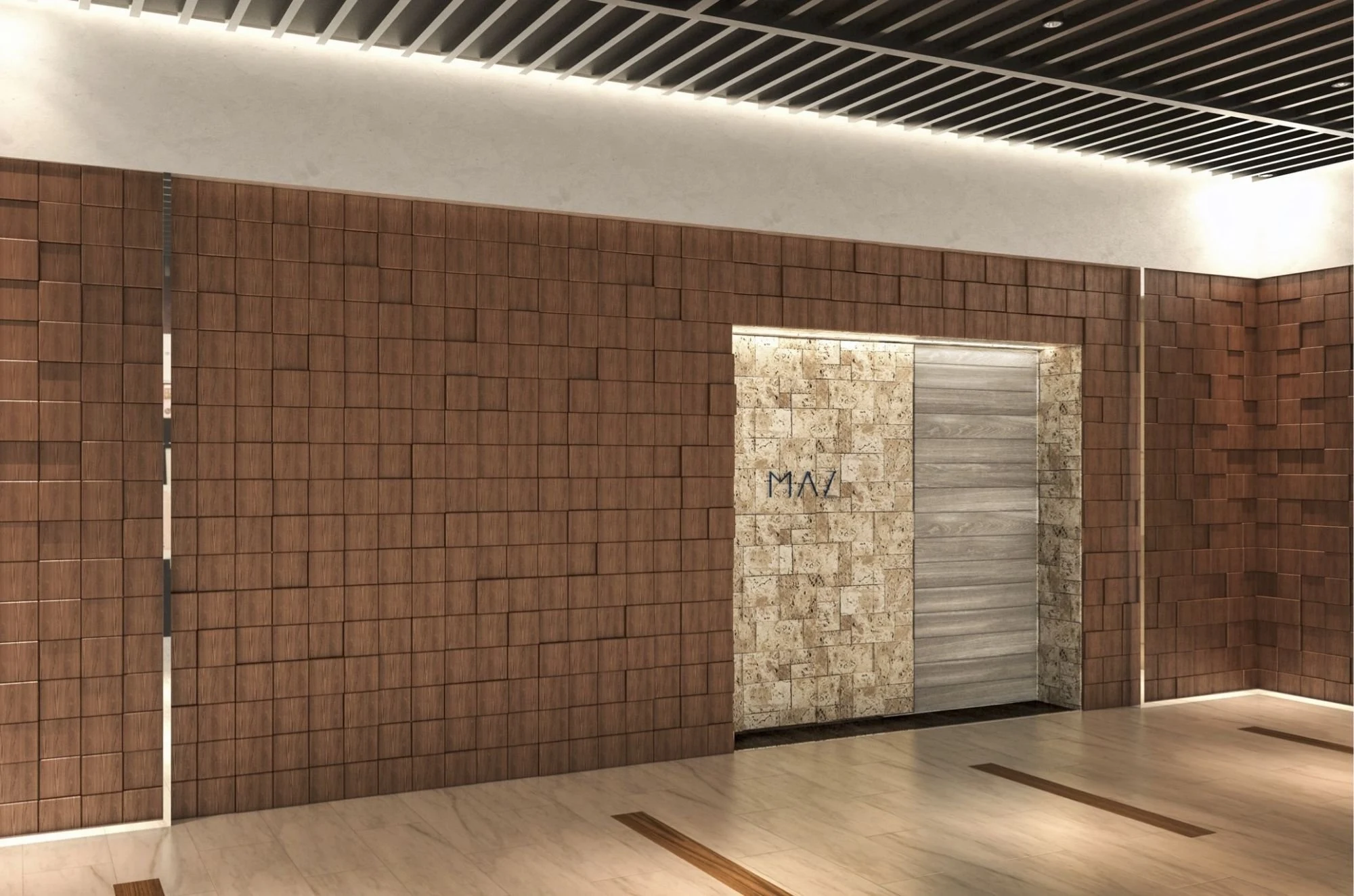
    MAZInnovative Peruvian-Japanese FusionTokyoMichelin 2 Stars, World's 50 Best
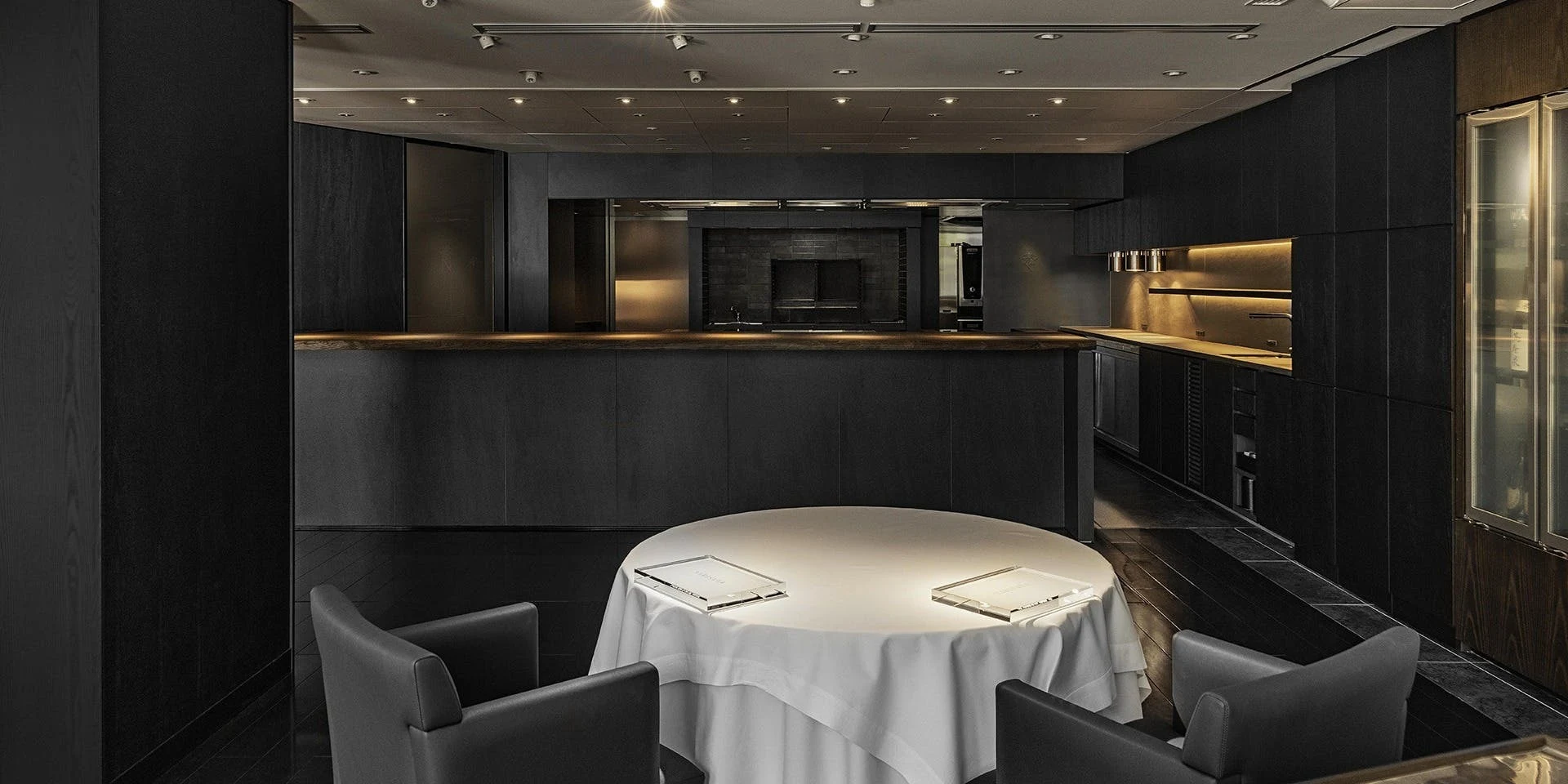
    NarisawaModern Japanese Satoyama Fine DiningTokyoMichelin 2 Stars, World's 50 Best
    The Glenturret Lalique RestaurantModern Scottish Fine DiningCrieffMichelin 2 Stars
    ZénNeo-Nordic with Japanese InfluencesSingaporeMichelin 3 Stars, World's 50 Best

    In residence

    Similar places

    ← Browse all places