Kobal Wines
- 01CityPtuj, Slovenia
- Falstaff Winery - 4 Stars · 2026
Approaching wine in Ptuj means dealing first with history, then with hills. The city’s wine culture sits within Slovenian Styria, where viticulture reaches back to the Roman period and where the Haloze sub-region gives producers a demanding agricultural brief: steep slopes, cool nights, marl-rich soils, and vines that need patient farming rather than scale. Kobal Wines belongs to this smaller, site-driven side of Slovenian wine, with its Ptuj tasting room below the castle hill acting less like a visitor complex and more like a place for reading the region through glassware.
The useful way to understand the estate is not through luxury signals, but through terrain. Haloze is a hillside region of terraces and severe gradients, with slopes described up to 45 degrees and vineyard elevations reaching 400 metres. That geography matters because Slovenian Styria’s reputation leans heavily toward aromatic white varieties, freshness, and mineral tension rather than power. Kobal’s work with Sauvignon Blanc, Pinot Gris, Furmint, Yellow Muscat, Traminer, Welschriesling, and Blaufränkisch places it inside that cool-climate conversation, while its skin-contact and pét-nat styles bring a more contemporary edge to a long local tradition.
Haloze gives the wines their structure, not just their origin story
In many Central European wine regions, terroir language can become decorative. Here it has practical consequences. Steep, terraced vineyards raise labour demands; marl and limestone soils shape water retention and root depth; cool evening winds help preserve acidity. Kobal’s stated focus on older vines, averaging more than 35 years, adds another layer to that regional reading. These are not ornamental details for a back label. They explain why the wines are framed around aromatic clarity, freshness, varietal definition, and a mineral line rather than oak weight or ripeness for its own sake.
The estate works from roughly 14 hectares under vine in the Haloze hills and also draws on relationships with local growers. That combination puts it in a familiar Slovenian pattern: a producer anchored by a defined home landscape, but not sealed off from the surrounding farming community. For travellers, that matters because the tasting is less about a single trophy bottle than about a regional grammar. The portfolio moves across still whites, rosé, red, sparkling, pét-nat, and orange or skin-contact wines, giving a compact survey of how Haloze fruit can shift under different cellar choices.
The winemaking details are unusually relevant for understanding the house style. Classic-line wines typically use cold maceration, with grapes held on skins for 24 hours or longer, and in some cases 24 to 72 hours, to draw out aroma and texture. Other wines move into warmer maceration, open-leading fermenters, barrel fermentation, or extended skin contact of 14 to 48 days. Roots and Bajta bottlings are associated with spontaneous fermentation, fine-lees ageing, stainless steel or oak maturation, and restrained sulphur at bottling. The result is a technical profile that sits between precision and low-intervention thinking rather than drifting into rusticity for effect.
The tasting-room format suits travellers who want discussion over spectacle
Ptuj’s strongest wine experiences tend to reward attention to context. Kobal’s enoteca format fits that pattern: small in scale, conversational in tone, and tied to a historic building rather than a panoramic estate theatre. The atmosphere is better suited to tasting and discussing terroir-driven Styrian wines than to treating the visit as a quick souvenir stop. Noise is described as conversational, the dress code is casual, and the format is built around flights, education, and estate visits by arrangement.
Bojan Kobal is the central winemaking figure, an oenologist whose background includes work at Ptujska Klet before establishing the family’s Haloze estate in 2019. That biography matters because Ptuj’s wine identity is not new; it is a continuum of cellars, growers, and regional knowledge. Kobal’s position is more interesting as a continuation and redirection of that tradition than as a personality-led brand story. The estate’s modernity comes through its range: classic aromatic whites for the Styria purist, plus pét-nat and skin-contact wines for drinkers who follow Europe’s natural-leaning fringe without wanting the wines to lose their regional accent.
There is no need to force Kobal into a grand château framework. Its appeal is more specific. It suits visitors who want a compact, guided encounter with Haloze soils, cool-climate acidity, and the practical decisions behind maceration, lees work, spontaneous fermentation, and barrel versus inox ageing. Food pairing is not the point here; neither is a resort-style visit. The reward is interpretive: a clearer sense of why this part of Slovenia produces wines with lift, aromatic detail, and a sense of hillside tension.
How to place Kobal within a Slovenian wine itinerary
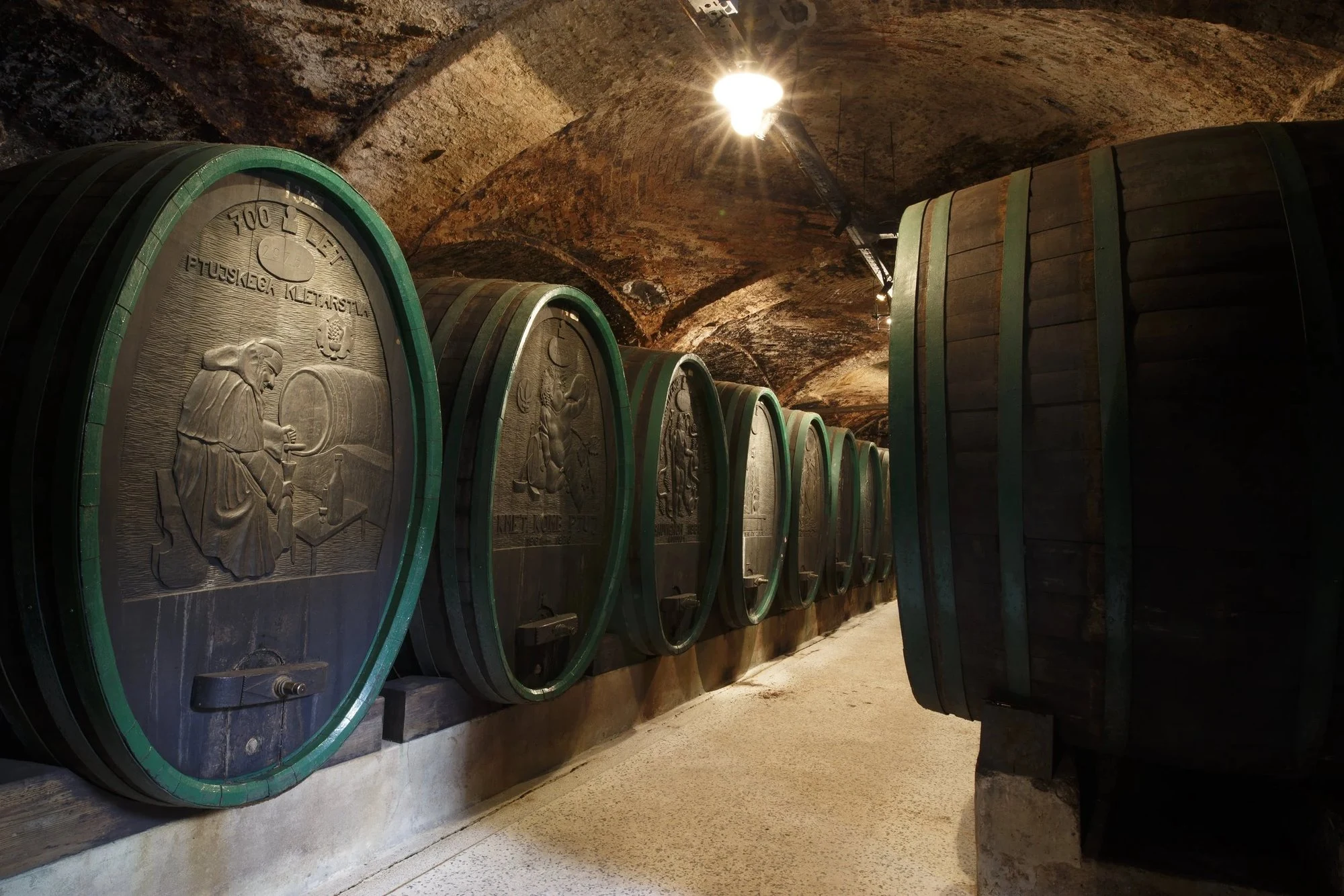
For a Ptuj-focused trip, the natural frame is regional depth rather than venue-hopping volume. Kobal Wines pairs logically with the city’s broader cellar culture and with other Ptuj winery references such as Ptujska Klet, Ptujska klet vinarstvo d.o.o. and Conrad Fürst & Söhne. Travellers building a wider Slovenian route can then compare Styria’s aromatic, hillside-driven idiom with western and coastal-leaning producers including Atelier Kramar in Dobrovo, Batič in Sempas, Bjana in Biljana, Blažič in Dobrovo v Brdih, and Burja in Podnanos. For a cross-border Central European lens, »der Steiner« Hans Steiner in Podersdorf am See and & Handwein in Mannheim extend the comparison into Austria and Germany.
In Ptuj itself, the winery works well as part of a day shaped around the old city rather than as an isolated detour. Use our full Ptuj wineries guide for cellar planning, then fold in meals, hotels, bars, and local culture through our full Ptuj restaurants guide, our full Ptuj hotels guide, our full Ptuj bars guide, and our full Ptuj experiences guide. The sharper itinerary gives Kobal enough time for explanation, because this is a winery where the slope, soil, and cellar method are the substance of the visit.
Questions
Frequently asked
How expensive is Kobal Wines?
Kobal Wines is listed at a price level of $$.
The field
How it compares
| Place | Notes | Awards |
|---|---|---|
| Kobal Wines | Old town / below Ptuj castle hill, $$ | · |
| Catena Zapata | Agrelo | World's 50 Best |
| Château Pape Clement | Pessac | World's 50 Best |
| Conrad Fürst & Söhne | Ptuj | · |
| Domaine Bruno Clair | Marsannay-la-Côte | · |
| La Rioja Alta | Haro | · |
| Ptujska Klet | Ptuj | · |