Kuishinbo Yamanaka
In Residence
Koji Yamanaka
Chef
- 01CuisinePremium Omi Beef Steakhouse
- 02CityKyoto, Japan
- Opinionated About Dining Top Restaurants in Japan Ranked #131 · 2026
- Tabelog Bronze #209: 4.3pts · 2026
- Tabelog Bronze · 2025
- Tabelog 100 #76: 4.3pts · 2025
- Opinionated About Dining Top Restaurants in Japan Ranked #115 · 2025
- Opinionated About Dining Top Restaurants in Japan Ranked #118 · 2024
- Opinionated About Dining Top Restaurants in Japan Ranked #131 · 2023
Approaching Katsura, Kyoto changes register. The temple-axis city gives way to a residential west-side rhythm, where destination restaurants often hide in plain sight rather than announce themselves with hotel-lobby polish. That setting matters for Kuishinbo Yamanaka: the room belongs to a Kyoto tradition in which serious cooking can sit away from the tourist spine, and where beef is treated less as spectacle than as a long-form craft.
Kyoto is not only a kaiseki city. Its modern dining culture also carries a deep yoshoku thread, the Japanese adaptation of Western dishes that moved from urban novelty to comfort grammar over the last century. Steak, hamburger steak and wine service sit naturally inside that lineage. The point here is not a generic wagyu splurge; it is the Kyoto version of meat cookery, where sourcing, doneness and restraint carry the same weight that broth clarity or rice temperature might carry elsewhere.
Omi beef gives Kyoto steak a different centre of gravity
Japan’s premium beef conversation is often dominated by better-known regional names, but Omi beef has a particular historical pull in Kansai. Raised in Shiga, east of Kyoto, it belongs to one of Japan’s older wagyu traditions and fits Kyoto’s palate for controlled richness rather than blunt luxury. Kuishinbo Yamanaka’s public identity is tied to “azuki-colored Omi Beef,” a phrase that signals attention to breed, fat quality and visual maturity rather than a menu built around theatre.
That distinction separates this style of steak house from teppanyaki performance counters. The cultural reference point is closer to yoshoku discipline: beef as the centre of a meal, supported by Western-derived technique and Japanese calibration. The listed categories, steak, hamburger steak and yoshoku, place the restaurant in that hybrid zone. It is a useful corrective for visitors who read Kyoto only through multi-course kaiseki or ramen queues; the city’s postwar Western-Japanese dining rooms form their own serious canon.
The recognition supports that reading. Kuishinbo Yamanaka is a Tabelog Award Bronze winner for 2026, following a run of Bronze awards from 2021 to 2025 and Silver awards in 2019 and 2020. It was also selected for Tabelog Steak・Teppanyaki WEST “Tabelog 100” in 2024 and 2025, and appears in Opinionated About Dining’s 2026 Top Restaurants in Japan Ranked at number 131. Those are not decorative badges; in Japan’s restaurant culture, Tabelog scores and category selections function as strong demand signals, especially outside the central sightseeing districts.
Kyoto’s steak field is narrow compared with Tokyo’s larger luxury beef circuit, but that gives the serious rooms clearer identities. Yutaka offers a useful local comparison within Kyoto steak, while Arakawa (Kyoto), Steak in Tokyo points to the more formal, capital-city end of the category. Outside Japan, a place such as Arthur J., Steak in Los Angeles shows how different the American steakhouse grammar is: larger-room hospitality, bolder cuts, a more declarative wine-and-beef culture. Kyoto’s version is quieter and more exacting.
Chef Koji Yamanaka and the long memory of yoshoku beef
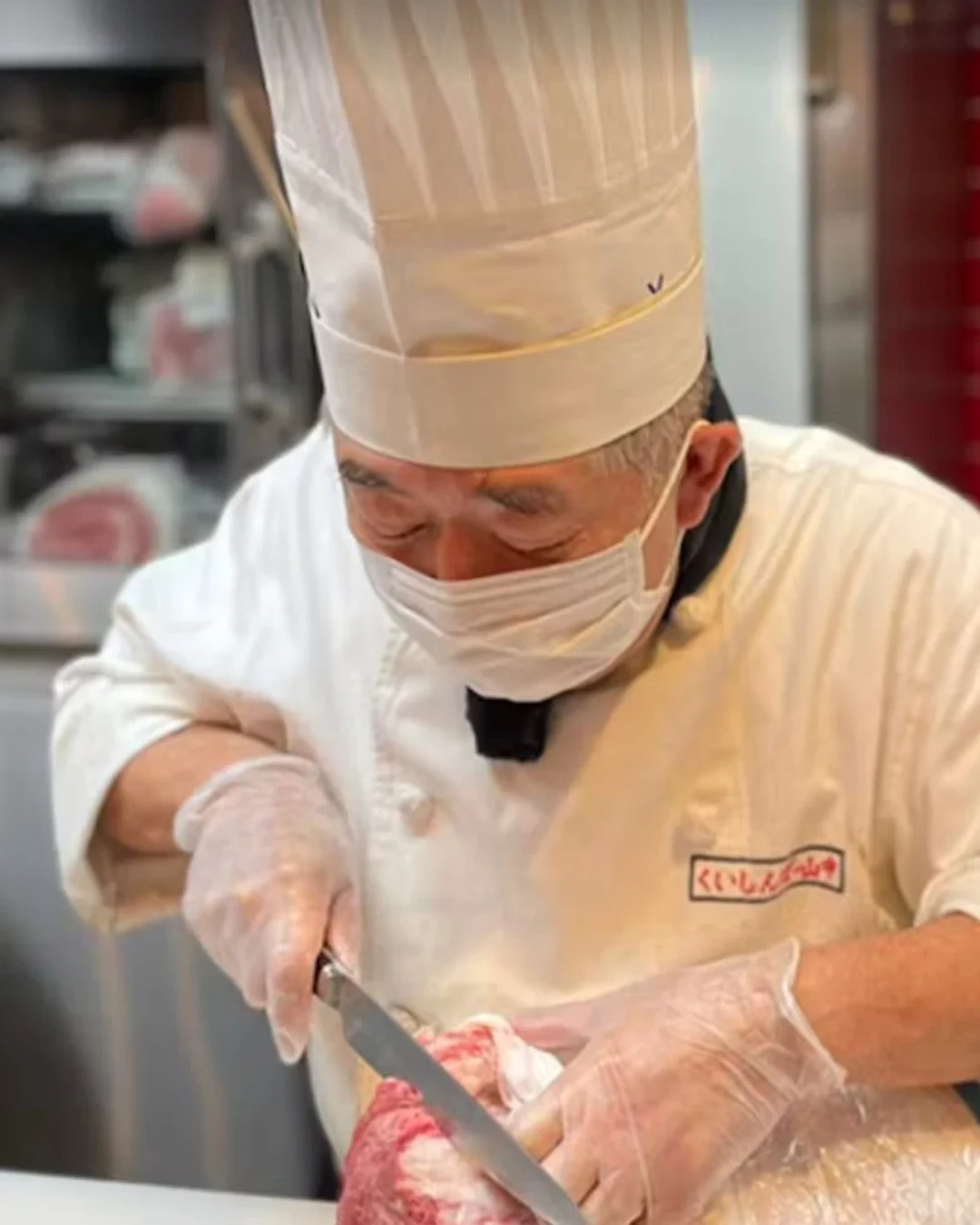
Chef Koji Yamanaka’s name matters as a credential, not as a personality hook. The restaurant’s reputation rests on continuity around beef rather than reinvention for the camera. A public description frames the work as a 40-year dedication to beef, and that timescale aligns with yoshoku’s status in Japan: not imported novelty, but a domestic genre with its own standards, regulars and exacting local audience.
That is why hamburger steak belongs in the same conversation as steak here. In lesser hands, it can be read as casual comfort food; in a serious yoshoku context, it becomes a test of grind, fat, heat and sauce. Kyoto diners understand that hierarchy. A dining room can be modest in format and still judged with the severity usually reserved for sushi counters or kappo kitchens. Tabelog’s 4.28 score in the 2026 award listing is one measure of that local scrutiny.
The west-Kyoto location also changes the decision. This is not a between-temples convenience stop. It fits a Kyoto itinerary built around a deliberate meal, especially for travellers who have already covered the city’s expected genres and want a clearer view of Kansai beef culture. For a broader route through the city, Our full Kyoto restaurants guide is the better starting point, with adjacent planning in Our full Kyoto hotels guide, Our full Kyoto bars guide, Our full Kyoto wineries guide and Our full Kyoto experiences guide.
How to read the meal within Kyoto's wider dining map
Kyoto rewards category contrast. A city often sold through refinement also has a strong appetite for direct, satisfying formats: grilled meat, pork buns, curry, French bistros, cafés and small counter rooms all sit beside the ceremonial dining image. Nearby editorial comparisons help sharpen the choice. 3TOKU6MI Shijo karasuma ten belongs to a different casual-meat register; 551蓬莱 represents the city’s everyday Kansai appetite; [ki:] and Abbesses show how Kyoto absorbs contemporary and French influences without losing its local dining codes.
For travellers comparing Japanese meat formats across cities, the useful question is not which room is grander. It is what kind of beef culture is being expressed. -Grilled beef Sukiyaki- KAMAKURA TANUKIAN 鎌倉 たぬき庵 in Kamakura frames beef through sukiyaki and regional leisure;. 鮪と炭火焼き うお炭 秋葉原店 in Tokyo sits closer to urban charcoal dining;.cafe in Osaka,.know in Kumamoto, (Shoku) Vietnam in Kawasaki and [Curry Senmon Ten] Maruyama Kyoju. in Sapporo underline how regional Japanese dining resists a single luxury template.
The strongest case for Kuishinbo Yamanaka is cultural rather than decorative. It gives Kyoto’s beef tradition a west-side address, an Omi focus and a yoshoku vocabulary, backed by repeated Tabelog recognition and OAD placement. For diners who want Kyoto to be more than seasonal courses and counter omakase, this is the kind of restaurant that expands the city’s definition without shouting for attention.
Questions
Frequently asked
Who works at Kuishinbo Yamanaka?
Made By profiles Koji Yamanaka (Chef) at Kuishinbo Yamanaka.
How expensive is Kuishinbo Yamanaka?
Kuishinbo Yamanaka is listed at a price level of $$$.
Where is Kuishinbo Yamanaka and what does it serve?
Kuishinbo Yamanaka is in Nishikyō, Kyoto, serving Premium Omi Beef Steakhouse.
The field
How it compares
| Place | Cuisine | Notes | Awards |
|---|---|---|---|
| Kuishinbo Yamanaka | Premium Omi Beef Steakhouse | Nishikyō, $$$ | · |
| Gion Sasaki | Modern Kaiseki | Kyoto | Michelin 3 Stars |
| Hyotei | Traditional Kaiseki | Kyoto | Michelin 3 Stars |
| Isshisoden Nakamura | Traditional Kyoto Kaiseki | Kyoto | Michelin 3 Stars |
| Miyama Sou | Tsumikusa Kaiseki | Kyoto | Michelin 3 Stars |
| Mizai | Traditional Kaiseki | Kyoto | Michelin 3 Stars |
| Ogata | Kaiseki Omakase | Kyoto | Michelin 2 Stars |


