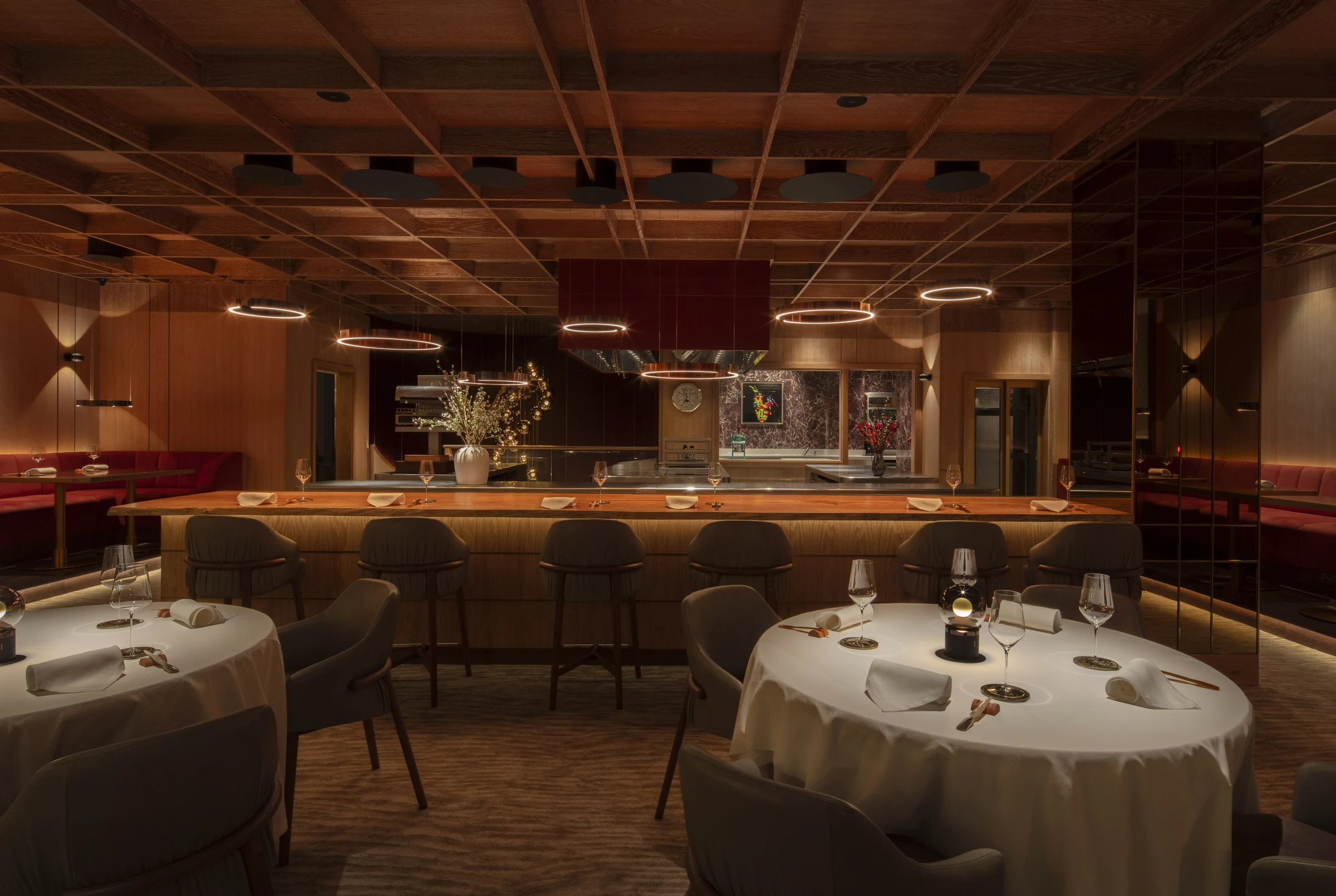
La Table Bâgésienne
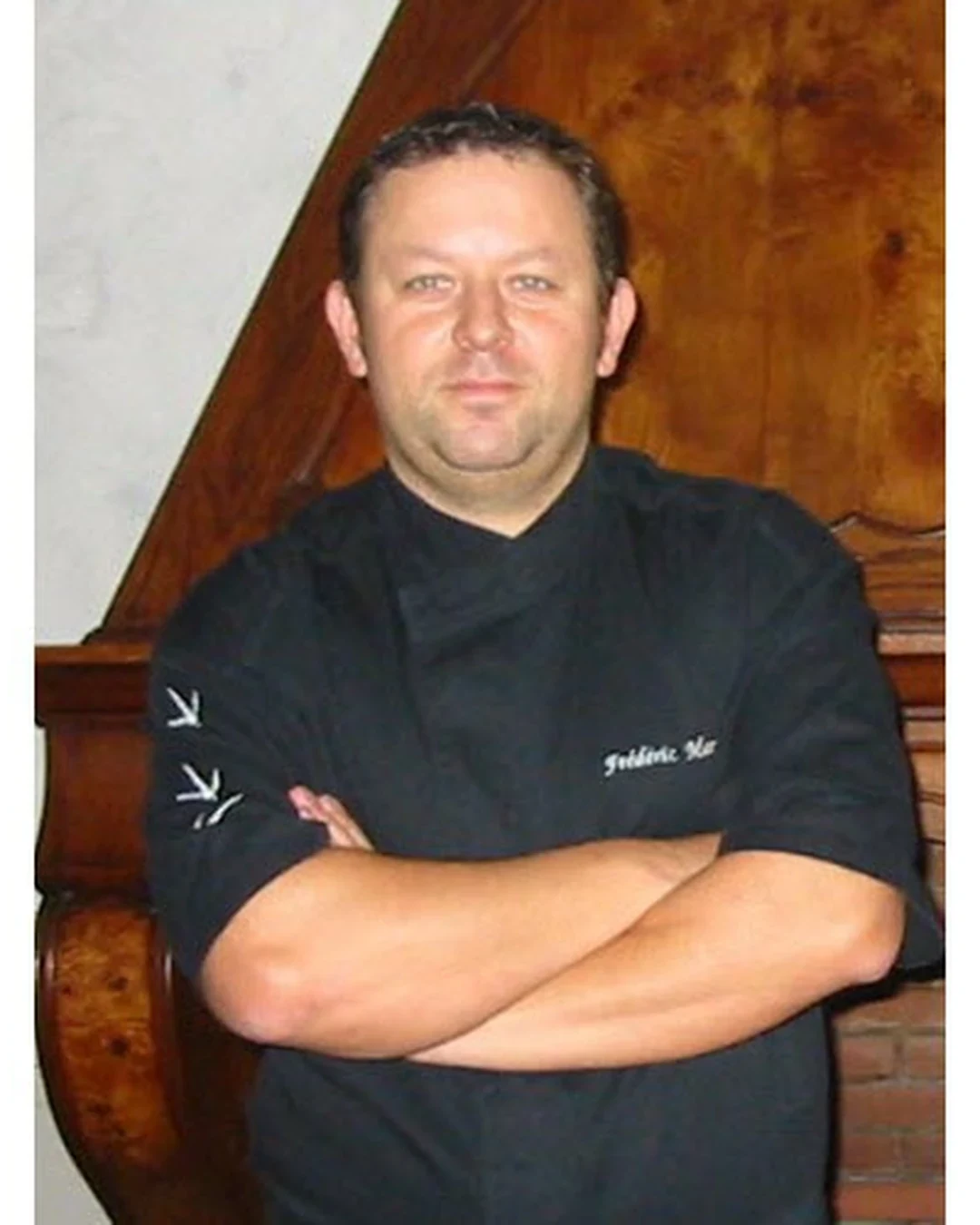
In Residence
Frédéric Martin
Chef
- 01CuisineTraditional Bresse Regional French
- 02CityBâgé-le-Châtel, France
- Michelin Bib Gourmand · Michelin Guide
- Michelin Bib Gourmand · 2026
- Michelin Bib Gourmand · 2025
- Michelin Bib Gourmand · 2024
A Village Address in France's Most Underrated Eating Country
The Grande Rue of Bâgé-le-Châtel is the kind of street that reads, at first glance, as pure provincial France: stone facades, an unhurried pace, no visible indicator that serious cooking is taking place behind any of its doors. That incongruity is part of what makes the Bresse and southern Ain corridor one of the more instructive places to think about how French culinary culture actually distributes itself. Great cooking in France radiates outward into market towns, farming villages, and postal codes that international visitors rarely plan around. Bâgé-le-Châtel, sitting on the Saône plain between Mâcon and Bourg-en-Bresse, is an example of that distribution in practice.
La Table Bâgésienne, at 19 Grande Rue, is the argument made concrete. Chef Frédéric Martin has held the Michelin Bib Gourmand in both 2024 and 2025. The Bib Gourmand tier sits below the star hierarchy but carries its own specific endorsement: Michelin's assessors found exceptional quality at a price they considered favourable. In a region where three-star ambition is represented by houses like Paul Bocuse - L'Auberge du Pont de Collonges in Collonges-au-Mont-d'Or and where the Burgundy border sits close enough to make wine-pairing expectations high, a sustained Bib Gourmand at the €€ price point is a clear signal. It places La Table Bâgésienne in the same general tier as Auberge Grand'Maison in Mûr-de-Bretagne, where traditional French cooking in a rural context earns Michelin attention not through modernist technique but through the discipline of doing classic work well.
Traditional Cuisine in the Bresse Context
La Table Bâgésienne's Traditional Cuisine label is not a limiting category in this part of France. Bresse sits between two of the country's most ingredient-obsessed regions: Burgundy to the north, with its defined appellations and centuries of table culture, and the Rhône-Alpes corridor to the east, where the lineage runs from Fernand Point through Paul Bocuse and outward into dozens of kitchens that still treat the classical repertoire as living, not archival. Traditional Cuisine here means proximity to exceptional raw material, Bresse chicken holds its own AOC designation, the Saône provides freshwater fish, and the broader Ain département supplies game in season, combined with techniques that have been in regional use long enough to have developed their own idiom.
That context shapes how to read Chef Martin's cooking. In cities, traditional French technique often functions as a reference point for creative departure. In a market town kitchen at the €€ price range, it functions as the point itself. The consistency that Michelin has rewarded twice in succession suggests a kitchen that has identified what it does and executes it without deviation. A Google rating of 4.8 across 513 reviews confirms that the local and regional audience reaching this address finds the reality matching the expectation. That convergence between critical recognition and popular reception is not automatic in French regional dining; plenty of Bib Gourmand addresses carry more critical than popular enthusiasm, or vice versa.
Frédéric Martin and the Regional Chef's Position
The editorial angle here is not the chef's biography but what his position in the French cooking hierarchy represents. France maintains a parallel track to its headline three-star circuit, one that runs through Bib Gourmand holders, regional competitions, and the quiet accumulation of local reputation. Chef Martin operates on that track, in a village that most visitors to the Mâcon area pass without stopping. That positioning, rigorous enough for Michelin to note twice, grounded enough to price at €€, located far enough from urban restaurant circuits to demand intentional travel, places La Table Bâgésienne in a category that the French dining culture values but that international press rarely covers with any depth.
For comparison, the starred ceiling of French creativity is represented elsewhere: Mirazur in Menton, Flocons de Sel in Megève, and AM par Alexandre Mazzia in Marseille each represent a different register of French ambition. Assiette Champenoise in Reims, Au Crocodile in Strasbourg, and Auberge de l'Ill in Illhaeusern show how high-starred cooking embeds in provincial French cities. What La Table Bâgésienne represents is the tier below those addresses, not lesser in conviction, but different in scale, format, and purpose. This is where the French actually eat when they want cooking that is honest about what it is and where it comes from.
Getting There and Planning Your Visit
Bâgé-le-Châtel is accessible by car from Mâcon in under fifteen minutes, making it a logical addition to any itinerary that includes the southern Burgundy wine villages or the Bresse region to the east. The A40 motorway connects the village to Bourg-en-Bresse in around thirty minutes. For visitors arriving by train, Mâcon-Loché TGV station provides a high-speed connection from Paris in under ninety minutes, with a car hire or taxi needed for the final leg to Bâgé-le-Châtel. The restaurant's address at 19 Grande Rue is direct to locate in a village of this size. Given the Bib Gourmand recognition and a 4.8 rating with nearly 500 reviews, booking ahead is advisable, particularly for weekend lunch, the format where regional French restaurants of this type typically see their highest demand. Phone and online booking details are available through current search; the database record does not carry direct contact information at the time of publication.
For those plotting a wider French regional circuit, Troisgros - Le Bois sans Feuilles in Ouches, Bras in Laguiole, and Auberge du Vieux Puits in Fontjoncouse represent three-star markers at different points of the French interior, useful anchors around which a trip that also includes Bâgé-le-Châtel makes geographical sense. And for those who want to understand the creative ceiling against which all French cooking is implicitly measured, Alléno Paris au Pavillon Ledoyen provides a clear reference point at the other end of the price and ambition spectrum. The contrast is instructive: Auga in Gijón shows how the same traditional-cuisine category plays out across the border in northern Spain, where the cultural context shifts but the underlying commitment to regional ingredients and classical technique remains recognisable.
Questions
Frequently asked
What recognition does La Table Bâgésienne hold?
La Table Bâgésienne holds a Michelin Bib Gourmand.
Who works at La Table Bâgésienne?
Made By profiles Frédéric Martin (Chef) at La Table Bâgésienne.
How expensive is La Table Bâgésienne?
La Table Bâgésienne is listed at a price level of $$$.
Where is La Table Bâgésienne and what does it serve?
La Table Bâgésienne is in Bâgé-le-Châtel village centre, Bâgé-le-Châtel, serving Traditional Bresse Regional French.
The field
How it compares
| Place | Cuisine | Notes | Awards |
|---|---|---|---|
| La Table Bâgésienne | Traditional Bresse Regional French | Bâgé-le-Châtel village centre, $$$ | · |
| Elkano | Basque Grilled Fish | Getaria | Michelin 1 Star, World's 50 Best |
| ESqUISSE | Modern French with Japanese Influences | Tokyo | Michelin 2 Stars, World's 50 Best |
| Jungsik New York | Modern Korean Fine Dining | New York City | Michelin 3 Stars, World's 50 Best |
| Providence | Modern Seafood Fine Dining | Los Angeles | Michelin 3 Stars, World's 50 Best |
| Reale | Modern Italian Fine Dining | Castel di Sangro | Michelin 3 Stars, World's 50 Best |
| Row on 5 | Modern British Fine Dining with Mediterranean & Asian Influences | London | Michelin 2 Stars |
In residence
Similar places
Basque Grilled Fish
Elkano
Getaria, Spain
★ · 50 Best
Modern French with Japanese Influences
ESqUISSE
Tokyo, Japan
★★ · 50 Best
Modern Korean Fine Dining
Jungsik New York
New York City, United States
★★★ · 50 Best
Modern Seafood Fine Dining
Providence
Los Angeles, United States
★★★ · 50 Best
Modern Italian Fine Dining
Reale
Castel di Sangro, Italy
★★★ · 50 Best
Modern British Fine Dining with Mediterranean & Asian Influences
Row on 5
London, United Kingdom
★★