Made ByRestaurant
La Table de Courcelles - Château de Courcelles
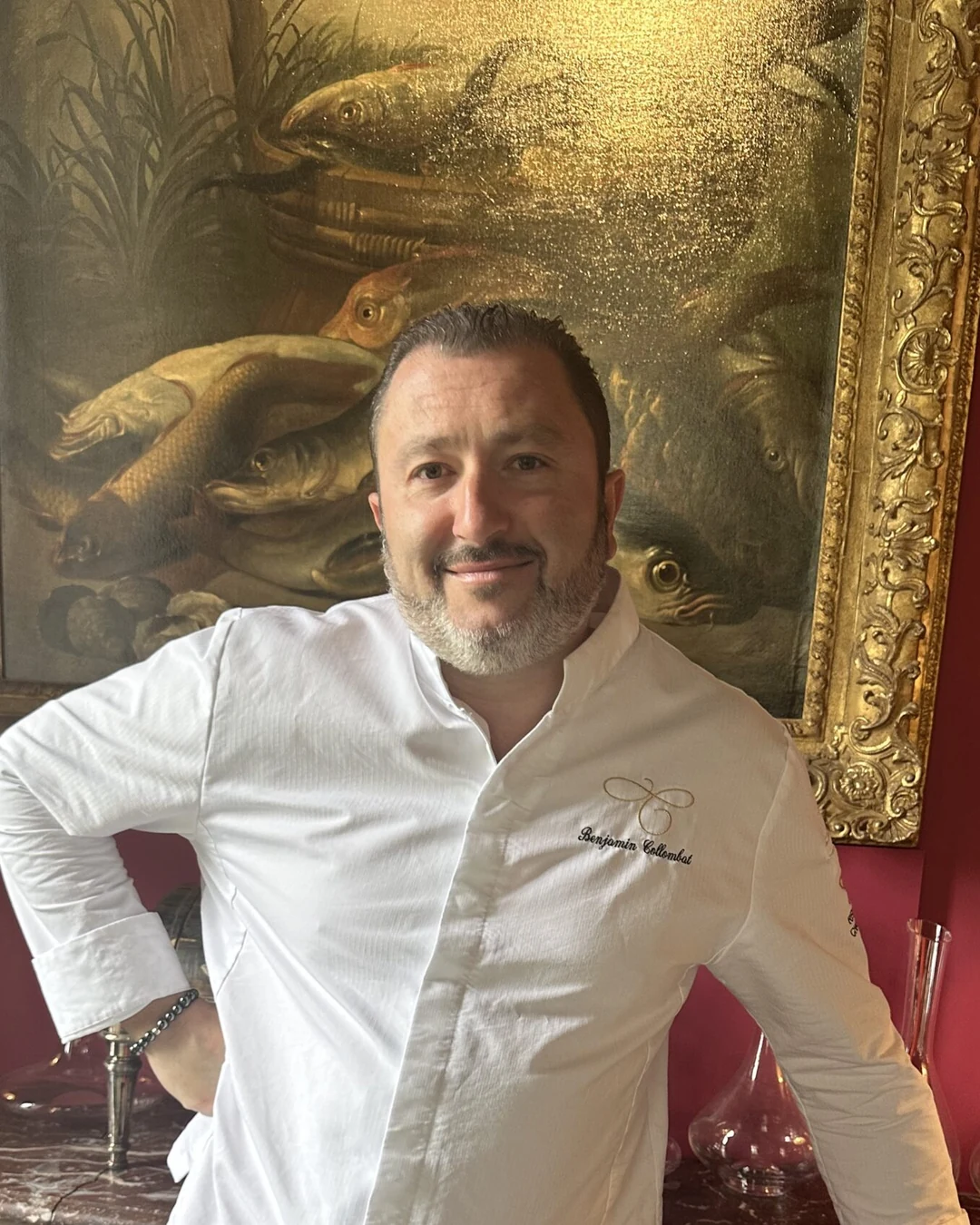
Chef in Residence
Benjamin Collombat
Chef
- 01CuisineFrench Fine Dining
- 02CityCourcelles-sur-Vesle, France
- 03RecognitionOne Michelin Star
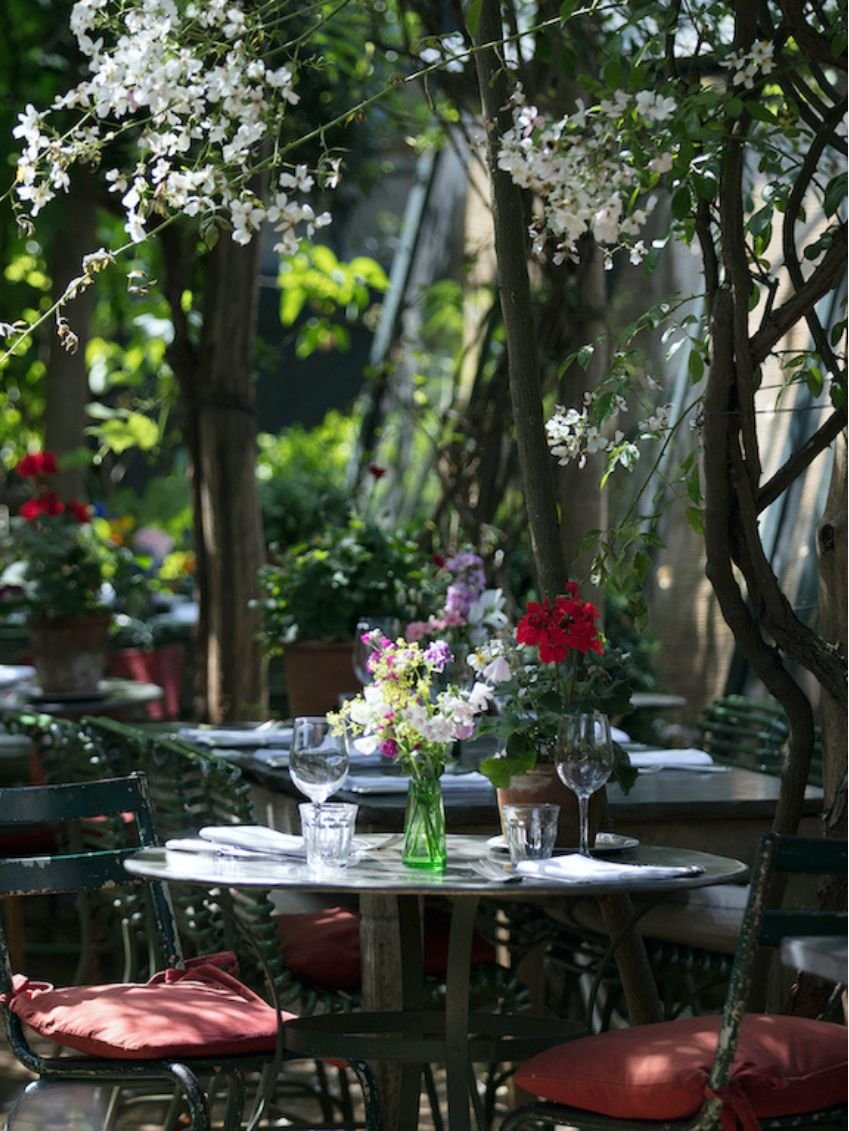
Set within a Grand Siècle château in the Aisne valley, La Table de Courcelles brings Italian-rooted modern cuisine to one of France's most quietly serious dining addresses. Chef Massimiliano Sena's restrained, ingredient-led cooking earned a Michelin Plate in 2024, supported by a wine list exceeding 700 references. The glass-roofed dining room overlooks formal gardens and a canal, making the setting as considered as the food.
- 1 Michelin Star
At a glance
- Cuisine
- French Fine Dining
- Price
- $$$$
- Per person
- $118
- Neighborhood
- Courcelles-sur-Vesle
- Rating
- 4.5 (590)
<h2>A Grand Siècle Setting With a Southern Italian Thread</h2><p>The formal gardens of Château de Courcelles are the kind that take a moment to register, the clipped geometry, the canal running parallel to the stone facade, the glass-roofed dining room that opens toward it like a conservatory with ambitions. Arriving at 8 Rue du Château in the village of Courcelles-sur-Vesle, roughly an hour's drive northeast of Paris in the Aisne department, the architecture sets terms before a single dish has been placed on the table. Grand Siècle country houses of this type have long served as backdrops for serious French hospitality, and this one sits comfortably in that tradition. What distinguishes the current chapter is the kitchen.</p><p>Across France's province dining circuit, châteaux restaurants occupy a specific position: the setting earns the initial attention, but the table only sustains it if the cooking can hold its own. The arrival of Massimiliano Sena, a chef originally from Sorrento with a formation built across serious European kitchens, marks a decisive shift in what La Table de Courcelles represents. The cooking that followed has moved the room from a secondary attraction into the primary reason to make the drive. A Michelin Plate recognition in 2024 confirms the trajectory, though the more interesting story is how Sena's Italian roots surface in the food without overwhelming the local-first sourcing philosophy that anchors modern French fine dining.</p><h2>How Italian Roots Shape a French Kitchen</h2><p>French haute cuisine and Italian culinary philosophy have always maintained a productive tension. The French tradition prizes technique, architecture, and structure; the Italian one tends toward the integrity of individual ingredients and a certain instinct for flavour marriage over decorative construction. At Courcelles-sur-Vesle, that tension resolves itself quietly. The local and seasonal ingredients take precedence, and Sena's Italian perspective makes itself felt as inflection rather than statement. According to the Michelin assessment of the restaurant, dishes like a slow-cooked egg with chanterelle mousse, or cod prepared alongside courgette, raspberry, and black garlic, show what this means in practice: the combination logic comes from somewhere south of Lyon, but the ingredients themselves are firmly of the Aisne and its surrounds.</p><p>This approach sits at a productive remove from the kind of Italian-French fusion that dominated European fine dining conversations in the 1990s and early 2000s. There is no showboating, no technique applied for its own sake. What replaces it is confident editorial restraint: the kind of cooking where the chef's role is largely to clarify what ingredients already want to do. For those who follow the broader conversation in French modern cuisine, the comparison point is less the theatrical tasting menus of, say, <a href="https://www.enprimeurclub.com/restaurants/alleno-paris-au-pavillon-ledoyen-paris-restaurant">Alléno Paris au Pavillon Ledoyen in Paris</a> and closer to the ingredient-led discipline practiced at places like <a href="https://www.enprimeurclub.com/restaurants/bras-laguiole-restaurant">Bras in Laguiole</a> or <a href="https://www.enprimeurclub.com/restaurants/auberge-du-vieux-puits-fontjoncouse-restaurant">Auberge du Vieux Puits in Fontjoncouse</a>, where the provincial setting is inseparable from what ends up on the plate.</p><p>The Champagne region's position in France's culinary geography is often underestimated. Reims, thirty kilometres to the west, has its own serious dining scene anchored by addresses like <a href="https://www.enprimeurclub.com/restaurants/assiette-champenoise-reims-restaurant">Assiette Champenoise in Reims</a>, which operates at the top of regional ambition. La Table de Courcelles plays a different role, one defined more by its estate character and the intimacy of a country-house dining room than by urban competitive intensity. That distinction matters for anyone choosing between them.</p><h2>The Wine List as a Commitment</h2><p>A wine list of over 700 references in a rural Aisne château is not a coincidence. It signals deliberate investment in hospitality infrastructure, the kind that takes years to build and reflects a specific understanding of what serious diners expect at the €€€€ price point. The geographical position alone makes the cellar logical: Courcelles-sur-Vesle sits within easy reach of Champagne vineyards, and any serious regional list would anchor itself there before ranging outward through France and beyond. The scale of 700-plus references also places the wine program in a different peer bracket from most château dining rooms, which tend to offer adequate rather than extensive lists. For wine-focused visitors, this is an independently sufficient reason to make the reservation.</p><p>Readers who want to understand how this cellar compares against the broader northern French and Alsatian tradition should look at what places like <a href="https://www.enprimeurclub.com/restaurants/auberge-de-lill-illhaeusern-restaurant">Auberge de l'Ill in Illhaeusern</a> or <a href="https://www.enprimeurclub.com/restaurants/au-crocodile-strasbourg-restaurant">Au Crocodile in Strasbourg</a> have built over decades. The Courcelles list is younger by comparison, but the commitment is clear.</p><h2>The Room and What It Asks of You</h2><p>The glass-roofed dining room is the experience's hinge point. It captures garden light in a way that shifts the atmosphere depending on the hour and season, making a spring lunch feel different from an autumn dinner in ways a conventionally windowed room cannot manage. The formal garden and canal view adds a visual counterweight to the attention placed on the plate, which for some diners is exactly the right level of ambient distraction. The Grand Siècle residence context sets an expectation of formality, but the cooking's restraint and the setting's garden warmth temper that into something more approachable than the architecture alone might suggest.</p><p>For context on what châteaux dining of this character typically delivers across France, the experiences at <a href="https://www.enprimeurclub.com/restaurants/flocons-de-sel-megeve-restaurant">Flocons de Sel in Megève</a> or <a href="https://www.enprimeurclub.com/restaurants/troisgros-le-bois-sans-feuilles-ouches-restaurant">Troisgros - Le Bois sans Feuilles in Ouches</a> offer useful reference points at different scales of ambition and recognition.</p><h2>Planning Your Visit</h2><p>La Table de Courcelles sits at 8 Rue du Château, 02220 Courcelles-sur-Vesle, within the Aisne department of the Hauts-de-France region. The village is approximately 25 kilometres east of Soissons and within an hour of both Reims and Paris by car, making it viable as a day excursion from either city, though the château's accommodation capacity makes an overnight stay the more composed option. The pricing sits firmly at the €€€€ level, consistent with a Michelin-recognised table offering this quality of wine program and setting. Reservations for tables at this tier in rural France should be made well in advance, particularly for weekend lunches and summer evenings. The glass-roofed room's garden orientation makes lunch bookings worth considering for first-time visitors.</p>
Know before you go
- Dress code
- formal
- Reservations
- essential
- Parking
- on_site_lot
- Payment
- credit_card, cash
- Outdoor seating
- Yes
- Children
- Welcomed
Frequently asked
Is La Table de Courcelles - Château de Courcelles a family-friendly restaurant?
The château setting and €€€€ price range position La Table de Courcelles firmly in formal dining territory. The emphasis on composed, technique-driven plates — slow-cooked egg with chanterelle mousse, cod with courgette and black garlic — and a 700-reference wine list signal a room oriented toward adults seeking a considered meal rather than a casual family outing. Families with older children comfortable in a Grand Siècle dining room will find the experience coherent; younger children would likely find the pace and format a mismatch.
How would you describe the vibe at La Table de Courcelles - Château de Courcelles?
Formal without being stiff. The glass-roofed dining room faces the château's formal garden and canal, so natural light does much of the atmospheric work across the course of a long lunch or dinner. Chef Massimiliano Sena's cooking adds a subtly Italian warmth to what could otherwise read as a purely austere Grand Siècle setting — the cuisine is confident and precise, not theatrical. The Michelin Plate recognition in 2024 reflects a kitchen focused on execution over spectacle.
Does La Table de Courcelles - Château de Courcelles have a Michelin star or similar recognition?
La Table de Courcelles - Château de Courcelles has received recognition including: With the arrival of Italian chef Massimiliano Sena (originally from Sorrento), armed with his impressive CV, this noble and elegant Grand Siècle-style residence has entered a modern culinary era that bodes well. Local and seasonal ingredien….
What should I order at La Table de Courcelles - Château de Courcelles?
The dishes cited in the Michelin assessment give a clear indication of the kitchen's register: slow-cooked egg with airy chanterelle mousse and cod with courgette, raspberry, and black garlic. Both reflect Chef Sena's approach — local and seasonal French produce shaped by restrained Italian sensibility, with no gratuitous technique. Beyond the food, the wine list of over 700 references deserves attention; a château in rural Aisne maintaining that depth of cellar is unusual, and the sommelier's selections should be taken seriously.
Address
8 Rue du Château, 02220 Courcelles-sur-Vesle, France
Courcelles-sur-Vesle
How it compares
La Table de Courcelles - Château de Courcelles
- Cuisine
- French Fine Dining
- Price
- $$$$
- Awards
- Michelin 1 Star
- Notes
- Courcelles-sur-Vesle
Le Royal - Royal Champagne Hotel & Spa
- Cuisine
- French Gastronomique
- Price
- $$$$
- Awards
- Michelin 1 Star
- Notes
- Champillon
- Cuisine
- Modern French Fine Dining
- Price
- $$$$
- Awards
- Michelin 1 Star
- Notes
- 17th arrondissement
L'Atelier de Joël Robuchon - Étoile
- Cuisine
- Modern French Fine Dining
- Price
- $$$$
- Awards
- Michelin 1 Star
- Notes
- Champs-Élysées
- Cuisine
- Modern French with Japanese and Italian Accents
- Price
- $$$$
- Awards
- Michelin 1 Star
- Notes
- Lille Centre 7
- Cuisine
- Modern French Fine Dining
- Price
- $$$$
- Awards
- Michelin 1 Star
- Notes
- Issy-les-Moulineaux
In residence
Similar places
Japanese-influenced Californian Kaiseki
Single Thread Farm
Healdsburg, United States
★★★ · 50 Best
French Seafood Fine Dining
Le Bernardin
New York City, United States
★★★ · 50 Best
Modern Korean Tasting Menu
Atomix
New York City, United States
★★ · 50 Best
French
Sézanne
Tokyo, Japan
★★★ · 50 Best
Modern Seafood Fine Dining
Providence
Los Angeles, United States
★★★ · 50 Best
Contemporary Plant-Based Fine Dining
Eleven Madison Park
New York City, United States
★★★ · 50 Best