Lee
- 01CuisineContemporary Estonian with Asian & French Influences
- 02CityTallinn, Estonia
Six shared courses at the hearth
- White Guide Baltic Restaurants - Very Fine Level · 2026
- Star Wine List · 2026
- Michelin Plate · 2026
- Falstaff Restaurant - 94 Falstaff Points · 2026
- Michelin Plate · 2025
- Star Wine List · 2025
- Michelin Plate · 2024
- Star Wine List · 2024
- Star Wine List · 2023
The hearth as a working idea
Lee, on Uus in Tallinn's Old Town, takes its name from an old Estonian word for the communal fireplace, the hearth where meals and stories were shared, and it treats that as an instruction rather than an image. The house is the successor to Leib Restaurant, run by the same team under LP Hospitality, and it has since evolved again into Lee Brasserie at the same address.
The house has reinvented itself repeatedly, changing name, concept and direction while raising the standard each time, and regulars describe every iteration as surpassing the last. What has carried across all of them is the founding principle inherited from Leib: simple food made from good ingredients at reasonable prices. Its predecessor occupied a former Scottish club space, which is part of the quirk the room has kept.
Estonian produce, foreign technique
The kitchen is led by head chef and partner Maido Maiste, who came through Estonia's best kitchens and worked abroad, and whose style presents simple flavours elegantly. His emphasis is on shared dining, applying finesse acquired elsewhere to local ingredients, which is exactly the balance the hearth idea implies.
Sourcing is hyper-local, from artisan producers, farms and forests, and the menu is contemporary, seasonal and Estonian with Asian and French turns. The signatures show the range: Liivimaa dry-aged beef short rib with cauliflower cream and wasabi, confit duck, trout with seasonal vegetables, beef tartare with mushrooms, and kohuke for dessert, an Estonian sweet most guests will know from a shop rather than a starred kitchen. The brasserie format runs a la carte alongside a six-course Lee Experience built on sharing plates, which is the clearest expression of the hearth: courses arriving to a table rather than to a person.
Powder blue walls and red banquettes
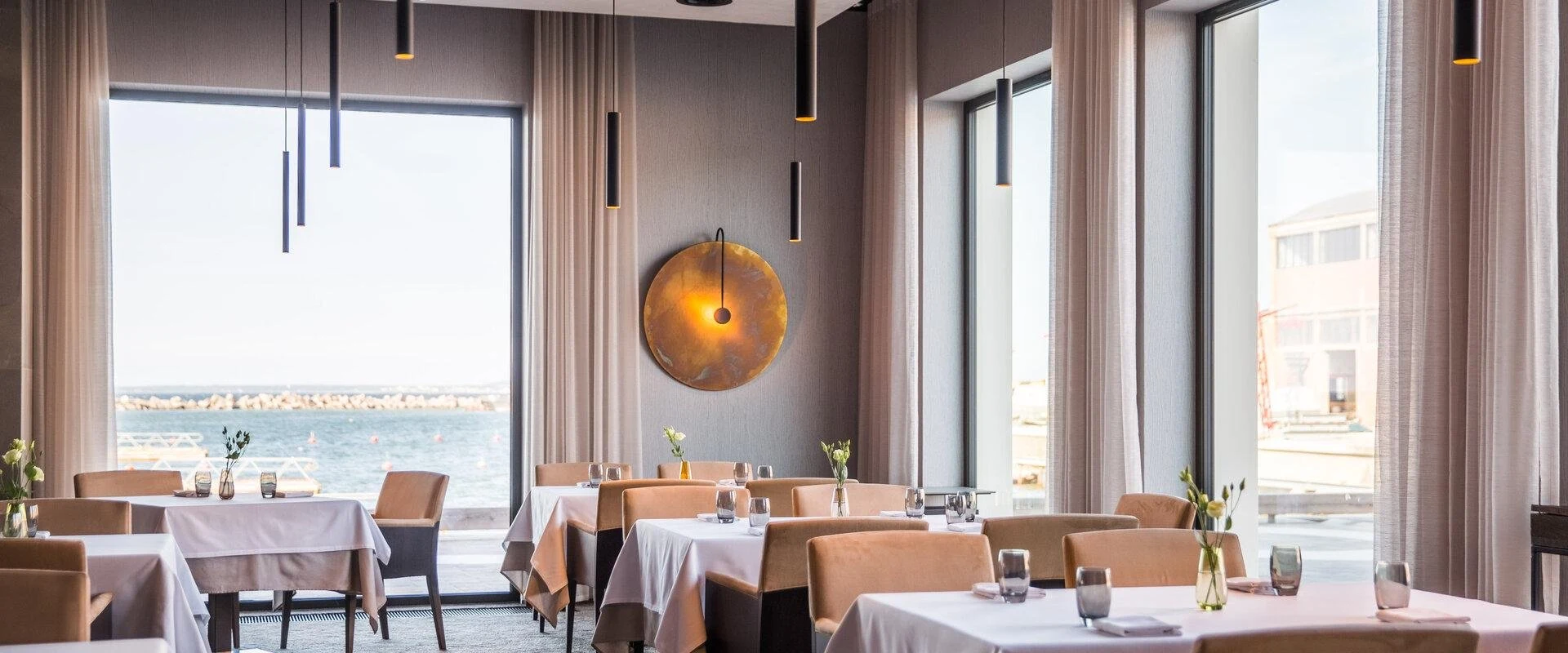
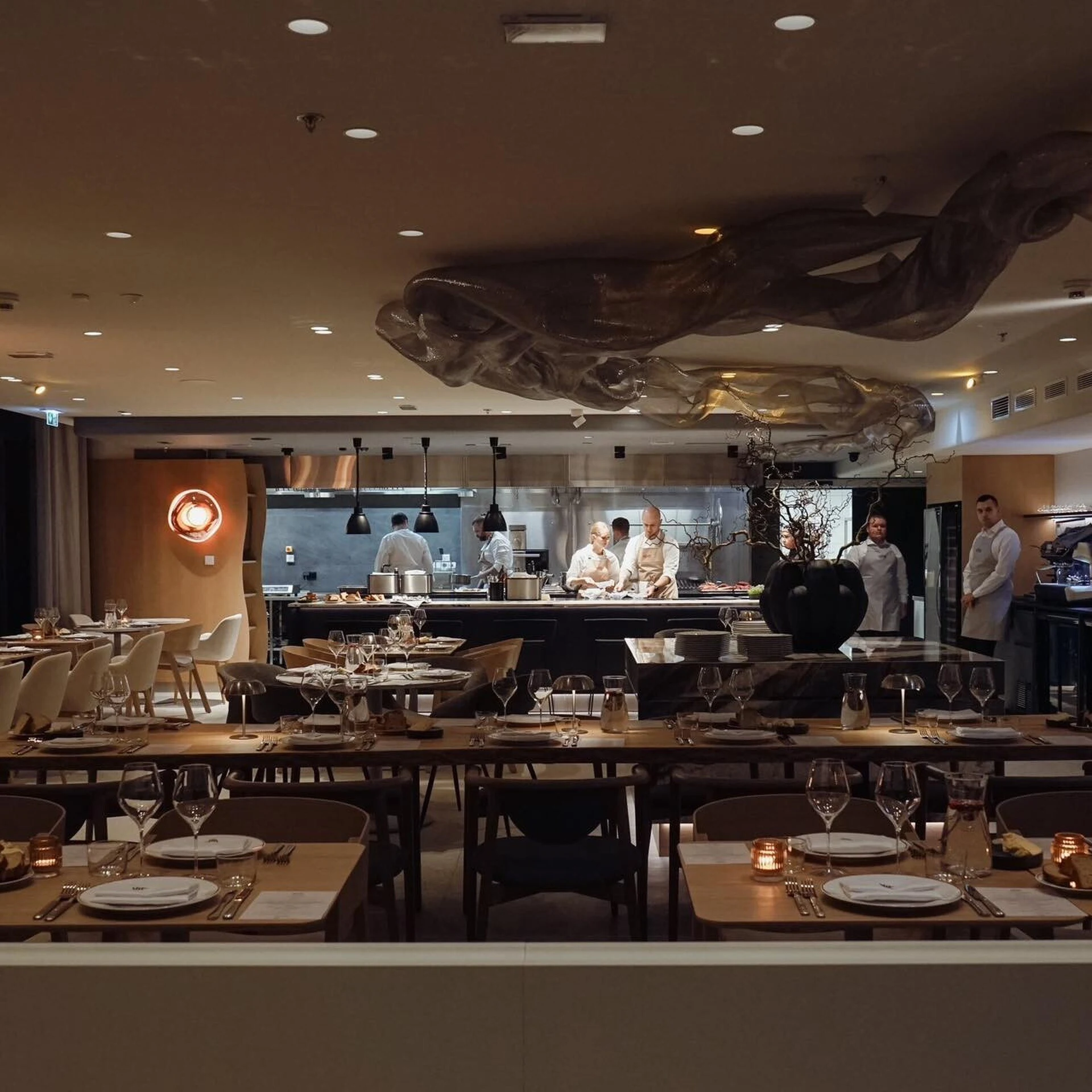
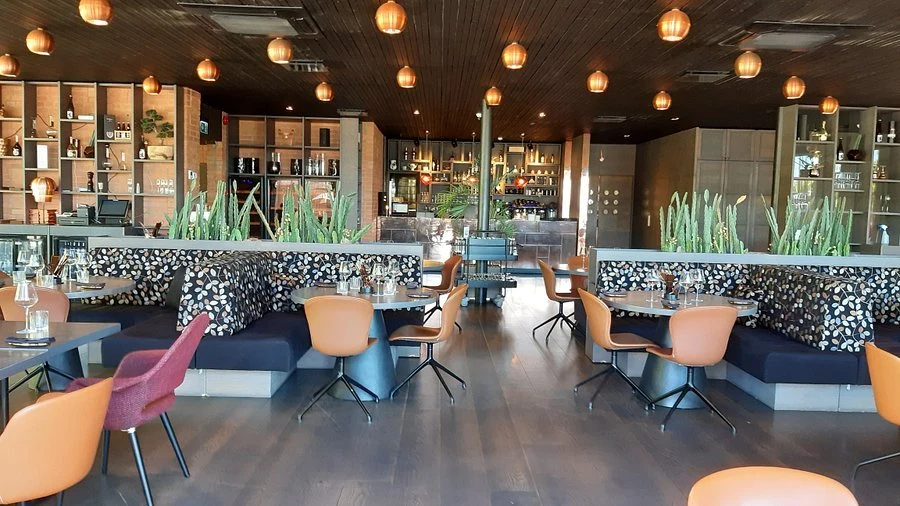
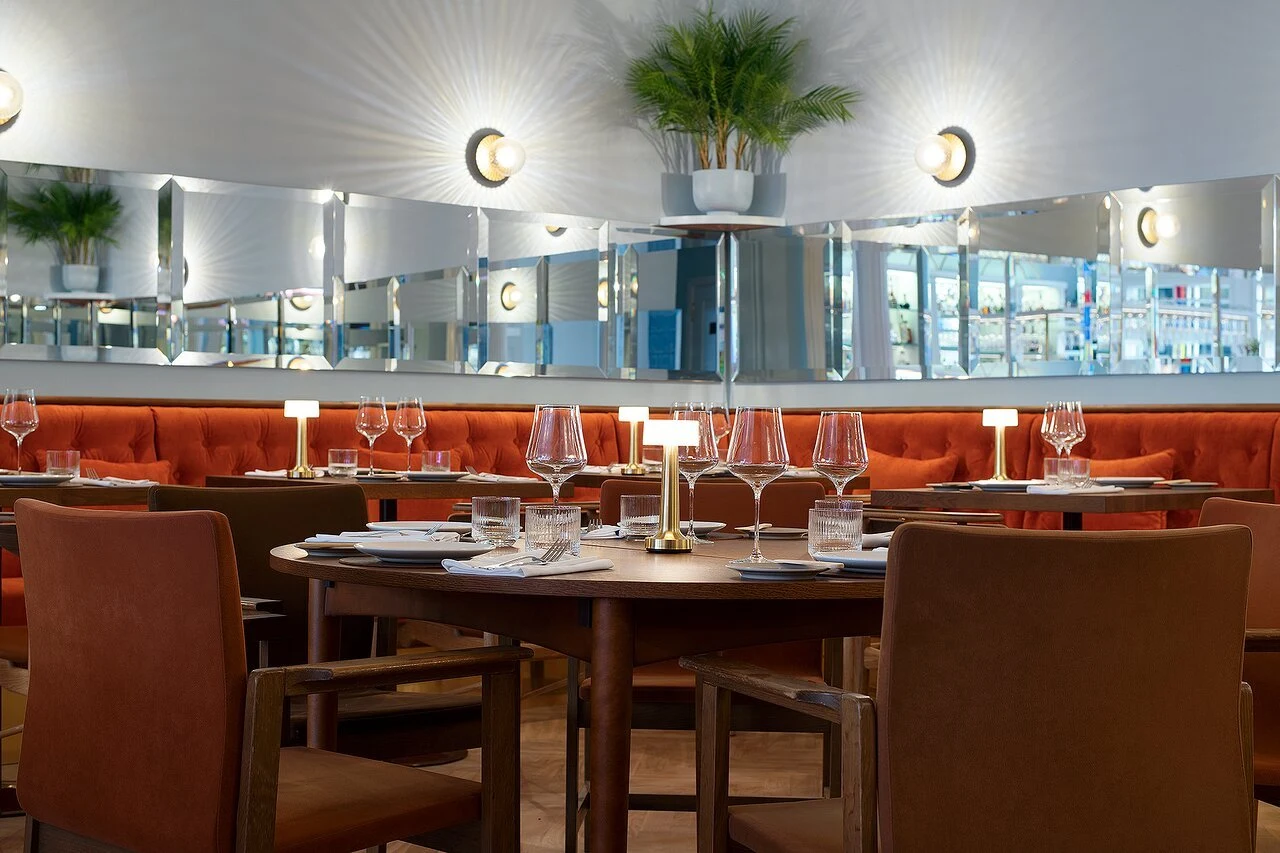
The room is warm and relaxed, with powder blue walls, red banquettes and ornate columns giving it a subtle French brasserie character, and intimate lighting keeping it refined without being formal. The capacity is small, the volume conversational, and there is a terrace looking toward the old city walls.
It works as a refined family gathering place rather than stuffy fine dining, and it is welcoming in the way a home is. The location is famously hard to find, which sources treat as part of the appeal, rewarding people who look for it with patio barbecue in summer and an indoor room built for winter. In an Old Town crowded with tourist trade, being slightly hidden is a form of self-selection.
Nine awards and a green label
Lee carries Michelin selection, a Green Key eco-label and White Guide Nordic recognition, and its value and execution have been praised consistently for more than a decade.
What the record actually shows is resilience rather than a single breakthrough. A team that has renamed and rebuilt the same address three times, kept its producers, and improved each time has made itself a fixture instead of a moment. The test stays the one the name sets in Tallinn: local produce, shared plates, and a table that behaves like a hearth.
Questions
Frequently asked
What kind of restaurant is Lee?
Lee is a contemporary Estonian restaurant in Tallinn’s Old Town, with Asian and French influences. It runs as a brasserie, with an à la carte menu and a six-course Lee Experience built around sharing plates.
Who is behind the kitchen at Lee?
The kitchen is led by head chef and partner Maido Maiste, who came through Estonia’s best kitchens and worked abroad. His cooking is described as simple flavours presented elegantly, with an emphasis on shared dining and local ingredients.
What are some of the dishes on the menu?
The signatures include Liivimaa dry-aged beef short rib with cauliflower cream and wasabi, confit duck, trout with seasonal vegetables, beef tartare with mushrooms, and kohuke for dessert.
What recognition does Lee have?
Lee carries Michelin selection, a Green Key eco-label and White Guide Nordic recognition.
Do I need to book in advance?
Reservation is essential, and bookings are made directly.
The field
How it compares
| Place | Cuisine | Notes | Awards |
|---|---|---|---|
| Lee | Contemporary Estonian with Asian & French Influences | Old Town, $$$ | · |
| 180° by Matthias Diether | Modern Creative Fine Dining | Tallinn | Michelin 2 Stars |
| Jungsik New York | Modern Korean Fine Dining | New York City | Michelin 3 Stars, World's 50 Best |
| Miramar | Modern Mediterranean Seafood | Llançà | Michelin 2 Stars |
| NOA | Modern International | Tallinn | · |
| NOA Chef’s Hall | Modern European Fine Dining | Tallinn | Michelin 1 Star |
| Tuljak | Modern Baltic with Mediterranean & Asian Influences | Tallinn | · |
Similar places
Modern Creative Fine Dining
180° by Matthias Diether
Tallinn, Estonia
★★
Modern Korean Fine Dining
Jungsik New York
New York City, United States
★★★ · 50 Best
Modern Mediterranean Seafood
Miramar
Llançà, Spain
★★
Modern International
NOA
Tallinn, Estonia
Modern European Fine Dining
NOA Chef’s Hall
Tallinn, Estonia
★
Modern Baltic with Mediterranean & Asian Influences
Tuljak
Tallinn, Estonia