Liguria
- 01CuisineTraditional Chilean Gastropub
- 02CitySantiago, Chile
Providencia's Long Table: How Liguria Fits the Neighbourhood's Dining Character
Avenida Providencia runs through one of Santiago's most functional and liveable districts, a stretch of the city where office workers, families, and weekend visitors coexist without the self-consciousness of Vitacura or the tourist density of Bellavista. Along this corridor, the dining culture leans toward the reliable and the recurring, restaurants that earn repeat visits rather than one-time pilgrimages. Liguria, at number 1353, occupies that role precisely. It is the kind of address that appears in conversations not as a recommendation but as an assumption: of course you've been, of course you go back.
That positioning matters when reading the Santiago restaurant scene as a whole. The city has developed two roughly parallel tracks in its mid-to-upper dining tier. One runs toward the technically ambitious: the native-ingredient programs at Boragó (Modern Chilean), the tasting-format precision at 99 Restaurante, the Chilean-French calibration at Ambrosia (French - Chilean). The other track, where Liguria sits, prizes consistency, recognisable cooking, and the kind of atmosphere that makes a long lunch feel like the obvious choice rather than a special occasion.
What Arrives on the Table, and Where It Comes From
Chilean cooking at its most honest draws from a geography that stretches nearly five thousand kilometres, from Atacama desert produce in the north to the cold-water seafood of Patagonia in the south. The Central Valley, where the Metropolitana region sits, contributes its own register: stone fruits, pulses, wine-region vegetables, and the lamb and beef of the foothills. Restaurants in Providencia that source carefully from this geography tend to operate seasonally by necessity as much as philosophy, the market dictates what goes on the menu as much as any kitchen decision.
Liguria's address on Avenida Providencia places it within reach of the Mercado de Providencia and the broader urban supply chain that connects Santiago kitchens to Central Valley producers. This is not the hyper-documented farm-to-table framing seen at Santiago's more internationally oriented restaurants, it is quieter and more embedded than that, the kind of sourcing relationship that predates the language around it. What appears on the plate at a restaurant with Liguria's longevity reflects accumulated knowledge of which suppliers are reliable across seasons, which cuts and varieties perform well in the kitchen's format, and which Chilean staples a regular clientele expects to find.
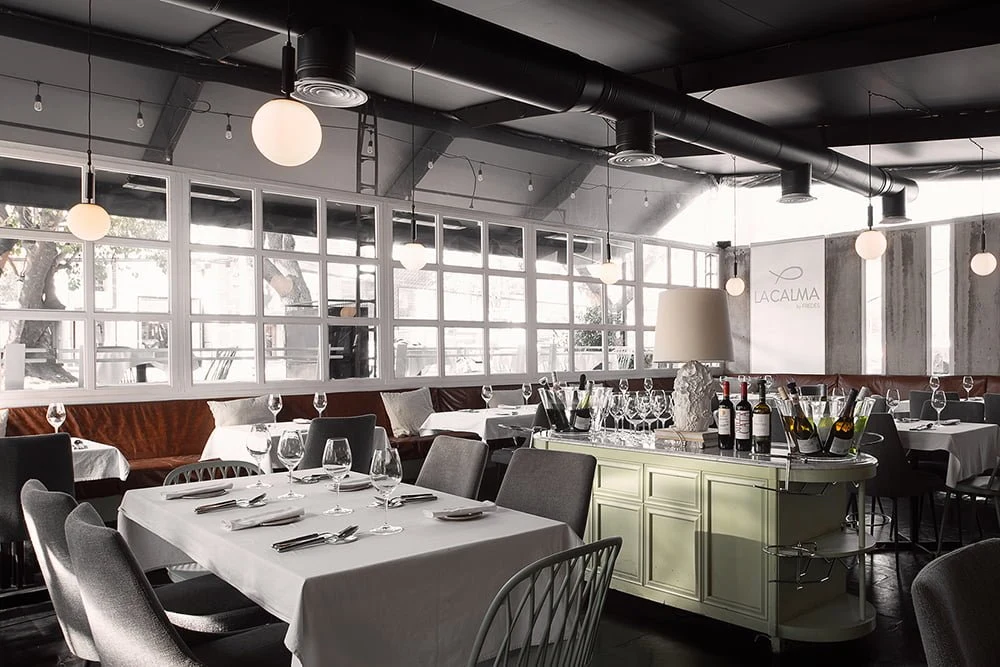
That accumulated knowledge is one reason long-standing Santiago restaurants of this type hold their own against newer openings. Compare Liguria's position to the seafood-specific sourcing visible at La Calma by Fredes (Seafood), where the sourcing narrative is more explicitly foregrounded, or to the indigenous-ingredient emphasis that defines Peumayen in Providencia, also in the same district. Each represents a different register of the same underlying question: what does Chilean produce, handled with care, actually taste like?
The Atmosphere Along Avenida Providencia
Approaching Liguria from the street, the context is immediately Providencia rather than anywhere else in Santiago. The avenue is broad and tree-lined, flanked by apartment buildings and commercial ground floors, the pedestrian rhythm unhurried by Santiago standards. The restaurant occupies the kind of frontage that reads as settled, not recently renovated for a new concept, not announcing itself with design theatre, but simply present in the way that places with a long tenure in a neighbourhood tend to be.
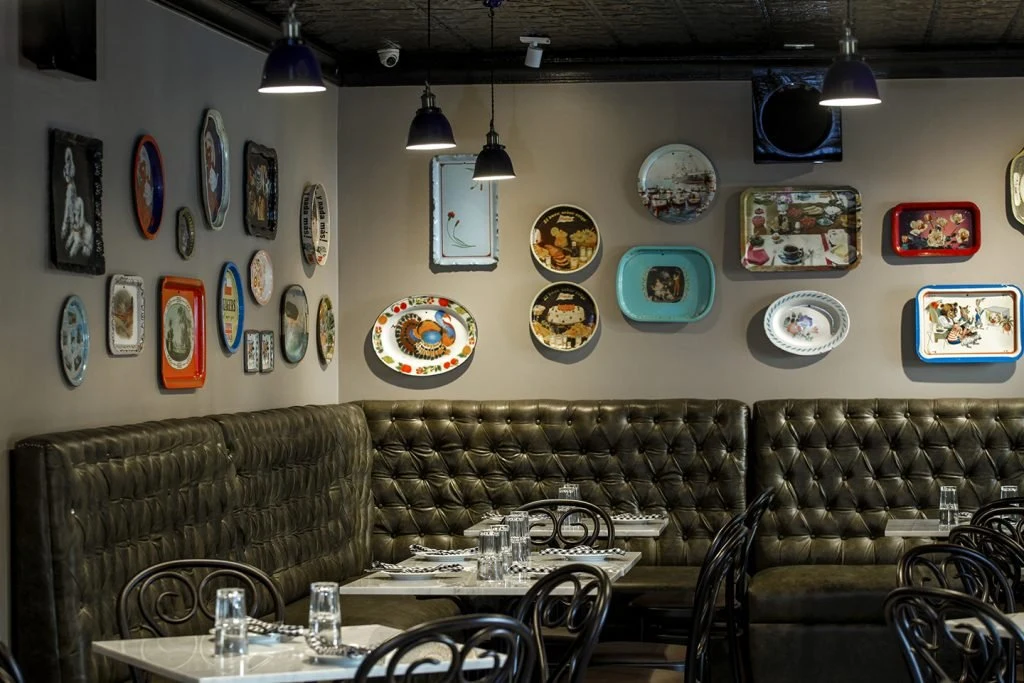
Inside, the atmosphere follows the same logic. This is a room calibrated for conversation, for tables that extend past what the clock would otherwise suggest, for the kind of lunch that becomes late afternoon without drama. The noise level stays at a point where you can hear the table next to you if you choose to, but don't have to. That acoustic register, neither hushed nor loud, is one of the harder things for a restaurant to sustain over time, and it is a reasonable indicator of how a kitchen and front-of-house have learned to read a room over the years.
Providencia as a district is walkable in the way that central Santiago's other neighbourhoods often are not, which makes it a sensible base for a broader afternoon that might include the neighbourhood's other dining and drinking options.
Where Liguria Sits in the Broader Santiago Picture
Santiago's restaurant scene has grown considerably more differentiated over the past decade. The upper end now includes internationally recognised tasting-menu programs; the mid-range has fragmented into a wider variety of cuisines and formats. Within that context, a restaurant like Liguria operates in what might be called the reliable anchor tier, not competing for the same reservation as Demencia or D.O. Restoran in Lo Barnechea, but filling a role that those restaurants are not designed to fill.
For visitors building an itinerary across Chile, the Providencia corridor makes logical sense as a starting point before the wine-region dining at Lapostolle Residence in Santa Cruz or the coastal registers of Pasta e Vino Ristorante in Valparaiso and Aquí Jaime in Concon. Liguria, in this context, offers an early read on what Santiago neighbourhood dining looks and feels like before the more destination-specific formats of the country's wine and coastal regions.
Further afield, the contrast is worth noting: the wilderness-embedded dining at Awasi Atacama in San Pedro de Atacama or andBeyond Vira Vira in Araucanía answers a completely different question than a Providencia lunch. Both have their place in a thoughtfully assembled Chilean itinerary. The internationally minded traveller accustomed to tasting-menu benchmarks at Le Bernardin in New York City or Lazy Bear in San Francisco will find Liguria operates in a different register entirely, one more concerned with civic dining culture than with technical ambition.
Planning a Visit
Liguria is located at Av. Providencia 1353, Providencia, Santiago. Given the restaurant's neighbourhood-anchor status, lunchtime, particularly on weekdays, is when the room reflects its intended character most clearly. Evening visits are equally viable, though the midday meal remains the more embedded tradition for this type of Santiago establishment. Booking in advance is advisable, particularly for groups or weekend sittings. For broader context on the surrounding area, see also Rosario in Rengo, Viña Concha y Toro in Pirque, and CasaMolle in El Molle for day-trip options within the Metropolitana region.
Questions
Frequently asked
How expensive is Liguria?
Liguria is listed at a price level of $$.
Where is Liguria and what does it serve?
Liguria is in Providencia, Santiago, serving Traditional Chilean Gastropub.
The field
How it compares
| Place | Cuisine | Notes | Awards |
|---|---|---|---|
| Liguria | Traditional Chilean Gastropub | Providencia, $$ | · |
| Aponiente | Avant-Garde Marine Seafood | El Puerto de Santa María | Michelin 3 Stars, World's 50 Best |
| Arca | Modern Yucatan Fire-Cooked Small Plates | Tulum | World's 50 Best |
| Boragó | Hyper-Local Chilean Tasting Menu | Santiago | World's 50 Best |
| Hiša Franko | Modern Slovenian Fine Dining | Kobarid | Michelin 3 Stars, World's 50 Best |
| La Calma by Fredes | Fresh Chilean Seafood | Santiago | World's 50 Best |
| Sühring | Modern German Fine Dining | Bangkok | Michelin 3 Stars, World's 50 Best |
Similar places
Avant-Garde Marine Seafood
Aponiente
El Puerto de Santa María, Spain
★★★ · 50 Best
Modern Yucatan Fire-Cooked Small Plates
Arca
Tulum, Mexico
50 Best
Hyper-Local Chilean Tasting Menu
Boragó
Santiago, Chile
50 Best
Modern Slovenian Fine Dining
Hiša Franko
Kobarid, Slovenia
★★★ · 50 Best
Fresh Chilean Seafood
La Calma by Fredes
Santiago, Chile
50 Best
Modern German Fine Dining
Sühring
Bangkok, Thailand
★★★ · 50 Best