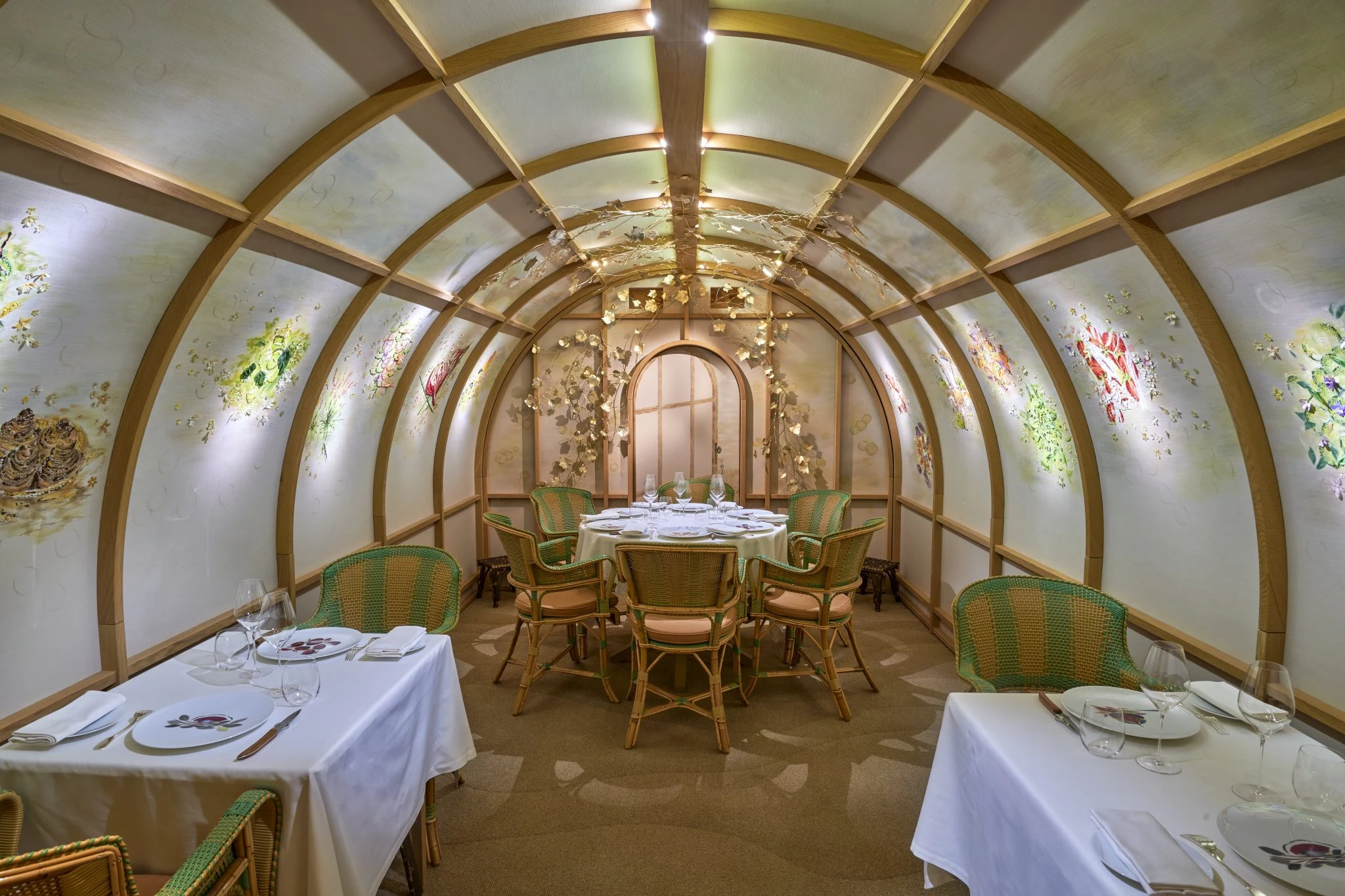
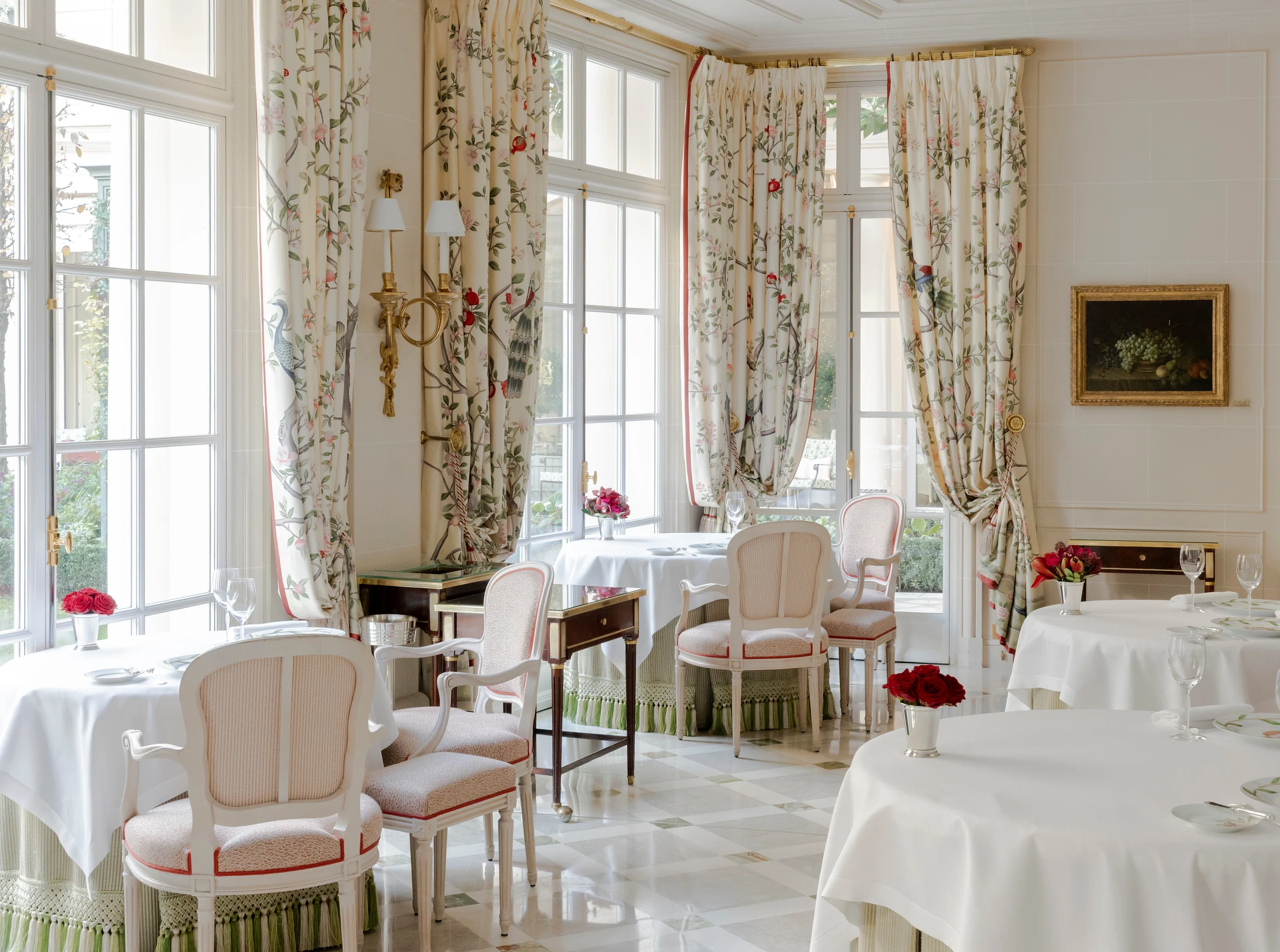
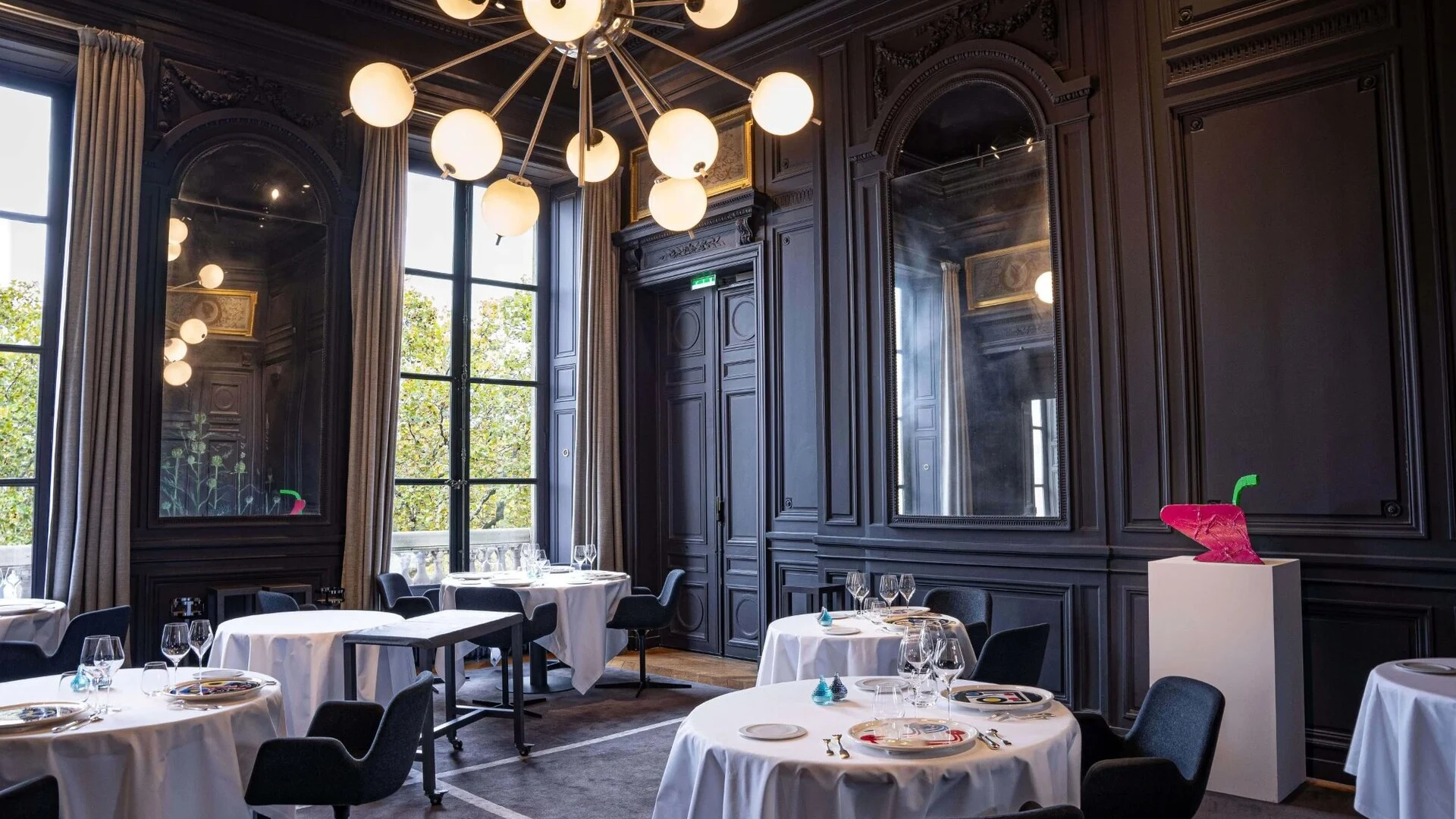
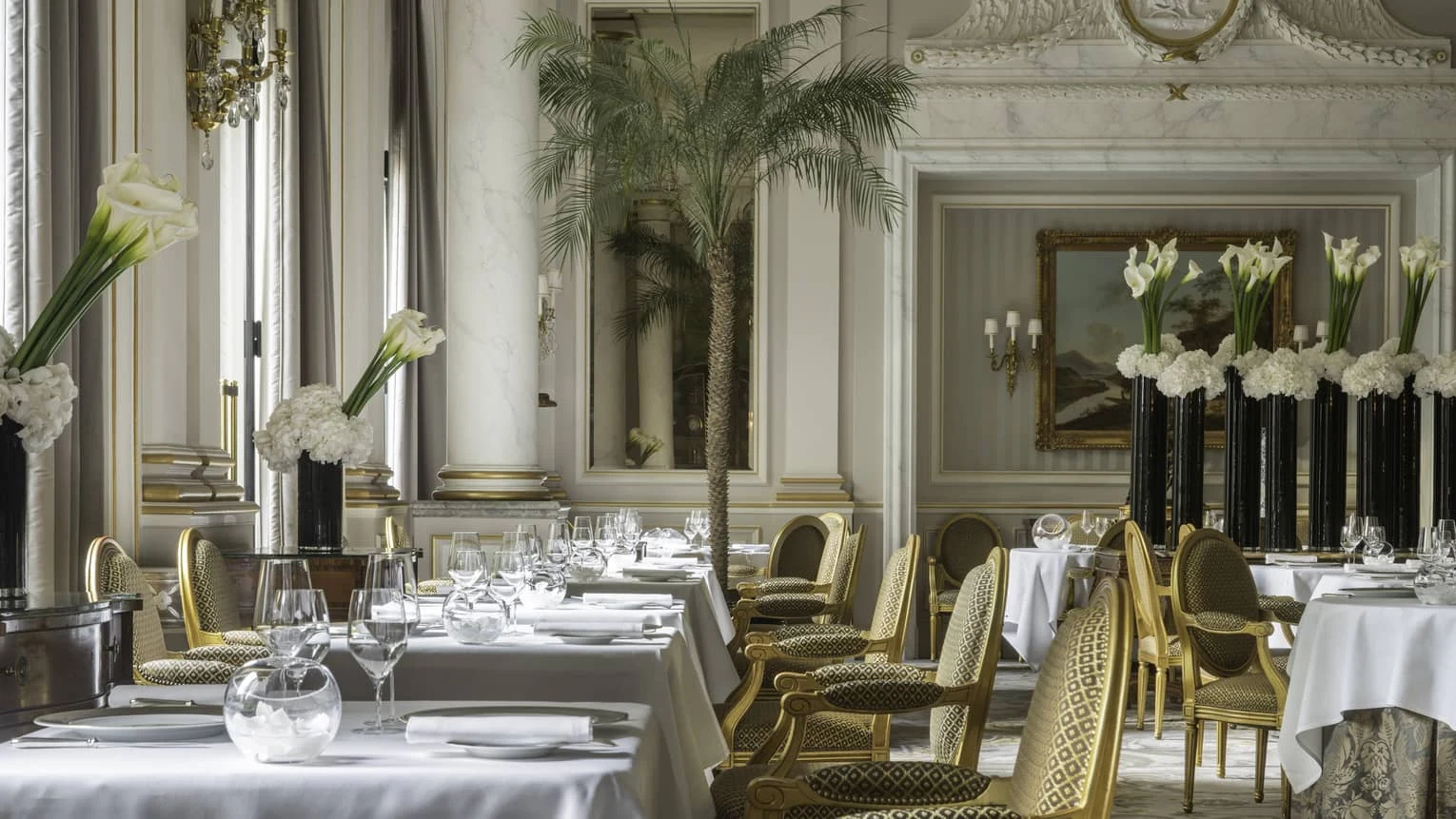
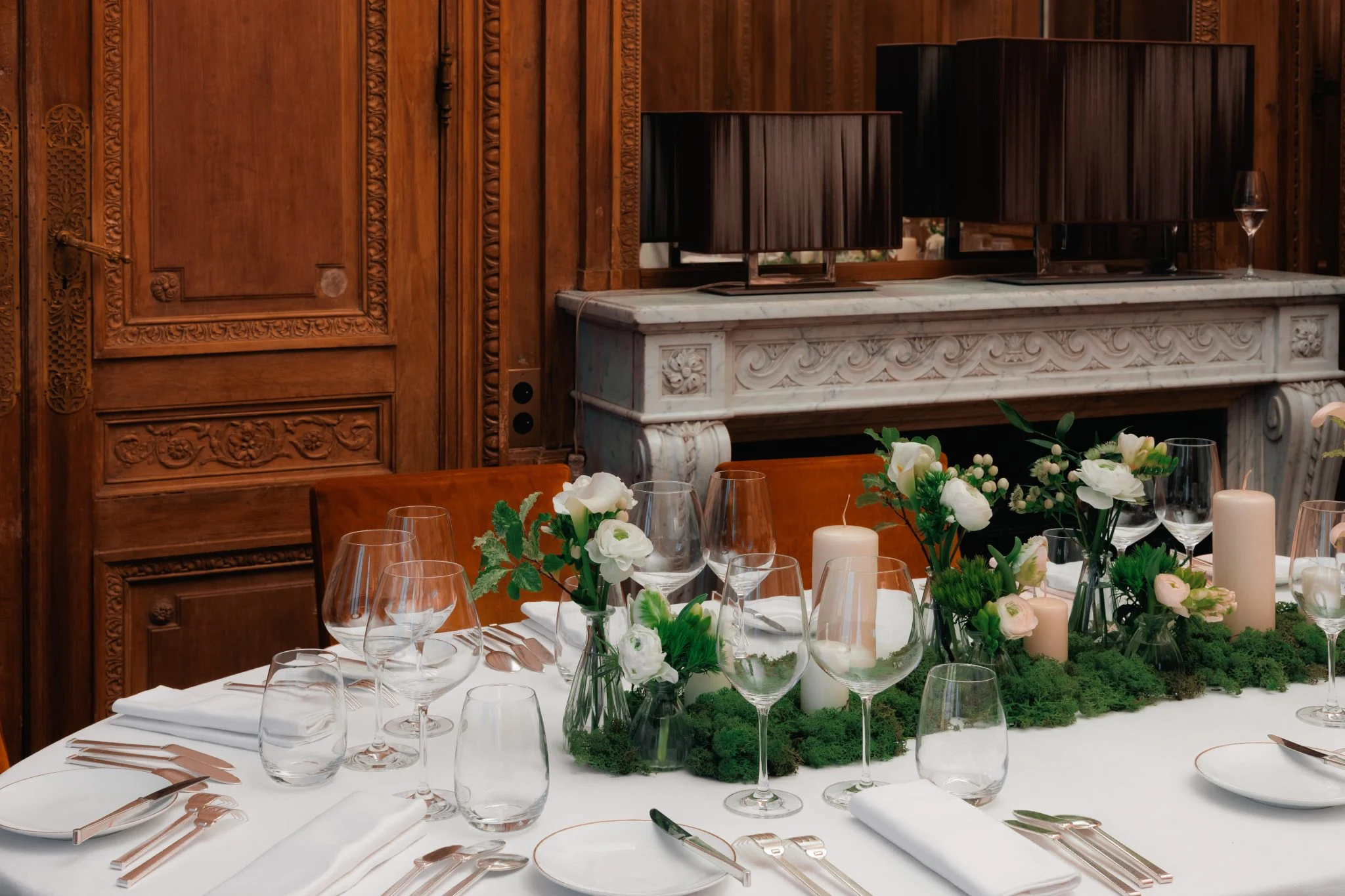
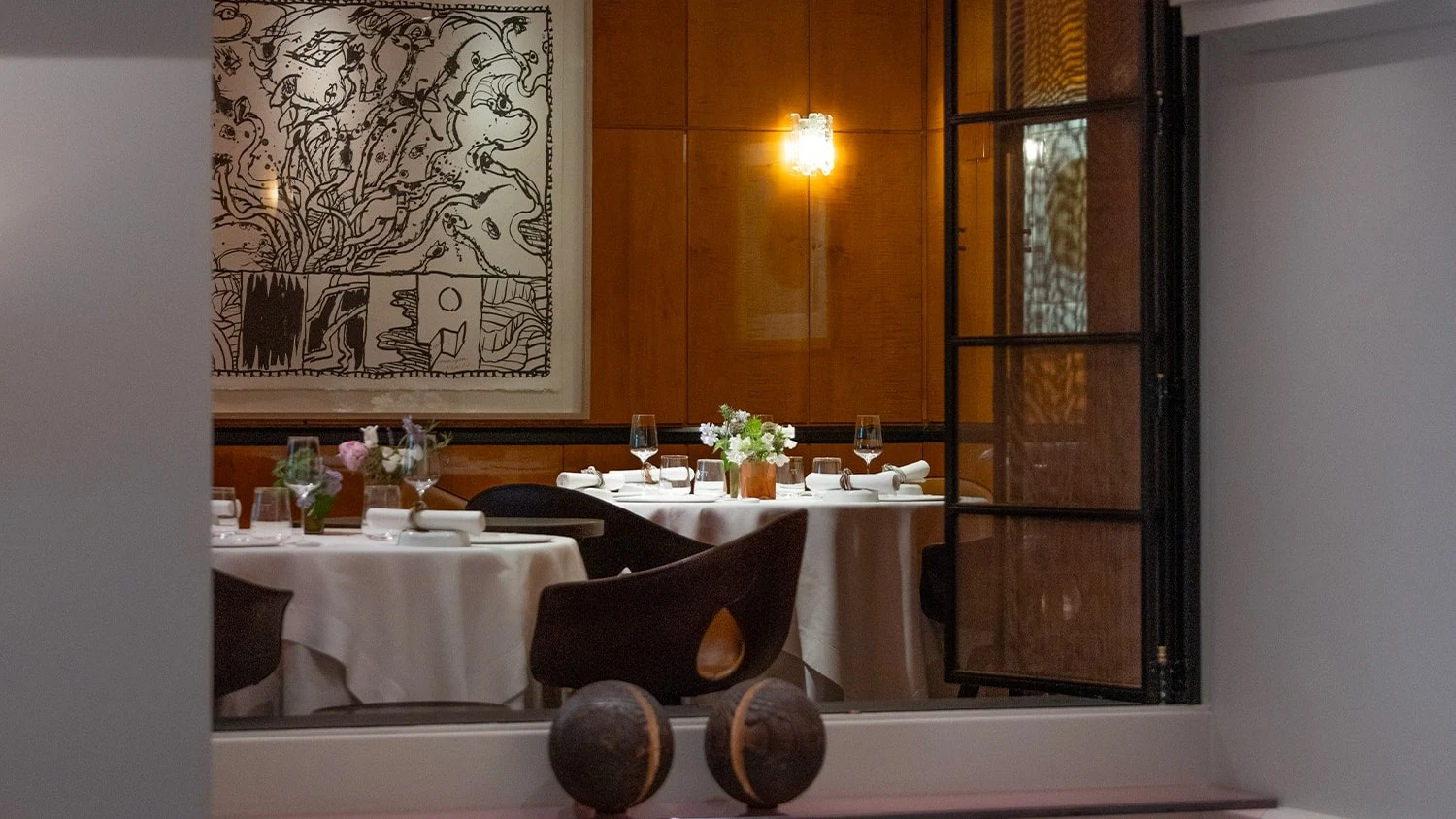
L'Orangerie
- 01CuisineModern French Pescatarian Fine Dining
- 02CityParis, France
- 03RecognitionTwo Michelin Stars
- 2 Michelin Stars · Michelin Guide
- Wine Spectator · Tier 1
- Wine Spectator Award of Excellence · 2026
- Opinionated About Dining Classical in Europe Ranked #122 · 2026
- Michelin 2 Stars · 2026
- Falstaff Restaurant - 96 Falstaff Points · 2026
- La Liste Top Restaurants: 82pts · 2026
- La Liste Top Restaurants: 83.5pts · 2025
- Michelin 2 Stars · 2025
- Gault & Millau Remarkable Restaurant: 16pts · 2025
- Michelin 2 Stars · 2024
The 8th Arrondissement's Two-Star Tier: Where L'Orangerie Sits
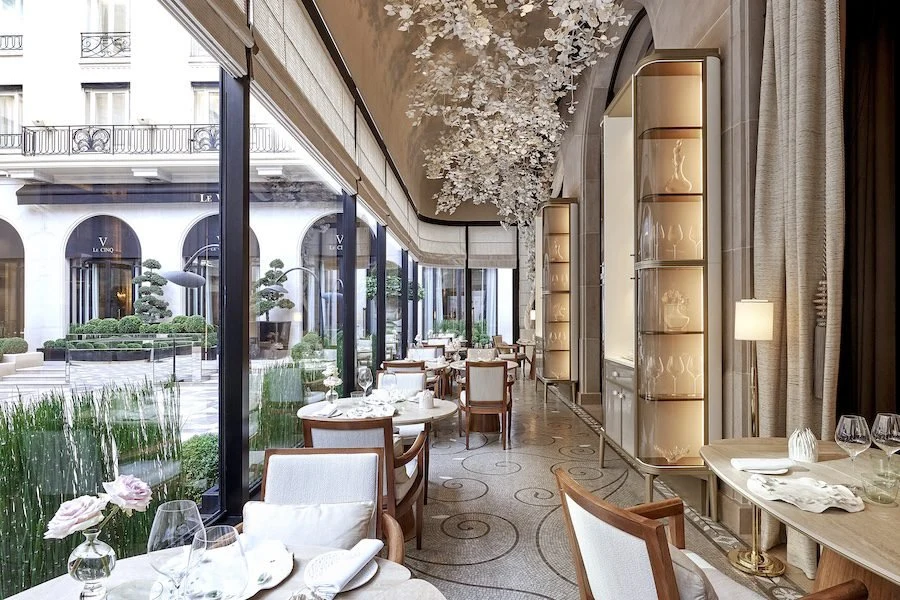
Avenue George V operates at a specific register of Parisian formal dining. The boulevard runs from the Seine toward the Champs-Élysées, and the buildings along it carry the kind of Haussmann-era weight that signals intent before you reach the door. L'Orangerie is a two-Michelin-star restaurant in Paris at 31 Av. George V, led by chef Alan Taudon. L'Orangerie, at number 31, occupies this geography deliberately: the address places it within walking distance of Le Cinq at the Four Seasons Hôtel George V, one of the 8th's three-star anchors, while occupying a distinct tier of its own with two Michelin stars held in both 2024 and 2025.
That distinction matters in Paris, where the gap between two and three stars is not merely a line on a guide but a difference in price architecture, service density, and the implicit contract with the guest. The two-star bracket in the 8th arrondissement is smaller than the city's overall two-star count might suggest: most of the arrondissement's dining prestige clusters at the three-star level or at the high-volume brasserie end, leaving a narrow middle tier where L'Orangerie competes against peers like La Scène and Nomicos. La Liste's 2025 score of 83.5 points, which slipped to 82 in 2026, places it in the guide's "Remarkable" category.
How the Menu Is Built: Architecture Over Abundance
Modern French haute cuisine at the two-star level has largely moved away from the maximalist plating that defined the 1990s and early 2000s. What replaced it, in the kitchens of chefs working within classical technique while incorporating contemporary restraint, is a menu architecture that prioritises sequence and proportion over sheer volume of courses. The question a kitchen at this level asks is not how many dishes can we serve, but in what order and at what pace does a meal build meaning.
Chef Alan Taudon's approach at L'Orangerie sits within that broader current. The cuisine is classified as Modern French, a designation that covers significant range in Paris, from the aggressively creative format of Guy Savoy to the more classically grounded expression at Tour d'Argent, but at the two-star level it tends to imply a kitchen that has internalized classical French structure and is working within it with precision rather than against it for effect. What distinguishes a menu built this way is the internal logic: how proteins are positioned relative to the lighter courses around them, how acidity and fat are balanced across a full sequence, and where the kitchen chooses to make its most assertive statement.
This architecture is what separates a two-star meal from a well-executed one-star. At L'Orangerie, the consistent Michelin recognition across consecutive years signals that this argument holds up under repeated evaluation, the kind of stability that distinguishes a settled kitchen from one still finding its voice.
For useful comparison, the structural ambition of the tasting format at this level echoes what kitchens like Flocons de Sel in Megève and Mirazur in Menton have built in their respective regions, French fine dining sequences that treat the full arc of the meal as a compositional unit.
The French Fine Dining Tradition L'Orangerie Belongs To
Paris has always been the headquarters of French haute cuisine's institutional legitimacy. The city's two and three-star kitchens collectively define what the category means globally, and the tradition they represent is one of accumulated technique: stocks built over days, sauces reduced to their essential character, pastry and bread programs that run in parallel to the savory kitchen with equal seriousness. That tradition, which produced the canonical restaurants of the mid-twentieth century, from the original Taillevent to the dining rooms that Paul Bocuse and the Troisgros family anchored outside the capital, is what restaurants like L'Orangerie inherit and work within.
The inheritance is not uncritical. Modern French cuisine at the two-star level in contemporary Paris shows the influence of chefs who trained in the tradition and then pushed against its more formulaic expressions. The result, at its most coherent, is a menu that reads classical in structure but contemporary in execution: lighter sauces, more precise vegetable cookery, less reliance on cream-heavy preparations as a default register. This shift has made the two-star format more internally competitive. Where a decade ago a kitchen could hold two stars on technical correctness alone, the current evaluation appears to weight coherence and distinctiveness more heavily.
Other French regional two and three-star kitchens that illuminate this evolution include Auberge de l'Ill in Illhaeusern and Bras in Laguiole, both of which have developed distinct identities rooted in their geography. Paris kitchens operate without that geographic anchor; their identity has to come from the kitchen itself. That is the more demanding brief, and sustained two-star status in the capital reflects meeting it year after year.
For those interested in how French Modern Cuisine translates outside France, Hélène Darroze at The Connaught in London and La Fourchette des Ducs in Obernai offer useful reference points within the same broad tradition.
comparable set and Competitive Position
The relevant comparable set for L'Orangerie is the group of Paris two-star modern French tables in the upper arrondissements. Against three-star neighbors on and around Avenue George V, Le Cinq, and further afield, Alléno Paris au Pavillon Ledoyen, Pierre Gagnaire, L'Ambroisie, and Kei, L'Orangerie occupies the position of a restaurant that the Michelin inspectors have consistently assessed as two-star material: technically accomplished, with a clear identity, but not yet in the category's highest tier. That is not a consolation; the three-star tier in Paris is among the most competitive in the world, and holding two stars across consecutive years demonstrates that the kitchen is operating at a level that the inspectors return to.
The decline from 83.5 points in 2025 to 82 in 2026 is small, placing L'Orangerie solidly in the "Remarkable" band rather than near its upper threshold. For a diner building a Paris itinerary around starred restaurants, this positions L'Orangerie as a dinner that delivers at the level its price tier promises, the €€€€ bracket in Paris's 8th arrondissement carries significant expectation.
Practical Planning
L'Orangerie is located at 31 Avenue George V, 75008 Paris. The George V metro station (Line 1) is directly on the avenue, making arrivals direct from most of the city. Cuisine: Modern French. Chef: Alan Taudon. Hours: Monday, Tuesday, and Wednesday, 7 to 9:30 pm. Price range: €€€€. Awards: Michelin 2 Stars (2024, 2025); La Liste 2025: 83.5 points; La Liste 2026: 82 points (Remarkable). Google rating: 4.8 from 375 reviews. Dress code: formal. Reservations are essential.
Questions
Frequently asked
What recognition does L'Orangerie hold?
L'Orangerie holds 2 Michelin stars.
How expensive is L'Orangerie?
L'Orangerie is listed at a price level of $$$$.
Where is L'Orangerie and what does it serve?
L'Orangerie is in Île Saint-Louis, Paris, serving Modern French Pescatarian Fine Dining.
The field
How it compares
| Place | Awards | Cuisine | Notes |
|---|---|---|---|
| L'Orangerie | Michelin 2 Stars | Modern French Pescatarian Fine Dining | Île Saint-Louis, $$$$ |
| Arpège | Michelin 3 Stars, World's 50 Best | Vegetable-Focused French Fine Dining | Paris |
| Epicure | Michelin 3 Stars | Contemporary French Fine Dining | Paris |
| Guy Savoy | Michelin 2 Stars, World's 50 Best | Classic French Fine Dining | Paris |
| Le Cinq | Michelin 3 Stars, World's 50 Best | Modern French Fine Dining | Paris |
| Le Taillevent | Michelin 2 Stars, World's 50 Best | Classic and Modern French Fine Dining | Paris |
| Pierre Gagnaire | Michelin 3 Stars, World's 50 Best | Avant-Garde French Fine Dining | Paris |
Similar places
Vegetable-Focused French Fine Dining
Arpège
Paris, France
★★★ · 50 Best
Contemporary French Fine Dining
Epicure
Paris, France
★★★
Classic French Fine Dining
Guy Savoy
Paris, France
★★ · 50 Best
Modern French Fine Dining
Le Cinq
Paris, France
★★★ · 50 Best
Classic and Modern French Fine Dining
Le Taillevent
Paris, France
★★ · 50 Best
Avant-Garde French Fine Dining
Pierre Gagnaire
Paris, France
★★★ · 50 Best