Maison Paul Bocuse
- 01CuisineIconic French Fine Dining
- 02CityTokyo, Japan
- Opinionated About Dining Top Restaurants in Japan Recommended · 2026
- Tabelog 100 #100: 3.8pts · 2025
- Opinionated About Dining Top Restaurants in Japan Ranked #606 · 2025
French Classicism in a City That Rewrites Every Tradition It Adopts
Tokyo's relationship with French haute cuisine stretches back further than most Western cities care to admit. Since the 1970s, Japanese chefs trained in Lyon, Paris, and the Rhône Valley have returned home and applied French technique to local produce. The city now holds more Michelin-starred French restaurants than many European capitals, and its diners are among the most technically informed in the world. Into this context, Maison Paul Bocuse has operated not as an import curiosity but as a serious outpost of a tradition that predates most of its neighbours.
The name connects directly to the Bocuse lineage, the most documented dynasty in modern French cooking. Paul Bocuse's brigade system, his insistence on codified classical foundations, and his Collonges-au-Mont-d'Or mothership shaped generations of chefs across Europe and Asia. A Tokyo address bearing that name enters the market with a set of expectations already established: ingredient sourcing that reflects regional French identity, technique that prioritises transparency over novelty, and a kitchen culture grounded in the canon rather than departing from it.
Daikanyama and the Case for Provenance-Led French
The restaurant sits in Daikanyama, a Shibuya-ward neighbourhood with a different register than Ginza or Marunouchi. Where the latter two districts attract destination dining at maximum price points, Daikanyama holds a more residential, considered character. The French dining scene in this pocket of Tokyo tends toward the precise rather than the spectacular: rooms that seat fewer covers, menus that reference terroir rather than technique as the primary organising idea, and wine programs that follow the food's regional logic rather than leading it.
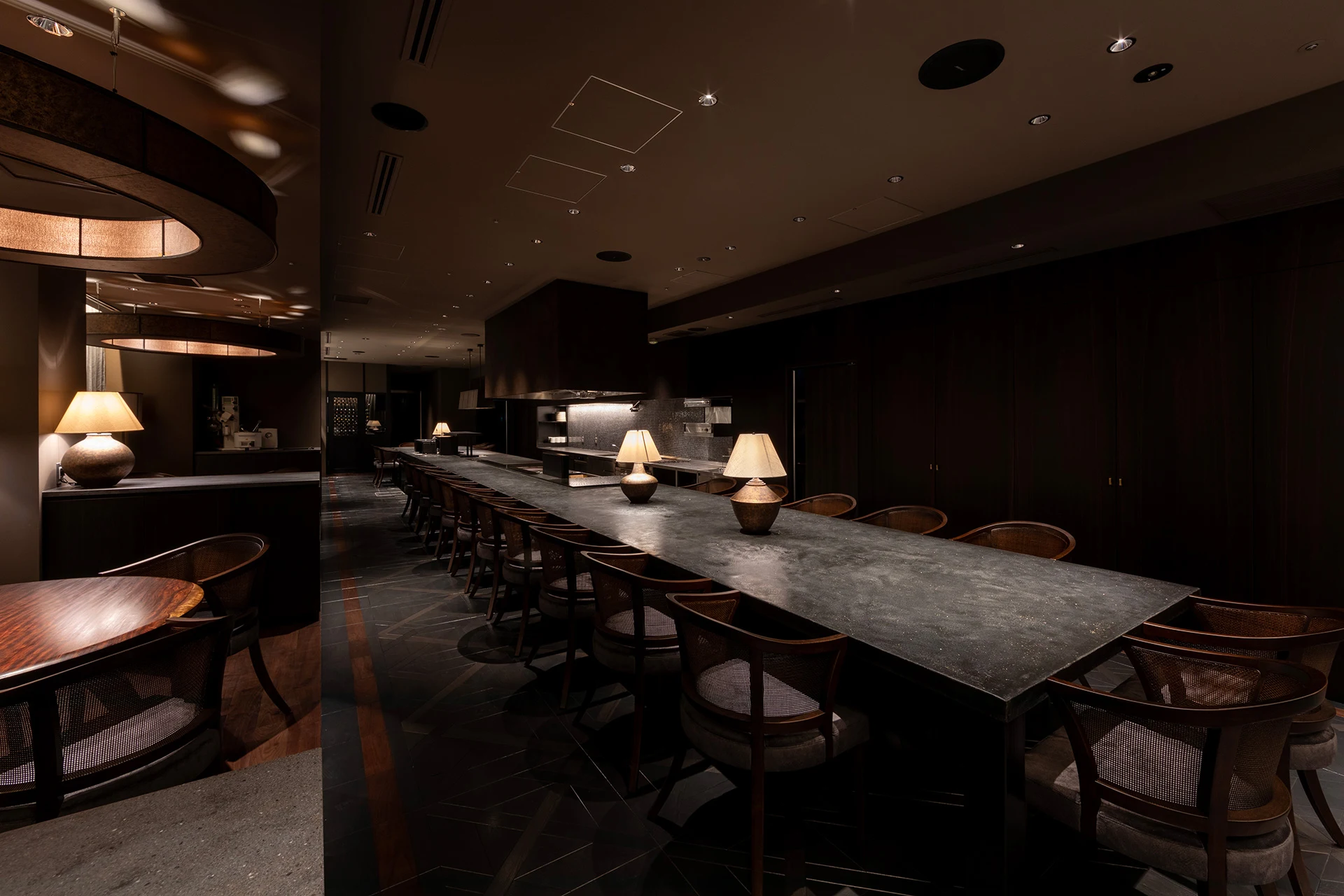
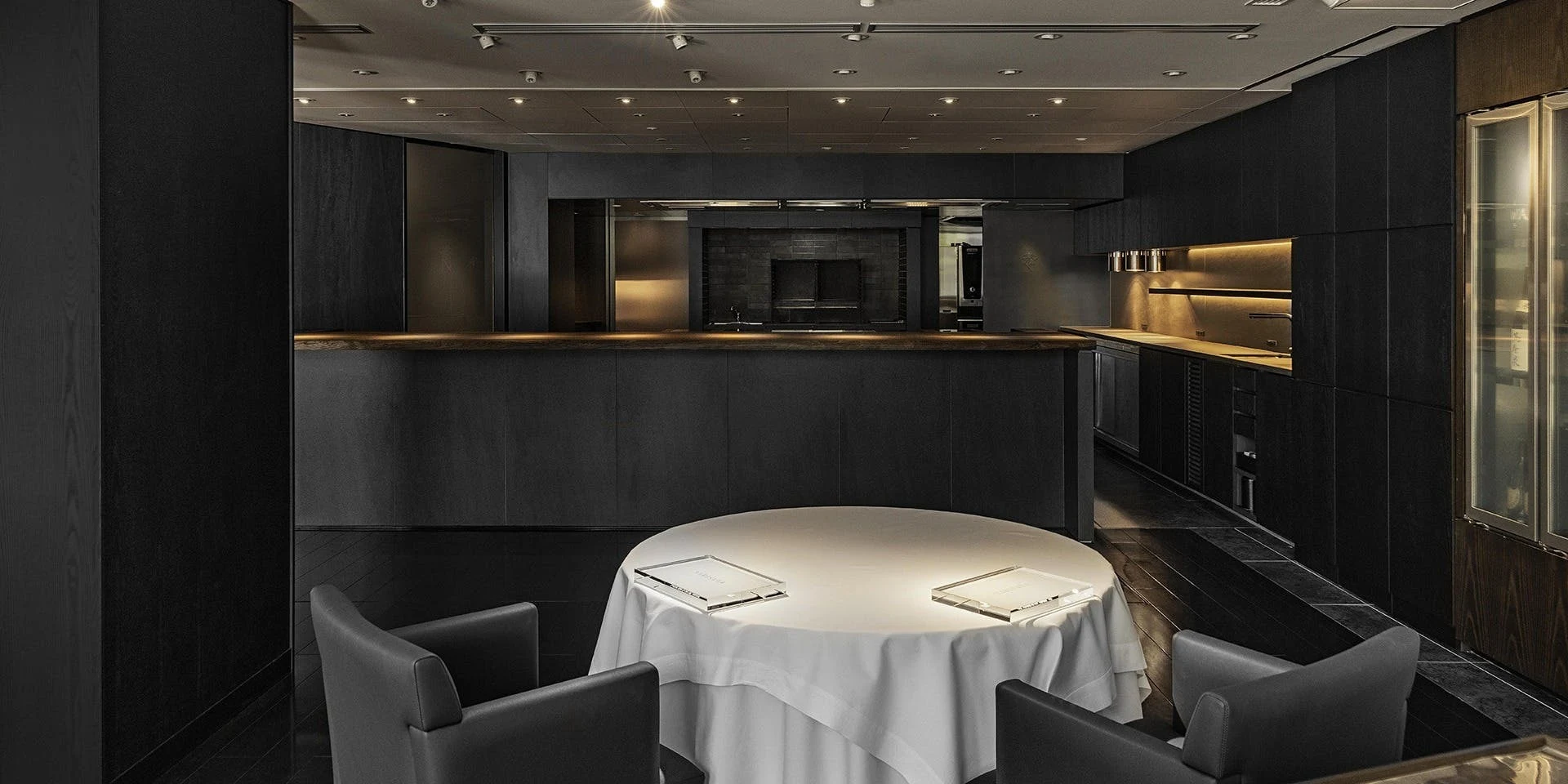
Maison Paul Bocuse sits in the basement level of the Daikanyama Forum building on Sarugakucho, an address that rewards intention. You do not arrive here accidentally. That geography matters: restaurants that require a degree of deliberate navigation tend to self-select a clientele that has done the research, and the kitchen's approach reflects that assumption.
The Kitchen's Orientation: Where Provenance Enters the Plate
Three chefs share the kitchen at Maison Paul Bocuse: Franck Ferigutti, Eric Pansu, and Olivier Bourra. In the context of a Bocuse-affiliated house, that structure is meaningful. The classical brigade is a collective institution, not a single-auteur model, and the provenance of the food tends to reflect the broader canon: Bresse poultry, Loire valley ingredients, Burgundian wine logics, Mediterranean coastal produce. What Bocuse-trained kitchens have historically done well is treat French regional geography as a sourcing map rather than a marketing category. The terroir does not arrive as a story on the menu, it arrives as a specific ingredient from a specific place, prepared with the technique that place's culinary tradition prescribes.
Tokyo's leading French kitchens, including L'Effervescence and Sézanne, have built their reputations partly on a Japan-inflected reading of French provenance, using domestic producers who match or exceed European equivalents. ESqUISSE and Florilège have moved further into a hybrid vocabulary. Maison Paul Bocuse occupies a different position: it maintains the French regional sourcing model as a point of principle, which in Tokyo's French dining scene now reads as a specific editorial choice rather than a default.
Recognition and Peer Positioning
The restaurant holds an Opinionated About Dining ranking of #606 among Japan's leading restaurants in 2025. OAD rankings aggregate critical assessments from a global pool of diners and food professionals, weighting frequency and expertise of reviewer over volume. A ranking in the top 700 nationally in a country with Japan's restaurant density represents a meaningful signal: this is a kitchen that the professional eating community returns to and reports on consistently.
In Tokyo's French tier specifically, the competitive set is deep. Château Restaurant Joël Robuchon occupies the ceremonial high end of European-name French dining in the city. Maison Paul Bocuse positions differently: less about theatrical presentation and more about the daily discipline of a classically organised kitchen. Its Google rating of 4.4 across 576 reviews suggests a consistent guest experience rather than a polarising one.
The Broader Map: French Dining Beyond Tokyo
For readers building a Japan itinerary around serious French cooking, the country offers a wider geography than Tokyo alone. HAJIME in Osaka operates in a different register entirely, closer to haute cuisine as philosophical statement. Gion Sasaki in Kyoto offers a kaiseki counterpoint to the French-dominant Tokyo scene. Further afield, akordu in Nara, Goh in Fukuoka, 1000 in Yokohama, and 6 in Okinawa each represent a distinct regional reading of serious dining in Japan.
For the European comparison set, Hotel de Ville Crissier in Crissier and Les Amis in Singapore represent how classical French tradition travels and adapts in non-French contexts, a useful frame for understanding what Maison Paul Bocuse is doing in Daikanyama.
Planning a Visit
Maison Paul Bocuse is located in the basement of the Daikanyama Forum building at 17-16 Sarugakucho, Daikanyama, Shibuya, Tokyo. Daikanyama Station on the Tokyu Toyoko Line is the most direct approach, a short walk from the building. The restaurant's Google rating of 4.4 from over 500 reviews indicates a booking operation that has sustained regular traffic. Maison Paul Bocuse is priced at about $200 per person, and reservations are essential. Given the kitchen's profile and the neighbourhood's character, this is a dinner reservation to plan ahead rather than a drop-in.
Questions
Frequently asked
How expensive is Maison Paul Bocuse?
Maison Paul Bocuse is listed at a price level of $$$$.
Where is Maison Paul Bocuse and what does it serve?
Maison Paul Bocuse is in Shibuya, Tokyo, serving Iconic French Fine Dining.
The field
How it compares
| Place | Cuisine | Notes | Awards |
|---|---|---|---|
| Maison Paul Bocuse | Iconic French Fine Dining | Shibuya, $$$$ | · |
| Den | Modern Japanese Kaiseki | Tokyo | Michelin 2 Stars, World's 50 Best |
| Florilège | Modern French-Japanese Plant-Based Fine Dining | Tokyo | Michelin 2 Stars, World's 50 Best |
| Narisawa | Modern Japanese Satoyama Fine Dining | Tokyo | Michelin 2 Stars, World's 50 Best |
| Quintessence | Modern French Fine Dining | Tokyo | Michelin 3 Stars |
| Sazenka | Modern Chinese Fine Dining | Tokyo | Michelin 3 Stars, World's 50 Best |
| Sézanne | Modern French Fine Dining | Tokyo | Michelin 3 Stars, World's 50 Best |
Similar places
Modern Japanese Kaiseki
Den
Tokyo, Japan
★★ · 50 Best
Modern French-Japanese Plant-Based Fine Dining
Florilège
Tokyo, Japan
★★ · 50 Best
Modern Japanese Satoyama Fine Dining
Narisawa
Tokyo, Japan
★★ · 50 Best
Modern French Fine Dining
Quintessence
Tokyo, Japan
★★★
Modern Chinese Fine Dining
Sazenka
Tokyo, Japan
★★★ · 50 Best
Modern French Fine Dining
Sézanne
Tokyo, Japan
★★★ · 50 Best