Marugo
- 01CuisineItalian Wine Bar
- 02CityTokyo, Japan
- Opinionated About Dining Casual in Japan Ranked #31 · 2026
- Opinionated About Dining Casual in Japan Ranked #72 · 2025
- Opinionated About Dining Casual in Japan Ranked #51 · 2024
- Opinionated About Dining Casual in Japan Ranked #47 · 2023
Tonkatsu in Tokyo: The Metropolitan Standard
Tokyo's approach to tonkatsu differs from the Kansai model in ways that go beyond geography. Where Kyoto houses like Jukuseibuta Kawamura and Osaka's Kyomachibori Nakamura tend to foreground aged-pork programmes and kaiseki-adjacent refinement, Tokyo's specialist tonkatsu circuit operates with a different set of priorities: tight menus, high-volume lunch service, and an almost engineering-minded focus on oil temperature and breadcrumb grade. The city's pace is a feature, not a compromise. In Shinjuku specifically, where salaryman lunch culture and late-night dining coexist within the same blocks, this efficiency has produced a category of tonkatsu-ya that are more rigorous than their modest settings suggest.
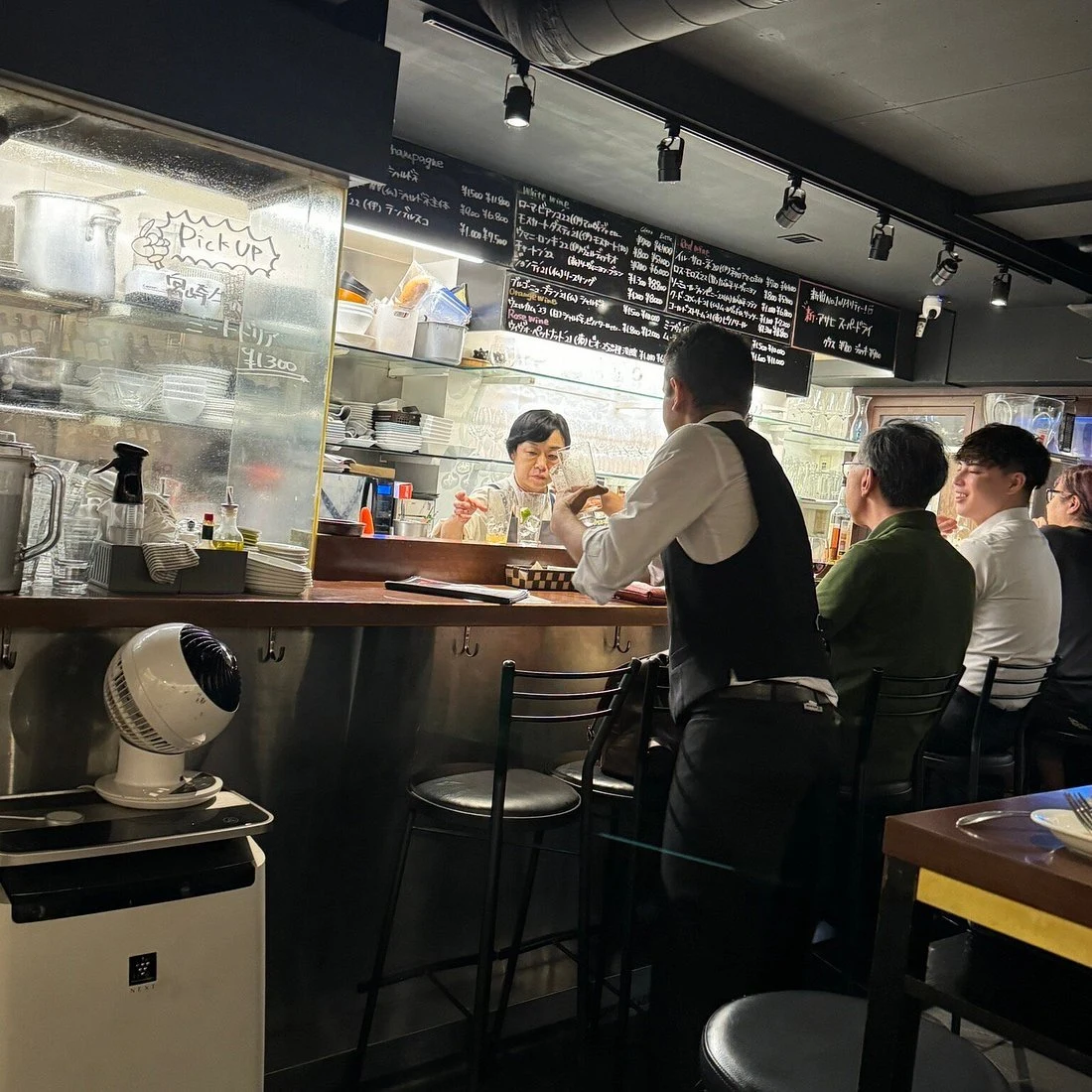
Marugo, at 3 Chome-7-5 Shinjuku, Tokyo, operates within that framework. It is not a destination restaurant in the kaiseki sense, and it does not aspire to be. What Opinionated About Dining's annual Casual Japan ranking captures when it lists a place like this is the specific competence of a well-run specialist: consistent sourcing, precise frying, the kind of discipline that produces a repeatable result rather than an occasionally brilliant one.
What the Rankings Say About the Competitive Set
Opinionated About Dining's Casual Japan list is a useful instrument for reading Tokyo's non-fine-dining tier. It reflects critic consensus across multiple visits and places venues against each other in a format that strips away ambience premium and reservation scarcity as variables. Marugo ranked #47 in 2023, #51 in 2024, and #72 in 2025. That three-year trajectory, a slight decline in absolute ranking, should be read in the context of a list that has grown more competitive annually as casual Japanese dining has attracted more critical attention. Holding a position in the top 75 across three consecutive years signals consistency rather than a single strong season.
Within Tokyo's tonkatsu specialist circuit, that consistency places Marugo in a recognisable peer group. Butagumi in Roppongi and Katsuyoshi represent different points on the same spectrum, as do Ginza Katsukami, Katsusen, and Fry-ya. Each occupies a different neighbourhood context and price positioning, but they share a common characteristic: the cooking at each is defined by a specific technical and sourcing commitment rather than by a broader restaurant concept. Marugo's Shinjuku address gives it a particular character within that group, one shaped by the neighbourhood's density and transactional pace.
Tokyo vs. Kyoto: Speed, Craft, and What Gets Lost in Translation
The Tokyo-Kyoto divide in tonkatsu is instructive. Kyoto's approach to most cooking categories tends toward elaboration: longer resting periods, more attention to the theatrical presentation of premium ingredients, a pace calibrated for reflection rather than throughput. That approach produces excellent results in the right format, but it also tends to price and present tonkatsu as a near-fine-dining proposition, which changes what it is fundamentally.
Tokyo's version of the same discipline runs in the opposite direction. The craft is present, but the setting is lean, the service is direct, and the experience is structured around the food rather than around the ritual of eating it. For serious eaters, this is not a downgrade. The frying counter as operating theatre, where every degree of oil temperature and every resting minute matters, is as technically demanding as any kaiseki kitchen; it simply refuses to perform its own seriousness. Marugo sits within this tradition. Chef Takayoshi Takeuchi operates in a city where the tonkatsu audience is experienced and unimpressed by presentation alone, which raises the bar for what the food itself must deliver.
That metropolitan standard extends to the rest of Tokyo's dining circuit at every price tier. The same critical rigour that applies to a Shinjuku tonkatsu-ya applies to the city's multi-course rooms: HAJIME in Osaka and Gion Sasaki in Kyoto represent the Kansai approach to that same standard, where refinement and setting carry more of the argument. In Tokyo, the food does the work.
Shinjuku as Context
Shinjuku's dining geography is more layered than its reputation as an entertainment district suggests. The neighbourhood contains some of Tokyo's densest concentrations of both tourist-facing izakayas and seriously regarded specialists working in traditional categories, often within the same block. For tonkatsu specifically, Shinjuku's high foot traffic and lunch-dominant culture have historically supported a category of restaurants that prioritise throughput without sacrificing sourcing standards, a combination that is harder to maintain than it appears.
The address at 3 Chome-7-5 places Marugo within a residential-commercial mix that is typical of the inner Shinjuku wards rather than the station-adjacent tourist corridor. That location has practical implications for who the regular clientele tends to be: the lunch crowd at this kind of address is local and repeat, which means the restaurant is accountable to a specific audience that returns regularly and notices when standards shift.
Planning Your Visit
Marugo operates Tuesday through Sunday, with service from 5 pm to 1 am on Tuesday through Friday and from 3 pm to 1 am on Saturday and Sunday. Monday is closed. The compressed weekly schedule and short service windows, particularly the dinner session, which runs only three hours, mean that timing matters. Google reviews place it at 3.7 across 198 responses.
For those extending beyond the capital, akordu in Nara, Goh in Fukuoka, 1000 in Yokohama, and 6 in Okinawa each represent the same calibre of specialist commitment in their respective cities.
Questions
Frequently asked
How expensive is Marugo?
Marugo is listed at a price level of $$.
Where is Marugo and what does it serve?
Marugo is in Shinjuku, Tokyo, serving Italian Wine Bar.
The field
How it compares
| Place | Cuisine | Notes | Awards |
|---|---|---|---|
| Marugo | Italian Wine Bar | Shinjuku, $$ | · |
| Den | Modern Japanese Kaiseki | Tokyo | Michelin 2 Stars, World's 50 Best |
| Florilège | Modern French-Japanese Plant-Based Fine Dining | Tokyo | Michelin 2 Stars, World's 50 Best |
| Narisawa | Modern Japanese Satoyama Fine Dining | Tokyo | Michelin 2 Stars, World's 50 Best |
| Quintessence | Modern French Fine Dining | Tokyo | Michelin 3 Stars |
| Sazenka | Modern Chinese Fine Dining | Tokyo | Michelin 3 Stars, World's 50 Best |
| Sézanne | Modern French Fine Dining | Tokyo | Michelin 3 Stars, World's 50 Best |
Similar places
Modern Japanese Kaiseki
Den
Tokyo, Japan
★★ · 50 Best
Modern French-Japanese Plant-Based Fine Dining
Florilège
Tokyo, Japan
★★ · 50 Best
Modern Japanese Satoyama Fine Dining
Narisawa
Tokyo, Japan
★★ · 50 Best
Modern French Fine Dining
Quintessence
Tokyo, Japan
★★★
Modern Chinese Fine Dining
Sazenka
Tokyo, Japan
★★★ · 50 Best
Modern French Fine Dining
Sézanne
Tokyo, Japan
★★★ · 50 Best