Masuda
In Residence
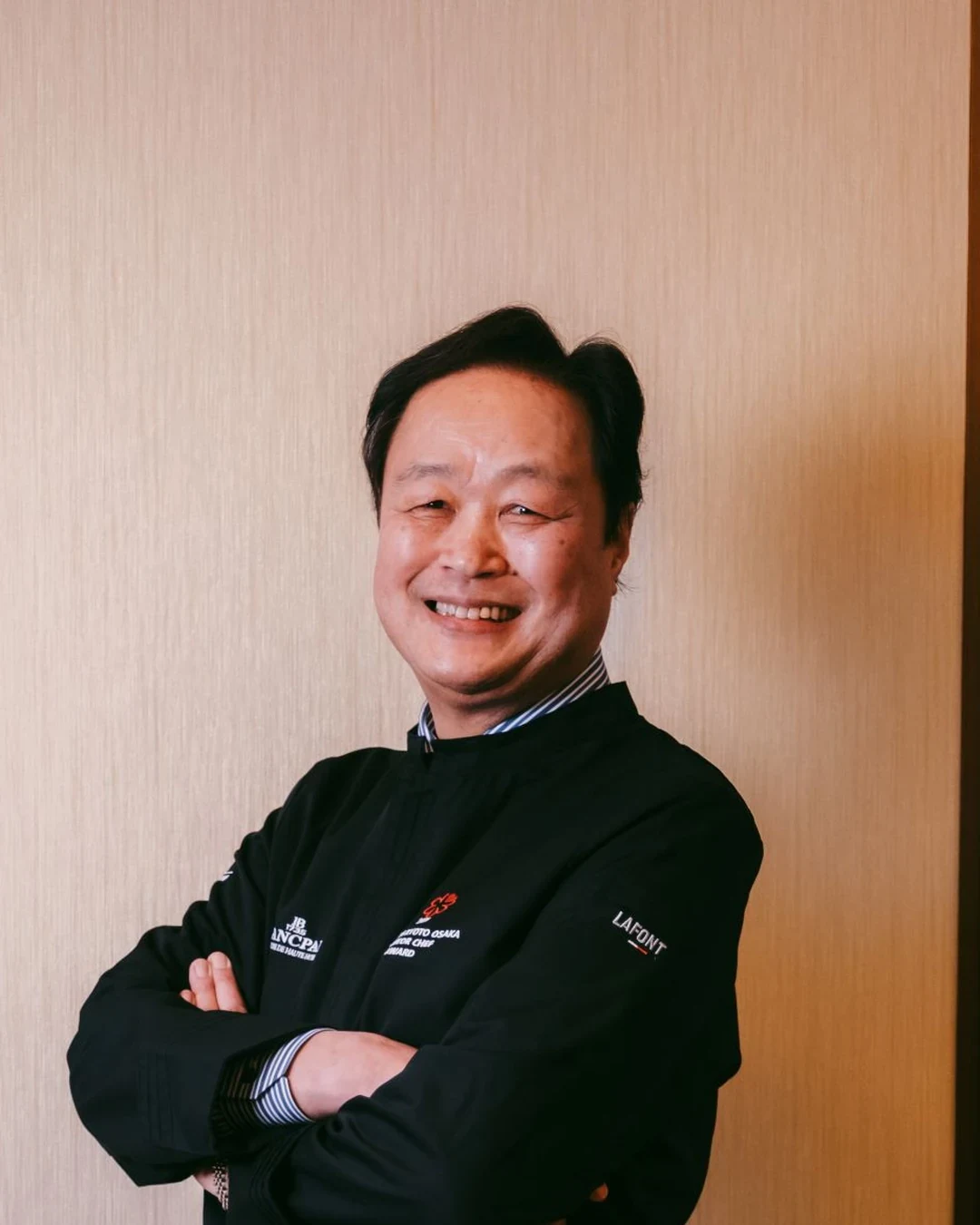
Yoshichika Masuda
Chef
- 01CuisineMichelin-Starred Seasonal Kaiseki Omakase
- 02CityOsaka, Japan
- 03RecognitionOne Michelin Star
- 1 Michelin Star · Michelin Guide
- Michelin 1 Star · 2026
- Tabelog Bronze #260: 4.2pts · 2026
- Tabelog Bronze · 2025
- Opinionated About Dining Top Restaurants in Japan Ranked #193 · 2025
- Tabelog 100 #92: 4.2pts · 2025
- Opinionated About Dining Top Restaurants in Japan Ranked #156 · 2024
- Michelin 1 Star · 2024
- Opinionated About Dining Top Restaurants in Japan Ranked #132 · 2023
The Counter as Architecture
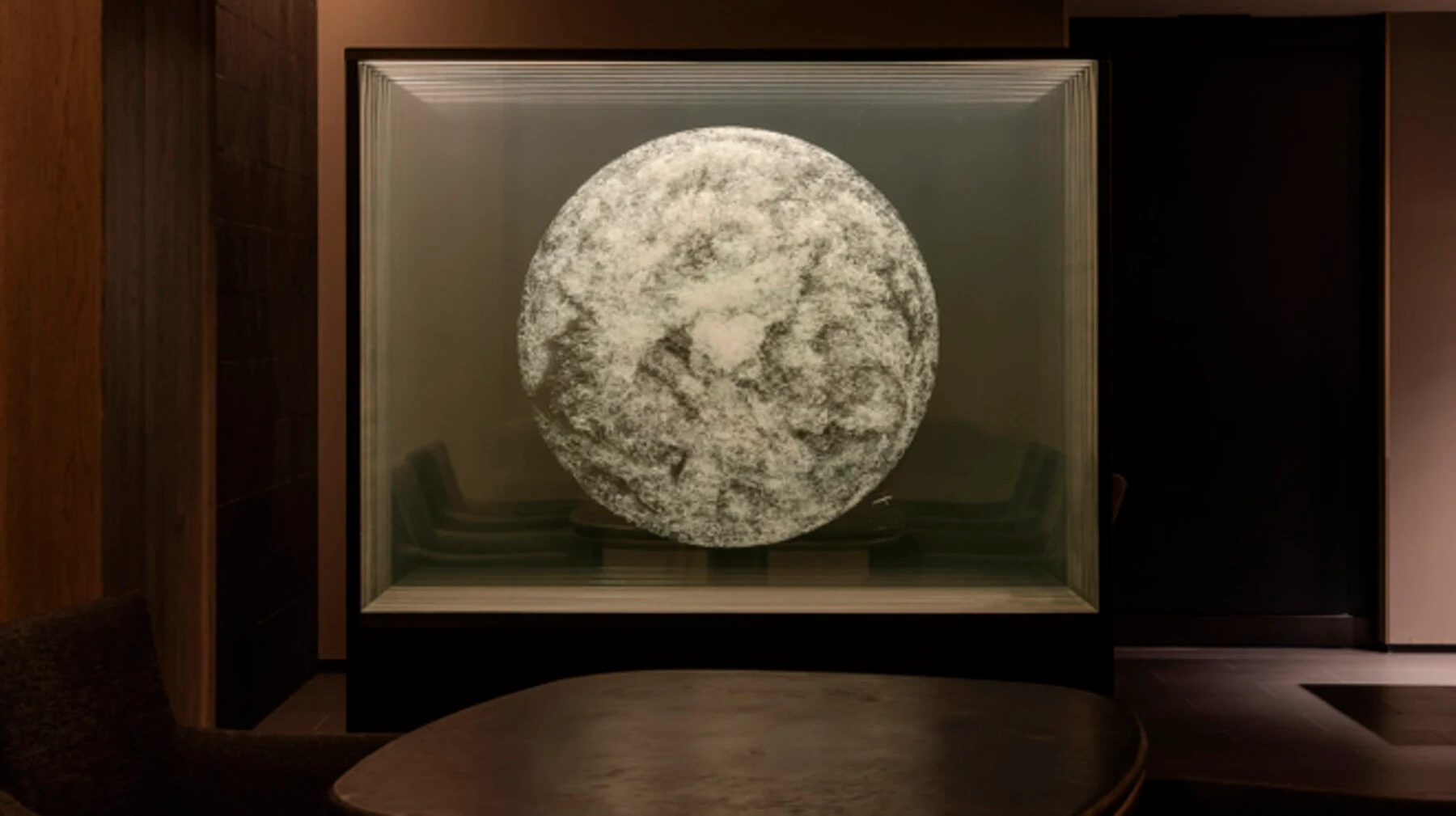
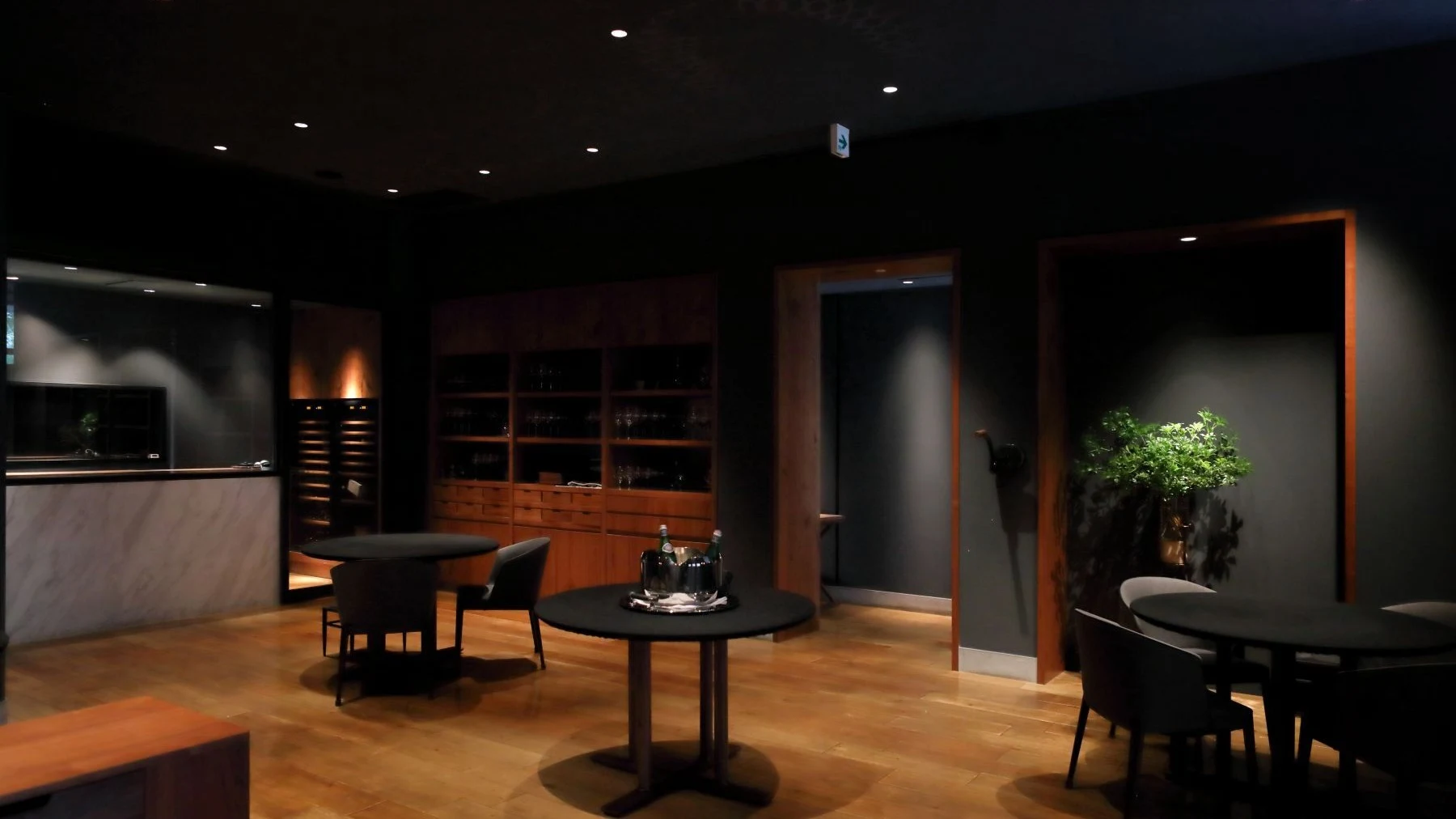
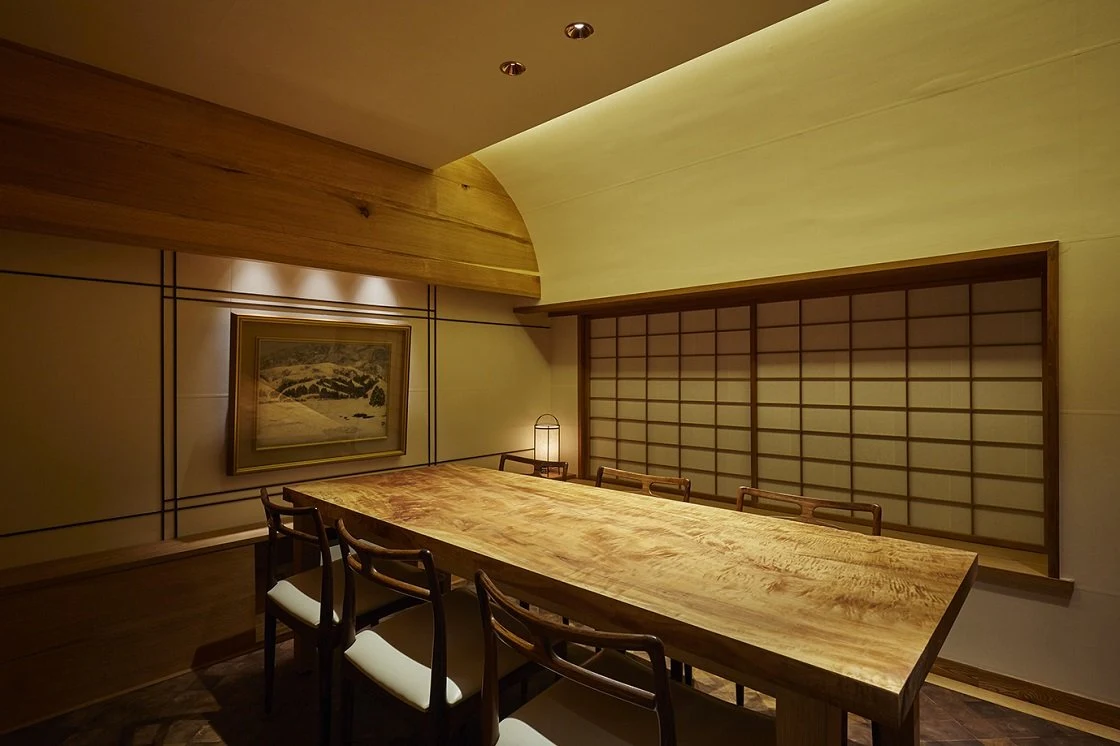
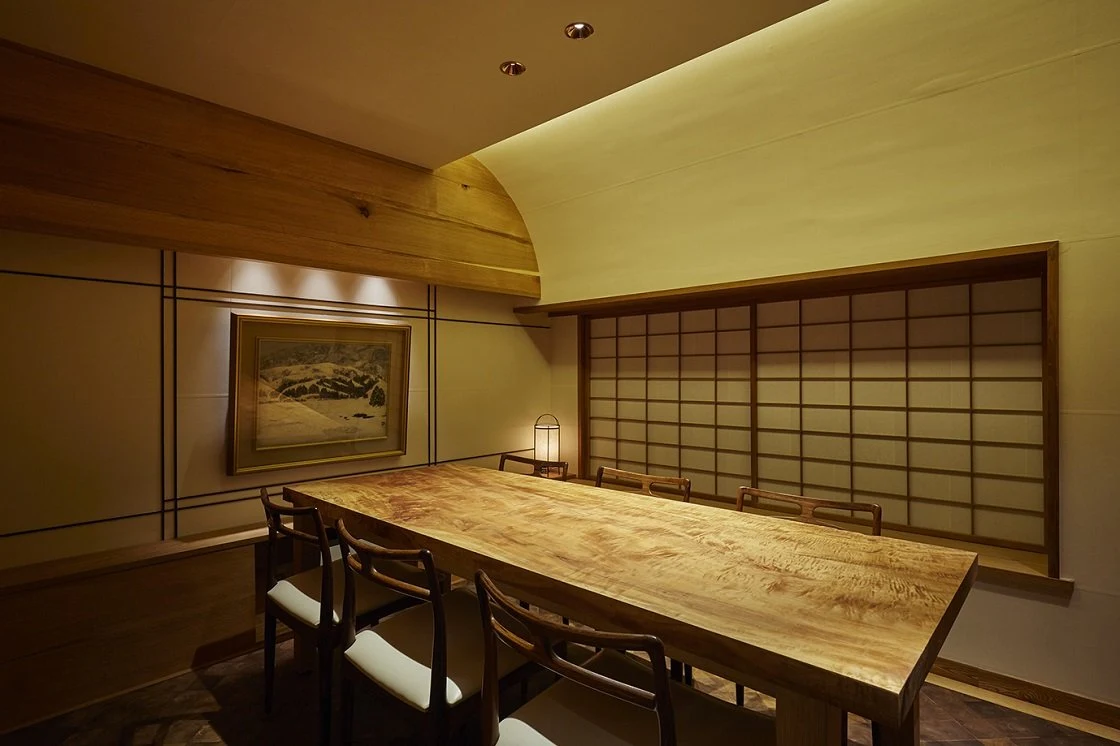
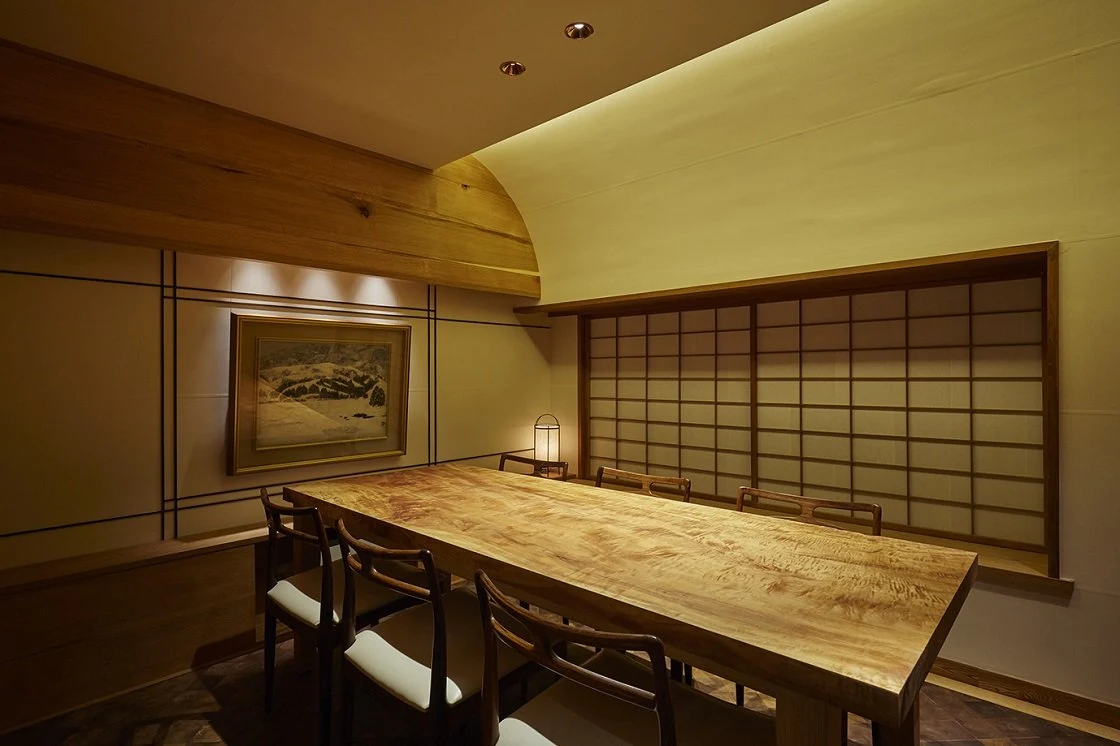
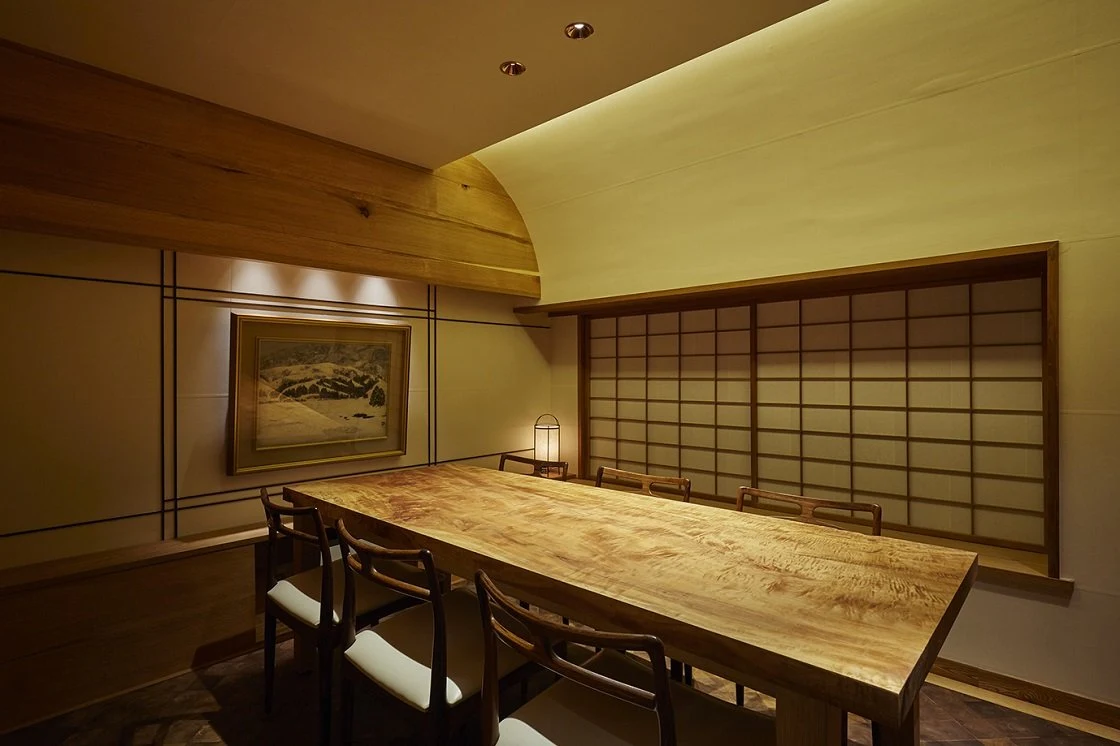
In Osaka's Chuo Ward, the dominant format for serious Japanese dining remains the counter: a single plank of wood, eight seats, and a kitchen that performs in full view. This is not a spatial accident. The counter format in kaiseki disciplines both cook and guest, removing the intermediary of a dining room and collapsing the distance between technique and reception. Masuda, on Shinsaibashisuji, operates inside this tradition without decorating it. The room is a stylish and relaxing space built around counter seating. There is nothing here to distract from the cooking.
The eight-seat counter is the organizing fact of the space. At that scale, every decision about material, light, and proportion is amplified. The wooden surface functions as both work surface and presentation plane, and Chef Yoshichika Masuda, who trained in the ryotei tradition, uses it accordingly. The counter at this tier of Osaka kaiseki is not incidental; it is the argument the restaurant makes about what fine dining should feel like.
Compare Masuda's single-counter format to the larger-footprint kaiseki houses operating at the same price level in the Kansai region, and the difference in spatial philosophy becomes clear. Venues like Kashiwaya Osaka Senriyama or Taian carry the kaiseki tradition in rooms that accommodate more guests and more ceremonial staging. Masuda compresses that ambition into eight chairs and a single surface.
What Happens at the Counter
Masuda's cooking follows the kaiseki sequence, and within that sequence the hassun course has become the element most noted by those who have eaten here. Hassun, the second course in formal kaiseki, sets the seasonal theme through a composed arrangement of ingredients from land and sea. At this counter, that arrangement has been described as sculptural, a study in light and shadow built from produce rather than from decor. It is one of the places in the meal where the space itself becomes content: the wooden counter, the proportions of the room, and the presentation combine into something that reads as intentional design rather than service choreography.
The kitchen's stated focus on fish is consistent with the Edomae and kaiseki traditions that inform this style of cooking, where sourcing and handling of seafood carries as much weight as preparation technique. The drink program, which lists sake, shochu, and wine with specific attention to each, is calibrated to support rather than compete with the food. A sommelier is available, and the venue accepts BYO, a practical flexibility that matters at this price point.
The meal runs Monday through Saturday, with lunch and dinner service on most days and dinner-only on Monday. That single-session evening format is standard for this type of counter, where the pace of a kaiseki progression cannot be compressed into shorter slots. Arriving on time is not optional: the reservation policy makes clear that late arrival may result in courses being skipped, because each course in the sequence is prepared and served simultaneously for the full counter.
Where Masuda Sits in Osaka's Fine Dining Tiers
Osaka operates at the top of Japan's restaurant hierarchy, and the city's kaiseki and Japanese fine dining options form a competitive field that extends from approachable multi-course dinners to multi-hour counter experiences at ¥50,000 per person and above. Masuda prices its dinner at JPY 40,000 to JPY 49,999 per person based on the listed budget, with review-based spending data suggesting the actual per-head cost often reaches JPY 50,000 to JPY 59,999 once drinks and service charges are included.
That positions Masuda at the same price tier as Koryu in the Osaka kaiseki bracket, and below the higher-ceiling French and innovative restaurants operating at ¥¥¥¥ in the same city, including HAJIME and La Cime. Within the kaiseki category specifically, the comparable set is limited: there are not many kaiseki counters in Osaka that operate at eight seats, hold a Michelin star, and appear in Opinionated About Dining's annual Japan rankings across multiple consecutive years.
A Michelin star and a Tabelog Bronze Award with a score of 4.04 provide the institutional corroboration that the dining room has earned.
For readers mapping kaiseki across the Kansai-Tokyo axis, the relevant comparisons extend outward. Gion Sasaki in Kyoto and Hyotei in Kyoto operate in the same tradition with longer institutional histories. RyuGin in Tokyo and Harutaka in Tokyo represent the Tokyo end of the premium Japanese dining spectrum. Masuda's positioning in Osaka, within walking distance of Shinsaibashi's retail and hospitality corridor, makes it the Chuo Ward answer to those better-publicized addresses.
Further afield, comparisons with akordu in Nara, Goh in Fukuoka, 1000 in Yokohama, and 6 in Okinawa illustrate how Japan's regional fine dining scene has developed a set of serious counter-format restaurants outside Tokyo that now compete on the same recognition circuit.
The Apprenticeship Dimension
One detail that carries editorial weight is the visible presence of an apprentice in training at the counter. In the context of a kaiseki room, this is not incidental: the ryotei and kaiseki traditions depend on extended apprenticeship structures, and the decision to make that transmission visible to guests is a statement about what the counter is for. It connects the evening to a longer timeline than a single meal, positioning the space as part of an educational and cultural continuity rather than purely as a service transaction. Whether or not that matters to any individual guest, it is a detail that distinguishes a serious practitioner from a venue that simply occupies the kaiseki format.
Know Before You Go
Planning Details
- Address: 1 Chome-3-12 Shinsaibashisuji, Chuo Ward, Osaka, 542-0085, Japan
- Hours: Monday to Sunday, 5:00 pm to 11:00 pm
- Price: JPY 40,000 to 49,999 per person
- Seats: 8 counter seats
- Reservations: Essential
- Payment: Credit cards accepted (Visa, Mastercard, JCB, Amex, Diners); no electronic money or QR code payments
- Service charge: 10%, no additional cover charge
- Drinks: Sake, shochu, and wine; sommelier available; BYO permitted
- Smoking: Non-smoking
- Private hire: Available for groups up to 20 people
- Dress: Smart casual
- Parking: Not available
Questions
Frequently asked
What recognition does Masuda hold?
Masuda holds 1 Michelin star.
Who works at Masuda?
Made By profiles Yoshichika Masuda (Chef) at Masuda.
How expensive is Masuda?
Masuda is listed at a price level of $$$$.
Where is Masuda and what does it serve?
Masuda is in Chūō, Osaka, serving Michelin-Starred Seasonal Kaiseki Omakase.
The field
How it compares
| Place | Awards | Cuisine | Notes |
|---|---|---|---|
| Masuda | Michelin 1 Star | Michelin-Starred Seasonal Kaiseki Omakase | Chūō, $$$$ |
| HAJIME | Michelin 3 Stars, World's 50 Best | Avant-Garde Japanese Fine Dining | Osaka |
| Honkogetsu | · | Traditional Kaiseki | Osaka |
| La Cime | Michelin 2 Stars, World's 50 Best | Modern French with Japanese Ingredients | Osaka |
| Numata | Michelin 2 Stars | Michelin-Starred Tempura Omakase | Osaka |
| Sushi Sanshin | Michelin 1 Star | Edomae Omakase Sushi | Osaka |
| Taian | Michelin 3 Stars | Traditional Japanese Kaiseki Omakase | Osaka |
In residence
Similar places
Avant-Garde Japanese Fine Dining
HAJIME
Osaka, Japan
★★★ · 50 Best
Traditional Kaiseki
Honkogetsu
Osaka, Japan
Modern French with Japanese Ingredients
La Cime
Osaka, Japan
★★ · 50 Best
Michelin-Starred Tempura Omakase
Numata
Osaka, Japan
★★
Edomae Omakase Sushi
Sushi Sanshin
Osaka, Japan
★
Traditional Japanese Kaiseki Omakase
Taian
Osaka, Japan
★★★