MIDA

In Residence
Seth Gerber
Owner
- 01CuisineModern Italian Neighborhood Pasta
- 02CityBoston, United States
- 03RecognitionJames Beard Award
- James Beard Winner · James Beard Foundation
- James Beard Award Semi Finalist · 2025
Tremont Street and the Architecture of Intention
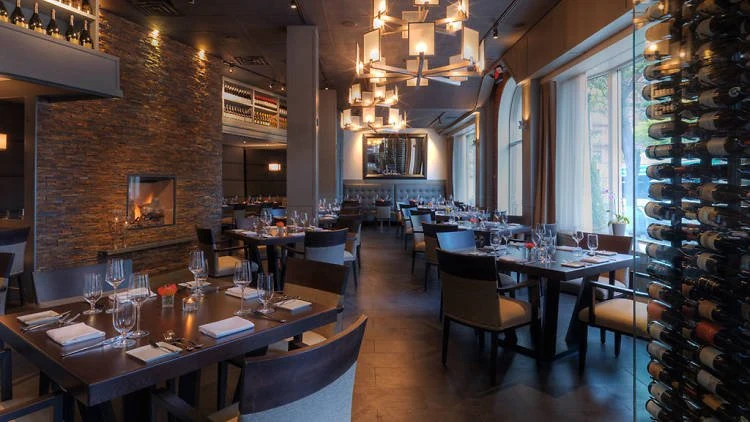
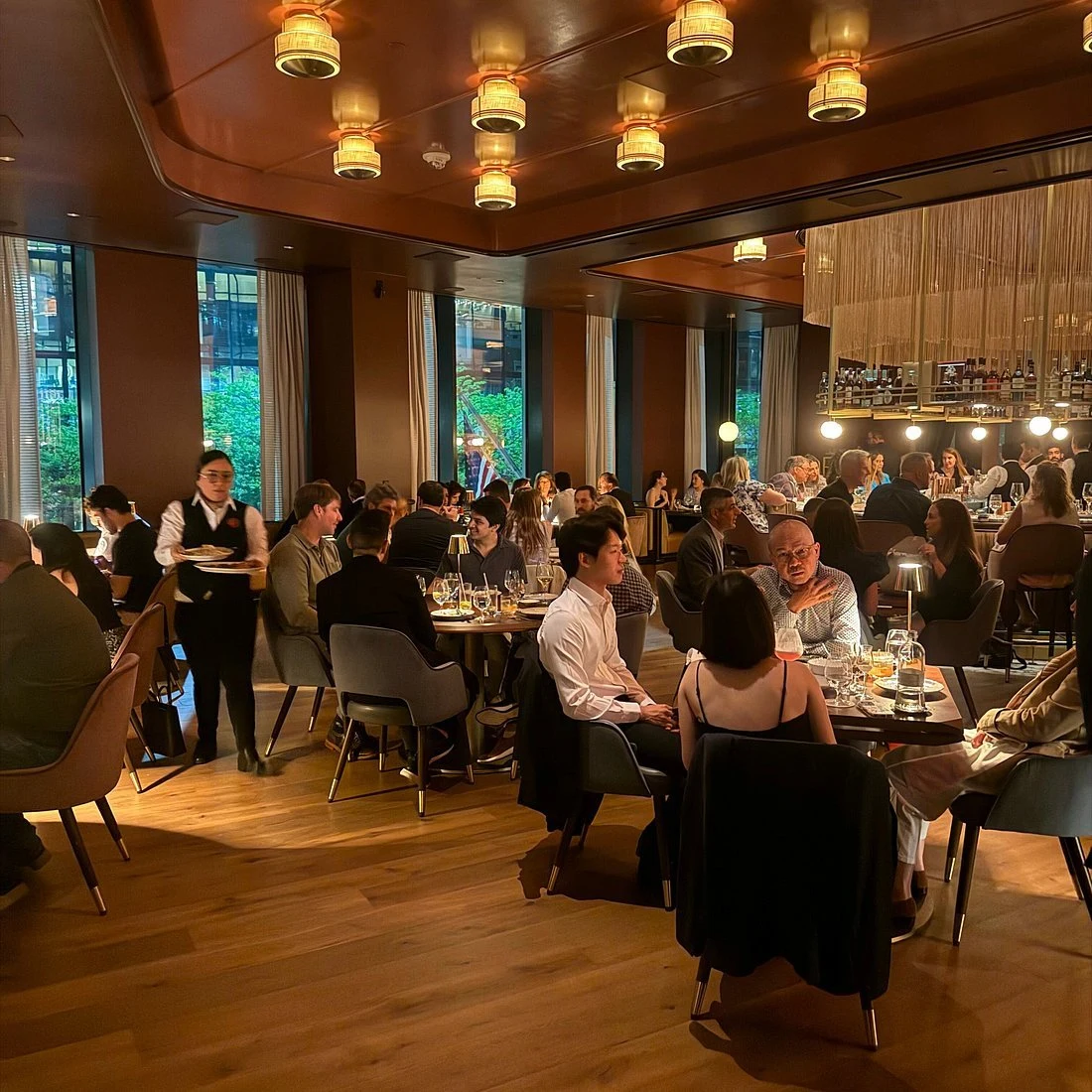
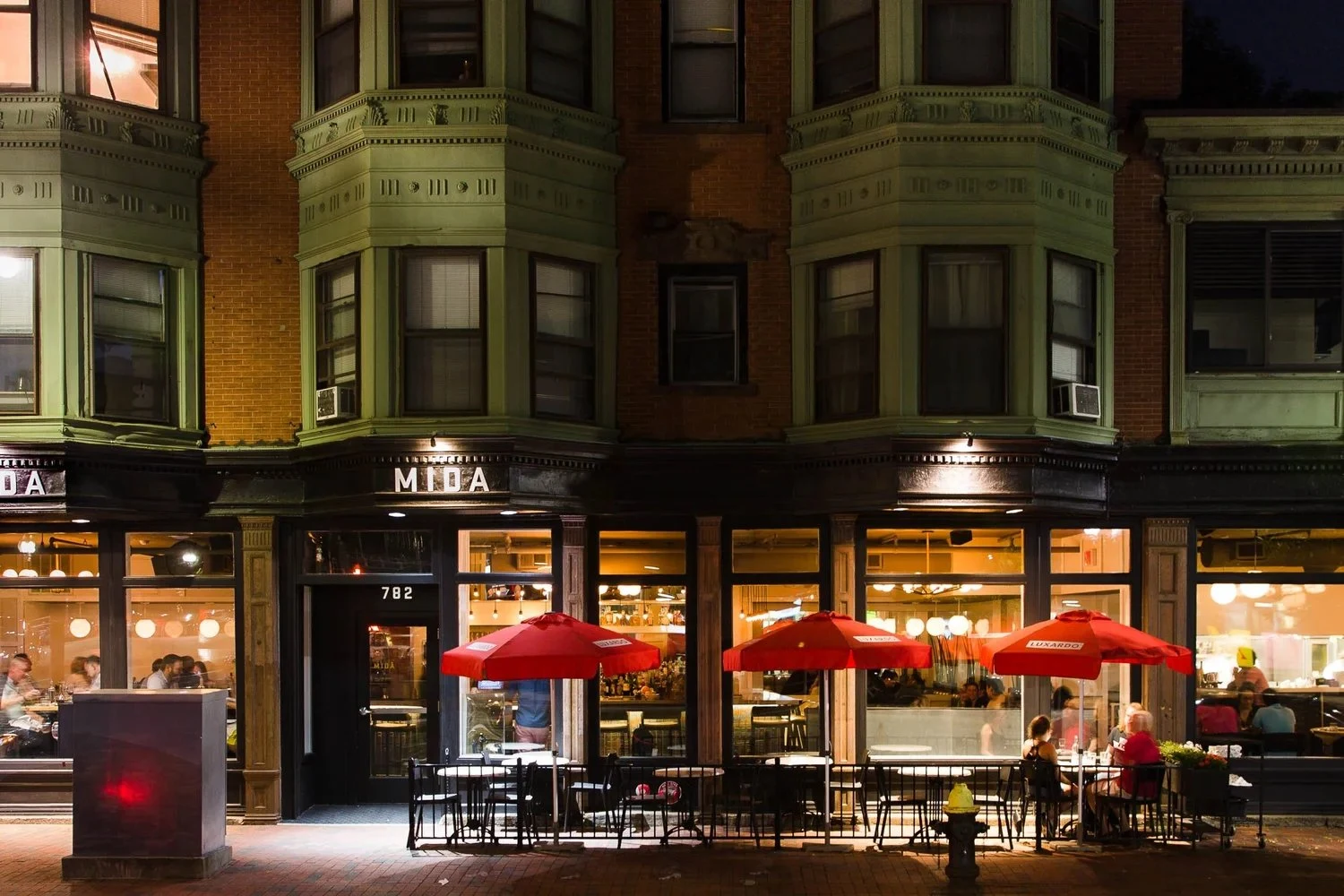
Boston's South End has spent the better part of two decades consolidating its reputation as the city's most consistent dining corridor. Tremont Street, its spine, now carries a density of serious independent restaurants that few American urban neighborhoods outside New York or San Francisco can match. What distinguishes the better operators along this stretch is how deliberately the physical space supports the experience. At 782 Tremont, MIDA occupies that category of room where the design is doing real editorial work, shaping how guests receive the cooking before a plate arrives.
The South End's Italian-leaning restaurants operate in a distinct competitive tier, one that sits above casual red-sauce trattorias but below the formal tasting-menu counters that dominate Boston's highest price brackets. For context on that upper register, Agosto, a Portuguese-inspired fine dining and tasting-menu chef's counter, represents the kind of commitment-heavy format at one end of the spectrum. MIDA reads differently: it is a room built for regulars and considered evenings rather than occasion dining with a capital O.
The Room as Argument
In a neighborhood where many dining rooms default to exposed brick and Edison bulbs, the more interesting question is which spaces have moved past that shorthand. The South End's residential character, its brownstone blocks and garden-level entrances, rewards restaurants that match the intimacy of the surrounding architecture rather than working against it. A dining room that feels proportioned to its street, that does not try to import the scale of a Financial District hotel lobby into a rowhouse footprint, tends to earn loyalty from the guests who live nearby and return weekly.
This is the competitive logic that shapes how Italian-leaning South End restaurants position themselves. The room has to do double duty: welcoming enough for a Tuesday dinner, composed enough that it does not embarrass a client meal on Friday. The seating arrangement, the acoustic treatment, the light levels across service, these decisions accumulate into something a guest either trusts or does not. At MIDA, the address on Tremont places it squarely in a neighborhood where that trust is built incrementally, reservation by reservation, across a local dining community that has many alternatives and notices when a room gets the details right.
The South End has no such visual dividend to spend. What it has instead is neighborhood density, walkability, and a guest base that returns because the room itself earns the repeat.
Italian Cooking in Boston's Current Context
Boston's Italian restaurant category has fragmented across several distinct tiers over the past decade. The low end remains strong in the North End, where volume and tradition sustain a reliable if predictable offer. The high end has contracted toward tasting-menu formats and chef-counter experiences, formats that 311 Omakase and comparable operations represent in the Japanese register. The middle tier, where pasta is made in-house, the wine list shows genuine curation, and the kitchen works from seasonal product without resorting to the preciousness of a tasting menu, is where MIDA operates.
That middle tier is arguably the most contested space in Boston dining right now. Operators in it face pressure from both directions: from below, where improved casual Italian has raised baseline expectations, and from above, where a growing number of guests have been trained by high-end tasting-menu culture to expect a particular kind of attention. The restaurants that hold this position successfully tend to have rooms that communicate confidence rather than anxiety, spaces that say the kitchen knows what it is doing and does not need the theatrical scaffolding of a formal dining experience to prove it.
The move away from the stripped-down industrial look that dominated the 2010s toward warmer, more materially considered rooms is visible in cities from San Francisco to Chicago, where operations like Lazy Bear and Alinea have demonstrated that spatial intelligence is not exclusive to the highest price brackets. Closer to the MIDA register, the lesson is that a well-proportioned room with consistent light and considered material choices can carry more authority than a larger space that has been decorated rather than designed.
South End Placement and Peer Context
Neptune Oyster in the North End draws from a citywide audience for its raw bar, while O Ya and Oishii Boston anchor Boston's Japanese fine dining tier. MIDA's Italian positioning and South End address keep it in a distinct submarket, one where the competition is local rather than citywide.
The room and the neighborhood do different things to the experience: the Back Bay steakhouse energy of Abe and Louie's gives way to something quieter and more residential on Tremont. Both are legitimate Boston dining experiences; they are simply making different arguments about what a good evening looks like.
MIDA shares that basic premise: good product, a made-in-house pasta program, and a room designed to earn regulars rather than capture tourists. Blue Hill at Stone Barns and Single Thread Farm occupy a different price bracket and format, but the same underlying logic applies: the physical environment is part of the culinary argument, not a backdrop to it.
Planning a Visit
MIDA sits at 782 Tremont Street in Boston's South End. The South End's restaurant blocks are dense enough that a reservation earlier in the week carries less friction than a Friday or Saturday seat; for weekend dining on Tremont, booking several weeks ahead is standard practice for the neighborhood's better-regarded rooms. Guests approaching from outside the neighborhood will find the street-level character of the block immediately readable: this is a residential dining corridor, and the restaurants here pitch to a guest who arrives on foot rather than by car.
Questions
Frequently asked
What recognition does MIDA hold?
MIDA holds a James Beard award.
Who works at MIDA?
Made By profiles Seth Gerber (Restaurateur) and Douglass Williams (Restaurateur) at MIDA.
How expensive is MIDA?
MIDA is listed at a price level of $$.
Where is MIDA and what does it serve?
MIDA is in South End, Boston, serving Modern Italian Neighborhood Pasta.
The field
How it compares
| Place | Awards | Cuisine | Notes |
|---|---|---|---|
| MIDA | James Beard | Modern Italian Neighborhood Pasta | South End, $$ |
| Arzak | Michelin 3 Stars, World's 50 Best | Contemporary Basque Fine Dining | San Sebastián |
| Atrio | Michelin 3 Stars | Modern Spanish Fine Dining with Iberian Pork Focus | Cáceres |
| Deuxave | · | Modern French American Nouveau | Boston |
| Hiša Franko | Michelin 3 Stars, World's 50 Best | Modern Slovenian Fine Dining | Kobarid |
| La Padrona | · | Modern Regional Italian | Boston |
| The Glenturret Lalique Restaurant | Michelin 2 Stars | Modern Scottish Fine Dining | Crieff |
In residence

Similar places
Contemporary Basque Fine Dining
Arzak
San Sebastián, Spain
★★★ · 50 Best
Modern Spanish Fine Dining with Iberian Pork Focus
Atrio
Cáceres, Spain
★★★
Modern French American Nouveau
Deuxave
Boston, United States
Modern Slovenian Fine Dining
Hiša Franko
Kobarid, Slovenia
★★★ · 50 Best
Modern Regional Italian
La Padrona
Boston, United States
Modern Scottish Fine Dining
The Glenturret Lalique Restaurant
Crieff, United Kingdom
★★