Miyasaka
In Residence
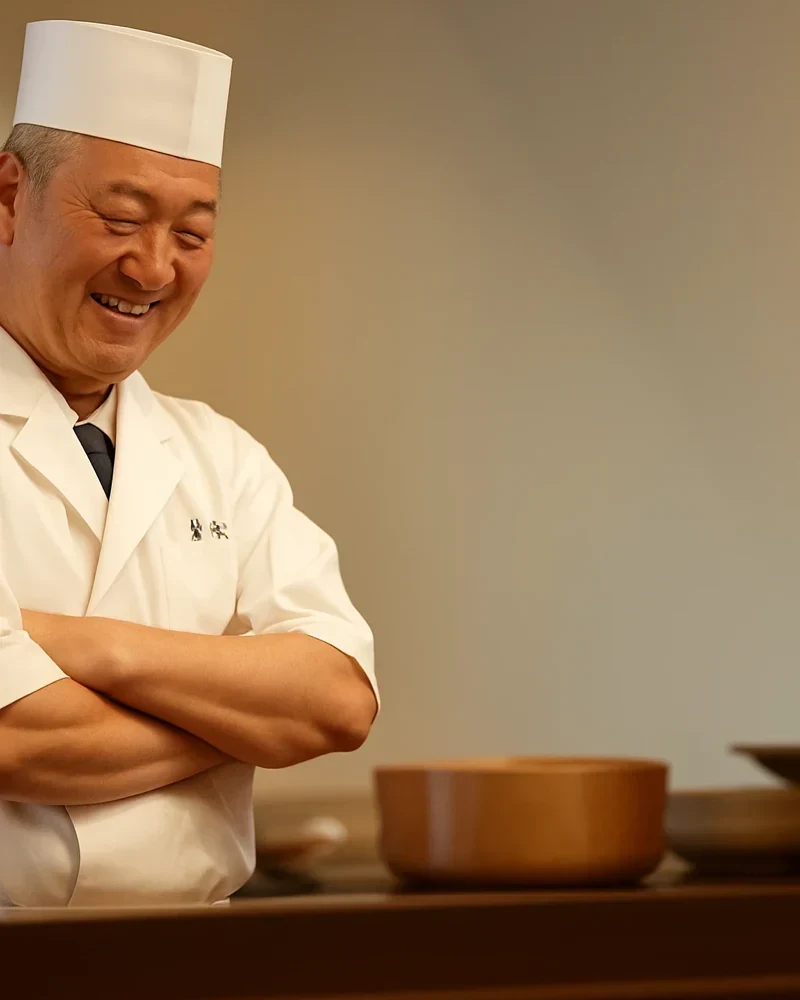
Nobuhisa Miyasaka
Chef
- 01CuisineKyoto-Style Kaiseki Omakase
- 02CityTokyo, Japan
- 03RecognitionOne Michelin Star
- 1 Michelin Star · Michelin Guide
- Opinionated About Dining Top Restaurants in Japan Recommended · 2026
- Michelin 1 Star · 2026
- Opinionated About Dining Top Restaurants in Japan Highly Recommended · 2026
- Tabelog Silver #81: 4.3pts · 2026
- Opinionated About Dining Top Restaurants in Japan Ranked #143 · 2025
- Tabelog 100 #52: 4.2pts · 2025
- Tabelog Bronze · 2025
- Opinionated About Dining Top Restaurants in Japan Ranked #105 · 2024
- Michelin 1 Star · 2024
- Opinionated About Dining Top Restaurants in Japan Ranked #68 · 2023
A Tea-Ceremony Framework in a Minamiaoyama Setting
Miyasaka is a Michelin-starred Kyoto-Style Kaiseki Omakase restaurant in Tokyo. The neighbourhood, Minato City’s Roppongi district, sits within one of Tokyo’s most exacting dining corridors. Against peers like Kanda, Kohaku, Ginza Kojyu, and Ginza Shinohara, establishing a distinct identity within four years required more than technical proficiency. Miyasaka's critical arc, Tabelog Bronze in 2023, Bronze again in 2024 and 2025, then Silver in 2026, with a Michelin star awarded in 2024, tracks as one of the more deliberate ascents in recent Tokyo kaiseki.
Tokyo's kaiseki field is typically sorted not just by price but by the conceptual framework each kitchen chooses to signal its lineage. Kitchens aligned with Kyoto's chakaiseki tradition, the form of cuisine that developed around the tea ceremony, occupy a distinct lane from restaurant kaiseki as it has evolved in Tokyo. Miyasaka plants its flag firmly in the chakaiseki lineage, shaped by Chef Nobuhisa Miyasaka's training in Kyoto. That positioning puts it in a different conversation from RyuGin, which leans toward technical innovation at the same price tier. For the reader weighing options across Japan's kaiseki geography, useful reference points include Hyotei and Kikunoi Honten in Kyoto, both of which operate within the same tea-influenced tradition that Miyasaka has brought to Tokyo.
The Physical Container: Fourteen Seats and Three Private Rooms
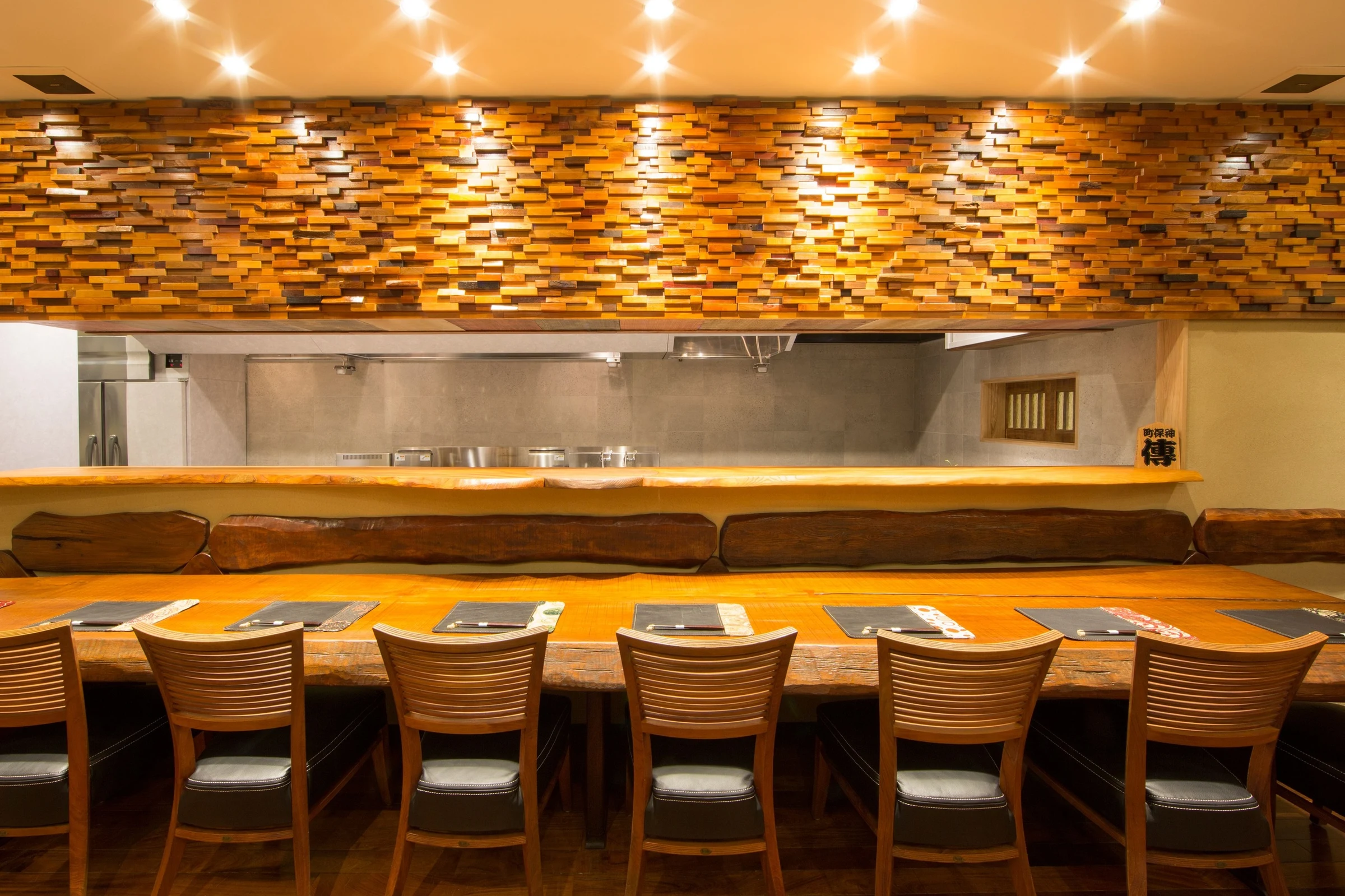
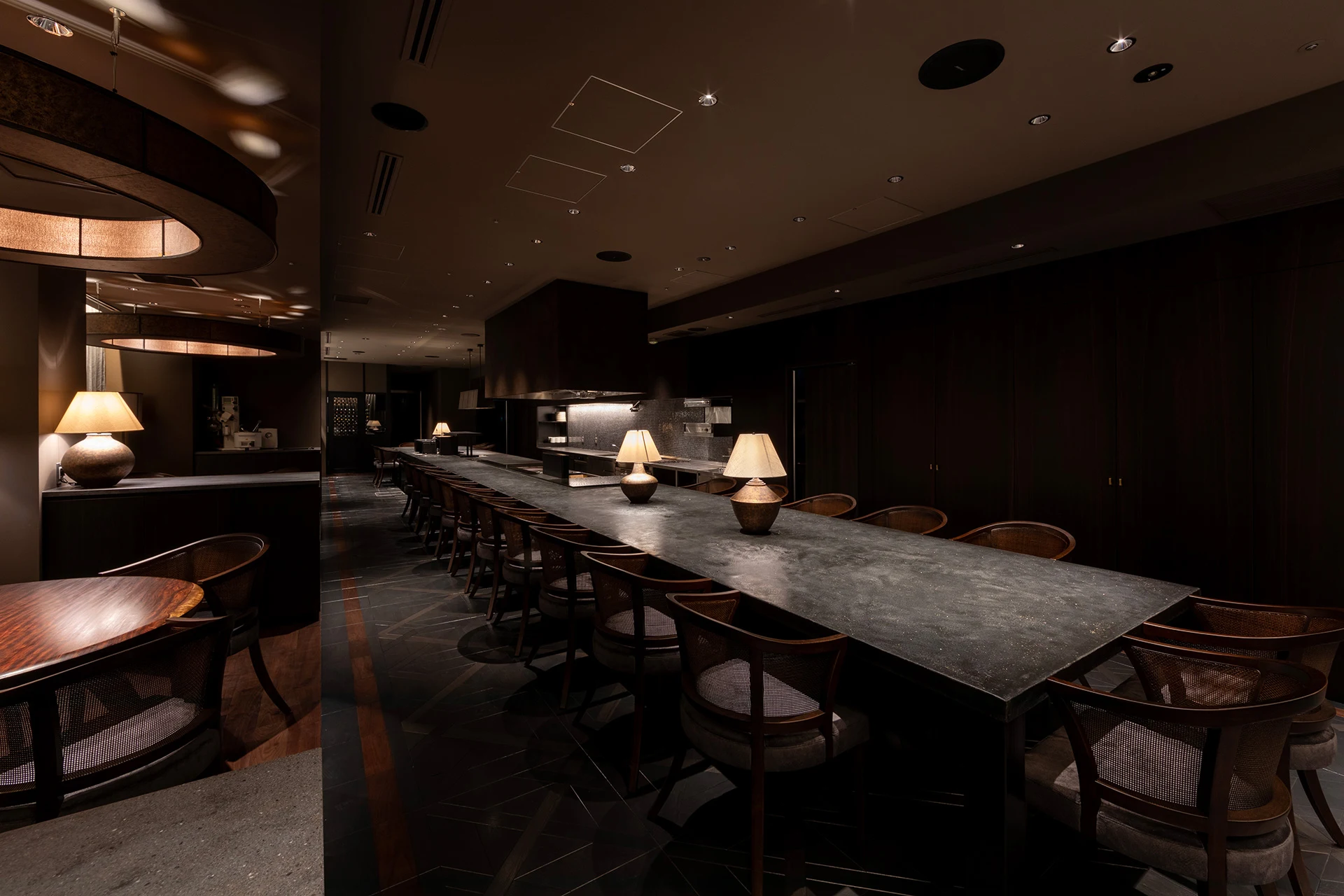
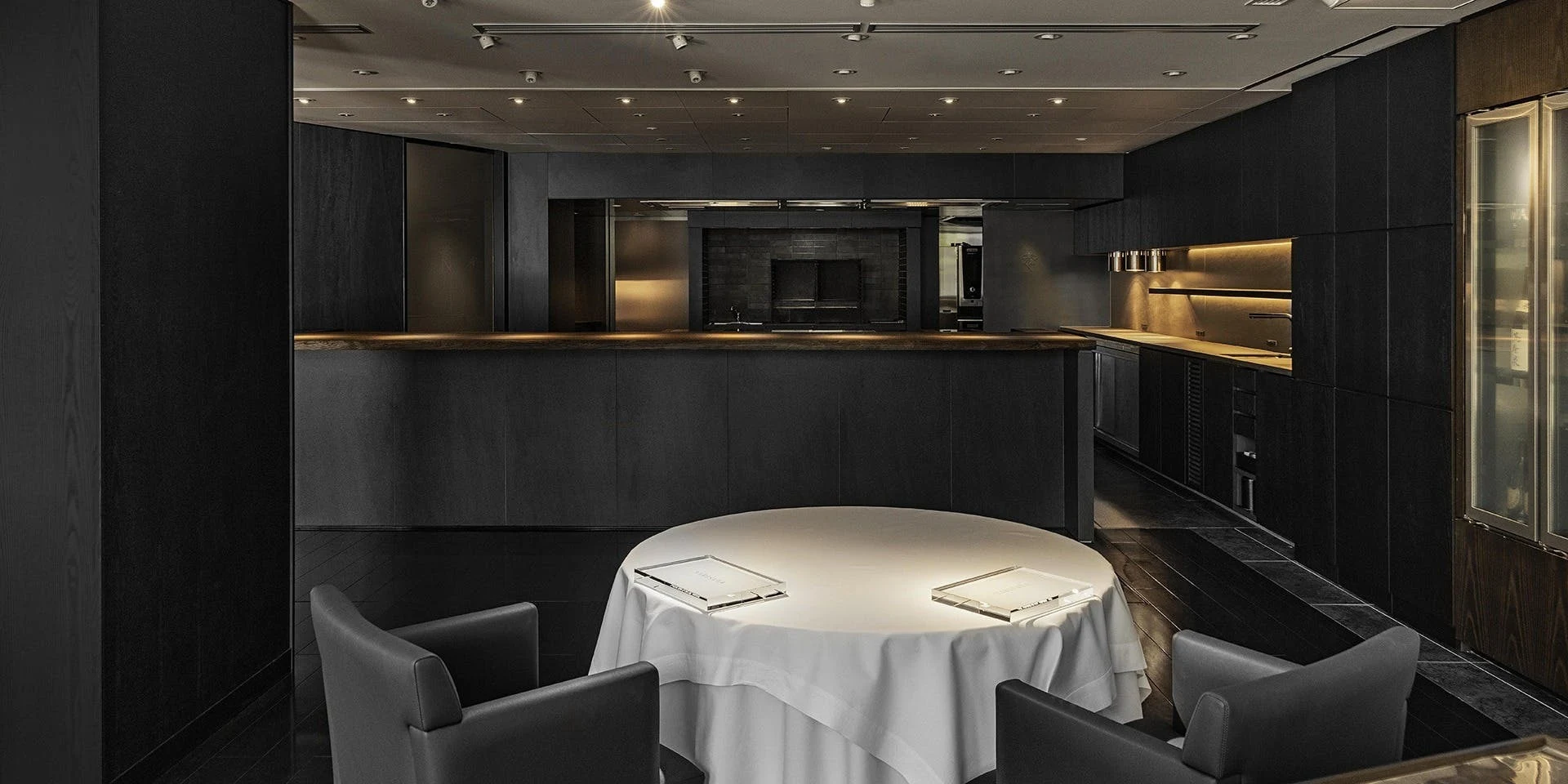
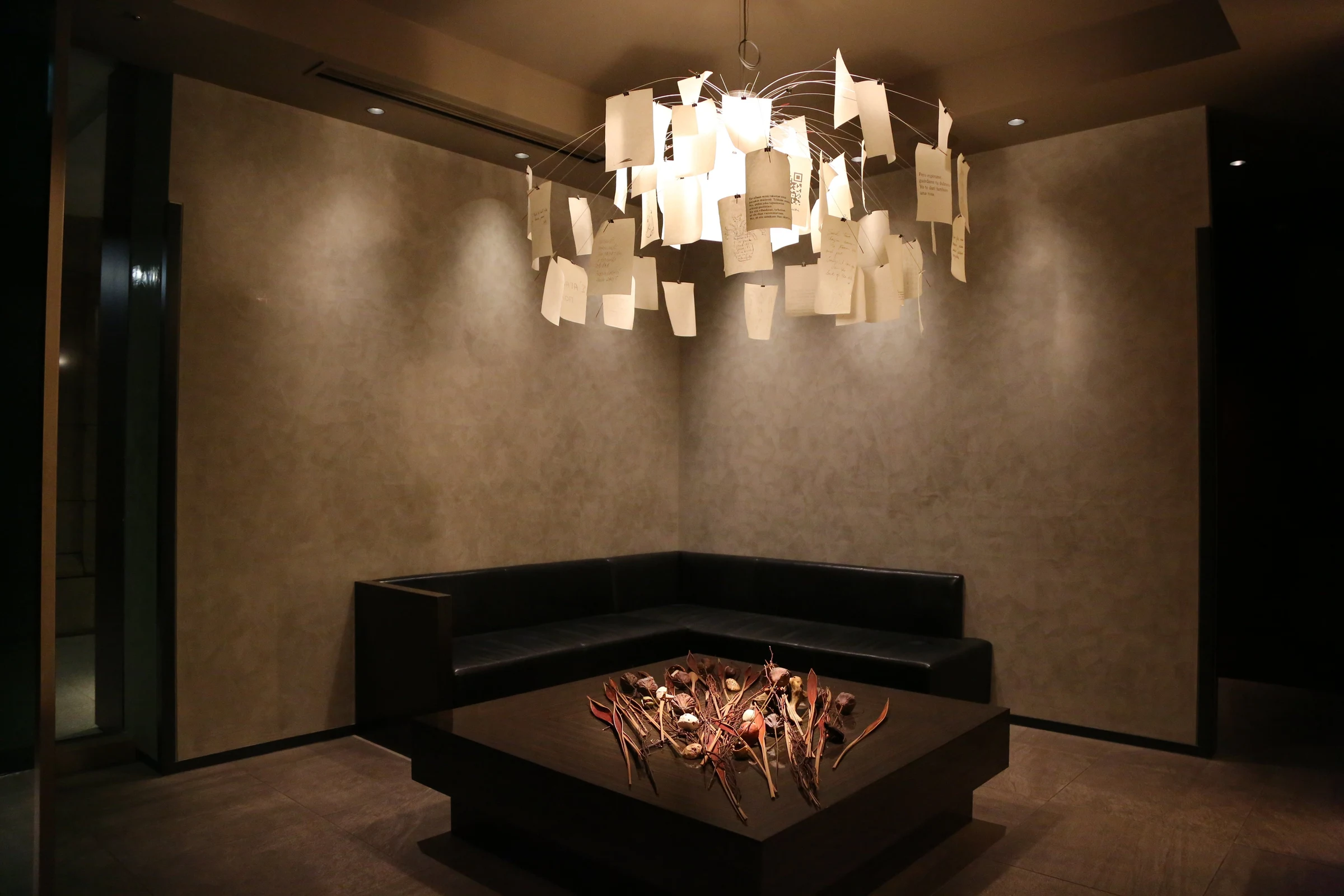
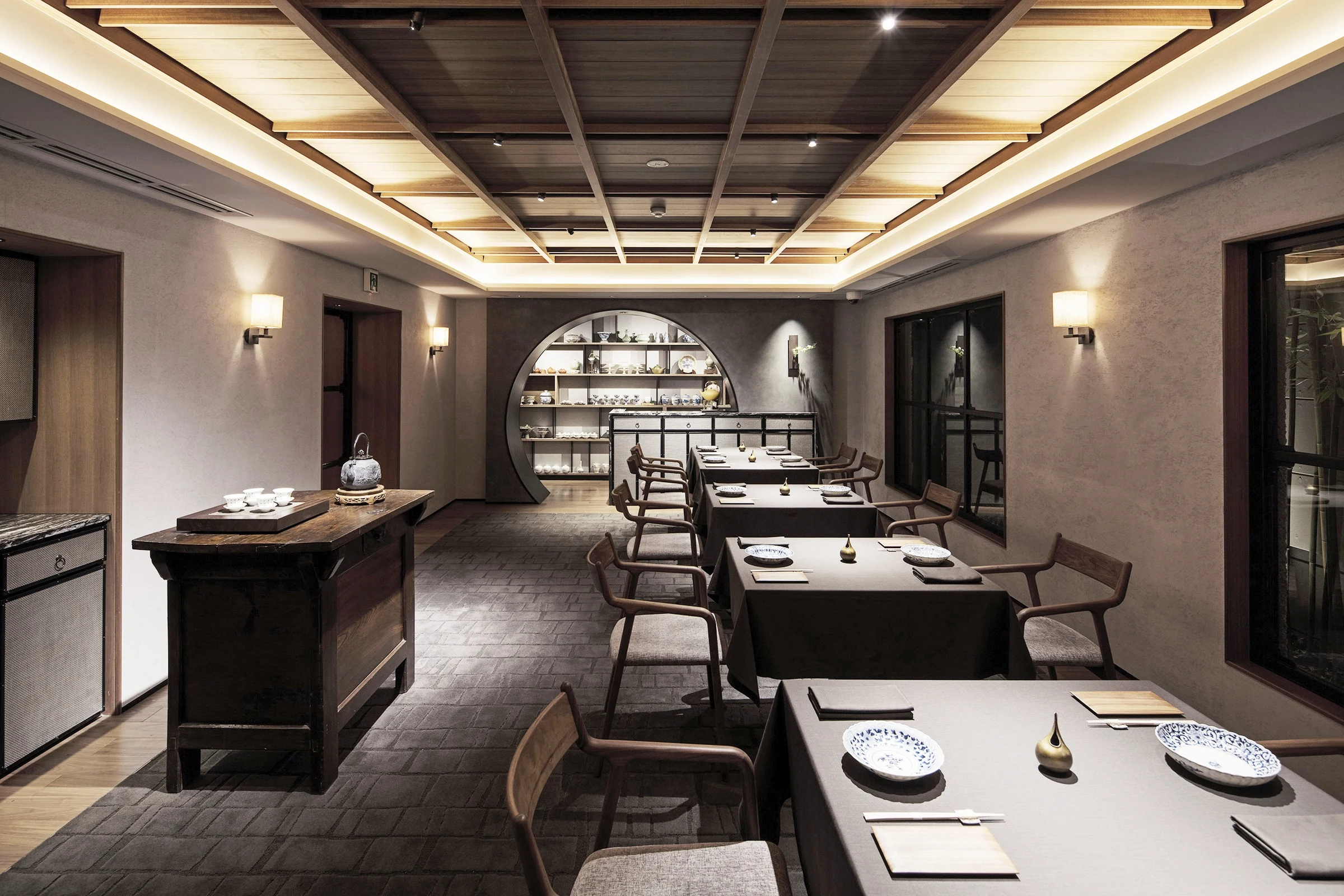
The editorial angle on most kaiseki rooms defaults to the food. The physical space tends to get compressed into a sentence about minimalism and pale wood. At Miyasaka, the architecture of the room deserves more careful attention because it directly shapes how the meal functions.
Total capacity is 14 seats. Private rooms accommodate parties of two, four, or six. This is not incidental configuration, it means the room almost never operates at anything approaching crowd density. At 14 seats, a full house at Miyasaka involves fewer diners than a single private room at many larger kaiseki establishments. The consequence is a level of service granularity that larger formats cannot replicate: rice served the moment it reaches optimal temperature, with guests in a position to observe the steam as it shifts, is a detail of timing that depends on a small, synchronized room rather than a large brigade managing multiple seatings simultaneously.
Address, on a third floor in the Roppongi Hills Keyakizaka-dori building, places the restaurant inside one of Tokyo's more architecturally deliberate commercial developments. Keyakizaka-dori itself was designed around a zelkova-tree-lined pedestrian axis, the kind of planned civic greenery that distinguishes it from the denser, lower-streetscape blocks of central Minato. The third-floor position creates a degree of separation from street-level foot traffic that is entirely consistent with the tea-ceremony philosophy at the heart of the menu: you arrive at a distinct threshold, not a restaurant you stumble into.
These are not administrative footnotes, they are part of the design logic of a space structured around the wabicha tea ceremony's emphasis on stillness and attention.
The Chakaiseki Sequence and What It Signals
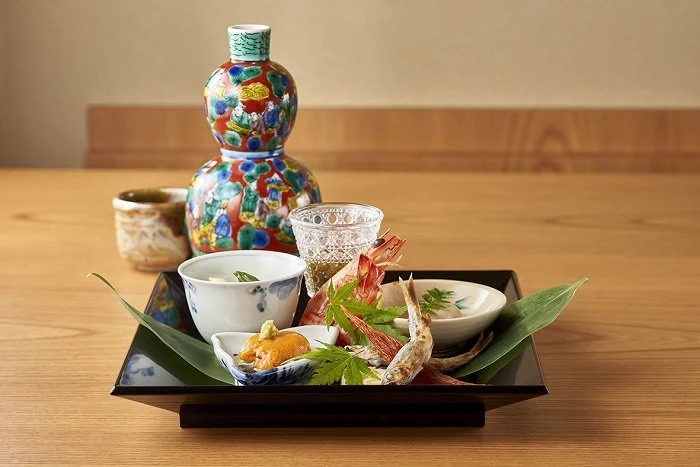
Chakaiseki is the older, stricter form. Where restaurant kaiseki has evolved considerable latitude in course construction, ingredient sourcing, and theatrical presentation, chakaiseki adheres to a sequence shaped by the tea ceremony's own rhythm, the meal exists to prepare the guest for the bowl of matcha that concludes it. The strong matcha at the end of a Miyasaka meal is not decorative; it is structurally load-bearing within the dining format.
The motto visible in the room, a paraphrase of Sen no Rikyu's teaching about approaching each encounter with beginner's mind, functions as a curatorial statement about how the kitchen relates to the tradition it works within. Rikyu's aphorism has governed tea ceremony practice for centuries; its presence at Miyasaka signals that the kitchen treats chakaiseki's rules as living principles rather than historical decoration. Handmade wagashi sweets follow the wabicha protocol before the matcha, making the conclusion of the meal a direct quotation of the tea ceremony sequence rather than an adaptation of it.
For lunch, available on select dates, the sequence runs to approximately seven courses, priced at JPY 25,000 inclusive of tax and service charge. Dinner is priced at about JPY 40,000 to JPY 79,000. Both figures position Miyasaka at the upper tier of Tokyo Japanese-cuisine pricing, consistent with its comparable set among Michelin-starred kaiseki rooms.
Recognition Trajectory and Competitive Position
The progression from Tabelog Bronze (2023, 2024, 2025) to Silver (2026) is a measurable signal. Tabelog's Silver tier, the restaurant ranks 81st in the 2026 Silver group with a score of 4.27, places Miyasaka in a tier above the broader Tokyo 100 selection it has appeared in since 2023. The simultaneous Michelin star in 2024, confirmed in the database, gives the kitchen credentials on both the domestic and international assessment scales.
Opinionated About Dining, which tracks a separate critical methodology, ranked Miyasaka at number 68 in Japan in 2023, rising to 105 in 2024 and 143 in 2025. That downward numerical drift in OAD rankings, set against the upward Tabelog trajectory and Michelin recognition, reflects the variance between how different assessment systems weight different qualities, a useful reminder that no single ranking describes the full picture. Taken together, the data suggests a kitchen that performs with consistency across domestic reviewer bases and has secured international recognition, without yet entering the very top tier occupied by long-established Tokyo kaiseki institutions with multiple Michelin stars.
Across Japan, the kaiseki tradition sustains a range of regional expressions. Gion Sasaki in Kyoto, HAJIME in Osaka, Goh in Fukuoka, akordu in Nara, 1000 in Yokohama, and 6 in Okinawa each anchor their menus in distinct local frameworks. Miyasaka's choice to root a Tokyo room in Kyoto's chakaiseki lineage rather than developing a Tokyo-specific identity is itself an editorial position about where the kitchen believes the tradition's authority resides.
Planning a Visit
The restaurant operates Monday, Tuesday, Thursday, Friday, Saturday, and Sunday from 18:00 to 11:00 pm, with Wednesday closed. Lunch service runs on select dates only, the Tabelog record notes March 14 and March 21 as confirmed dates, with reservation required either through the OMAKASE booking platform (available 24 hours a day) or by telephone. The 14-seat total capacity means availability is structurally limited regardless of day of week; advance booking rather than walk-in is the only practical approach.
The Omotesando Station exit B3 places the restaurant approximately five minutes on foot, at roughly 345 metres. There is no on-site parking; a coin car park sits in front of the building, and the private road adjacent to the restaurant is explicitly not available for waiting or parking. The restaurant accepts major credit cards (Visa, Mastercard, JCB, Amex, Diners) but does not accept electronic money or QR code payments. The room is fully non-smoking. Private room hire is available for groups of two to six, with full venue buyout also an option. Dress code is not formally specified in the database, but the price tier and format are consistent with considered dress rather than casual wear.
, our full Tokyo hotels guide, our full Tokyo bars guide, our full Tokyo wineries guide, and our full Tokyo experiences guide.
Questions
Frequently asked
What recognition does Miyasaka hold?
Miyasaka holds 1 Michelin star.
Who works at Miyasaka?
Made By profiles Nobuhisa Miyasaka (Chef) at Miyasaka.
How expensive is Miyasaka?
Miyasaka is listed at a price level of $$$$.
Where is Miyasaka and what does it serve?
Miyasaka is in Minato, Tokyo, serving Kyoto-Style Kaiseki Omakase.
The field
How it compares
| Place | Awards | Cuisine | Notes |
|---|---|---|---|
| Miyasaka | Michelin 1 Star | Kyoto-Style Kaiseki Omakase | Minato, $$$$ |
| Den | Michelin 2 Stars, World's 50 Best | Modern Japanese Kaiseki | Tokyo |
| Florilège | Michelin 2 Stars, World's 50 Best | Modern French-Japanese Plant-Based Fine Dining | Tokyo |
| Narisawa | Michelin 2 Stars, World's 50 Best | Modern Japanese Satoyama Fine Dining | Tokyo |
| Quintessence | Michelin 3 Stars | Modern French Fine Dining | Tokyo |
| Sazenka | Michelin 3 Stars, World's 50 Best | Modern Chinese Fine Dining | Tokyo |
| Sézanne | Michelin 3 Stars, World's 50 Best | Modern French Fine Dining | Tokyo |
In residence
Similar places
Modern Japanese Kaiseki
Den
Tokyo, Japan
★★ · 50 Best
Modern French-Japanese Plant-Based Fine Dining
Florilège
Tokyo, Japan
★★ · 50 Best
Modern Japanese Satoyama Fine Dining
Narisawa
Tokyo, Japan
★★ · 50 Best
Modern French Fine Dining
Quintessence
Tokyo, Japan
★★★
Modern Chinese Fine Dining
Sazenka
Tokyo, Japan
★★★ · 50 Best
Modern French Fine Dining
Sézanne
Tokyo, Japan
★★★ · 50 Best