Mooiplaas Wine Estate
- 01CityStellenbosch, South Africa
- Falstaff Winery - Listed · 2026
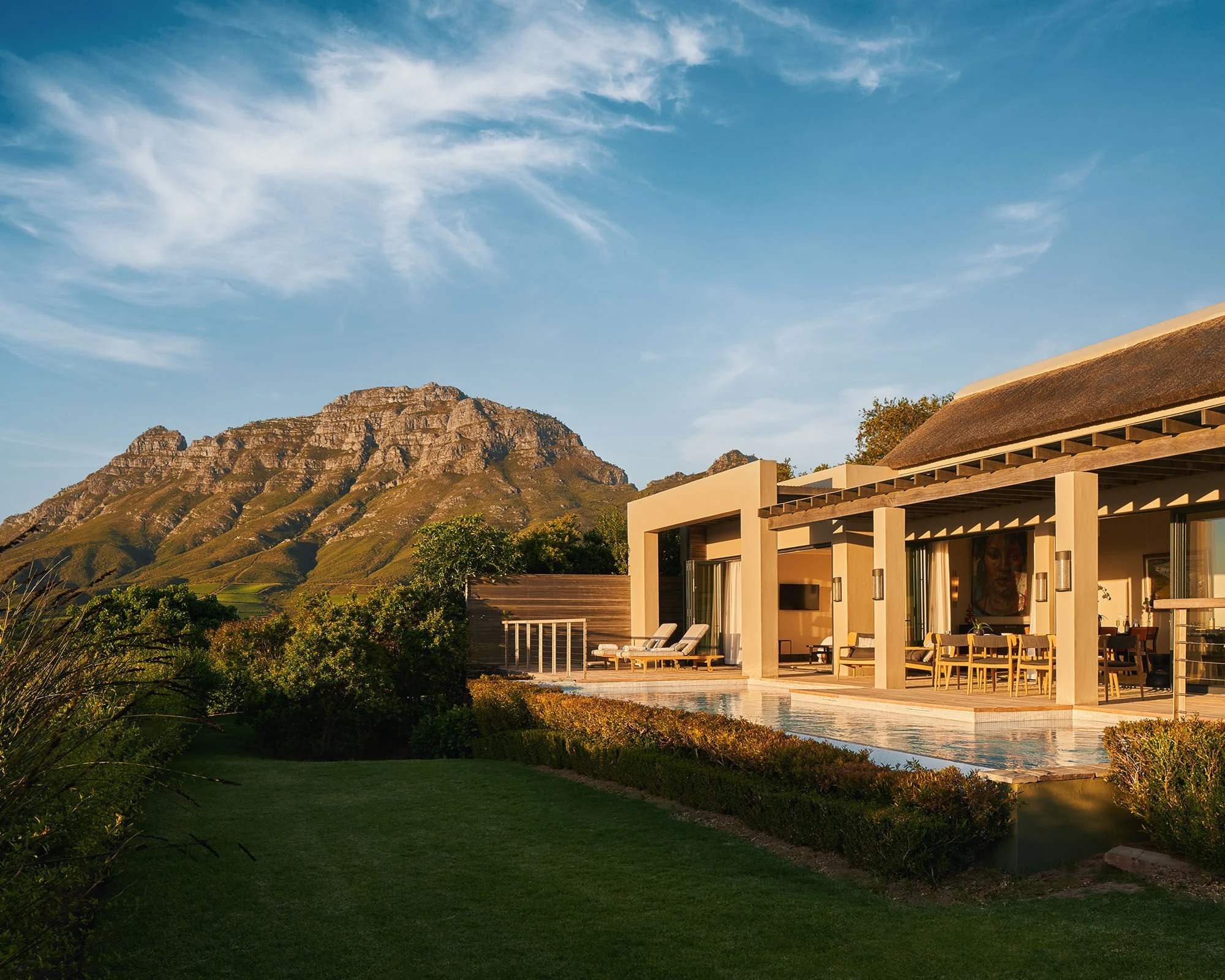
Approaching Mooiplaas Wine Estate means entering a quieter register of Stellenbosch: vineyard slopes, farm architecture, and a hillside setting that frames the Cape Peninsula rather than competing with it. The small tasting-room format suits the estate’s character. This is not the high-production face of the winelands; it is the older agricultural version, where the room, the land, and the wines are read together.
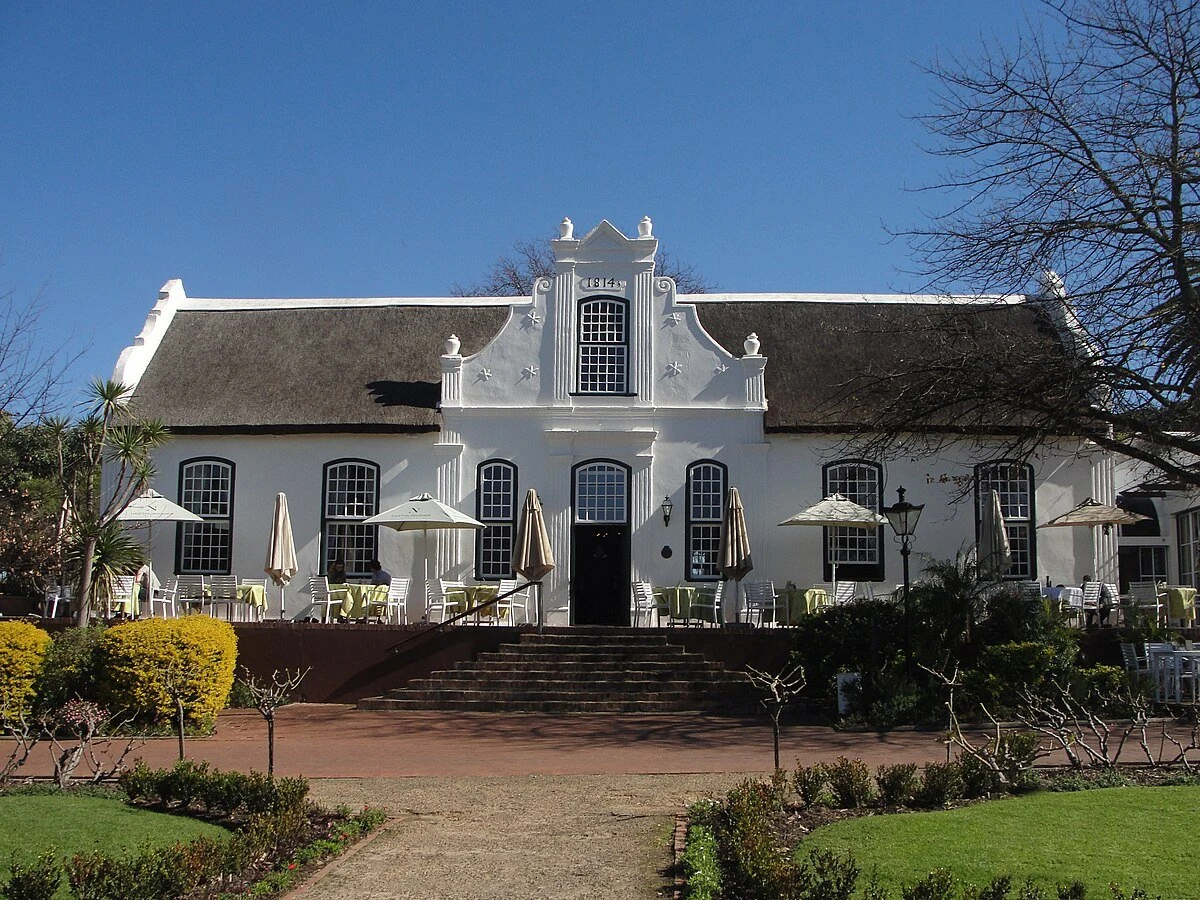
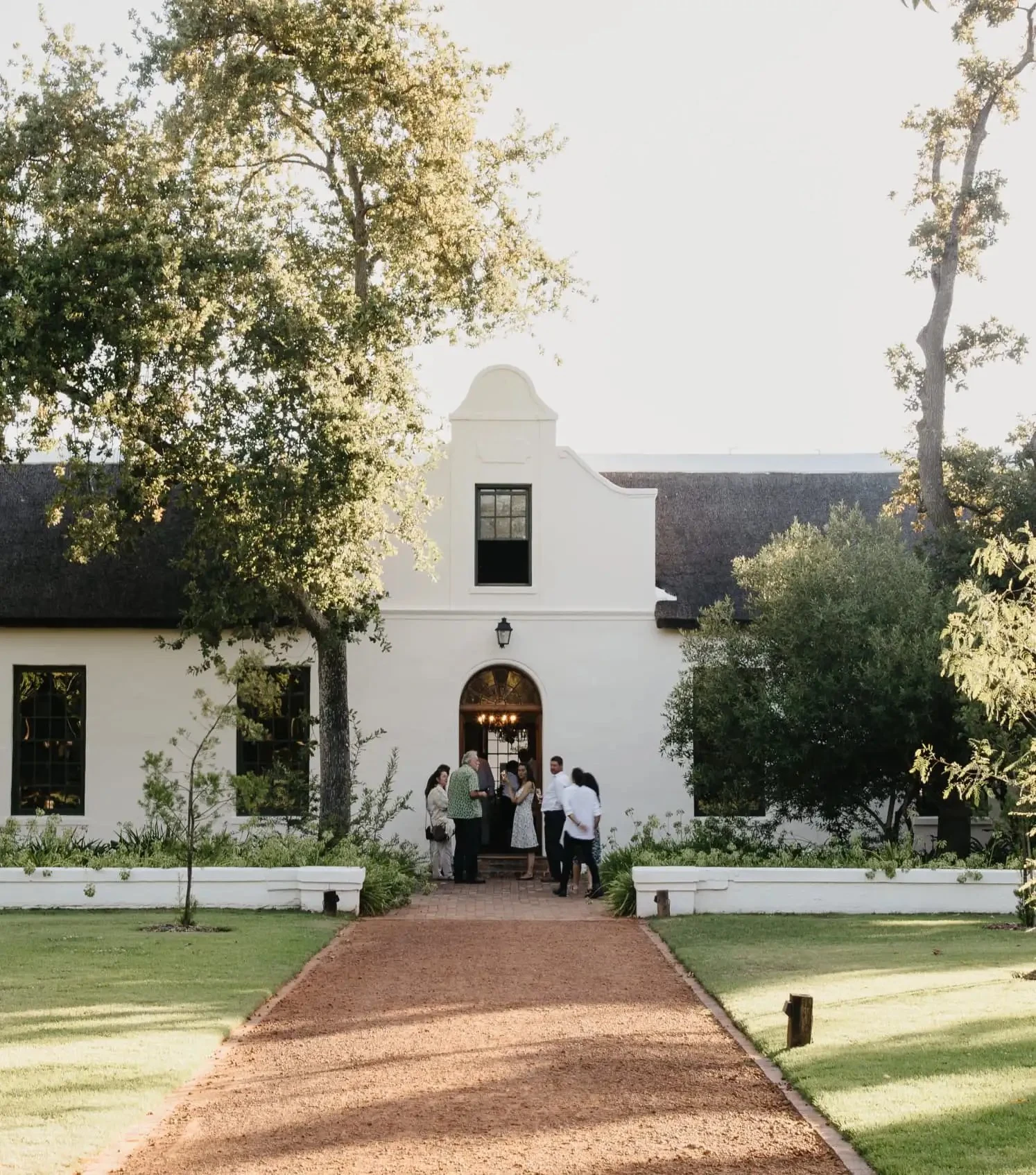
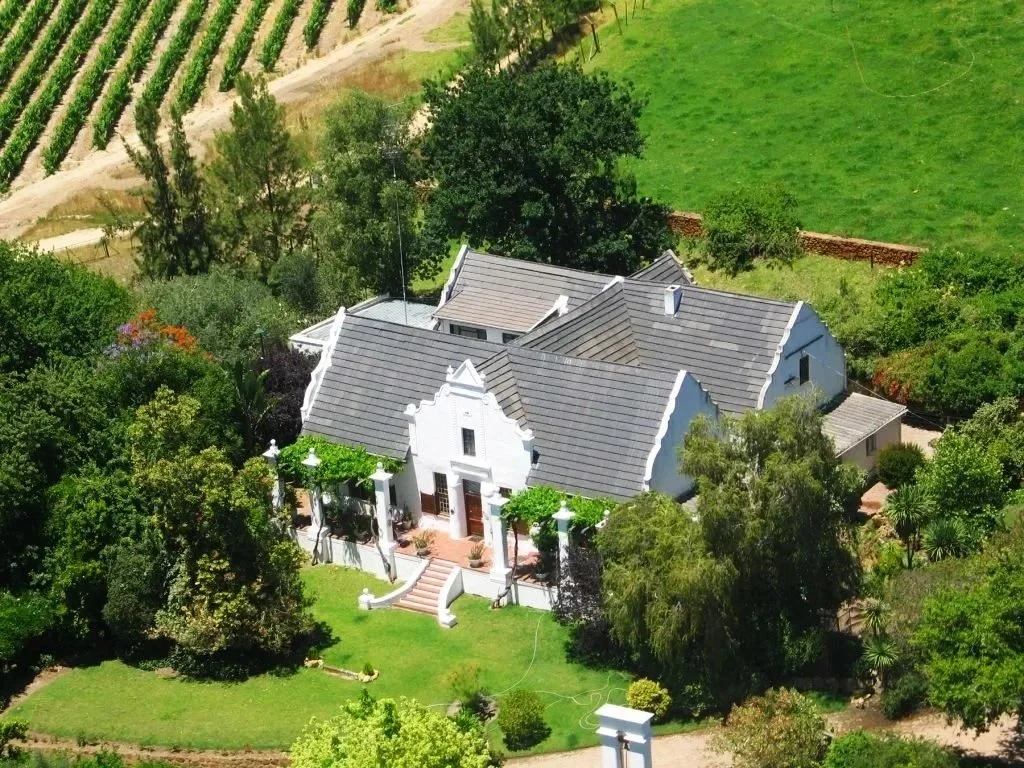
That distinction matters in Stellenbosch, where wine tourism can swing between cellar-door spectacle and deeply rooted estate culture. Mooiplaas belongs to the second camp. Its history dates to 1806, and the Cape Dutch manor house is a national monument, giving the property architectural weight before a glass is poured. The Roos family connection, beginning with Nicolaas Roos’s purchase in 1963 and continuing through Tielman Roos in viticulture and Louis Roos in winemaking, adds continuity rather than celebrity gloss.
Bottelary Hills slope, old soils, and a cellar style built around restraint
The estate’s strongest argument is topographical. In the Bottelary Hills, vineyards sit on steep, ancient mineral-rich soils with marked elevation change across the farm. The reported range from roughly 135 to 370 metres above sea level creates different exposures, drainage patterns, and ripening conditions within one property. In practical wine terms, that helps explain why the portfolio can carry both aromatic whites and structured reds without feeling like a single-note tasting.
Stellenbosch is often shorthand for Cabernet and muscular reds, but the broader region is more varied than that cliché allows. Mooiplaas uses familiar Cape varieties, including Chenin Blanc, Sauvignon Blanc, Cabernet Sauvignon, Shiraz, and Pinotage, while also working with Pinot Noir under the Watershed label. The portfolio reads as an estate range rather than a trend-led collection: Sauvignon Blanc for freshness, Cabernet for structure, Pinotage for local identity, and Pinot Noir as a cooler-climate counterpoint within a warm-region conversation.
The winemaking details that are public point toward selective rather than industrial handling. Watershed Pinot Noir has been associated with spontaneous malolactic fermentation and nine months in oak, while Pinotage has seen 18 months in French oak with a four-barrel selection. Sauvignon Blanc has been described as using free-run juice and short skin contact. Those choices do not create a single house formula; they suggest a cellar willing to adjust technique by grape, weight, and intended texture.
For readers mapping a wider Cape itinerary, Mooiplaas fits naturally into the quieter side of the region’s wine culture. The broader circuit can be planned through Our full Stellenbosch wineries guide, with nearby regional planning supported by Our full Stellenbosch restaurants guide, Our full Stellenbosch hotels guide, Our full Stellenbosch bars guide, and Our full Stellenbosch experiences guide.
Heritage here is agricultural, not decorative
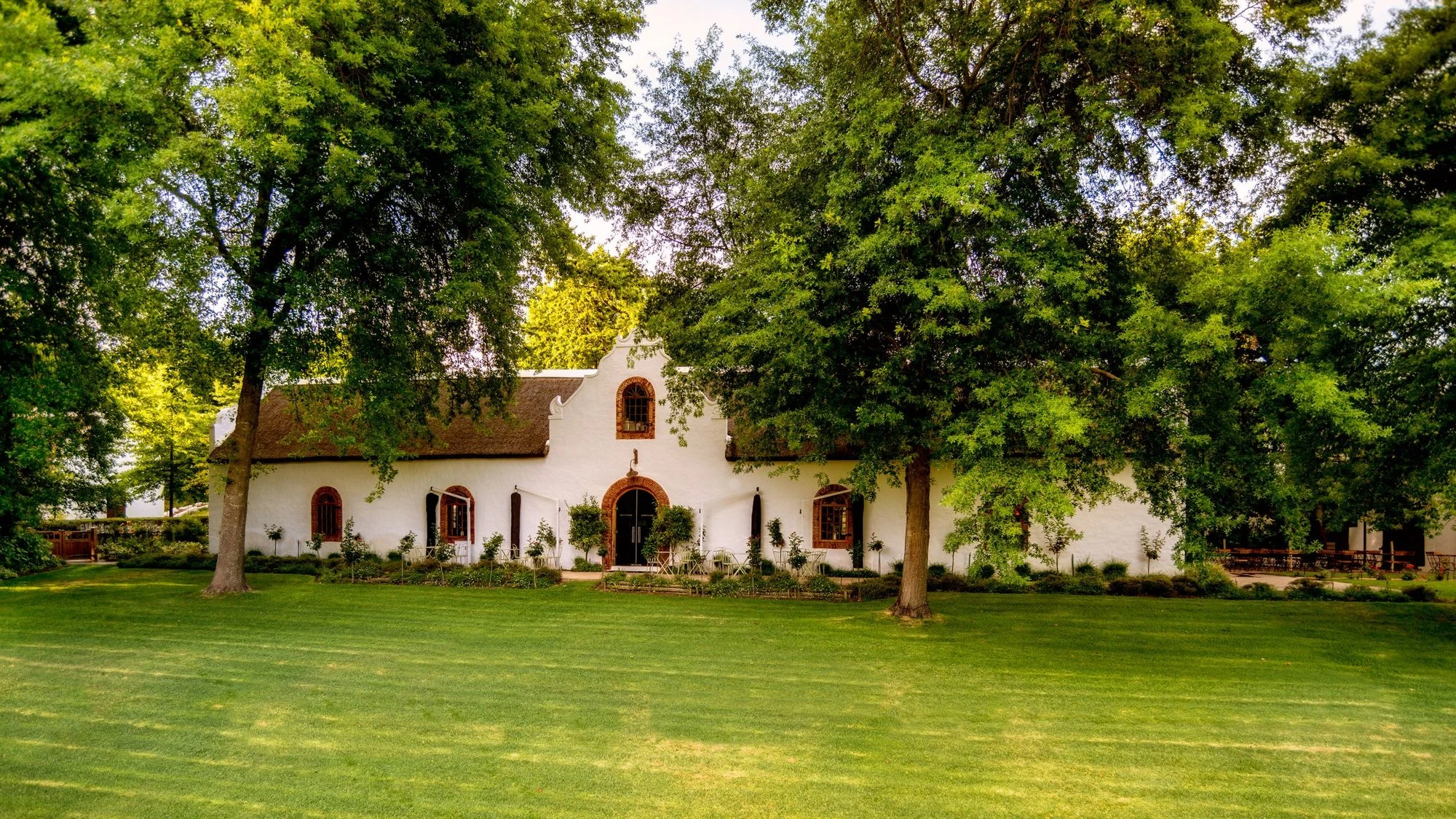
The Cape Dutch manor house gives Mooiplaas historical authority, but the more interesting signal is how little the estate seems designed around theatrical polish. The tasting room has been described as a former cattle shed, which places the experience closer to farm continuity than hospitality reinvention. That physical modesty matters: it keeps attention on the estate’s working character, the views, and the line between vineyard, cellar, and conservation land.
The private nature reserve, established in 1995 and covering 70 hectares for endangered fynbos conservation, broadens the estate’s identity beyond wine production. In the Western Cape, where biodiversity is part of the region’s global significance, that land-use decision is more than a scenic amenity. It makes the property part wine farm, part heritage site, part conservation landscape. The estate’s sustainability claim is therefore strongest where it is concrete: protected land, hillside farming, and an environmentally minded production philosophy.
Tabakland Cabernet Sauvignon also shows how agricultural memory enters the bottle. The name refers to tobacco land, linking a wine label to an earlier use of the farm. That kind of historical encoding is more persuasive than abstract heritage language because it ties a current bottling to a specific piece of land history.
How to place it within a Stellenbosch wine trip
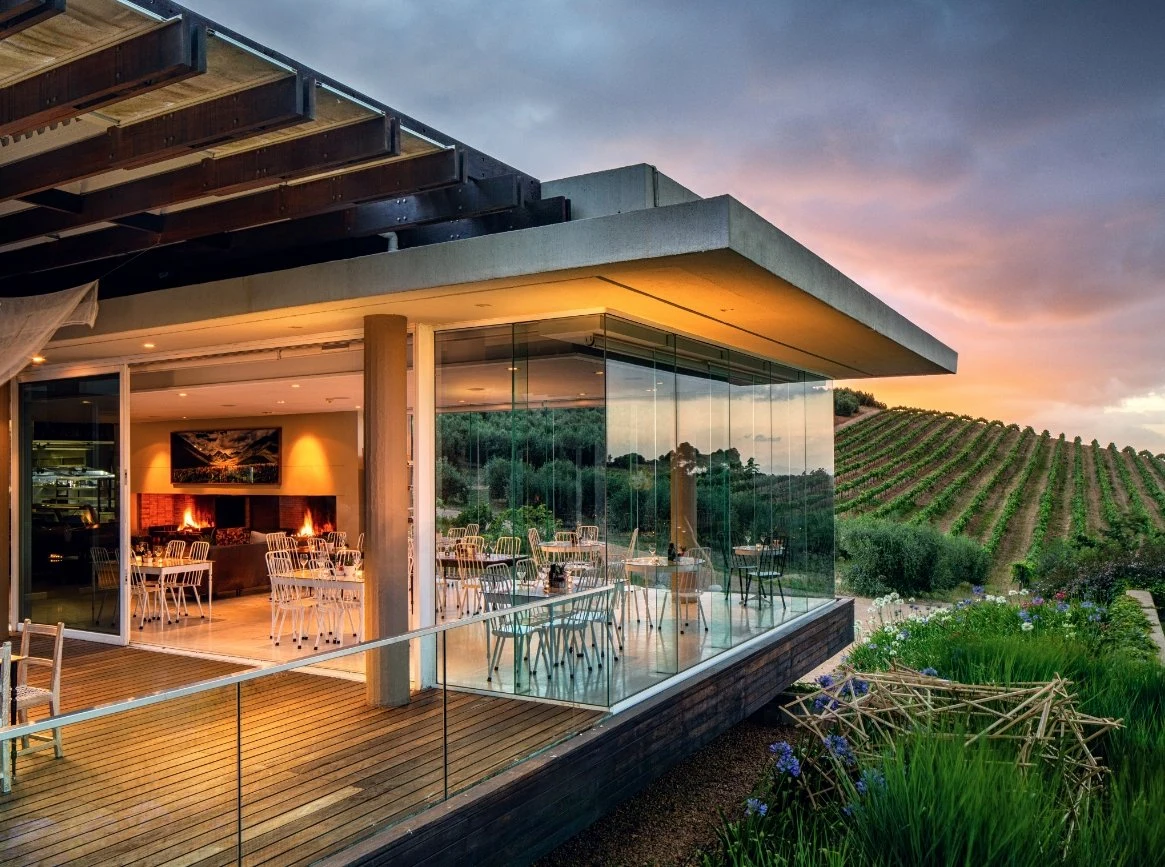
Mooiplaas is suited to travellers who prefer small-format tastings, rural texture, and site-driven wines over large cellar-door programming. The setting is quiet, the ambience is casual, and the estate works better for wine education or slow exploration than for a high-energy group crawl. Outdoor seating, vineyard views, and estate grounds make the visit feel landscape-led, while the tasting room’s scale rewards smaller parties.
Stellenbosch offers many versions of the wine-estate visit, from polished hospitality properties to farms with stronger agricultural grain. Readers building a broader route can compare styles across Aaldering Estate, Alto Wine Estate, Asara Wine Estate, Bartinney, and Beyerskloof. For a wider South African and international frame, the same cellar-door questions of terroir, scale, and visitor format extend to 4G Wines in Kapstadt, A. A. Badenhorst Family Wines in Paardeberg, Alheit Vineyards in Hermanus, »der Steiner« Hans Steiner in Podersdorf am See, and & Handwein in Mannheim.
The editorial case for Mooiplaas is clear: it is a Stellenbosch estate where terroir is not a slogan but a set of visible conditions: slope, elevation, old soils, agricultural memory, and protected fynbos. Go for the connection between land and wine rather than for spectacle, and the estate makes sense.
Questions
Frequently asked
How expensive is Mooiplaas Wine Estate?
Mooiplaas Wine Estate is listed at a price level of $$.
The field
How it compares
| Place | Notes | Awards |
|---|---|---|
| Mooiplaas Wine Estate | Bottelary Hills, $$ | · |
| Delaire Graff Estate | Stellenbosch | World's 50 Best |
| Kanonkop Wine Estate | Stellenbosch | · |
| Neethlingshof Estate | Stellenbosch | · |
| Rust en Vrede Wine Estate | Stellenbosch | · |
| Spier Wine Farm | Stellenbosch | · |
| Tokara Winery | Stellenbosch | World's 50 Best |