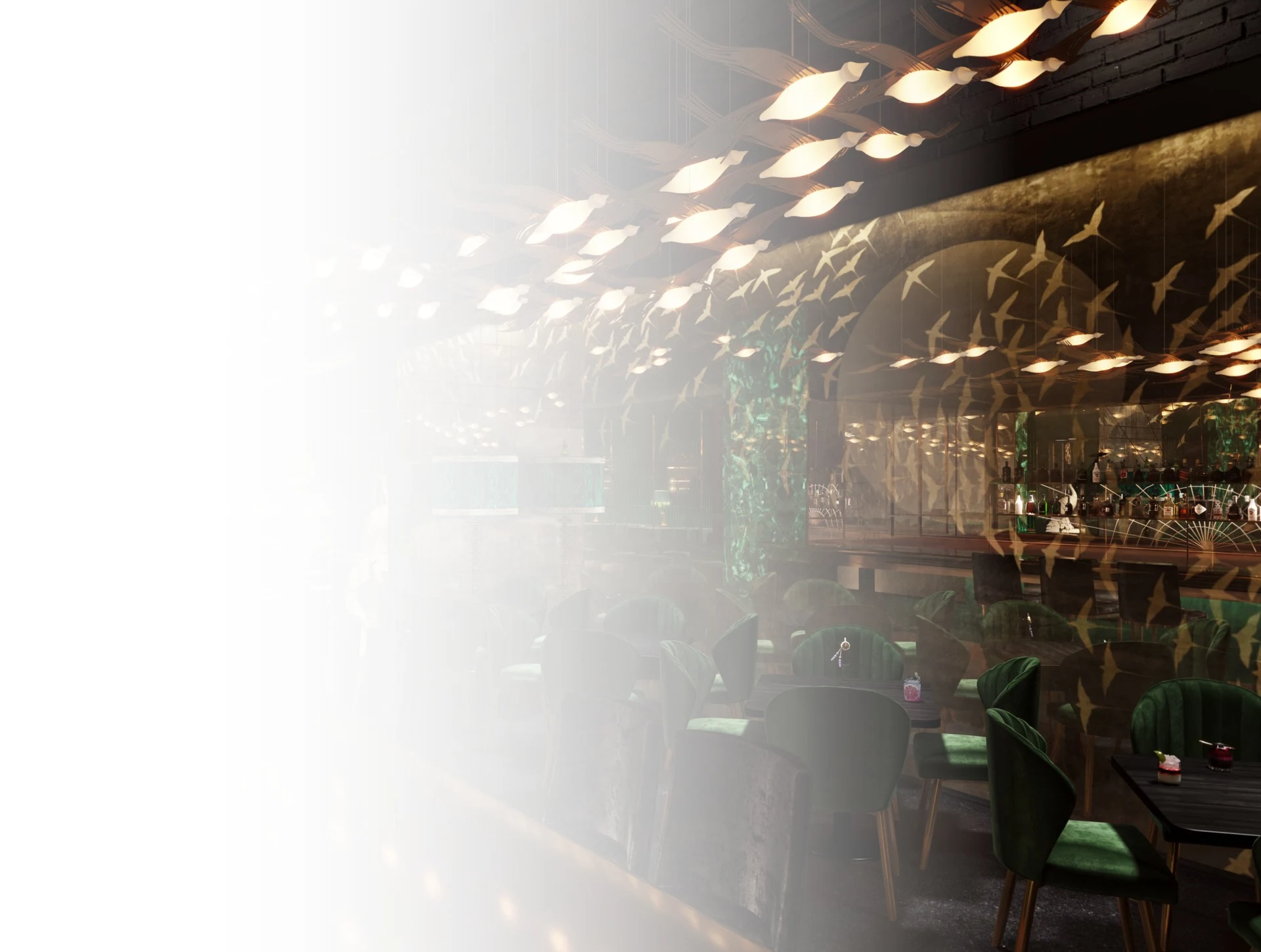
Mr Chow
- 01CityBeverly Hills, United States
From the people index
Recommended by
One trusted voice points here.
The Room Before the Food
On North Camden Drive, the approach to Mr Chow already signals its register: a formal facade in a zip code that treats dinner as occasion rather than convenience. Inside, white tablecloths and a dining room scaled for spectacle set the tone before a single dish arrives. Beverly Hills has accumulated a dense layer of ambitious restaurants over the decades, but relatively few have maintained the same address, the same format, and the same gravitational pull on the city's social calendar across multiple generations. Mr Chow is one of that short list.
This is not a room that trades on novelty. The design logic here belongs to an older school of upscale Chinese dining that flourished in the 1970s and spread across London, New York, and Los Angeles: formal service, a wine list built for long tables, and a kitchen rooted in Beijing technique rather than the Cantonese or Sichuan traditions that now dominate the Western conversation about Chinese cuisine. That positioning, unfashionable in some critical circles, is precisely what gives the room its character.
Beijing Tradition in a Cantonese-Dominant City
Los Angeles' Chinese dining scene has historically centred on the San Gabriel Valley, where Cantonese, Shanghainese, and more recently Northern Chinese regional cooking operate at serious depth and low price points. Beverly Hills operates in a different register entirely. Here, Chinese dining has always been filtered through the lens of occasion: the power lunch, the industry table, the anniversary dinner. Mr Chow belongs to that tradition and has, for decades, been its clearest expression on the Westside.
The Beijing-rooted menu anchors the kitchen's identity. Northern Chinese cuisine, distinct from the dim sum-forward Cantonese model, emphasises wheat-based preparations, roasted meats, and a broader reliance on duck and hand-pulled noodles. In a city that still defaults to Cantonese or Sichuan when thinking about Chinese food at a serious level, this positioning occupies a niche that few comparable rooms in Beverly Hills or West Hollywood are equipped to contest. For a useful contrast in how other cities handle specialised regional Chinese formats within upscale frameworks, it is worth looking at how programme discipline shapes identity in places like Kumiko in Chicago, where format commitment creates a distinct competitive tier.
The Pairing Logic: Wine Inside a Chinese Kitchen
The editorial angle that matters most here is not the menu in isolation but how the drinks program has been constructed alongside it. For much of its history, upscale Chinese dining in the West operated with wine lists that were either perfunctory or bolted on as afterthoughts. Mr Chow took a different position: the wine program was built to function as a genuine counterpart to the food, not a concession to Western clientele who could not be expected to drink tea through a long dinner.
This matters because Beijing-rooted cooking presents specific pairing challenges. The roasted and lacquered preparations that anchor Northern Chinese menus tend to interact differently with wine than the brighter, more acidic profiles of Cantonese or Shanghainese dishes. Burgundy and older Bordeaux, with enough bottle age to soften tannin, have traditionally performed well against the richness of roasted duck; the Mr Chow wine list has historically leaned into that logic rather than chasing trend-driven by-the-glass programmes. Compare this approach with how serious bar-food programmes in the United States are rethinking pairing logic from the ground up: ABV in San Francisco and Jewel of the South in New Orleans both demonstrate how thoughtful drinks architecture can reframe what the food means.
The key differentiator at Mr Chow is longevity of intent. This is not a restaurant that adopted wine seriousness recently in response to critical pressure. The format has been consistent enough, and the clientele demanding enough, that the drinks list has had decades to develop internal logic rather than reactive curation.
Where Mr Chow Sits in Beverly Hills' Dining Hierarchy
Beverly Hills' top-tier restaurant addresses cluster within a walkable stretch of Camden, Brighton, and Rodeo. Lawry's The Prime Rib on La Cienega represents a parallel tradition: an institution built on format discipline and theatrical tableside service that has outlasted dozens of trendier successors. Jon and Vinny's Beverly Hills operates at the other end of the formality register, casual Italian built for the industry-lunch crowd. Il Cielo courts the romantic-occasion market with its garden setting. Each occupies a distinct niche. Mr Chow's niche is the formal Chinese dining occasion, and in Beverly Hills specifically, that niche has no serious competitor at the same address or format.
Urasawa, operating a few blocks away, represents the precision end of Japanese counter dining at price points that make Mr Chow look accessible by comparison. Matsuhisa, also nearby, built its reputation on Peruvian-Japanese fusion and became the template for Nobu's global expansion. These are different conversations entirely. The Chinese fine-dining category in Beverly Hills, defined by tablecloth service, formal wine pairing, and a Beijing-anchored kitchen, belongs to Mr Chow almost by default.
The contrast with Mr Chow's more classic wine-forward approach is instructive. Bar Baldi, the tandem lounge for Baldi on nearby Canon Drive, offers a useful local reference for how Beverly Hills handles the cocktail-first dining adjacency model. The Parlour in Frankfurt rounds out a useful international comparison for formal bar programmes that treat the food component as structural rather than supplementary.
Planning a Visit
Mr Chow sits at 344 North Camden Drive in Beverly Hills, within the core of the city's restaurant corridor. The room operates at a register that assumes dinner will take time: this is not a venue for quick turnovers. The wine list and the format both reward arriving without schedule pressure. For a city where evening traffic can compress arrival windows significantly, planning for a 7:00 or 7:30 reservation and building in buffer time is the rational approach. Reservations are recommended, and dinner is served nightly from 5:30 to 11:30 PM. Readers planning a broader Beverly Hills evening should consult our for context on how Mr Chow fits within the wider dining map.
Questions
Frequently asked
How expensive is Mr Chow?
Mr Chow is listed at a price level of $$$$.
The field