Muromachi Wakuden
- 01CuisineModern Kyoto Kaiseki Omakase
- 02CityKyoto, Japan
- 03RecognitionOne Michelin Star
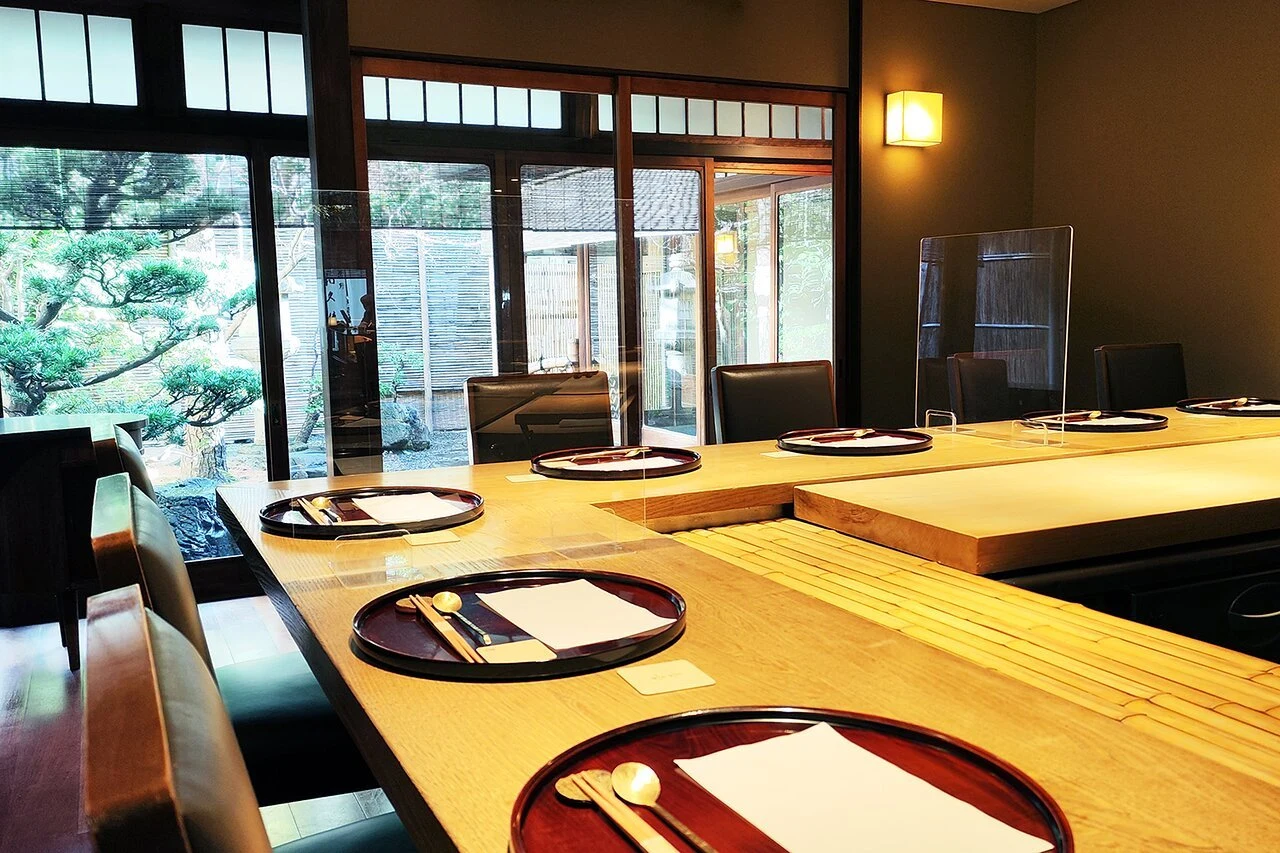
Seasonal kaiseki at the counter
- 1 Michelin Star · Michelin Guide
- Michelin 1 Star · 2026
- Opinionated About Dining Top Restaurants in Japan Recommended · 2026
- Tabelog Bronze #298: 4.2pts · 2026
- Opinionated About Dining Top Restaurants in Japan Ranked #268 · 2025
- Tabelog Bronze · 2025
- Tabelog 100 #84: 4.1pts · 2025
- Michelin 1 Star · 2024
- Opinionated About Dining Top Restaurants in Japan Ranked #296 · 2024
- Opinionated About Dining Top Restaurants in Japan Ranked #143 · 2023
Crab over charcoal, conger in matsutake
Charcoal-grilled crab met the counter under Shinya Matsumoto, former head chef at Muromachi Wakuden in Nakagyo Ward, Kyoto, Japan. Shinya Matsumoto later became chef and owner of Tokuha Motonari in Kyoto's Kamigyo-ku, but his work here sat inside the Wakuden discipline: seasonal omakase, natural flavor, and a visible pass where the guest could read the method as it happened. At Muromachi Wakuden, part of the Wakuden group, he crafted menus around dishes such as conger eel wrapped in matsutake mushrooms, charcoal-grilled crab, bamboo shoots, clam soup, and wagyu beef sukiyaki. The lineage around him was older than the branch. Wakuden began as a culinary inn in northern Kyoto Prefecture in 1870, in what is now Kyotango, a place of sea, mountain vegetables, and rice fields. The inn was destroyed in the 1927 North Tango Earthquake and rebuilt over four years as a 7-room ryotei. By 1982, the house had moved to Kodai-ji Temple in Kyoto's eastern foothills, into a sukiya-style building by Sotoji Nakamura. Muromachi Wakuden carries that inheritance into a machiya on Sakaimachi-dori near Oike, with a quieter register than the grander image of kaiseki sometimes suggests.
The omakase moves by season
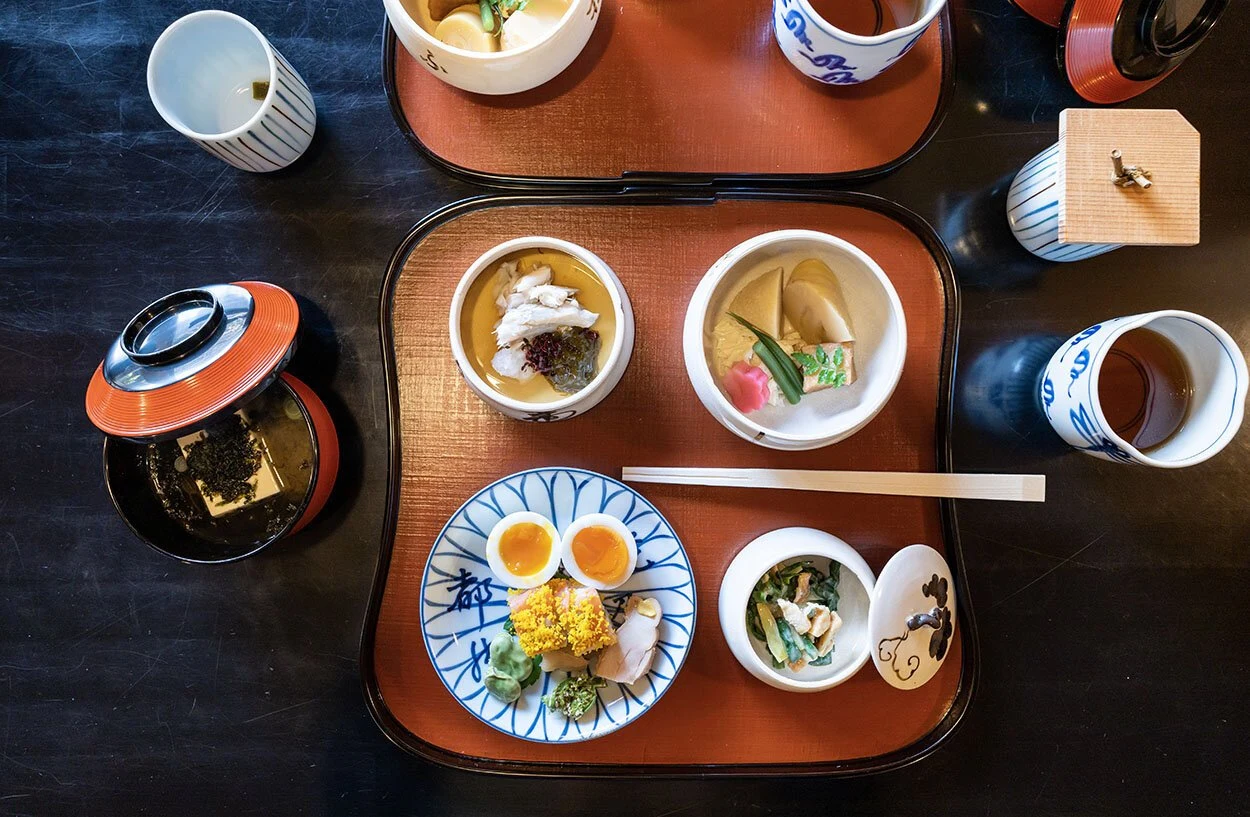
The menu is set, not à la carte, and follows the architecture of kaiseki: hassun, owan, mukozuke, grilled course, rice, pickles, final soup, and dessert. The discipline is in restraint. Dashi carries kombu and katsuobushi rather than weight; shiro miso meets uni; yuzu sharpens a milky soup of tofu and cod intestine; sea bream and scallop arrive with seaweed, wasabi, and radish. Spring brings cherry buds, mountain vegetables, shellfish, young sweetfish, and whitebait. Other courses have included grilled ayu, winter melon, matsutake mushrooms from Kumamoto, Awaji conger eel, hairy crab, and horse dung uni. Rice matters here as much as the fish. Wakuden draws on pesticide-free Isehikari rice from Kyoto and Tanba fields, and the restaurant cooks rice in earthen pots, with leftovers shaped as onigiri to carry away from the meal. The beverage program stays close to that same fieldwork: sake and organic rice wine, including Aotakeshu served from bamboo, and pairings built to keep the food's outline clean rather than louder.
A machiya counter with the pass in view
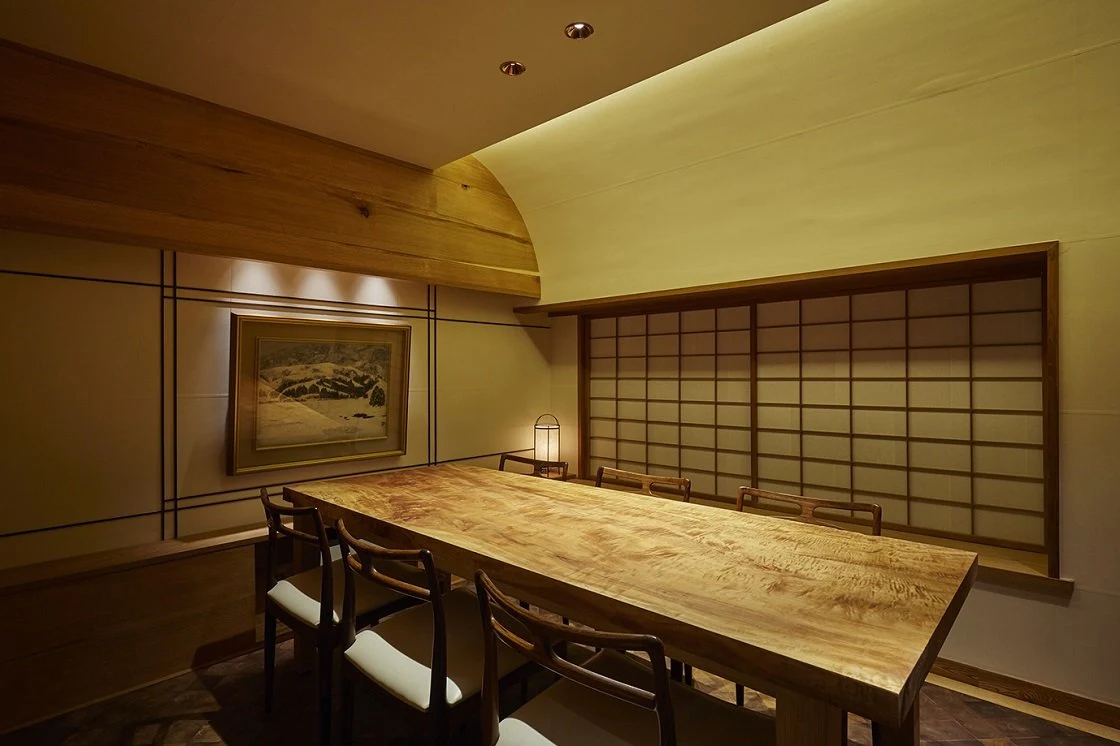
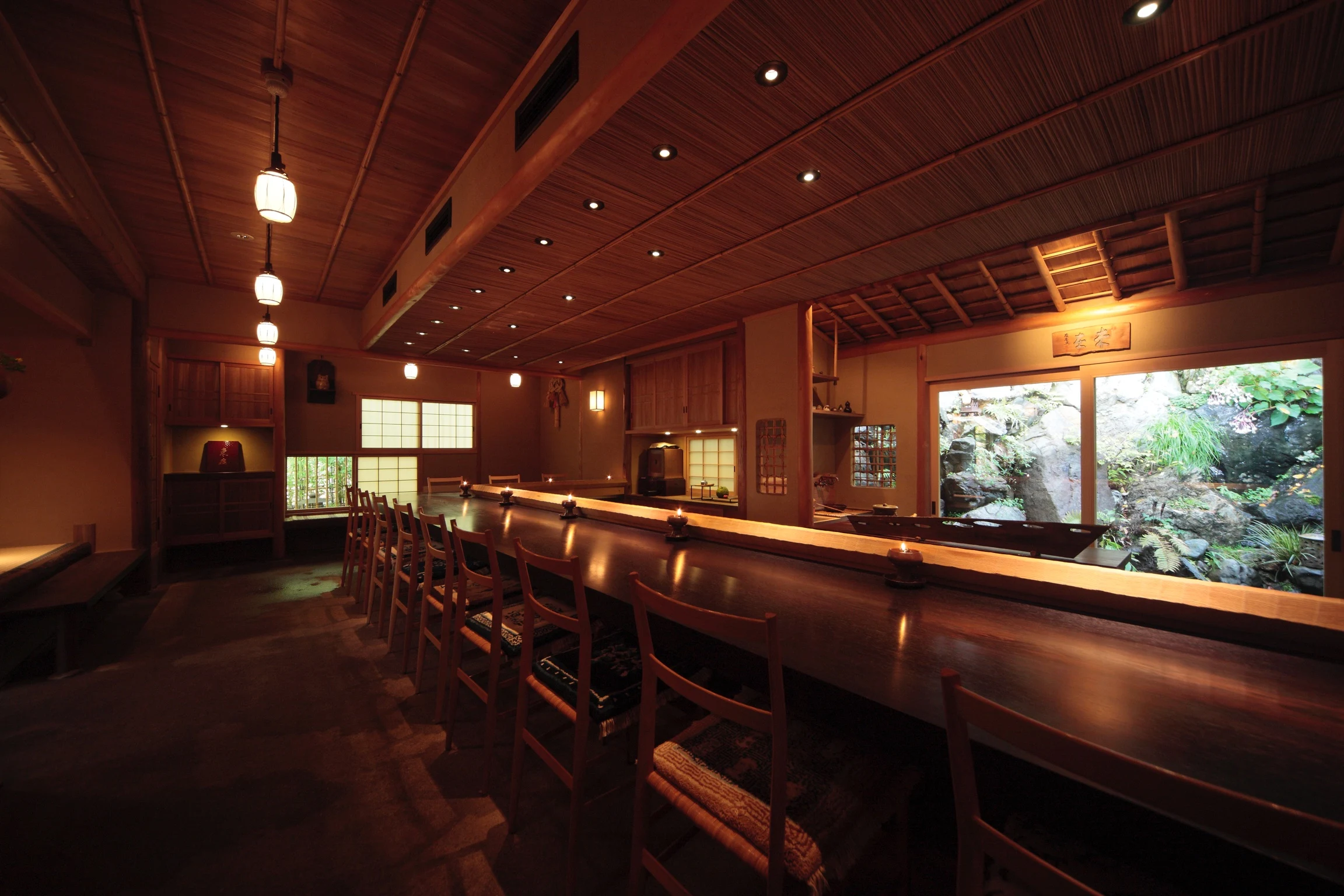
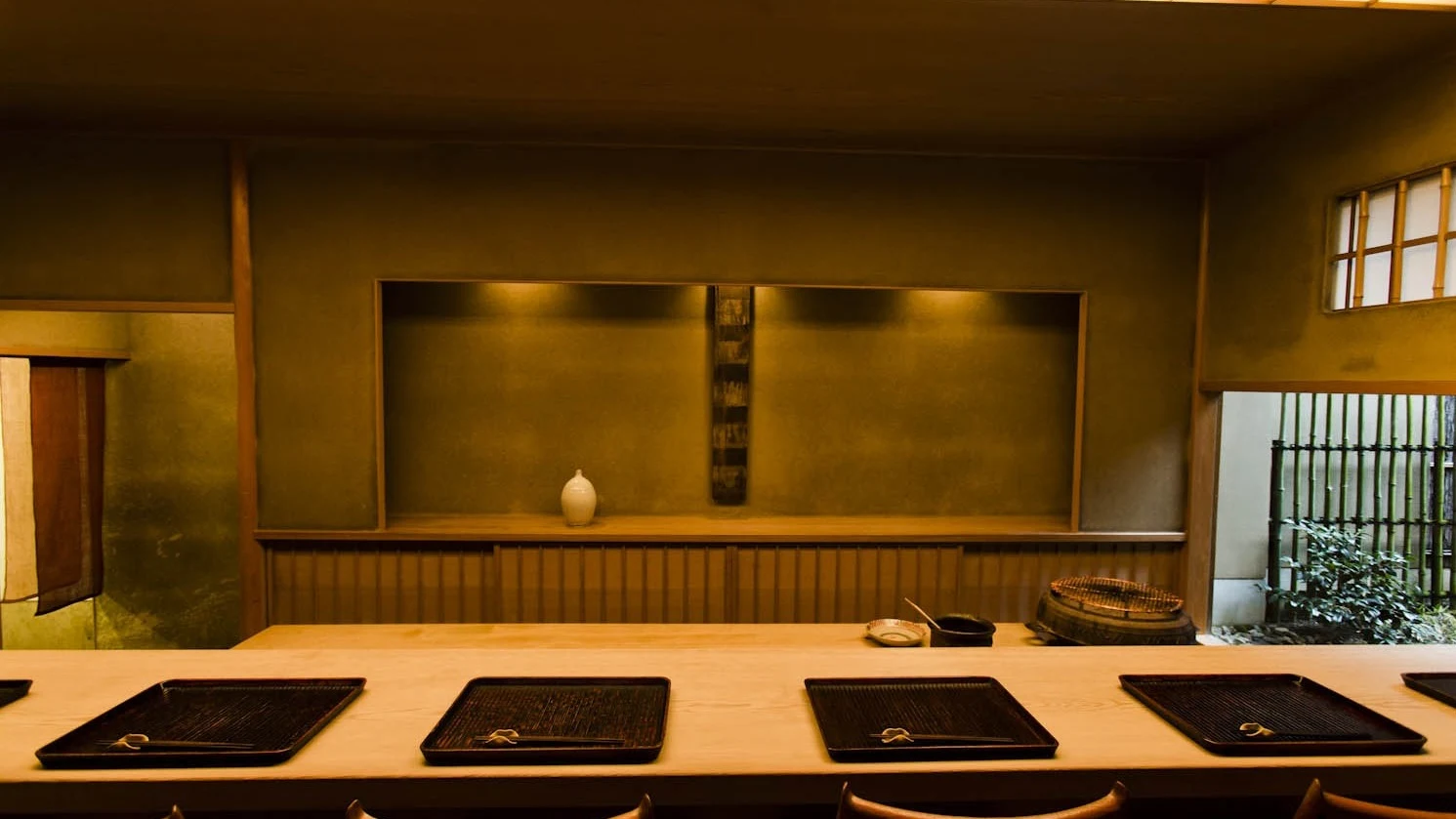
The room is intimate and quiet, a traditional Kyoto townhouse drawn around the counter and the open kitchen. Guests sit close enough to see the bench-side sequence: the cut of sashimi, the lift of a bowl, the timing of a grill, the moment a course leaves the pass. The house has one Michelin star and sits within a broader record of 9 awards, but the room does not trade on spectacle. Its feeling comes from proximity, from the spirited motion of young staff and chefs, and from the old Kyoto preference for seasonal suggestion over display. Leaves, bamboo, rice, crab shell, hot broth, smoke from charcoal: the materials give the meal its pace.
Kyotango held inside Nakagyo
Muromachi Wakuden matters because it keeps the Wakuden origin close while working in central Kyoto. The group traces its palate to Kyotango's coast, hills, and fields, then filters that through the austerity associated with shojin ryori and the hospitality of the ryotei. Matsumoto's chapter here has ended, so the cleanest measure of the place is the continuing method: seasonal ingredients, counter service, and the Wakuden hand applied to clam soup and bamboo shoots.
Questions
Frequently asked
What kind of restaurant is Muromachi Wakuden?
Muromachi Wakuden is a modern Kyoto kaiseki omakase restaurant in Nakagyo Ward, Kyoto. The menu is set and follows a seasonal kaiseki structure rather than offering à la carte choices.
What is it known for?
The restaurant is known for seasonal omakase built around natural flavour and close counter service. Dishes associated with it include conger eel wrapped in matsutake mushrooms, charcoal-grilled crab, bamboo shoots, clam soup, and wagyu beef sukiyaki.
Who shaped the kitchen there?
Former head chef Shinya Matsumoto shaped Muromachi Wakuden through seasonal counter kaiseki. He later became chef and owner of Tokuha Motonari in Kyoto's Kamigyo-ku.
What recognition does it hold?
Muromachi Wakuden holds one Michelin star.
How is booking handled?
Reservations are essential, and booking is made direct.
The field
How it compares
| Place | Awards | Cuisine | Notes |
|---|---|---|---|
| Muromachi Wakuden | Michelin 1 Star | Modern Kyoto Kaiseki Omakase | Nakagyō, $$$$ |
| Gion Sasaki | Michelin 3 Stars | Modern Kaiseki | Kyoto |
| Hyotei | Michelin 3 Stars | Traditional Kaiseki | Kyoto |
| Isshisoden Nakamura | Michelin 3 Stars | Traditional Kyoto Kaiseki | Kyoto |
| Kikunoi Honten | Michelin 3 Stars | Kyoto Kaiseki Ryotei | Kyoto |
| Mizai | Michelin 3 Stars | Traditional Kaiseki | Kyoto |
| Ogata | Michelin 2 Stars | Kaiseki Omakase | Kyoto |