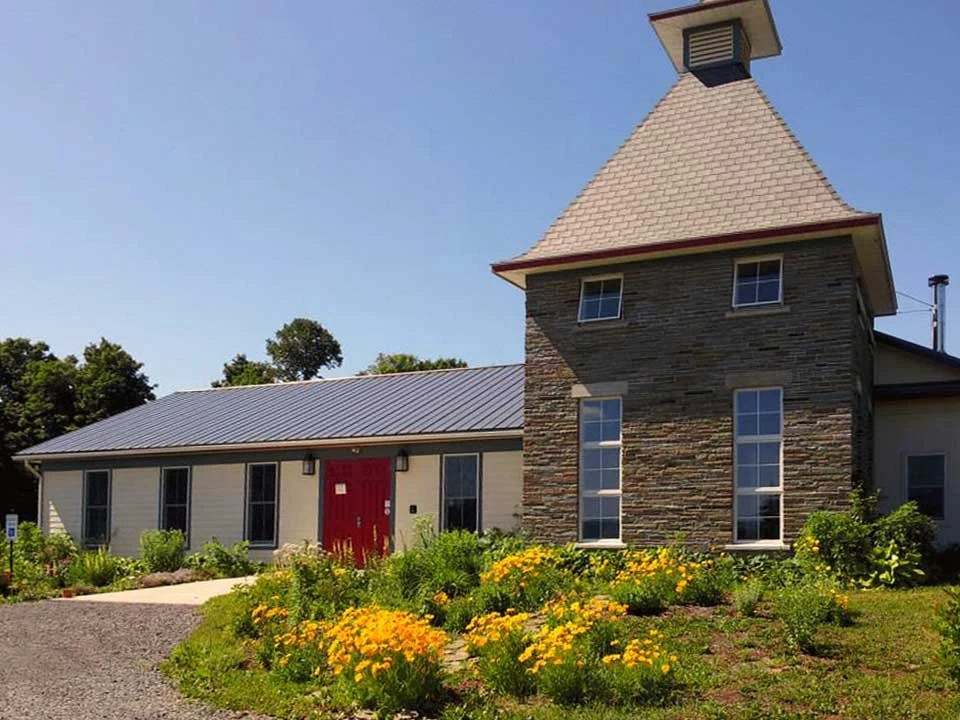
Myer Farm Distillers operates along the western shore of Seneca Lake in Ovid, New York, where the region's glacially carved soils and dramatic temperature swings shape what comes off the still. The distillery earned a Pearl 2 Star Prestige recognition in 2025, placing it among a small cohort of producers in the Finger Lakes that command serious attention beyond the region's better-known wine corridor.
<p>The western shore of Seneca Lake is quieter than the wine trail that lines its eastern counterpart. Route 89 runs close to the water here, and the farms that front it have been working the same glacially deposited soils for generations. At 7350 NY-89, Myer Farm Distillers occupies land that carries the same geological logic as the region's celebrated vineyards: deep shale substrates, sharp overnight temperature drops even in summer, and a lake-effect moderating influence that keeps the growing season longer than the latitude would otherwise allow. These conditions support farming and distilling on this ground.</p><h2>The Finger Lakes as a Distilling Context</h2><p>The Finger Lakes built its reputation on Riesling, a grape whose expressive range in this climate has drawn comparisons to the Mosel and Alsace. But the same terroir logic that makes dry-farmed grain and orchard fruit compelling here also makes the Finger Lakes an increasingly serious address for craft spirits. The corridor between Seneca and Cayuga lakes has produced a generation of farm distilleries that operate with the same sourcing discipline as the region's better estate wineries: grain grown on-site or from neighboring farms, water drawn from glacial aquifers, and a production scale that keeps provenance traceable. Myer Farm Distillers belongs to this cohort, working from an agricultural base. That distinction matters when reading the 2025 Pearl 2 Star Prestige recognition.</p><p> A distillery whose raw materials come from the farm it sits on occupies a different critical category from one that sources commodity grain from a broker, regardless of how skilled the distillation is.</p><h2>What the Land Produces</h2><p>Seneca Lake is the deepest of the Finger Lakes at roughly 618 feet, and that depth creates a thermal mass that delays both spring and autumn frost compared to inland sites. The surrounding slopes, carved by glacial retreat approximately 10,000 years ago, left behind a mix of shale, limestone, and lacustrine sediment that drains well and retains enough mineral content to show up in what grows from it. Farms on the western shore of Seneca, including the Ovid corridor where Myer Farm sits, tend toward mixed agriculture: field grains, apple orchards, and some grape cultivation, though the vine density here is lower than around Watkins Glen to the south or the denser planting zones near Geneva to the north.</p><p>This agricultural diversity is what makes Myer Farm's position interesting relative to dedicated wineries. A farm distillery in this setting has access to a broader ingredient palette than a single-crop estate, which creates both more creative latitude and a higher burden of curation. The most respected farm distilleries in the northeastern United States, from Vermont to the Hudson Valley, have found that the terroir argument only holds if production discipline matches the sourcing integrity. The Pearl 2 Star Prestige recognition in 2025 suggests Myer Farm is meeting that standard.</p><h2>Placing the 2025 Recognition</h2><p>The Pearl rating system evaluates producers across sourcing, craft, and experience. A 2 Star Prestige designation at the 2025 level puts Myer Farm in a tier above basic recognition and within the range of producers that draw visitors with a specific purpose rather than incidental traffic. In practical terms, that means the distillery is worth planning around, not just folding into a broader wine trail itinerary. Producers at comparable recognition levels in other American craft spirits regions tend to run limited production runs and maintain tasting room operations with some seasonal variation.</p><p>For Finger Lakes visitors already familiar with estate wineries like <a href="https://www.enprimeurclub.com/wineries/adelsheim-vineyard-newberg-winery">Adelsheim Vineyard in Newberg</a> or producers in California's more visited corridors such as <a href="https://www.enprimeurclub.com/wineries/adelaida-vineyards">Adelaida Vineyards in Paso Robles</a> or <a href="https://www.enprimeurclub.com/wineries/alban-vineyards">Alban Vineyards in Arroyo Grande</a>, the logic of visiting a recognized farm distillery in the Finger Lakes follows a similar pattern: arrive with some knowledge of what they're making, ask specific questions about sourcing and production, and treat the tasting room as a working farm stop rather than a hospitality venue engineered for volume. The experience reads differently that way, and the recognition is better understood.</p><h2>Getting There and Planning the Visit</h2><p>Ovid sits roughly midway along the western Seneca Lake shore, between Lodi to the south and the town of Romulus to the north. The nearest larger town with accommodation is Watkins Glen, about 20 miles south, which has grown into a reasonable base for multi-day Finger Lakes itineraries. Ithaca, home to Cornell University and a wider range of lodging and restaurants, is approximately 30 miles southeast along a route that takes in some of the lake's southern shoreline. Weekend visits in September and October are busiest along the western Seneca corridor, so planning ahead is wise. Farm operations have a natural rhythm that doesn't always align with fixed hospitality schedules, and visits to working agricultural producers in this region generally benefit from advance contact.</p><p>Visitors combining Myer Farm with the broader Finger Lakes circuit might also note that the region's distilling and winemaking scene has developed enough critical mass to justify a dedicated itinerary, rather than treating spirits producers as secondary stops after the established wine estates. Producers earning structured recognition in 2025 represent a different generation of Finger Lakes craft than the hobbyist distilleries of a decade ago.</p><h2>The Wider Frame</h2><p>For those who follow American craft spirits closely, the Finger Lakes sits in an interesting position. It lacks the branding infrastructure of Kentucky bourbon country or the urban cool of Brooklyn-based micro-distilleries, but it has something neither of those has in the same concentration: direct access to farm-grown ingredients in a climatically distinctive agricultural zone. Producers like Myer Farm, working the same glacially shaped soils that give Seneca Lake Riesling its signature tension, are making an argument for terroir-driven spirits that doesn't rely on borrowed prestige from wine country comparisons.</p><p>That argument is still being made, not yet settled. But the 2025 Pearl 2 Star Prestige recognition signals that critical observers are taking the claim seriously. Comparable arguments are being tested at recognized producers across American wine and spirits regions: at <a href="https://www.enprimeurclub.com/wineries/andrew-murray-vineyards">Andrew Murray Vineyards in Los Olivos</a>, at <a href="https://www.enprimeurclub.com/wineries/artesa-vineyards-and-winery">Artesa Vineyards and Winery in Napa</a>, and at estate operations from <a href="https://www.enprimeurclub.com/wineries/au-bon-climat-santa-barbara-winery">Au Bon Climat in Santa Barbara</a> to <a href="https://www.enprimeurclub.com/wineries/aubert-wines">Aubert Wines in Calistoga</a>. In each case, the terroir argument holds or collapses depending on whether production discipline matches the sourcing story. At Myer Farm, the recognition suggests the two are in alignment.</p>
Myer Farm Distillers operates from a working farm property at 7350 NY-89 in Ovid, along the western shore of Seneca Lake. The address places it in one of the Finger Lakes' quieter agricultural corridors, removed from the higher-traffic wine trail clusters further south. Expect a farm-scale environment rather than a polished tasting room complex.
Myer Farm Distillers has received recognition including: Pearl 2 Star Prestige (2025).
Myer Farm Distillers is a distillery, not a winery, so wine is not the category to focus on here. The 2025 Pearl 2 Star Prestige recognition specifically evaluates distilled spirits producers, covering sourcing, craft, and experiential quality. The farm's spirits program is the reason to visit.
Myer Farm Distillers is located at 7350 NY-89, Ovid, NY 14521, Ovid.
The defining factor is the integration of farm and distillery on a single property in Ovid, NY, which ties the raw agricultural material directly to the production process. That approach earned Myer Farm a Pearl 2 Star Prestige designation in 2025, a rating that assesses sourcing and craft together rather than finished product alone. In a region better known internationally for Riesling, a spirits producer at this recognition level occupies a distinct position.
Reservation and booking details for Myer Farm Distillers are not confirmed in current records. Given the farm's location on a rural stretch of NY-89 in Ovid, contacting them directly before visiting is advisable, particularly for groups or tastings tied to the Pearl 2 Star Prestige spirits lineup.
The Finger Lakes has historically concentrated its craft production reputation in wine rather than spirits, which makes Myer Farm's Pearl 2 Star Prestige recognition in 2025 a meaningful data point for the region's distilling scene. Located in Ovid on the Seneca Lake corridor, the farm operates in an area where agricultural depth supports grain and fruit sourcing directly on-site. Few producers in the broader Finger Lakes have reached equivalent formal recognition in the spirits category at this stage.
7350 NY-89, Ovid, NY 14521
Ovid