Nakashima
In Residence
Tetsuo Nakashima
Chef
- 01CuisineTraditional Japanese Kaiseki
- 02CityHiroshima, Japan
- Opinionated About Dining Top Restaurants in Japan Recommended · 2026
- Tabelog Bronze #308: 4.3pts · 2026
- Tabelog 100 #82: 4.2pts · 2025
- Opinionated About Dining Top Restaurants in Japan Ranked #397 · 2025
- Tabelog Bronze · 2025
- Opinionated About Dining Top Restaurants in Japan Ranked #346 · 2024
- Opinionated About Dining Top Restaurants in Japan Highly Recommended · 2023
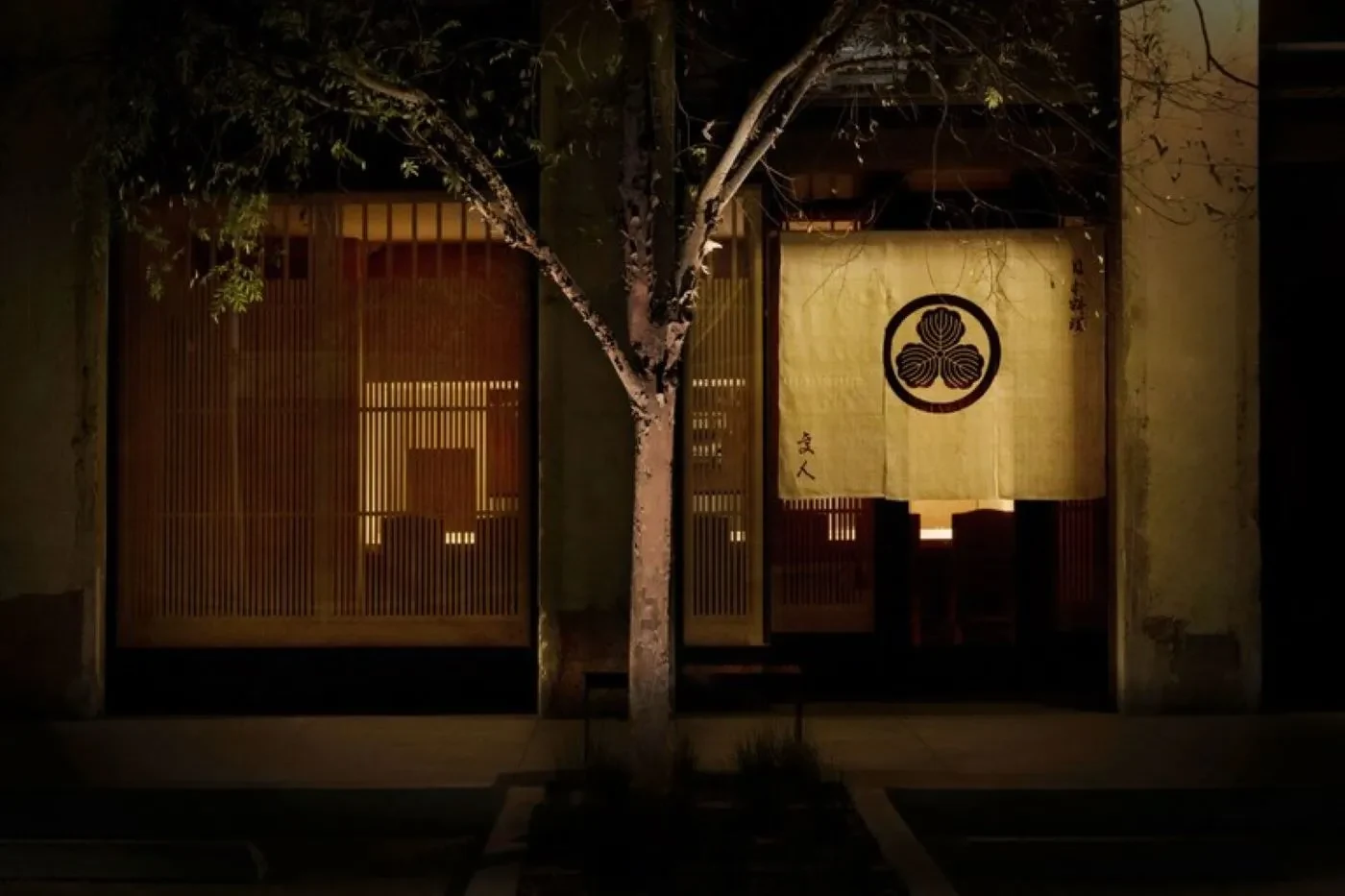
Higashi-Hakushima moves at a different tempo from Hiroshima’s central drinking corridors: quieter, residential, less performative. At a TOHAKU Building address, in a compact room, the meal asks diners to settle into sequence rather than chase spectacle. In a city where social eating often means grill smoke, beer, oysters, and late moves between counters, kaiseki here is a counterpoint, not a rejection. It keeps eating and drinking communal, but in a controlled register: seasonal cooking, sake or wine with the meal, and a room small enough for the evening to feel deliberate.
Hiroshima dining is often read through immediacy: okonomiyaki cooked in front of the diner, seafood tied to the Seto Inland Sea, and casual rooms built for groups. Nakashima sits nearer Japanese cuisine houses that use season, pacing, and restraint as grammar. Its repeated Tabelog Bronze recognition from 2020 through 2026, selection for Tabelog Japanese cuisine WEST 100 in 2021, 2023, and 2025, and inclusion in Opinionated About Dining’s 2026 Japan Recommended list place it beyond local loyalty. Compare it not with tourist-facing Hiroshima dinners, but with mature kaiseki rooms in western Japan where a small counter, fixed evening cadence, and measured beverage service define the experience.
Hiroshima kaiseki with the sociability of a small drinking room
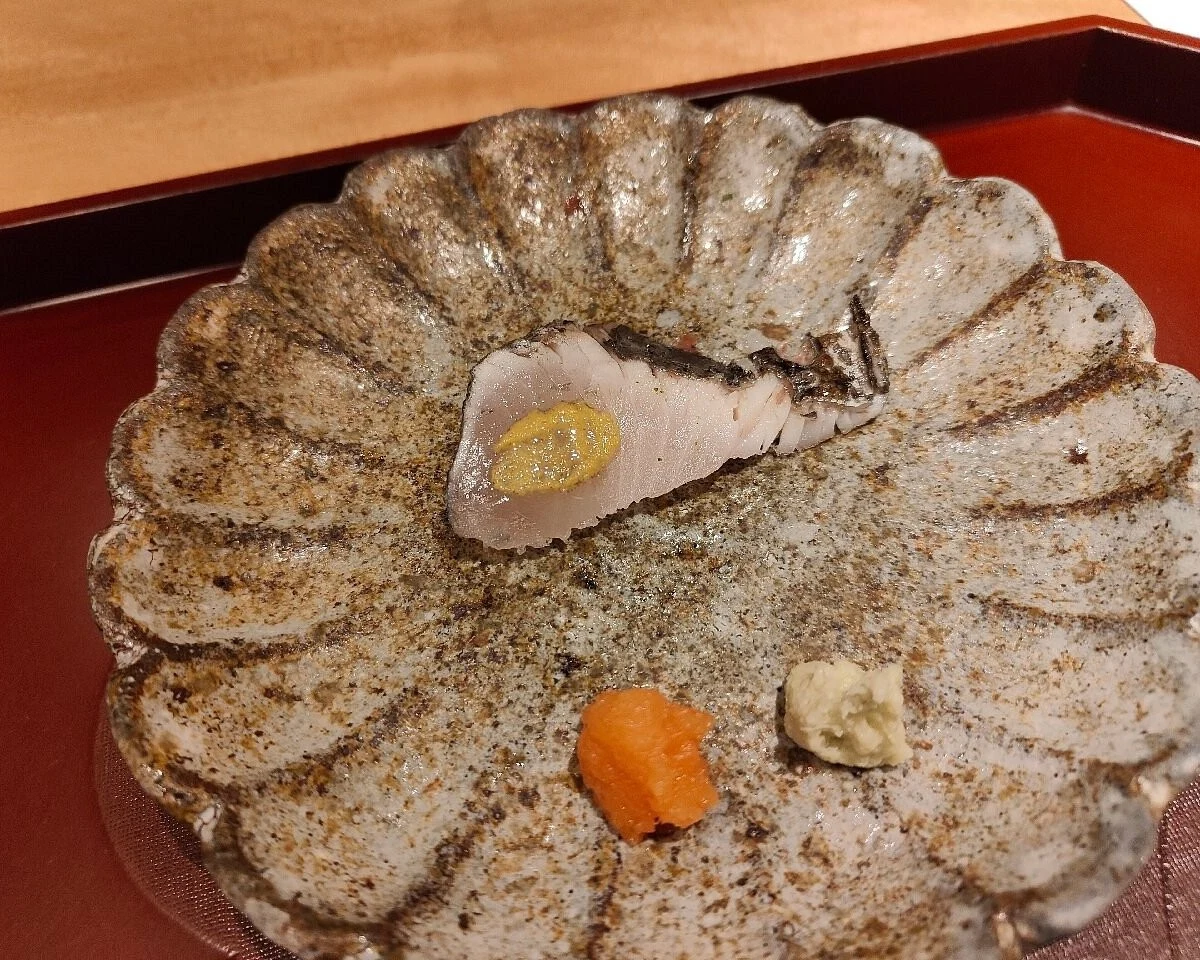
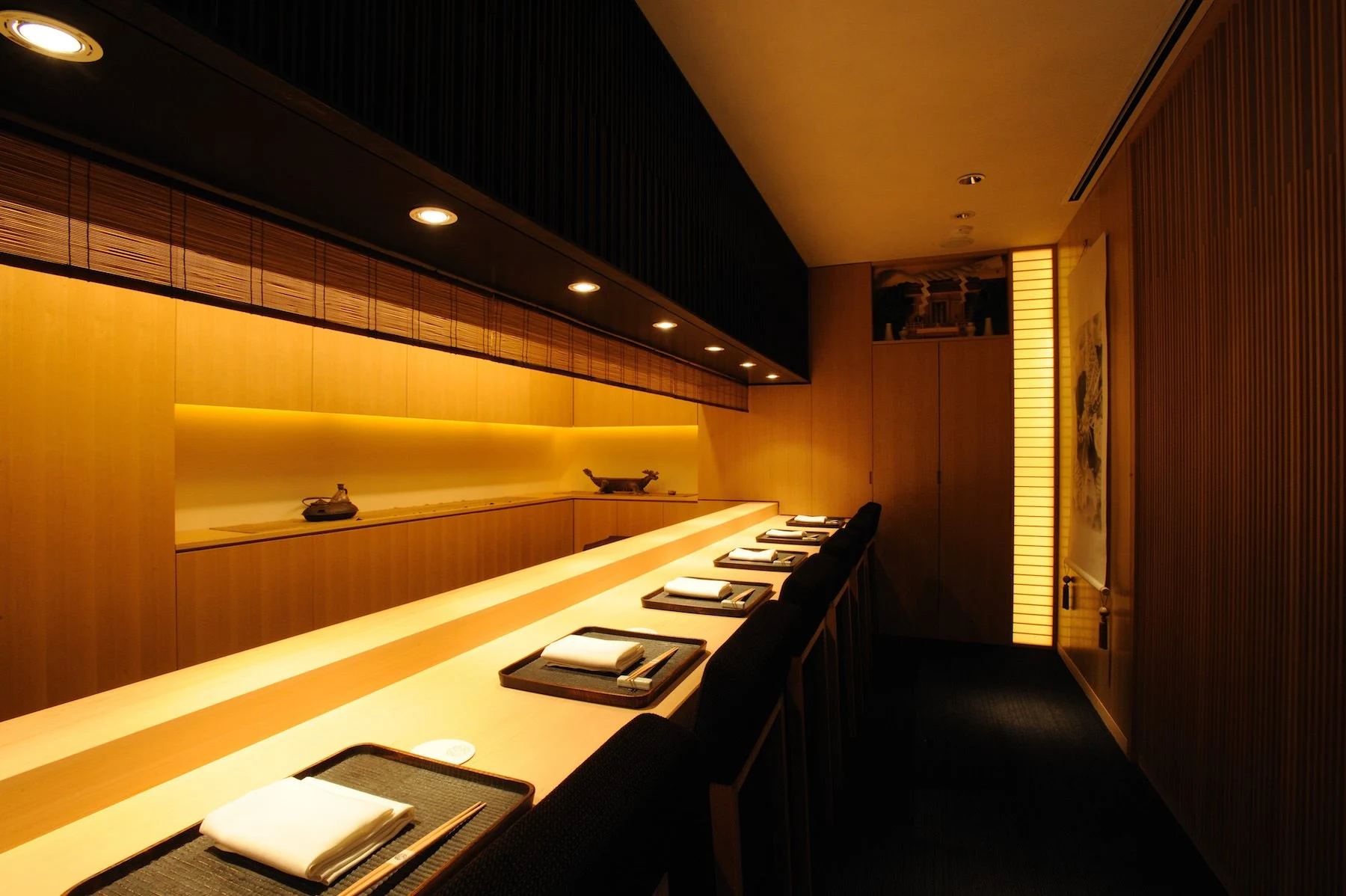
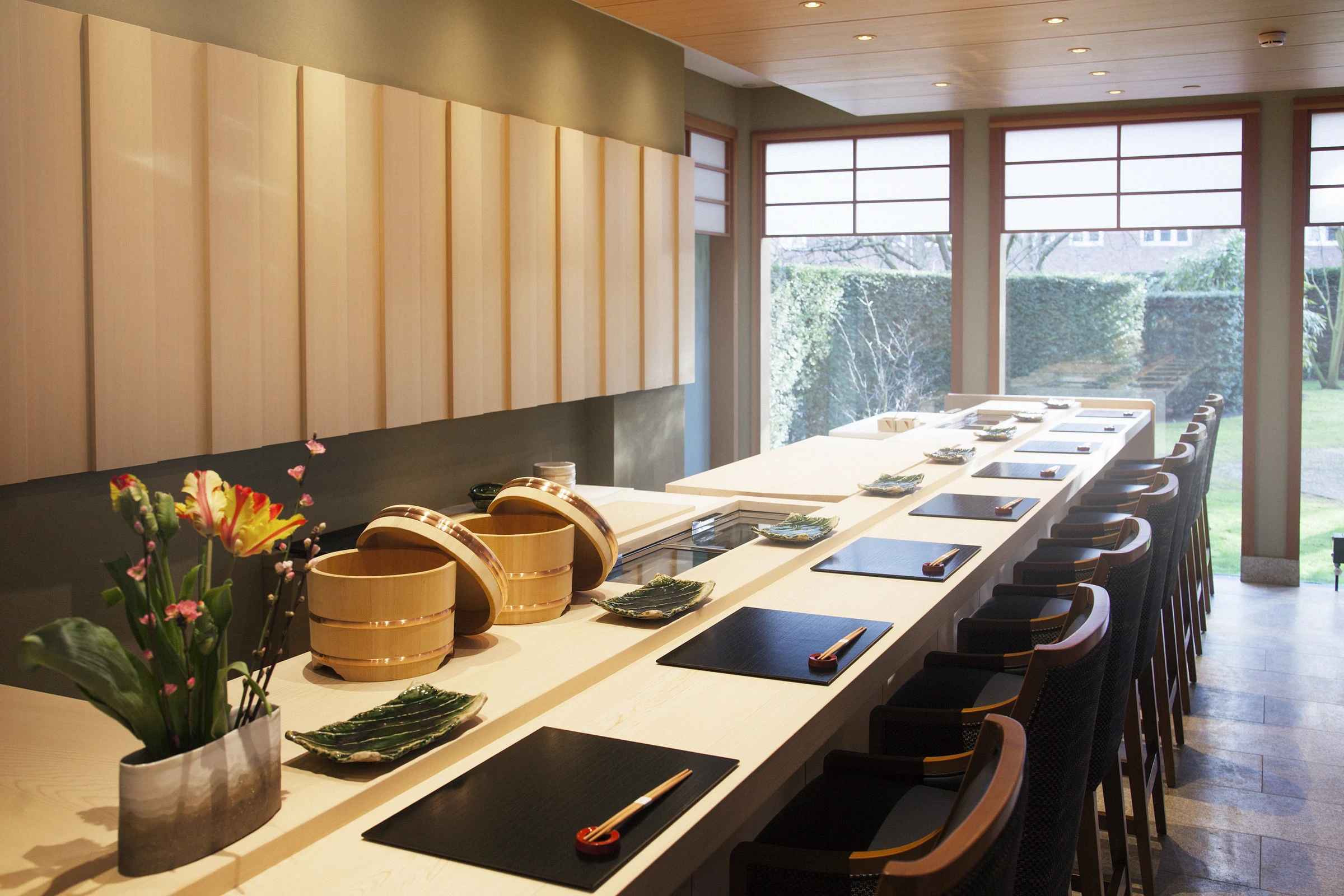
Kaiseki can turn stiff when form becomes the point. The better version keeps ceremony in the background and lets the table behave socially. Nakashima’s scale helps: 14 seats, eight at the counter and one table for four to six. This is not a grand dining room, but a compact space in the Japanese habit of serious eating, where the counter carries evening energy and drinks are not accessories. The listed beverage range, sake, shochu, and wine, suggests pairing across moods rather than one prescribed route.
The izakaya connection is rhythm, not informal cooking. Hiroshima has a deep culture of eating while drinking, letting conversation and small courses share tempo. Kaiseki translates that instinct into stricter structure. Courses arrive in progression rather than scatter; fish receives particular emphasis; the small footprint makes the counter a social device. Diners who associate Hiroshima with louder, faster meals find another expression of the same city impulse: food as the anchor for an evening, not a standalone performance.
That distinction gives the recognition weight. Tabelog’s 2026 Bronze Award and 4.26 score place it in a competitive Japanese cuisine category where consistency matters more than novelty. Opinionated About Dining’s 2026 Japan Recommended listing confirms the point through a separate editorial system. Awards do not describe the meal or replace judgement, but they show this is not merely a neighbourhood favourite operating on sentiment. It belongs to the tier of regional Japanese restaurants serious diners use to map how kaiseki changes outside the old capitals.
Why the counter format matters more than theatre
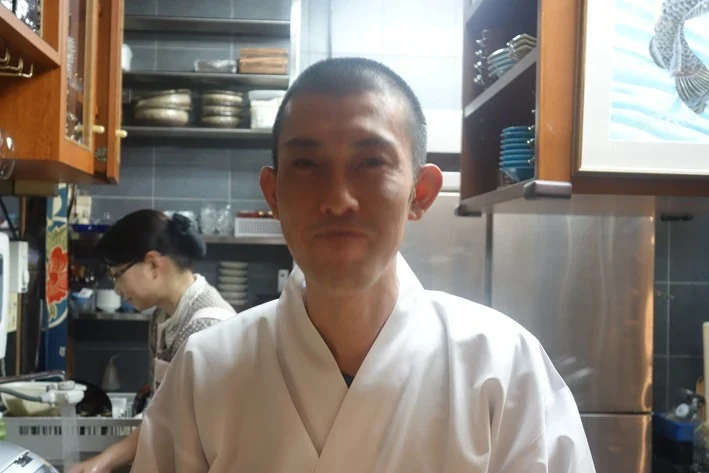
Chef Tetsuo Nakashima’s name matters as credential, not myth. The stronger point is the format: a small, reservation-only Japanese cuisine room where the counter has priority. In contemporary Japan, that configuration marks seriousness across sushi, tempura, and kaiseki because it reduces distance between preparation, service, and diner attention. It also prevents anonymity. A 14-seat room cannot hide weak pacing or uneven hospitality behind scale.
The restaurant opened in 2006, giving it enough history to be judged by continuity rather than launch excitement. Its awards record supports that reading: Bronze recognition across consecutive recent years and repeated WEST 100 selection suggest a dining public returning to the address as part of the region’s Japanese cuisine conversation. For visitors, the practical lesson is that Hiroshima’s serious dining is not confined to famous casual foods. The city can reward a night reserved for quiet technique as much as one built around grills and beer.
Within kaiseki, Nakashima appears more compact and socially scaled than the out-of-metro comparison set of Sato, Imoto, Uemura, Nawaya, and Momen. Those names define the wider Japanese kaiseki field, but Hiroshima changes the frame. Here, a small Japanese cuisine room competes not only with formal counters, but with the city’s powerful convivial dining culture. The result is a useful hybrid for travellers: more disciplined than an izakaya, less ceremonial in feel than a destination dining room that demands an itinerary around it.
For a Hiroshima dining map, the contrast sharpens beside other local choices. Chisou Sottakuito (馳走啐啄一十) gives another view of Hiroshima’s Japanese dining depth, while Akai (Creative Cuisine) points to a more contemporary local register. ANDERSEN, Bishu Bikou Hamai, and Butter Cake no Nagasaki Do broaden the city beyond dinner counters, from bakery culture to casual local stops. For the wider edit, use Our full Hiroshima restaurants guide, then match the meal with Our full Hiroshima hotels guide, Our full Hiroshima bars guide, Our full Hiroshima wineries guide, and Our full Hiroshima experiences guide.
How to read the meal in a Japan-wide itinerary
The case for booking is strongest when Hiroshima sits inside a larger Japan route. Tokyo and Kyoto often dominate kaiseki planning, but regional rooms show how Japanese cuisine adapts to local expectations of scale, drinking, and seasonality. A traveller comparing kaiseki styles might look at Ajihiro, Kaiseki in Tokyo or Akasaka Asada, Kaiseki in Tokyo for capital-city reference points, then use Hiroshima to see how a smaller market expresses the same discipline without the same ceremonial weight.
That wider itinerary can also absorb less formal Japanese dining without flattening the differences. -Grilled beef Sukiyaki- KAMAKURA TANUKIAN 鎌倉 たぬき庵 in Kamakura,. 鮪と炭火焼き うお炭 秋葉原店 in Tokyo,.cafe in Osaka,.know in Kumamoto, (Shoku) Vietnam in Kawasaki, and [Curry Senmon Ten] Maruyama Kyoju. in Sapporo show the country’s range once a trip moves beyond one genre. Against that backdrop, Nakashima’s value is clarity. It gives Hiroshima a composed Japanese cuisine address with enough recognition to justify planning, while keeping the evening intimate, drink-friendly, and rooted in the city’s preference for meals that unfold through conversation.
Questions
Frequently asked
Who works at Nakashima?
Made By profiles Tetsuo Nakashima (Chef) at Nakashima.
How expensive is Nakashima?
Nakashima is listed at a price level of $$$$.
Where is Nakashima and what does it serve?
Nakashima is in Naka, Hiroshima, serving Traditional Japanese Kaiseki.
The field
How it compares
| Place | Cuisine | Notes | Awards |
|---|---|---|---|
| Nakashima | Traditional Japanese Kaiseki | Naka, $$$$ | · |
| Chiso Sottakuito | Modern Japanese Omakase | Hiroshima | · |
| Hayato | Traditional Japanese Kaiseki | Los Angeles | Michelin 2 Stars |
| Iyo Kaiseki | Traditional Japanese Kaiseki | Milan | Michelin 1 Star |
| Kagurazaka Ishikawa | Traditional Japanese Kaiseki | Tokyo | Michelin 3 Stars |
| Yamazato | Traditional Japanese Kaiseki | Amsterdam | Michelin 1 Star |
| 麻布 幸村 | Traditional Japanese Kaiseki | Tokyo | · |
In residence
Similar places
Modern Japanese Omakase
Chiso Sottakuito
Hiroshima, Japan
Traditional Japanese Kaiseki
Hayato
Los Angeles, United States
★★
Traditional Japanese Kaiseki
Iyo Kaiseki
Milan, Italy
★
Traditional Japanese Kaiseki
Kagurazaka Ishikawa
Tokyo, Japan
★★★
Traditional Japanese Kaiseki
Yamazato
Amsterdam, Netherlands
★
Traditional Japanese Kaiseki
麻布 幸村
Tokyo, Japan