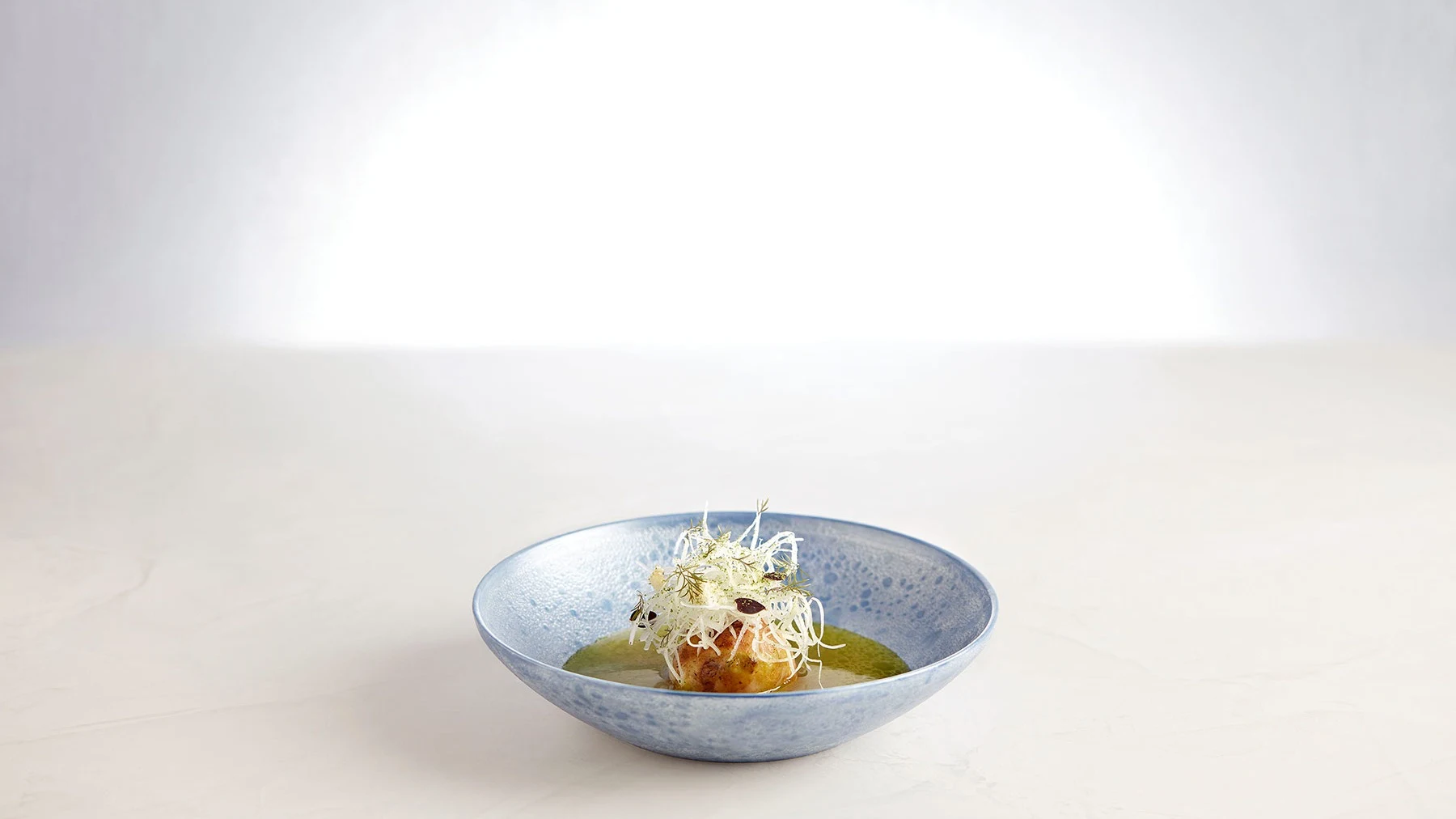
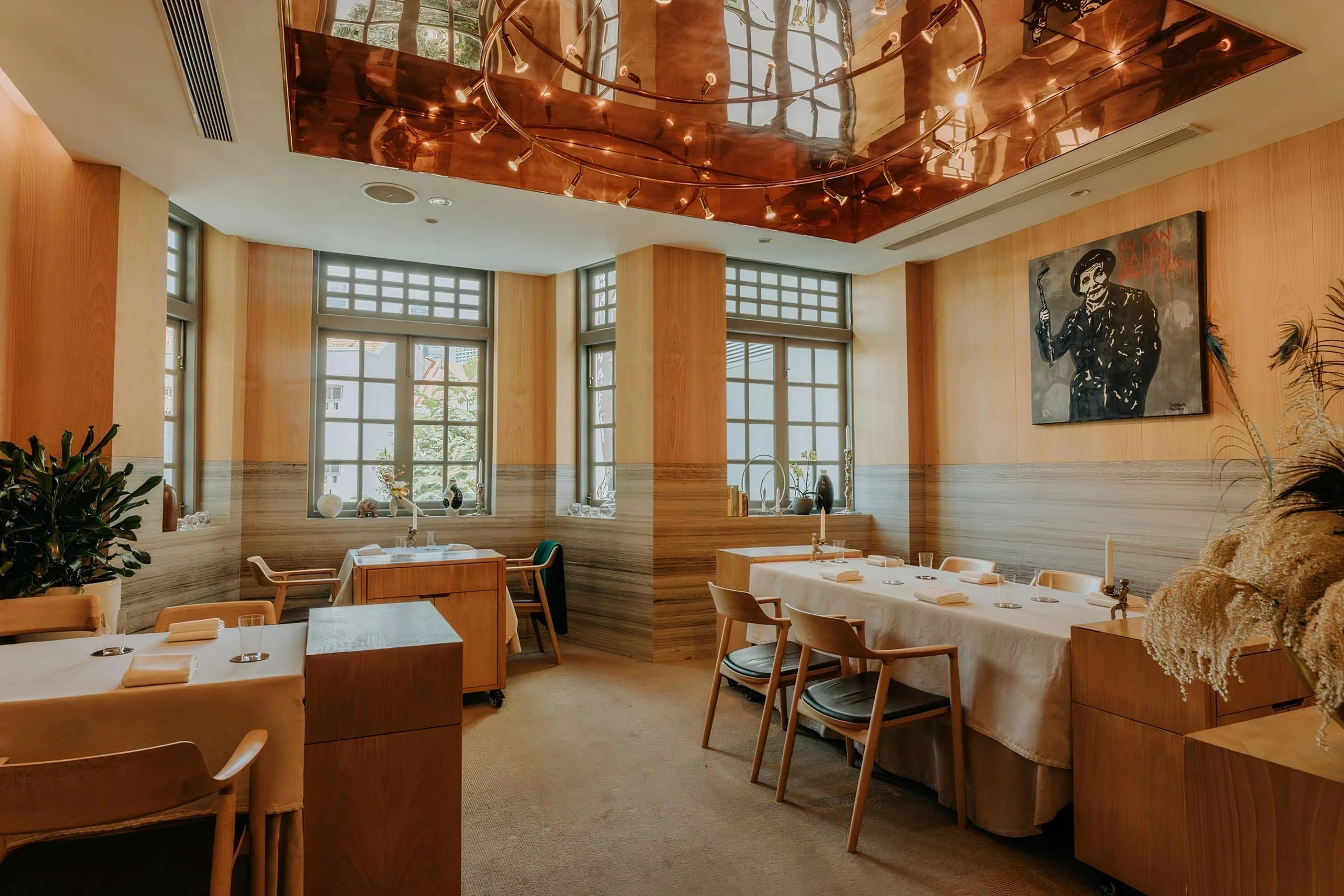
National Kitchen by Violet Oon
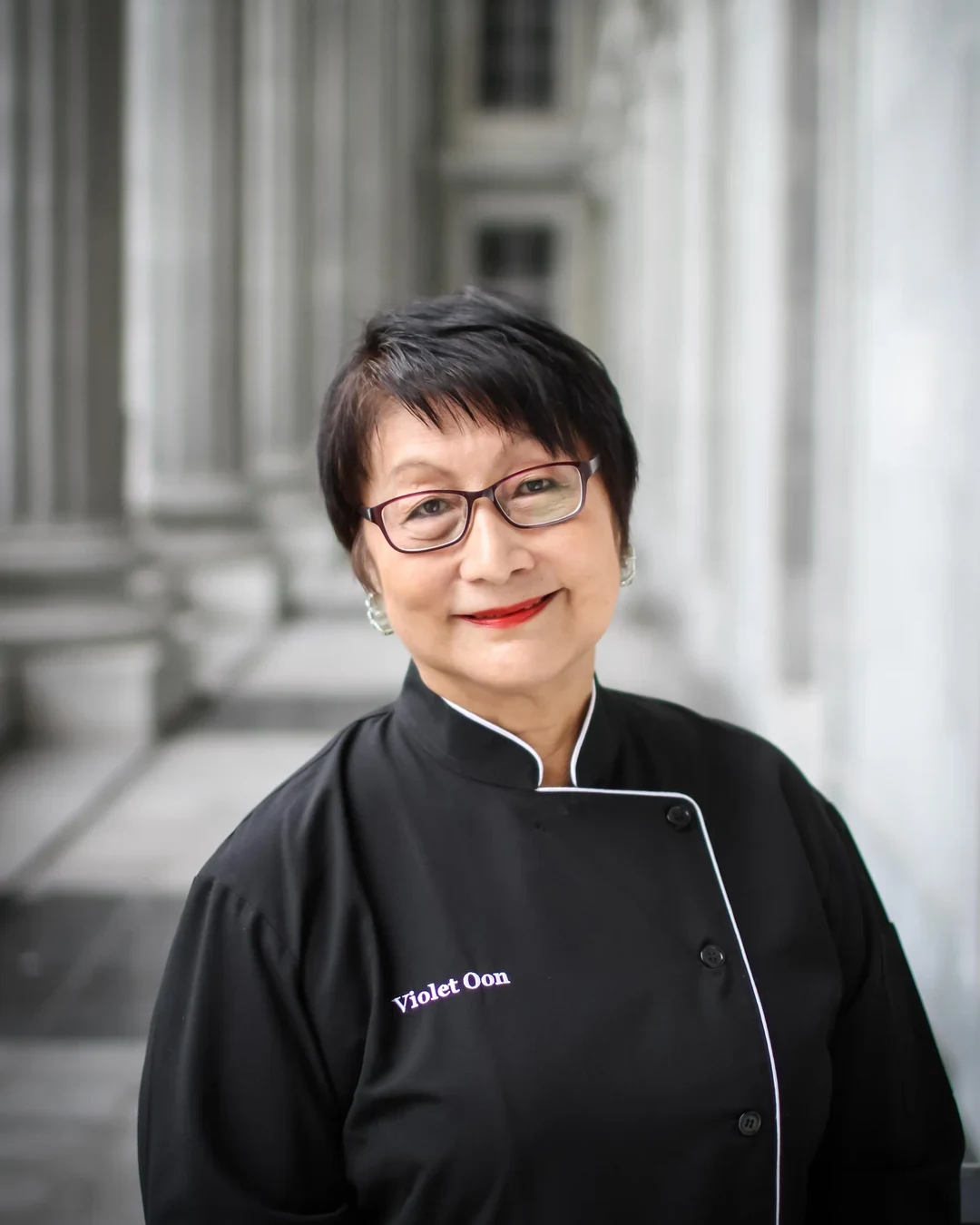
In Residence
Violet Oon
Chef
- 01CuisineAuthentic Peranakan
- 02CitySingapore, Singapore
- Michelin Guide Plate · 2026
- Opinionated About Dining Top Restaurants in Asia Recommended · 2026
- Opinionated About Dining Top Restaurants in Asia Ranked #251 · 2025
- Michelin Plate · 2024
- Opinionated About Dining Top Restaurants in Asia Ranked #215 · 2024
- Opinionated About Dining Top Restaurants in Asia Highly Recommended · 2023
A Colonial Frame for a Layered Cuisine
The former Supreme Court and City Hall buildings that together form the National Gallery Singapore carry a particular kind of institutional gravity. The proportions are imperial, high ceilings, long corridors, stone that has absorbed a century of equatorial humidity, and the restaurants that occupy this building carry the weight of that context whether they intend to or not. National Kitchen by Violet Oon, positioned on the second floor at the civic heart of the building, does not resist that framing. The setting suits a cuisine with its own complicated colonial inheritance: Peranakan cooking, which emerged from centuries of intermarriage between Chinese migrants and Malay communities across the Straits Settlements, is itself a record of absorbed influences, adapted techniques, and ingredients that crossed borders before borders were formally drawn. National Kitchen by Violet Oon is a Peranakan restaurant in Singapore at National Gallery Singapore, with a Michelin Plate 2024 and a typical spend of about $50 per person.
That layering of histories, colonial architecture housing a cuisine built from colonial-era migration, is not incidental. It's one efficient way to understand what the restaurant is doing and why it occupies a different position in Singapore's dining scene than the dozens of casual Peranakan kopitiam counters spread across the island.
Where Peranakan Cooking Sits in Singapore's Restaurant Tier
Singapore's fine-dining conversation is dominated by European-influenced rooms. Les Amis and Odette hold the Michelin three-star tier. Zén operates at the highest price point in the city. Jaan by Kirk Westaway and Meta occupy the creative-contemporary bracket. Heritage Singaporean cuisines, Peranakan, Hainanese, Hokkien, rarely reach the formal sit-down tier at the same price point. The reasons are structural: the cuisine is labour-intensive, the customer base for formal Peranakan dining is smaller than for European formats, and the economics of restaurant-grade rempah (spice pastes ground fresh) and slow-braised meats do not compress easily into competitive pricing.
National Kitchen by Violet Oon operates at the $$ price tier, comparable to Summer Pavilion for Cantonese, and well below the $$$ and $$$$ brackets occupied by the city's European-format fine diners. That positioning matters: it places Peranakan cooking inside a formal sit-down framework without demanding the price premium that rooms like Zén or Born require. The recognition supports that positioning, Opinionated About Dining ranked the restaurant at #251 in Asia in 2025, following a #215 placement in 2024 and a Highly Recommended citation in 2023. The 2024 Michelin Plate adds a separate layer of institutional recognition.
The Intersection of Imported Method and Indigenous Ingredient
Peranakan cooking is not a cuisine that imported European technique in a clean transaction. It works the other way: Chinese cooking methods absorbed Malay aromatics, the resulting hybrid then absorbed Dutch, Portuguese, and British colonial-era ingredients over generations. The kitchen at National Kitchen by Violet Oon works within that tradition, which means the relevant comparison for understanding its technique is less about formal training lineage, the kind of chef-biography detail that anchors a restaurant like Alain Ducasse at Louis XV or Alléno Paris, and more about how well a kitchen maintains fidelity to processes that resist shortcuts.
The defining techniques of serious Peranakan cooking are time-intensive in ways that most restaurant kitchens find commercially inconvenient. Rempah, the foundational spice paste, requires grinding and frying in sequence, with different pastes for different dishes, none of which share a base. Ayam buah keluak, the signature Peranakan preparation of chicken braised with black Indonesian nuts, demands multi-day preparation. The buah keluak nuts themselves are toxic before extended soaking and processing; the ingredient alone communicates something about a cuisine that takes patience as a technical precondition rather than a stylistic choice. For comparison, the kind of ingredient-level commitment that drives kitchens like Aponiente or Lazy Bear is present here at a structural level, built into the cuisine's DNA rather than imposed as a contemporary fine-dining flourish.
Violet Oon's role in this context is that of a preservationist with a public record: her cookbooks and long-standing advocacy for Peranakan cooking in Singapore predate the current heritage-cuisine revival by decades. The restaurant functions as a formal presentation of that documented tradition, in a setting that asks diners to take the cuisine seriously at a sit-down level, which is rarer in Singapore than the city's reputation for food sophistication might suggest.
The Setting as Editorial Statement
The National Gallery location is not neutral real estate. Positioning a Peranakan restaurant inside Singapore's national art institution, in a building that was the seat of colonial legal authority, carries an argument about cultural legitimacy that the cuisine has not always received from formal dining establishments. Similar institutional placements abroad, a heritage cuisine given a serious room inside a cultural building, tend to signal that a city is ready to treat its own food traditions with the same formality it extends to imported ones. This parallels what institutions like Emeril's in New Orleans or Atomix in New York represent for their respective culinary traditions: a formal, argument-making room, not a casual expression of a familiar cuisine.
Most of the city's recognised fine-dining addresses operate in European or contemporary-Asian idioms. A meal here covers territory that rooms like 8½ Otto e Mezzo Bombana or Le Bernardin cannot: the specific, local, historically rooted cooking of the Straits Chinese community, presented with enough formality to hold its own alongside the city's international dining options.
Planning Your Visit
Location: 1 St Andrew's Rd, #02-01, National Gallery Singapore, Singapore 178957. Hours: Monday to Thursday, 12 to 3 pm and 6 to 10:30 pm; Friday to Sunday, 12 to 5 pm and 6 to 10:30 pm. Price tier: $$ (mid-range for Singapore's formal dining segment). Reservations: Booking ahead is advisable, particularly for weekend lunch, when the extended 12 to 5 pm window draws both local and visiting diners. Awards: Michelin Plate 2024; Opinionated About Dining Leading Restaurants in Asia #215 (2024) and #251 (2025). Dress: Smart casual aligns with the building's character; the formal architecture sets expectations.
Questions
Frequently asked
Who works at National Kitchen by Violet Oon?
Made By profiles Violet Oon (Chef) at National Kitchen by Violet Oon.
How expensive is National Kitchen by Violet Oon?
National Kitchen by Violet Oon is listed at a price level of $$$.
Where is National Kitchen by Violet Oon and what does it serve?
National Kitchen by Violet Oon is in CITY HALL, Singapore, serving Authentic Peranakan.
The field
How it compares
| Place | Cuisine | Notes | Awards |
|---|---|---|---|
| National Kitchen by Violet Oon | Authentic Peranakan | CITY HALL, $$$ | · |
| Born | Contemporary Fusion Fine Dining | Singapore | Michelin 1 Star, World's 50 Best |
| Burnt Ends | Modern Australian Barbecue | Singapore | Michelin 1 Star, World's 50 Best |
| Jaan by Kirk Westaway | Modern British Fine Dining | Singapore | Michelin 2 Stars, World's 50 Best |
| Les Amis | Classic French Haute Cuisine | Singapore | Michelin 3 Stars, World's 50 Best |
| Odette | Modern French Fine Dining | Singapore | Michelin 3 Stars, World's 50 Best |
| Zén | Neo-Nordic with Japanese Influences | Singapore | Michelin 3 Stars, World's 50 Best |
In residence
Similar places
Contemporary Fusion Fine Dining
Born
Singapore, Singapore
★ · 50 Best
Modern Australian Barbecue
Burnt Ends
Singapore, Singapore
★ · 50 Best
Modern British Fine Dining
Jaan by Kirk Westaway
Singapore, Singapore
★★ · 50 Best
Classic French Haute Cuisine
Les Amis
Singapore, Singapore
★★★ · 50 Best
Modern French Fine Dining
Odette
Singapore, Singapore
★★★ · 50 Best
Neo-Nordic with Japanese Influences
Zén
Singapore, Singapore
★★★ · 50 Best