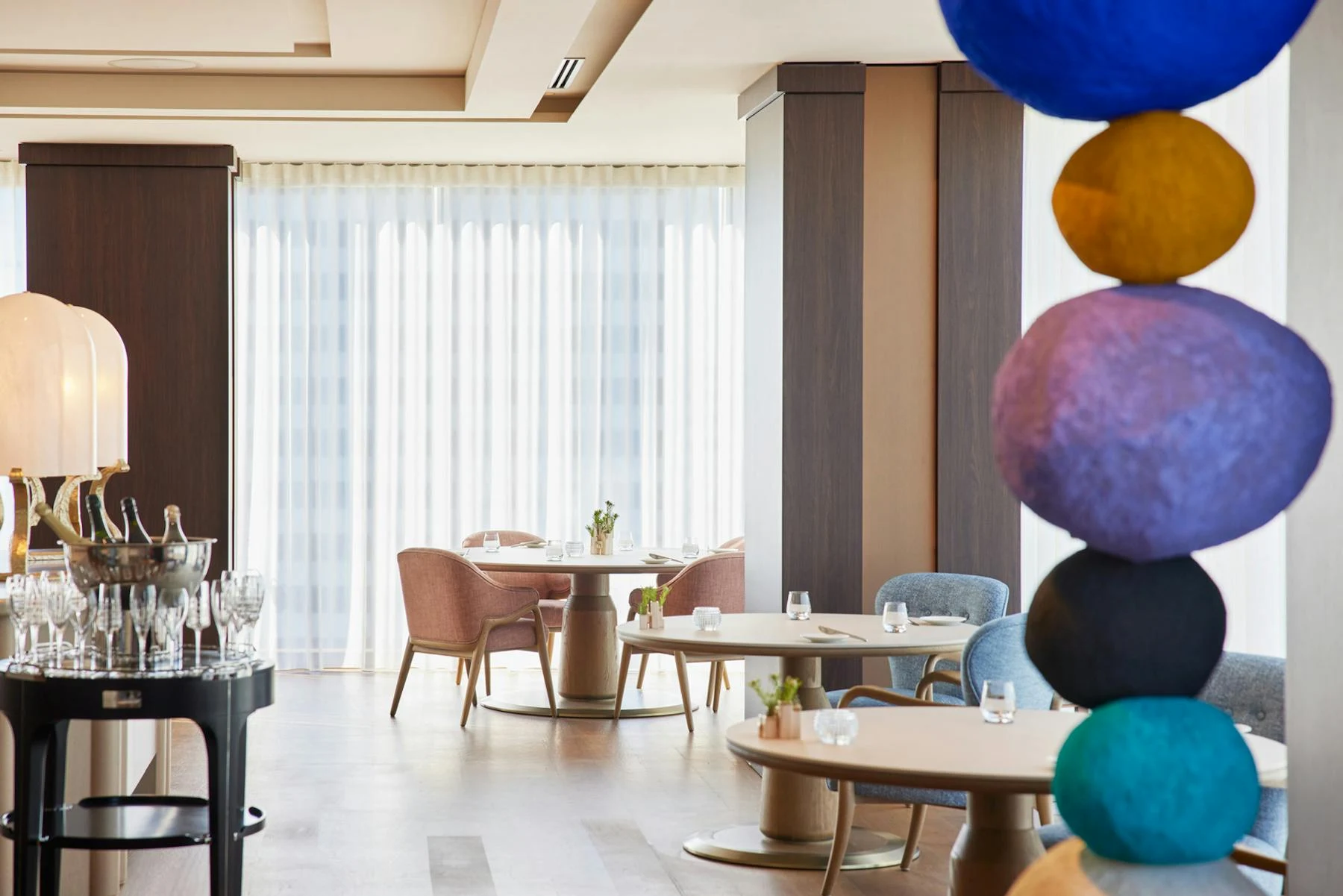
Nishiazabu Sushi Shin
- 01CuisineEdomae Omakase Sushi
- 02CityTokyo, Japan
- 03RecognitionTwo Michelin Stars
From the people index
Recommended by
One trusted voice points here.
- 2 Michelin Stars · Michelin Guide
- Opinionated About Dining Top Restaurants in Asia Recommended · 2026
- Opinionated About Dining Top Restaurants in Japan Recommended · 2026
- Michelin 2 Stars · 2026
- Michelin 1 Star · 2024
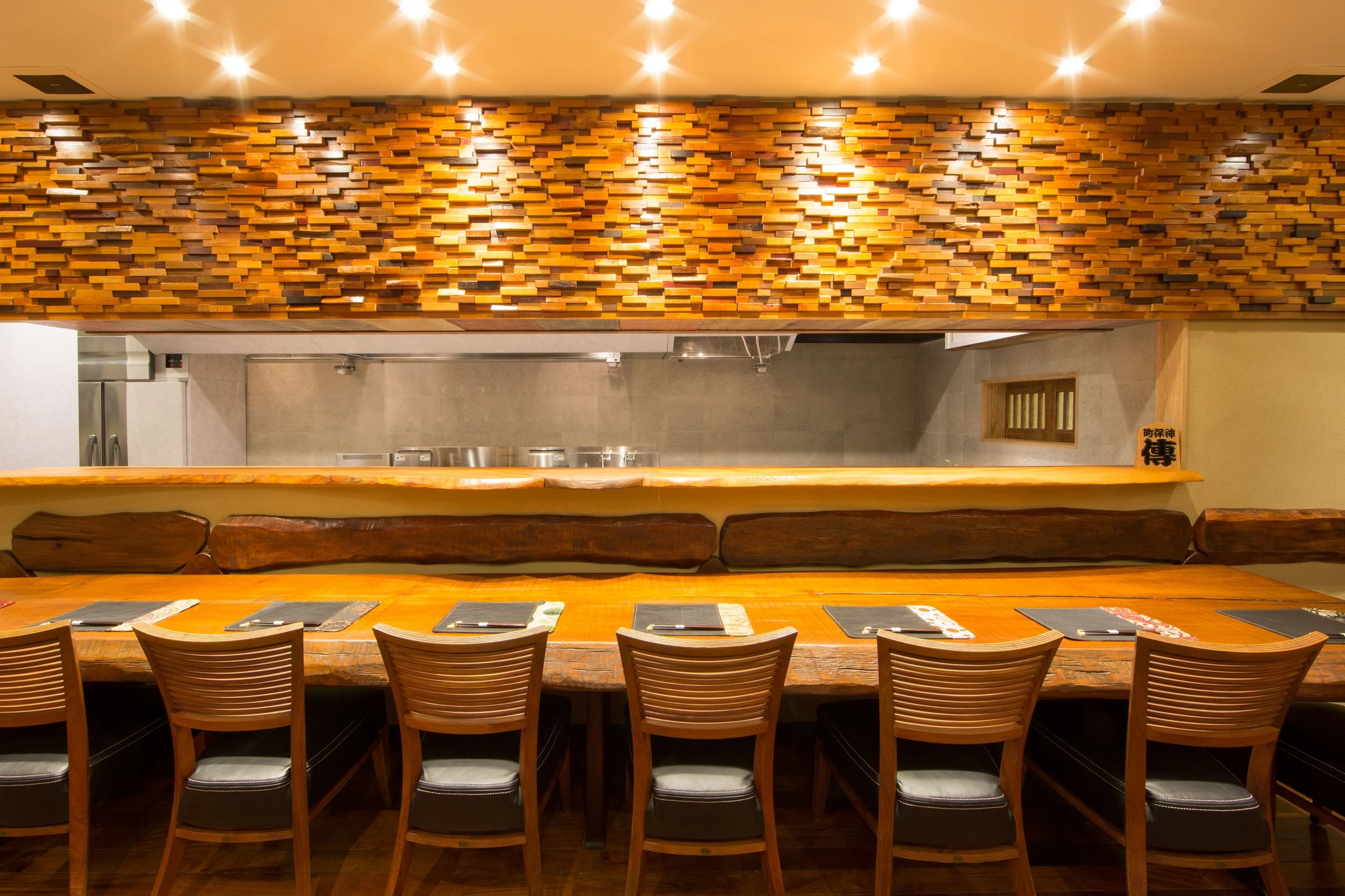
The Counter as Architecture
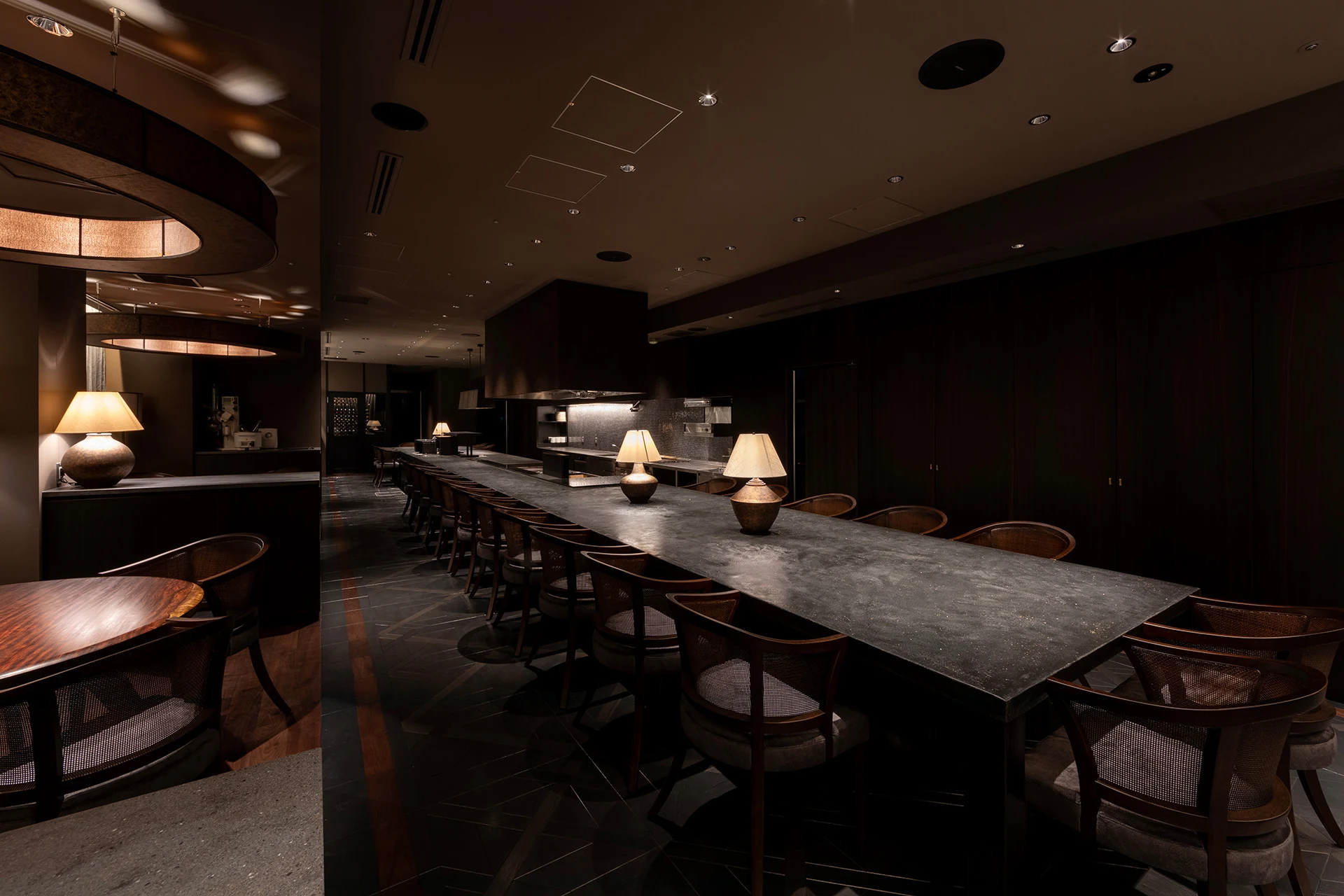
Tokyo's premium sushi counters have undergone a quiet spatial reckoning over the past two decades. The long, lacquered bar that once served ten or twelve guests has, at the top of the market, contracted into something closer to a viewing platform: fewer seats, tighter angles, a physical arrangement that places the itamae's movements at the centre of the room's geometry. The counter at Nishiazabu Sushi Shin fits inside that shift. The address in Nishiazabu's 4-chome puts it in a low-profile residential corridor of Minato City, away from the Roppongi circuit's heavier foot traffic, which shapes both the room's character and its clientele. Guests here are not passing through; they have made a deliberate decision to be present.
The physical container at counters of this calibre is rarely accidental. The positioning of the chef, the grain of the hinoki or cypress wood, the distance between guest and preparation surface, each element controls what the diner observes and how closely. At Sushi Shin, the reported awards language from the chef's own craft description points toward a practice built on visible, fine-grained motion: the placement of fish on the fingertips of the left hand, the application of wasabi with a forefinger, the knife work that opens hidden incisions below the surface of each slice. That kind of detail is only legible to a diner seated close enough to watch it. The room, by design, makes the craft legible.
Self-Taught in a City of Lineages
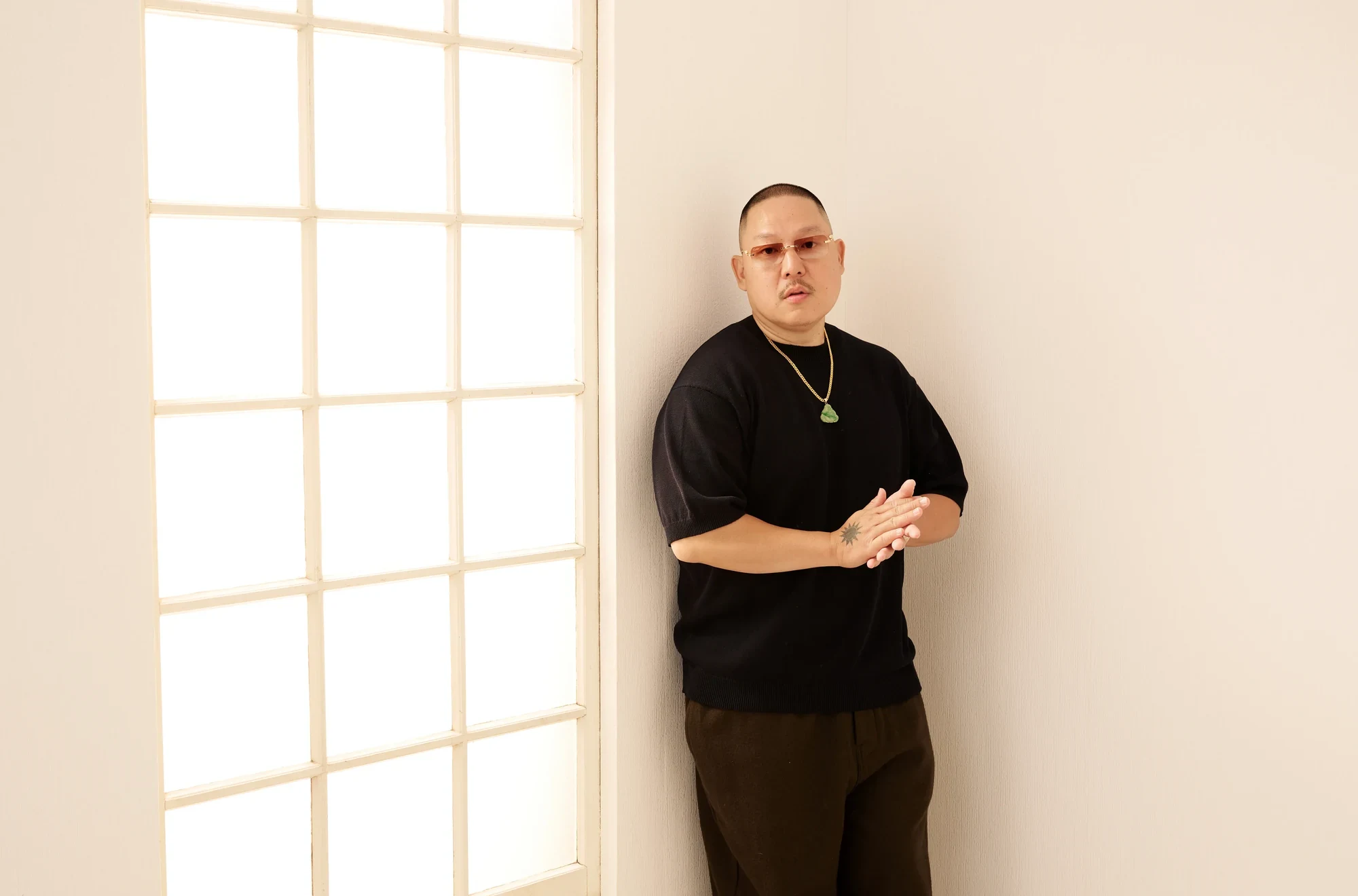
Tokyo's upper omakase tier is substantially organised around lineage. Counters affiliated with Sushi Kanesaka or comparably established houses carry a credential that functions almost like a denominational mark, a signal that the chef passed through a specific school of technique and taste. Harutaka and Sukiyabashi Jiro Roppongiten similarly anchor their authority in traceable traditions. Nishiazabu Sushi Shin operates from a different premise. Chef Shintaro Suzuki is described explicitly as self-taught, someone who reached into Tokyo-style sushi traditions independently and found his own path rather than inheriting one. In a city that prizes pedigree, that positioning places him in a smaller and somewhat braver category of practitioners.
Self-teaching in this context does not mean informality. It means that the framework of improvement is self-constructed rather than institutionally provided. The awards text associated with Sushi Shin frames Suzuki's practice in terms of ongoing experimentation and respect for established forms simultaneously, a combination that produces, at its finest, a counter where classical Edomae structure is present but the specific applications carry a personal empirical logic. His use of different soy sauces for different ingredients, onion-flavoured, plum-flavoured varieties alongside conventional preparations, reflects a systematic approach to flavour matching that sidesteps convention without rejecting the form itself. This is not fusion; it is a methodical re-examination of variables that most counters treat as fixed.
For comparison, Edomae Sushi Hanabusa and Hiroo Ishizaka represent the more traditionally credentialed end of Tokyo's serious sushi market. Sushi Shin sits in a parallel tier, where the credential is the quality of the outcome rather than the name of the school behind it. A Google aggregate of 4.4 across 228 reviews suggests that outcome holds consistently enough to sustain a reputation without institutional scaffolding.
The Nigiri as Object
Edomae sushi, the style developed in Edo-period Tokyo and still the dominant reference point for premium counters in the city, is a cuisine of controlled variables. Temperature, pressure, the ratio of vinegared rice to fish, the timing between preparation and consumption, these are not matters of preference but of precision. What distinguishes a counter operating at serious level is not the ability to source premium fish, which at this price tier is assumed, but the ability to manage all these variables simultaneously and repeat it across twelve to eighteen pieces in a single service.
The knife work described in Sushi Shin's awards record points to one specific variable: internal heat transfer. Scoring incisions in fish are not purely aesthetic; they create pathways that affect how warmth from the rice moves through the topping and how marinade or soy penetrates below the surface. It is a technique detail that only becomes visible when you understand what problem it solves. The double-urchin battleship sushi mentioned in the awards text represents a different kind of statement: a single-composition piece that uses visual drama and contrast to make an argument about ingredient sourcing and combination. Gunkanmaki (battleship sushi) is among the most format-constrained pieces in an Edomae sequence, which makes it also among the most revealing of a chef's thinking when executed at this level.
Nishiazabu as a Dining Address
The neighbourhood of Nishiazabu sits between Roppongi's restaurant density and Hiroo's quieter residential weight. It has accumulated a concentration of serious restaurants over the past decade without becoming a designated dining district in the way that Ginza or Azabu-Juban carry explicit culinary branding. That relative anonymity works in favour of counters that prefer word-of-mouth over walk-in traffic. The address at 4 Chome-18-20 is specific enough that finding it requires intent, which effectively filters the room toward guests who have done the work in advance.
Tokyo's wider dining scene in 2024 and beyond continues to operate at a level that makes the city one of the densest concentrations of serious restaurant cooking in the world by any measurable standard, Michelin count, 50 Best representation, or per-capita density of multi-decade specialist practitioners. Sushi is its centrepiece tradition. Beyond the counters already mentioned, the city's range extends outward to kaiseki houses and innovative formats; see our full Tokyo restaurants guide for a broader map. For the rest of Tokyo's hospitality infrastructure, our full Tokyo hotels guide, our full Tokyo bars guide, our full Tokyo wineries guide, and our full Tokyo experiences guide cover the remaining categories in equivalent depth.
For those mapping a wider Japan itinerary, the serious restaurant tier extends consistently beyond Tokyo. HAJIME in Osaka, Gion Sasaki in Kyoto, and akordu in Nara represent the range of approaches operating at comparable price and ambition levels in the Kansai region. Goh in Fukuoka covers the southern arc of serious dining on Kyushu, while 1000 in Yokohama and 6 in Okinawa extend the map to adjacent cities. For those tracing Tokyo-trained sushi technique exported to other Asian markets, Sushi Shikon in Hong Kong and Shoukouwa in Singapore offer the most direct points of comparison.
Know Before You Go
Address: 4 Chome-18-20 Nishiazabu, Minato City, Tokyo 106-0031, Japan
Price range: ¥¥¥¥ (premium omakase tier)
Cuisine: Sushi (Edomae tradition, self-taught approach)
Google rating: 4.4 (228 reviews)
Access: Nishiazabu is best reached by taxi from Roppongi or Hiroo stations. The 4-chome address is a residential block requiring specific navigation.
Timing: As with most serious Tokyo omakase counters, confirm current opening days and session times directly before arrival, as schedules can vary seasonally or by reservation volume.
Questions
Frequently asked
What recognition does Nishiazabu Sushi Shin hold?
Nishiazabu Sushi Shin holds 2 Michelin stars.
How expensive is Nishiazabu Sushi Shin?
Nishiazabu Sushi Shin is listed at a price level of $$$$.
Where is Nishiazabu Sushi Shin and what does it serve?
Nishiazabu Sushi Shin is in Minato, Tokyo, serving Edomae Omakase Sushi.
The field
How it compares
| Place | Awards | Cuisine | Notes |
|---|---|---|---|
| Nishiazabu Sushi Shin | Michelin 2 Stars | Edomae Omakase Sushi | Minato, $$$$ |
| Den | Michelin 2 Stars, World's 50 Best | Modern Japanese Kaiseki | Tokyo |
| Florilège | Michelin 2 Stars, World's 50 Best | Modern French-Japanese Plant-Based Fine Dining | Tokyo |
| Narisawa | Michelin 2 Stars, World's 50 Best | Modern Japanese Satoyama Fine Dining | Tokyo |
| Quintessence | Michelin 3 Stars | Modern French Fine Dining | Tokyo |
| Sazenka | Michelin 3 Stars, World's 50 Best | Modern Chinese Fine Dining | Tokyo |
| Sézanne | Michelin 3 Stars, World's 50 Best | Modern French Fine Dining | Tokyo |
Similar places
Modern Japanese Kaiseki
Den
Tokyo, Japan
★★ · 50 Best
Modern French-Japanese Plant-Based Fine Dining
Florilège
Tokyo, Japan
★★ · 50 Best
Modern Japanese Satoyama Fine Dining
Narisawa
Tokyo, Japan
★★ · 50 Best
Modern French Fine Dining
Quintessence
Tokyo, Japan
★★★
Modern Chinese Fine Dining
Sazenka
Tokyo, Japan
★★★ · 50 Best
Modern French Fine Dining
Sézanne
Tokyo, Japan
★★★ · 50 Best