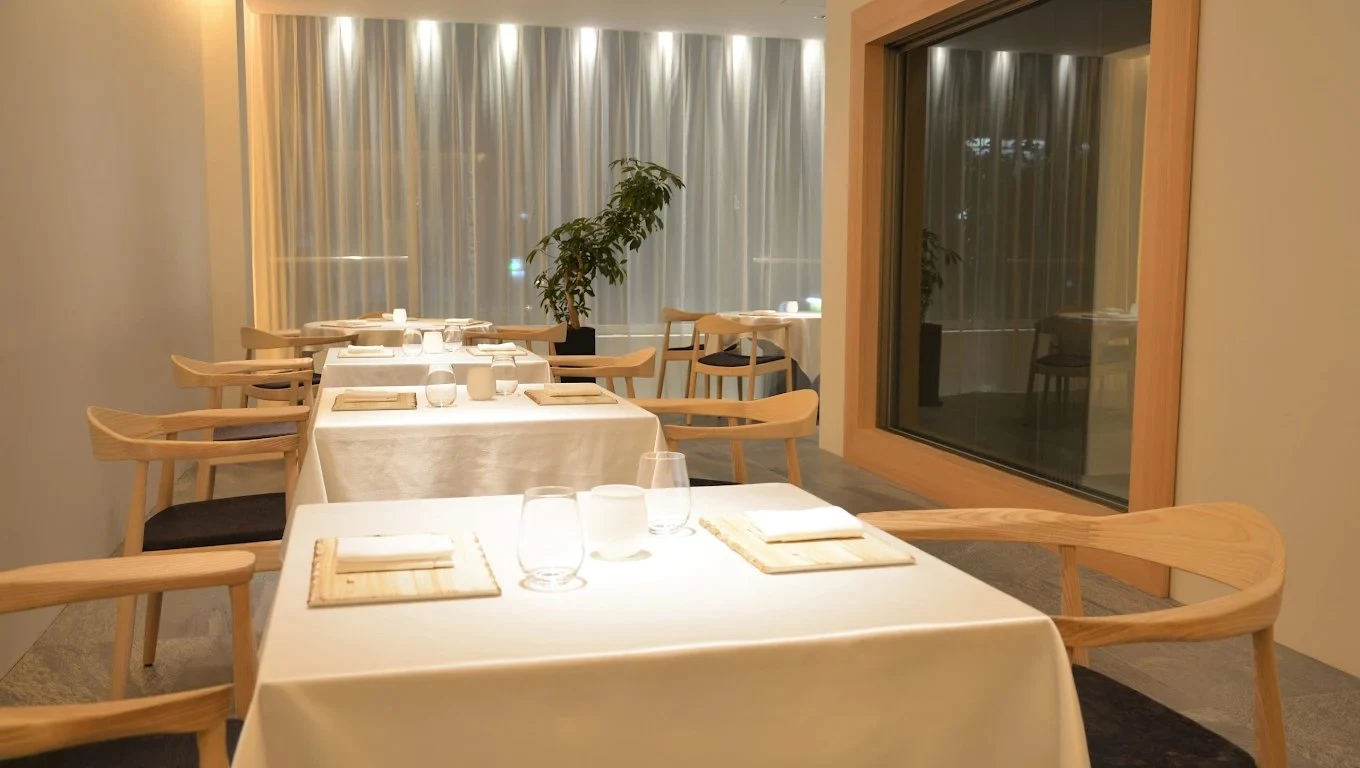
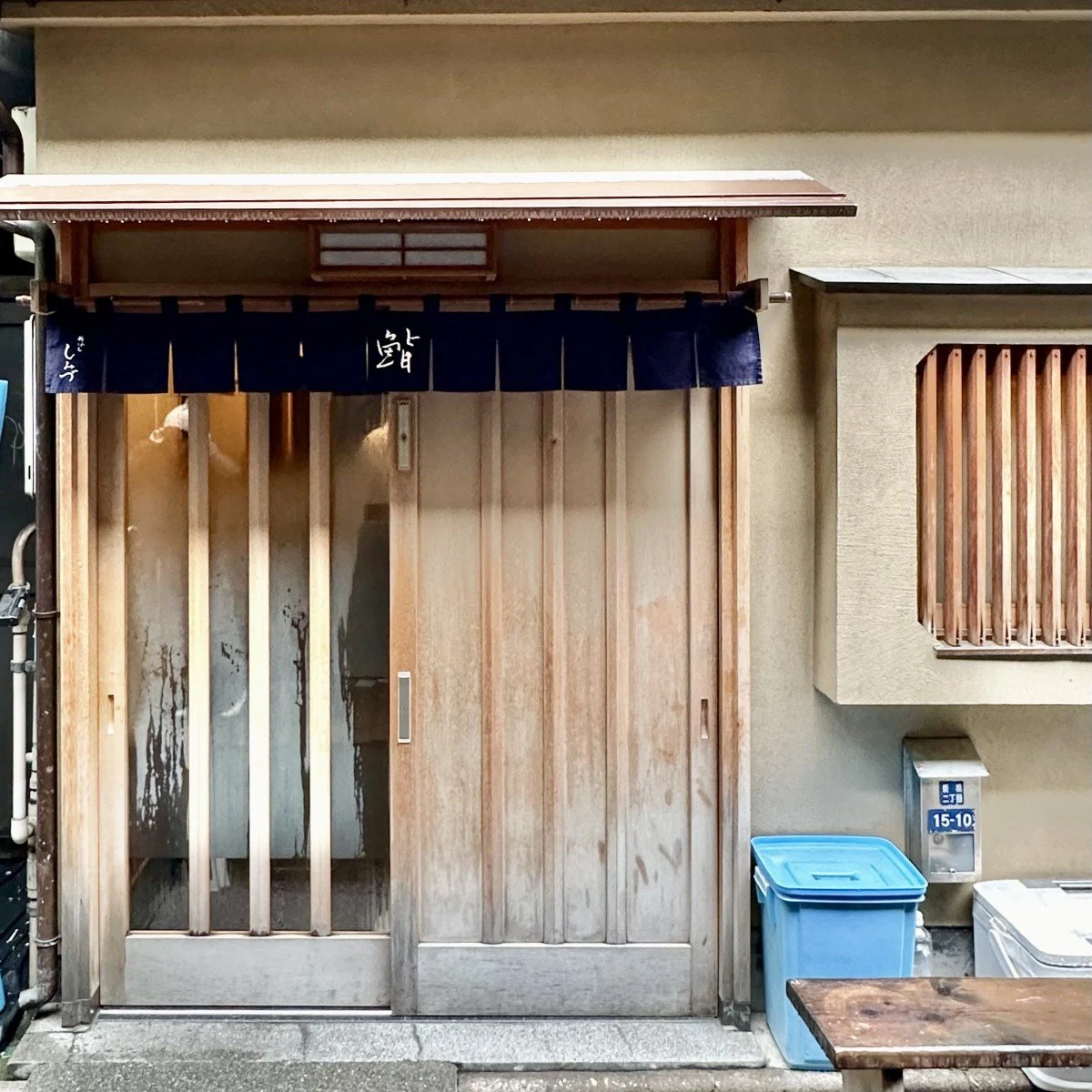
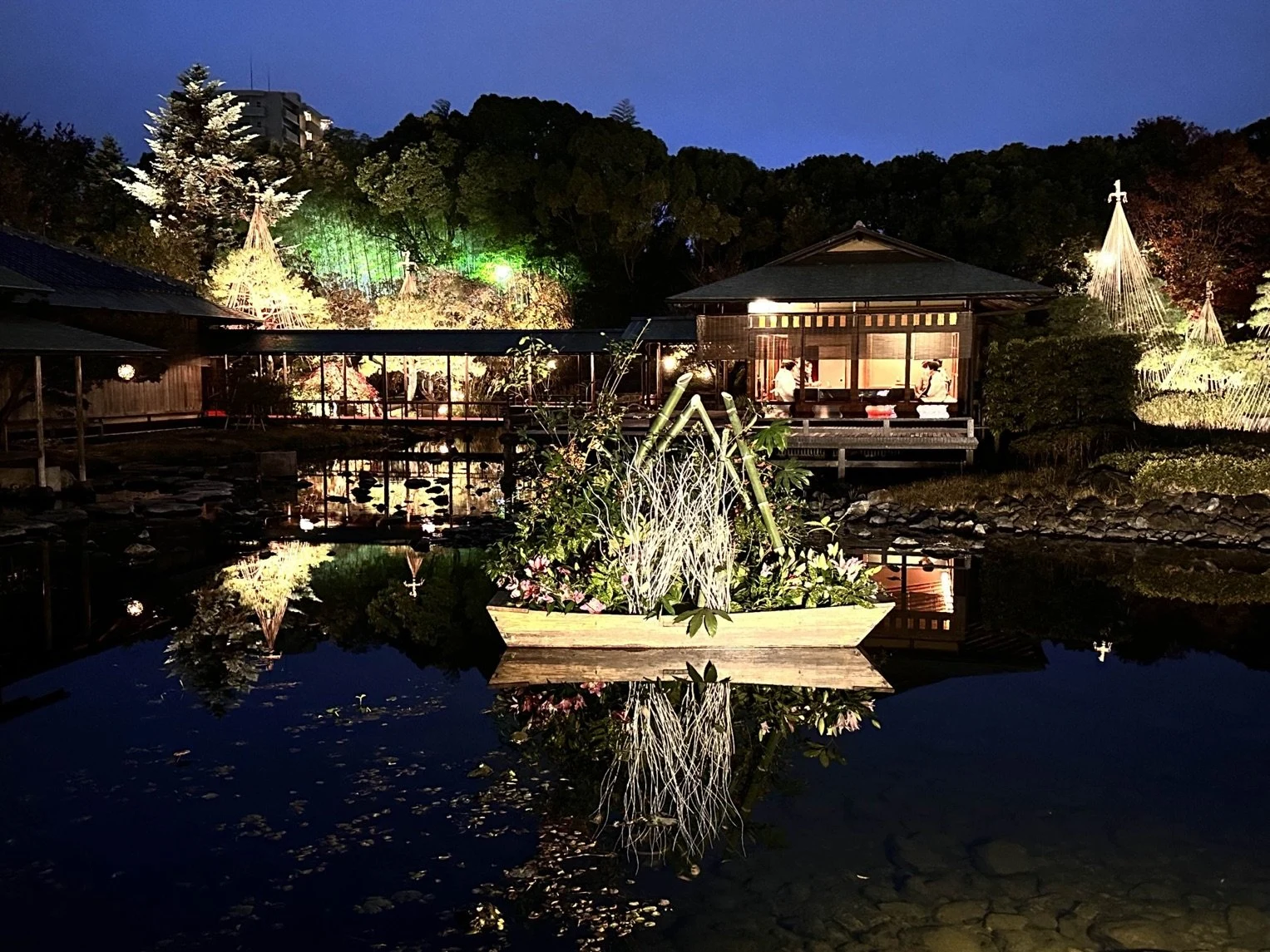
A Michelin-starred kaiseki counter in Kyoto's Higashiyama district, NISHITOMIYA holds a 2025 one-star recognition and an EP Club member rating of 4.4 out of 5. The kitchen operates under chef Patricio Wise, placing it among a small cohort of Kyoto kaiseki addresses where Western culinary training meets the rigour of Japanese seasonal form. Google reviewers rate it 4.1 across 458 responses.
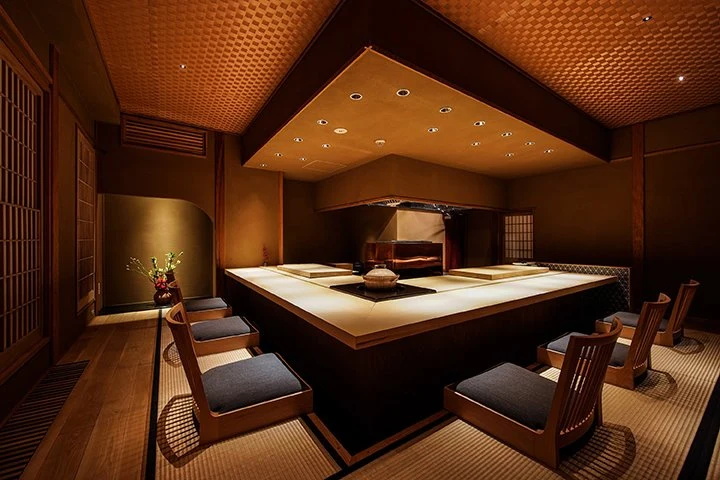
<h2>Where Higashiyama's Quieter Streets Set the Mood</h2><p>NISHITOMIYA is a restaurant in Kyoto serving Modern Japanese Kaiseki, with a 4.1 Google rating and an average spend of about $250 per person. The approach to NISHITOMIYA tells you something before you step inside. Higashiyama Ward sits east of central Kyoto, where the city begins to thin out against the foothills and the pace drops measurably. The address, tucked inside a low-rise building on Nishimachi, accessed from the crossing of Tominokoji and Rokkaku, belongs to a stretch of Kyoto where the built environment is small in scale and the sensory noise is correspondingly low. This is not the lantern-lit tourist corridor of Gion's main thoroughfares. The light arriving through the entrance is softer, the sounds more contained, and the register of the room signals from the first moment that attention is the currency here.</p><p>Kyoto kaiseki has long traded on this kind of deliberate quietude. The cuisine evolved from the spare meals served alongside the tea ceremony, and its modern form retains that structural discipline: courses progress through prescribed categories, each one calibrated to the season, the temperature, the weight of what preceded it. The physical environment of a kaiseki room is not incidental to that experience, it is part of the argument the kitchen is making about restraint and timing. NISHITOMIYA's location in Higashiyama, removed from the denser commercial fabric of central Kyoto, sits coherently within that tradition.</p><h2>The Michelin Signal and What It Places</h2><p>NISHITOMIYA holds one Michelin star for 2025 and carries the additional Michelin designation of Cooking Classics, a classification the guide applies to restaurants demonstrating mastery of a defined culinary tradition rather than innovation for its own sake. Within the broader Kyoto kaiseki category, this pairing of recognitions is a precise placement: the kitchen is being read as technically accomplished and formally grounded, not as an experimental outlier. This is a room where the interest lies in execution and fidelity to seasonal form, not in conceptual surprise.</p><p>Kyoto produces a dense concentration of starred kaiseki addresses, and the competition for Michelin attention within the tradition is correspondingly tight. One-star kaiseki in this city typically means a kitchen operating at a level that rewards the attentive diner without yet carrying the international booking pressure of the two- and three-star counters. For comparison, addresses like <a href="https://www.enprimeurclub.com/restaurants/gion-sasaki-kyoto-restaurant">Gion Sasaki in Kyoto</a> or <a href="https://www.enprimeurclub.com/restaurants/hajime-osaka-restaurant">HAJIME in Osaka</a> sit at higher star counts and correspondingly higher booking difficulty. NISHITOMIYA's tier is meaningful: it offers Michelin-verified quality at a point where access remains more realistic, though booking ahead is still advisable.</p><p>The 4.1 Google rating and 469 reviews suggest consistent delivery across a range of diners and meal occasions. Volume at that rating level suggests consistent delivery across a range of diners and meal occasions.</p><h2>The Sensory Architecture of a Kaiseki Meal</h2><p>The kaiseki format structures the sensory experience before the kitchen has made a single dish-level decision. Courses arrive in a sequence that mirrors the arc of a seasonal day or the passage of a year: lighter preparations early, richer ones in the middle register, a return to clarity toward the close. The ceramics, lacquerware, and serving vessels shift in weight and texture as the meal proceeds, and the colour palette on the table tends to track the season visible through any window or garden view.</p><p>In Kyoto's autumn months, the kaiseki table typically moves through ingredients like matsutake mushroom, tilefish, and persimmon, while spring kitchens pivot hard toward bamboo shoots, cherry blossoms used sparingly, and the first freshwater fish of the warmer current. This seasonal attunement is not decorative, it is the primary argument the cuisine makes about what cooking is for. The sensory experience at a room like NISHITOMIYA is therefore inseparable from when you visit. A meal in November is a materially different sequence of colours, temperatures, and textures than a meal in April.</p><p>Chef Patricio Wise operates in a category where the technical discipline of classical Japanese kaiseki is the baseline requirement. What distinguishes this kitchen's position in the wider Kyoto scene is the combination of formal Michelin recognition and a non-Japanese chef leading the counter, a configuration that remains uncommon enough to be worth noting as context. Kyoto kaiseki is among the most tradition-bound expressions of Japanese cuisine; a Western-trained cook earning one-star recognition within it speaks to the credibility of the kitchen's engagement with the form. For comparable cases of Western culinary training intersecting with Japanese precision, <a href="https://www.enprimeurclub.com/restaurants/akordu-nara-restaurant">akordu in Nara</a> offers a useful regional reference point.</p><h2>Kyoto in the Context of Japan's Kaiseki Map</h2><p>Kaiseki is not a cuisine confined to Kyoto, but Kyoto is where its grammar was established and where it is still most densely practised at high levels. Tokyo has absorbed the form and produced its own starred kaiseki counters, <a href="https://www.enprimeurclub.com/restaurants/aoyagi-tokyo-restaurant">Aoyagi in Tokyo</a> being one reference point, and cities like Fukuoka (<a href="https://www.enprimeurclub.com/restaurants/goh-fukuoka-restaurant">Goh</a>) and Yokohama (<a href="https://www.enprimeurclub.com/restaurants/1000-yokohama-restaurant">1000</a>) have their own serious representations of the form. But Kyoto remains the reference address, and dining in Higashiyama specifically places the meal within the part of the city that has retained the most coherent traditional fabric.</p><p>For visitors planning a broader Kansai itinerary, NISHITOMIYA sits within a network of serious dining addresses across the region. The kaiseki comparison at <a href="https://www.enprimeurclub.com/restaurants/aca">Aca 1° in Kyoto</a> offers another data point within the same city.</p><h2>Planning the Visit</h2><p>NISHITOMIYA sits approximately 3 kilometres from JR Kyoto Station, making it direct to reach by taxi or a short train-and-walk combination. For those arriving from Osaka Itami International Airport, the journey is roughly 52 kilometres, typically 70 to 90 minutes by train via Kyoto Station, or longer by road depending on traffic. The address places it in Kyoto's Higashiyama Ward, within walking distance of the main sightseeing corridor though comfortably off its busiest sections. By car, the nearest practical reference is the Tominokoji-Rokkaku crossing, with one minute's walking to the entrance from there.</p><p>Given the Michelin recognition and the kaiseki format, booking well in advance is the practical standard. Visiting in a shoulder season, late October through November for autumn ingredients, or late March through April for spring, will align the menu most clearly with the seasonal transitions that kaiseki frames most dramatically. Those extending their travel across the region should also reference our full Nagoya hotels guide, bars guide, and experiences guide for a complete picture.</p>
The chef associated with NISHITOMIYA is Patricio Wise.
NISHITOMIYA operates as a kaiseki counter, meaning the kitchen sets the sequence and the diner follows it. There is no à la carte selection. The progression moves through seasonal courses in the classical kaiseki structure, which is precisely what earned the restaurant its Michelin Cooking Classics designation alongside its 2025 star.
NISHITOMIYA is located at Japan, 〒605-0037 Kyoto, Higashiyama Ward, Nishimachi, 126 ビスタ三条白川 1F奥, Nagoya.
NISHITOMIYA has received recognition including: HIGHLIGHTS: • 1 MICHELIN STAR 2025 • COOKING CLASSICS DIRECTIONS & ACCESS: Directions By car 1 min. walk from the crossing of Tominokoji street and Rokkaku street in City Kyoto By plane Osaka (Intl) 52 km By train JR Kyoto Station 3 km GPS ….
No direct booking link or phone number is currently listed in public sources for NISHITOMIYA.For a one-Michelin-star kaiseki address in Kyoto's Higashiyama Ward, the standard approach is to contact the restaurant through a concierge service or a specialist Japan dining platform, and to allow at least four to eight weeks' lead time.
The defining commitment at NISHITOMIYA is the kaiseki sequence itself as a seasonal argument — each course building on the last in a grammar established in Kyoto over centuries. Michelin's Cooking Classics designation, awarded alongside the 2025 star, signals that the kitchen is working within a codified tradition rather than reinterpreting or departing from it.
Japan, 〒605-0037 Kyoto, Higashiyama Ward, Nishimachi, 126 ビスタ三条白川 1F奥
Nakagyō-ku