A ten-seat counter in Kitashinchi, Osaka, Noguchi Taro holds a Tabelog score of 4.10 and has earned consecutive Tabelog Bronze Awards from 2017 through 2026, alongside three selections to the Tabelog Japanese Cuisine WEST 100. Operating dinner-only from 18:00 six evenings a week, it draws a following shaped by a precise focus on fish and a drinks program built around sake and shochu.
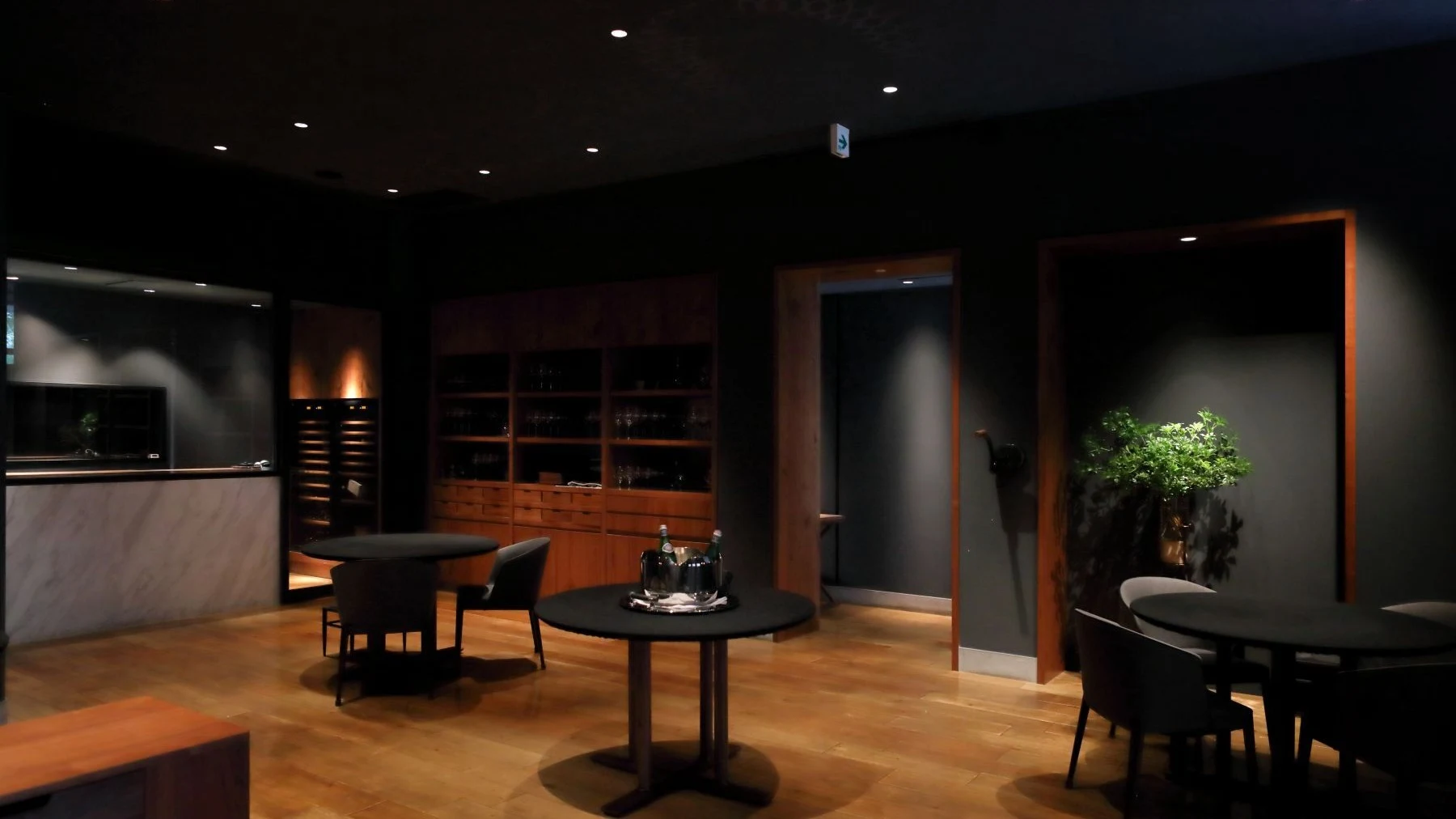
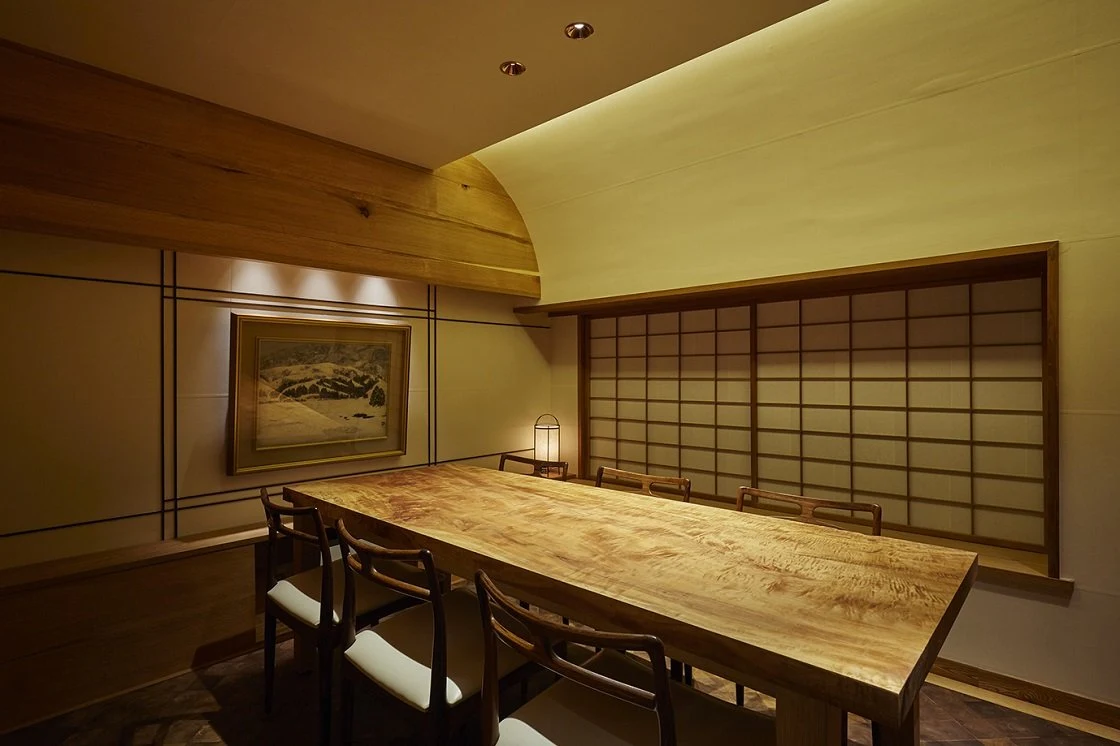
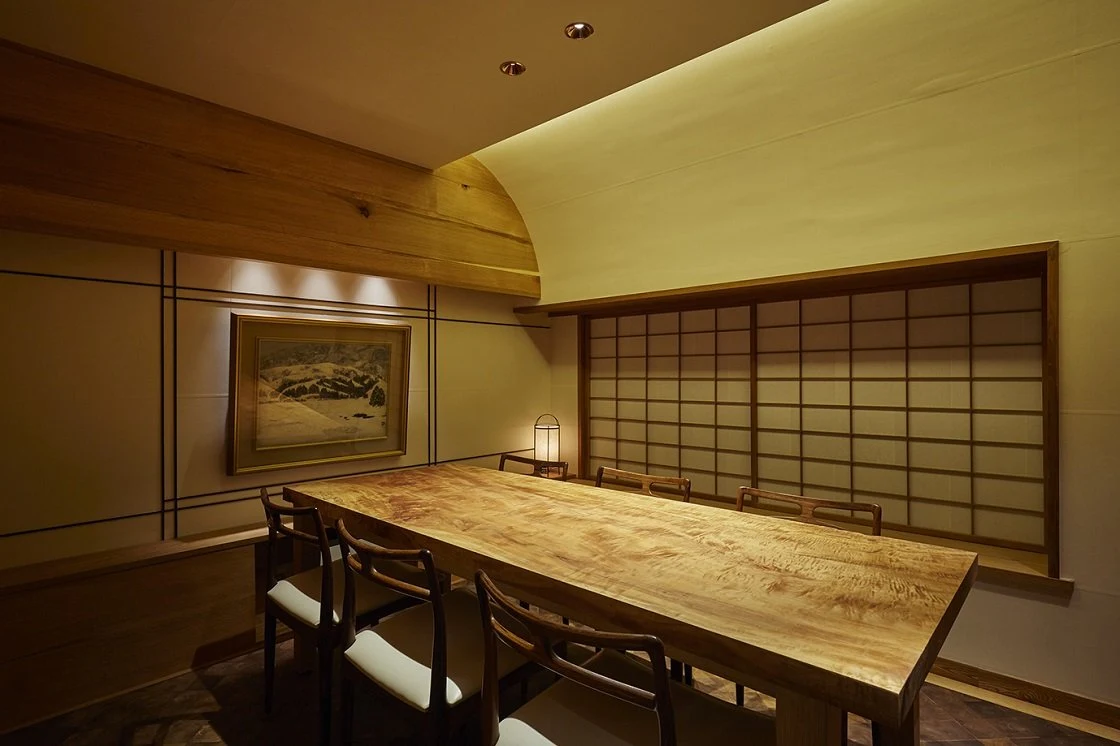
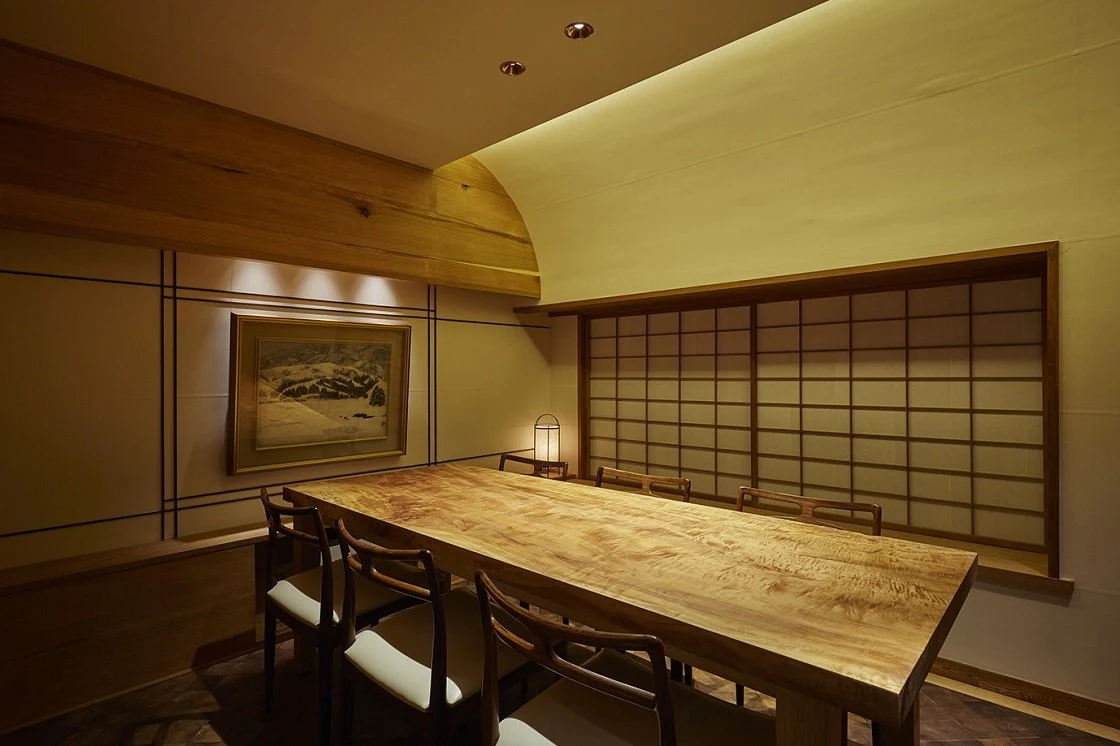
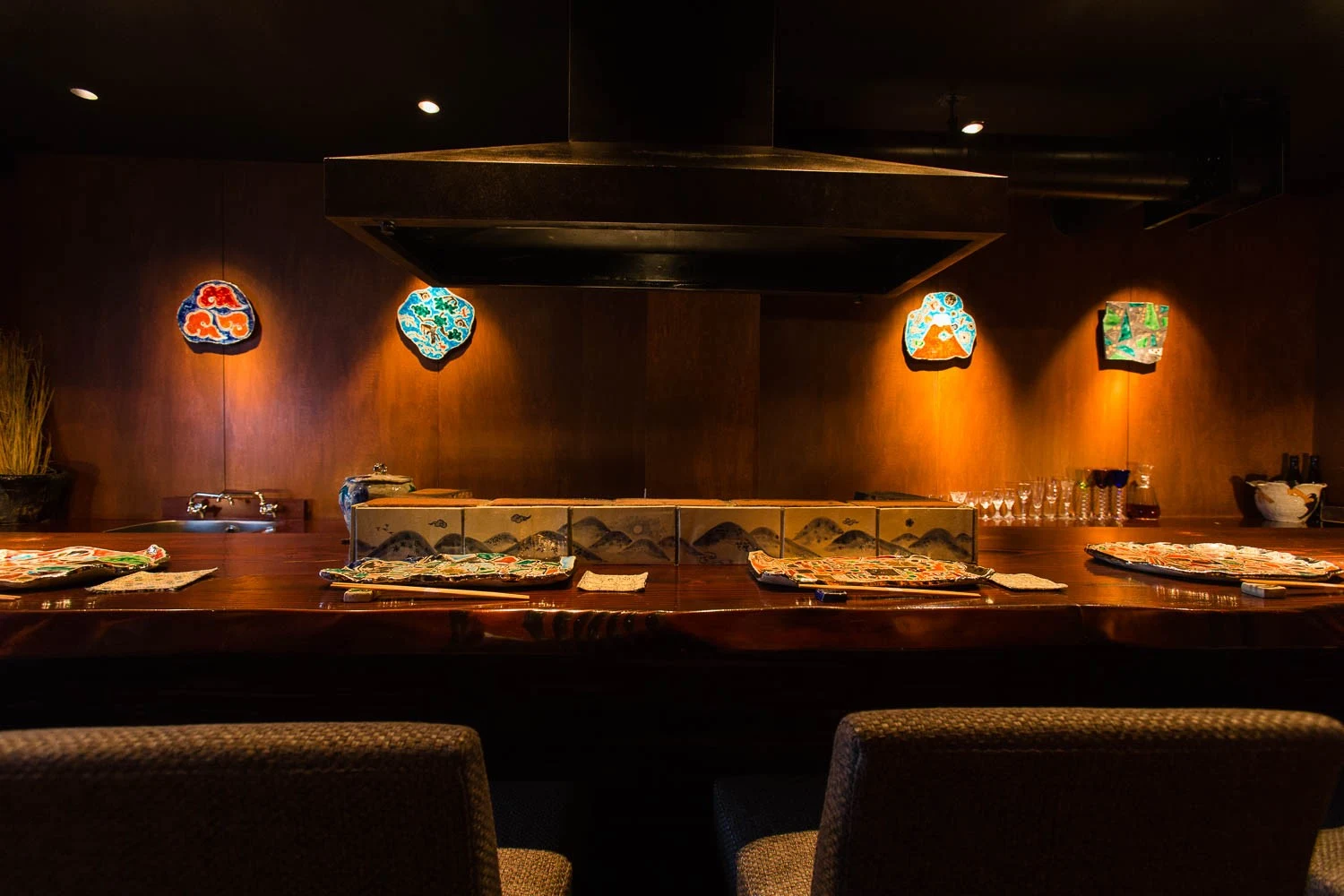
<h2>A Counter in Kitashinchi</h2><p>Osaka's Kitashinchi district has long held a particular place in Japan's dining hierarchy: not the rarefied quiet of Kyoto's Higashiyama, nor the tourist-facing bustle of Dotonbori, but a working entertainment quarter where serious restaurants operate behind unmarked doors and buildings that show nothing from street level. The third floor of a building near the Avanza Dojima intersection is an address that rewards those who have already done the research. That kind of address, in that kind of neighbourhood, is where Noguchi Taro has operated its ten-seat counter.</p><p>The Kitashinchi model, counter-only, dinner-only, small capacity, has become a shorthand for a certain tier of Japanese cuisine in western Japan. At this end of the market, the room is not incidental to the meal: it is the meal. A counter of ten seats means the kitchen is always cooking for a single cohort, the pacing is unified, and there is no second seating to rush toward. That structural fact shapes every course that follows.</p><h2>How the Meal Moves</h2><p>Counter dining at the upper end of Osaka's Japanese cuisine scene is built on a progression that differs from the kaiseki format found at places like <a href="https://www.enprimeurclub.com/restaurants/taian-osaka-restaurant">Taian</a> or <a href="https://www.enprimeurclub.com/restaurants/kashiwaya-osaka-senriyama-osaka-restaurant">Kashiwaya Osaka Senriyama</a>. Where kaiseki follows a codified sequence rooted in tea ceremony aesthetics, the counter-focused Japanese restaurant has more latitude to move between techniques, temperatures, and registers. The meal is still a progression, but the grammar is looser, and the kitchen's particular obsessions tend to surface more directly.</p><p>At Noguchi Taro, the database makes one of those obsessions explicit: the kitchen is described as particular about fish. In the context of Osaka, which sits at the intersection of Seto Inland Sea sourcing and Kansai market infrastructure, that specificity has weight. A focus on fish in this city is not a constraint but an opening into one of Japan's most layered seafood traditions. The progression of a meal here, course by course, is likely to track the seasons through what the sea is offering: the fat of autumn, the leaner precision of winter, the transition ingredients of early spring.</p><p>The drinks program reinforces the editorial logic of the food. The venue is listed as particular about both sake and shochu, with wine available. Sake pairings at this price point in Osaka tend to track the meal's regional identity, drawing from producers in Nada, Fushimi, and further afield in the Kansai region. A meal that moves through fish-led courses with a sake progression running alongside it is, in structural terms, a distinctly western Japanese format, one that differs from the wine-forward pairings you would find at <a href="https://www.enprimeurclub.com/restaurants/hajime-osaka-restaurant">HAJIME</a> or <a href="https://www.enprimeurclub.com/restaurants/la-cime-osaka-restaurant">La Cime</a> a few stops away.</p><h2>What the Awards Record Signals</h2><p>Consecutive Tabelog Bronze Awards from 2017 through 2026, with no gap in the record, is not a minor credential. Tabelog Bronze places a restaurant inside the top tier of Tabelog's annual recognition system, which draws on aggregated review scores across Japan's largest dining database. Consistent annual Bronze recognition over nearly a decade indicates a steady performance rather than a single exceptional year.</p><p>The three selections to Tabelog's Japanese Cuisine WEST 100, in 2021, 2023, and 2025, add a regional dimension. The WEST 100 specifically identifies the leading Japanese cuisine restaurants in western Japan, a category that includes Kyoto, Osaka, and surrounding prefectures, and one where competition from established ryotei and kaiseki houses is substantial. Appearing in that list three times in five years positions Noguchi Taro among the most closely watched Japanese cuisine operations in the region.</p><p>For comparison, the Innovative and French-influenced restaurants that define Osaka's international profile, including <a href="https://www.enprimeurclub.com/restaurants/fujiya-1935-osaka-restaurant">Fujiya 1935</a> and <a href="https://www.enprimeurclub.com/restaurants/hajime-osaka-restaurant">HAJIME</a>, draw their recognition primarily from Michelin. Noguchi Taro's profile runs through Tabelog's domestic system, which reflects a different, and often more local, constituency of diners. That distinction matters: Tabelog Bronze at a consistent score of 4.10 is a signal that resonates strongly with Japanese diners planning meals in Osaka.</p><p>Comparable counter-focused Japanese cuisine operations elsewhere in Japan, <a href="https://www.enprimeurclub.com/restaurants/gion-sasaki-kyoto-restaurant">Gion Sasaki in Kyoto</a>, <a href="https://www.enprimeurclub.com/restaurants/harutaka-tokyo-restaurant">Harutaka in Tokyo</a>, <a href="https://www.enprimeurclub.com/restaurants/goh-fukuoka-restaurant">Goh in Fukuoka</a>, each sit within their own regional context, but share the structural logic of the small counter, the fish-forward agenda, and the domestic recognition system. Noguchi Taro belongs to that grouping by format and by record.</p><h2>The Room and What It Implies</h2><p>Ten seats, counter only, third floor of a building with no street signage: this is what Tabelog categorises as a hideout and house restaurant format. The classification is more than atmospheric labelling. It describes a business model in which the room itself functions as a filter. Getting to the third floor of an unmarked building in Kitashinchi requires prior knowledge or deliberate research, and that friction is part of the contract. The diners who arrive have already self-selected.</p><p>Private use is available for groups of up to twenty people. The listing also notes that children are allowed, provided they eat the food.</p><p>The absence of private rooms within the standard configuration is consistent with the counter format's core logic: the shared experience of a single cohort moving through the same progression simultaneously. At comparable operations internationally, that shared pacing is considered a feature rather than a limitation. Counter dining at <a href="https://www.enprimeurclub.com/restaurants/atomix">Atomix in New York City</a> or the counter format at <a href="https://www.enprimeurclub.com/restaurants/le-bernardin">Le Bernardin</a> operate from different culinary traditions, but the principle of a controlled, unified dining arc is understood across all of them.</p><h2>Planning Your Visit</h2><p>Noguchi Taro operates dinner service from Monday through Saturday, 18:00 to 23:30, with Sundays closed. The counter runs ten seats. Budget: The listed average is JPY 20,000 to 29,999 per person at dinner. Reservations are essential. Getting there: The venue is located at Japan, 〒530-0002 Osaka, Kita Ward, Sonezakishinchi, 1 Chome−3−1 3階. Drinks: Sake and shochu are the primary focus; wine is available. Parking: Not available on-site.</p><p> Elsewhere in the Kansai and broader Japan region, comparable Japanese cuisine operations include <a href="https://www.enprimeurclub.com/restaurants/gion-sasaki-kyoto-restaurant">Gion Sasaki in Kyoto</a> and <a href="https://www.enprimeurclub.com/restaurants/akordu-nara-restaurant">akordu in Nara</a>; further afield, <a href="https://www.enprimeurclub.com/restaurants/1000-yokohama-restaurant">1000 in Yokohama</a> and <a href="https://www.enprimeurclub.com/restaurants/6-okinawa-restaurant">6 in Okinawa</a> represent other points on Japan's counter-dining spectrum.</p>
Noguchi Taro is located at Japan, 〒530-0002 Osaka, Kita Ward, Sonezakishinchi, 1 Chome−3−1 3階, Osaka.
Noguchi Taro has received recognition including: {"Year":"2026","Award Source":"Tabelog","Award Type":"The Tabelog Award","Award Group":"bronze","Award Group Rank":"325","Restaurant Name":"Noguchi Taro","Score":"4.10","Budget":"Dinner: JPY 20,000 - JPY 29,999; Lunch: -","Budget Dinner":"J….
The kitchen's stated focus is fish, and the format is a set counter progression rather than à la carte, so selection is not the operative question. The drinks program centres on sake and shochu, with the venue explicitly noting a particular focus on both. Review-based spending at this counter typically runs JPY 30,000–39,999 per person.
Hours at Noguchi Taro: Mon, Tue, Wed, Thu, Fri, Sat 18:00 - 00:00.
Noguchi Taro holds consecutive Tabelog Bronze Awards from 2017 through 2026 and has been selected for the Tabelog Japanese Cuisine WEST 100 in 2021, 2023, and 2025, placing it among the most consistently recognised Japanese cuisine counters in western Japan. The format is ten seats, counter only, on the third floor of a building in Osaka's Kitashinchi district with no street-level presence, and the kitchen's focus is fish with a drinks program built around sake and shochu.
Japan, 〒530-0002 Osaka, Kita Ward, Sonezakishinchi, 1 Chome−3−1 3階
Kita Ward

Modern French with Japanese Ingredients
La Cime
Osaka, Japan
★★ · 50 Best

Avant-Garde Japanese Fine Dining
HAJIME
Osaka, Japan
★★★ · 50 Best

Michelin-Starred Modern Cantonese
Sawada
Osaka, Japan
★

Traditional Kaiseki
Honkogetsu
Osaka, Japan

Seasonal Kaiseki Omakase
Kashiwaya Osaka Senriyama
Osaka, Japan
★★★

Traditional Japanese Kaiseki Omakase
Taian
Osaka, Japan
★★★