Ogimachi Udonya Asuro
In Residence
Nishigori Koki
Chef
- 01CuisineHandmade Udon Specialist
- 02CityOsaka, Japan
Dual-flour udon, clear seafood dashi
- Michelin Bib Gourmand · Michelin Guide
- Michelin Bib Gourmand · 2026
- Michelin Bib Gourmand · 2025
- Tabelog 100 #14: 3.7pts · 2024
- Michelin Bib Gourmand · 2024
Six years before the counter
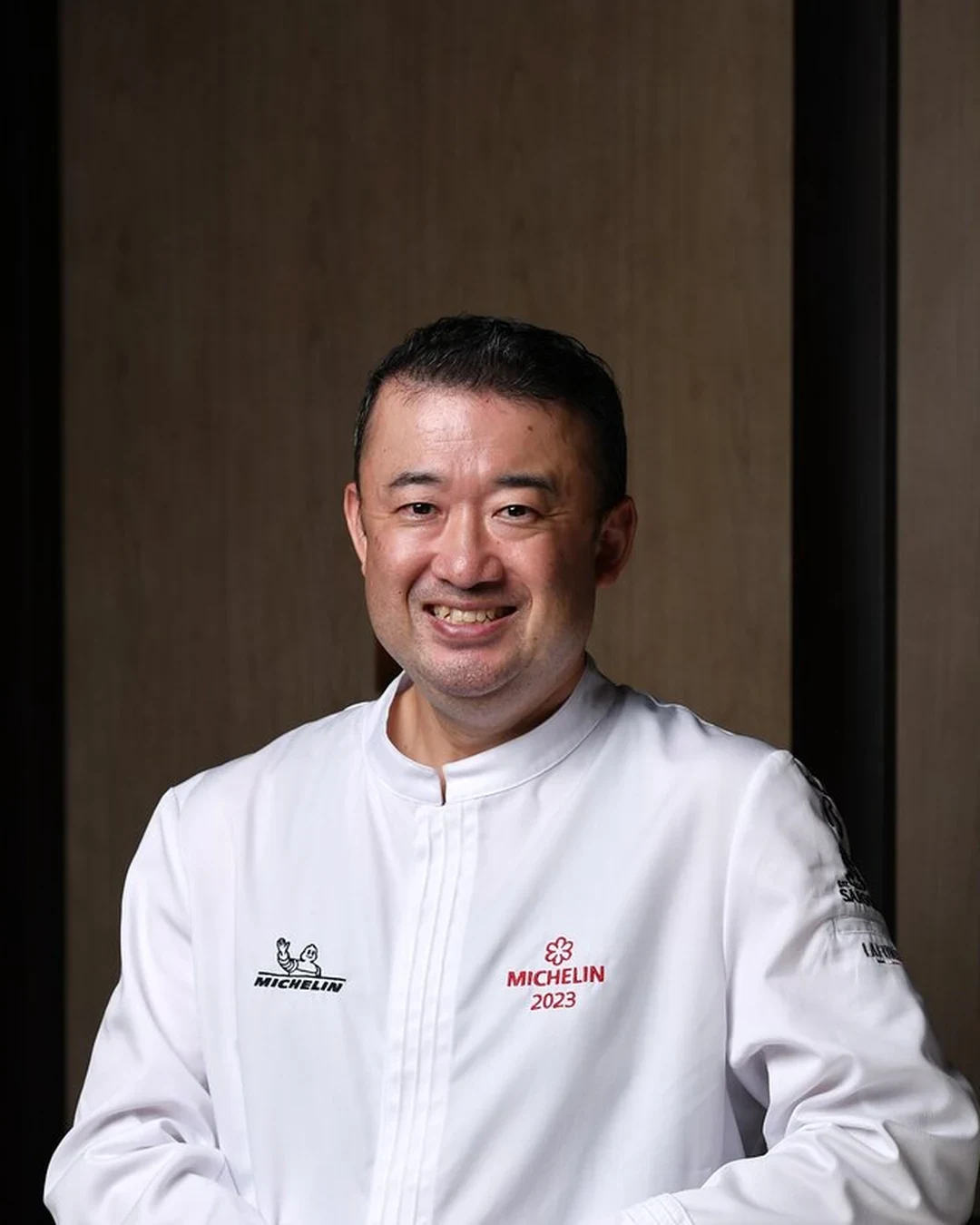
The flour blend comes first, before the broth or toppings. Nishigori Koki, Executive Chef at Ogimachi Udonya Asuro in Osaka, works from that decision outward. His udon carries the training of a six years apprenticeship at another Osaka udon-ya, where the craft was learned in the daily repetition of noodle handling, dashi discipline, and service rhythm. The mentor's name is not given by the house, and the omission matters less than the method it left behind: dough judged by touch, noodles judged in the bowl, and a pass that moves quickly without turning the work casual in the hands.
At Asuro, Nishigori holds the station as the singular named culinary lead. The restaurant sits in Osaka's Kita-ku district near Tenjimbashi-suji, a setting suited to a shop that asks little of the room and much of the noodle. Michelin Bib Gourmand recognition in 2025 and 2024 marks the work as quality cooking at good value, but the citation follows what the queue already knows. This is udon made to be read through texture, clarity, and timing.
The Sunday letter
Find new places through the people who run them.
Our Sunday email brings you the chefs, winemakers and hoteliers behind our newest stories. See a sample before you subscribe.
See a sample of the Sunday emailOne email a week. Unsubscribe from any issue.
Dual flour, clear dashi, chosen toppings
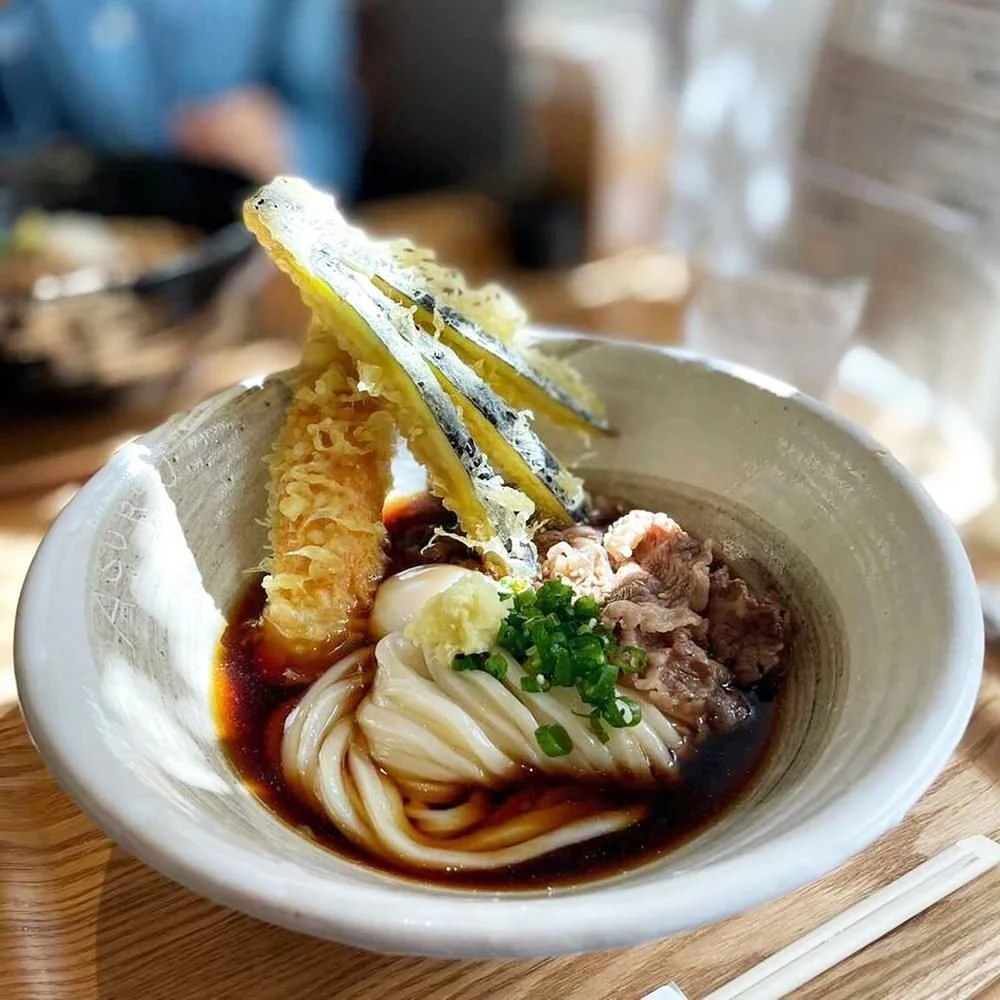
The method turns on flour mixing. Nishigori uses a dual-flour approach to give the udon body and spring, a texture meant to hold its line whether served as bukkake, hiyakake, or kijoyu. In Kijoyu, the noodle has little cover; dipping sauce and the natural flavor of the wheat carry the bowl. In Hiyakake, the clear seafood broth brings the test to temperature and balance, asking the noodle to stay alive against dashi rather than disappear into it.
The signature Toriten to Taichikuwaten to Ontama Bukkake adds weight without crowding the craft. Chicken tempura, sea bream paste cake tempura, and a soft-boiled egg sit over the udon, giving crispness, chew, and richness to a bowl still governed by noodle structure. Shichimi and sansho appear as finishing choices, not as disguise. The architecture is direct: noodle, broth or sauce, topping, bowl. Its restraint is the discipline.
The room around the noodle
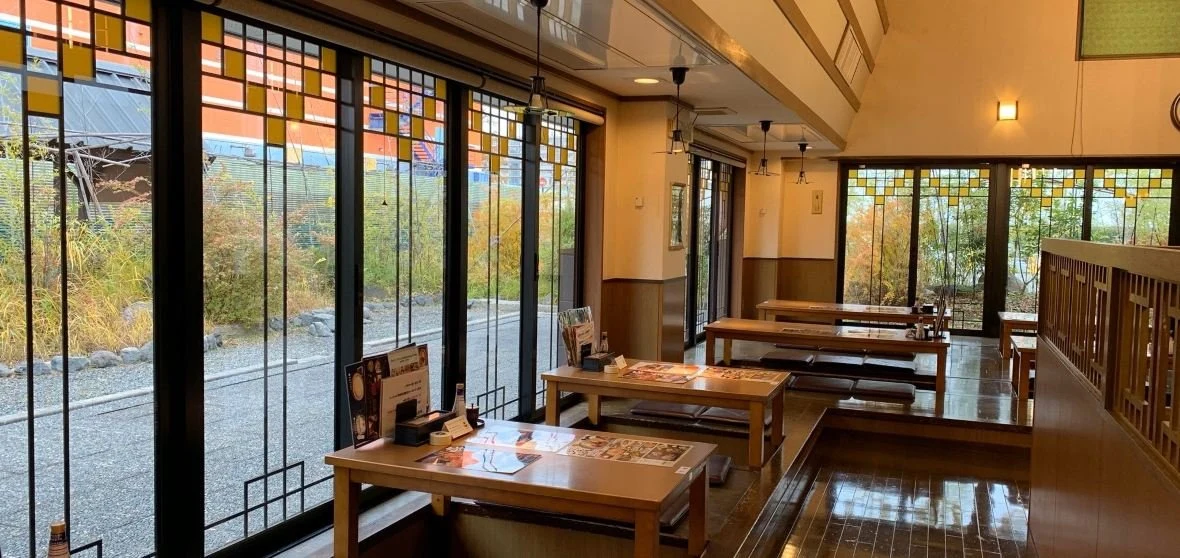
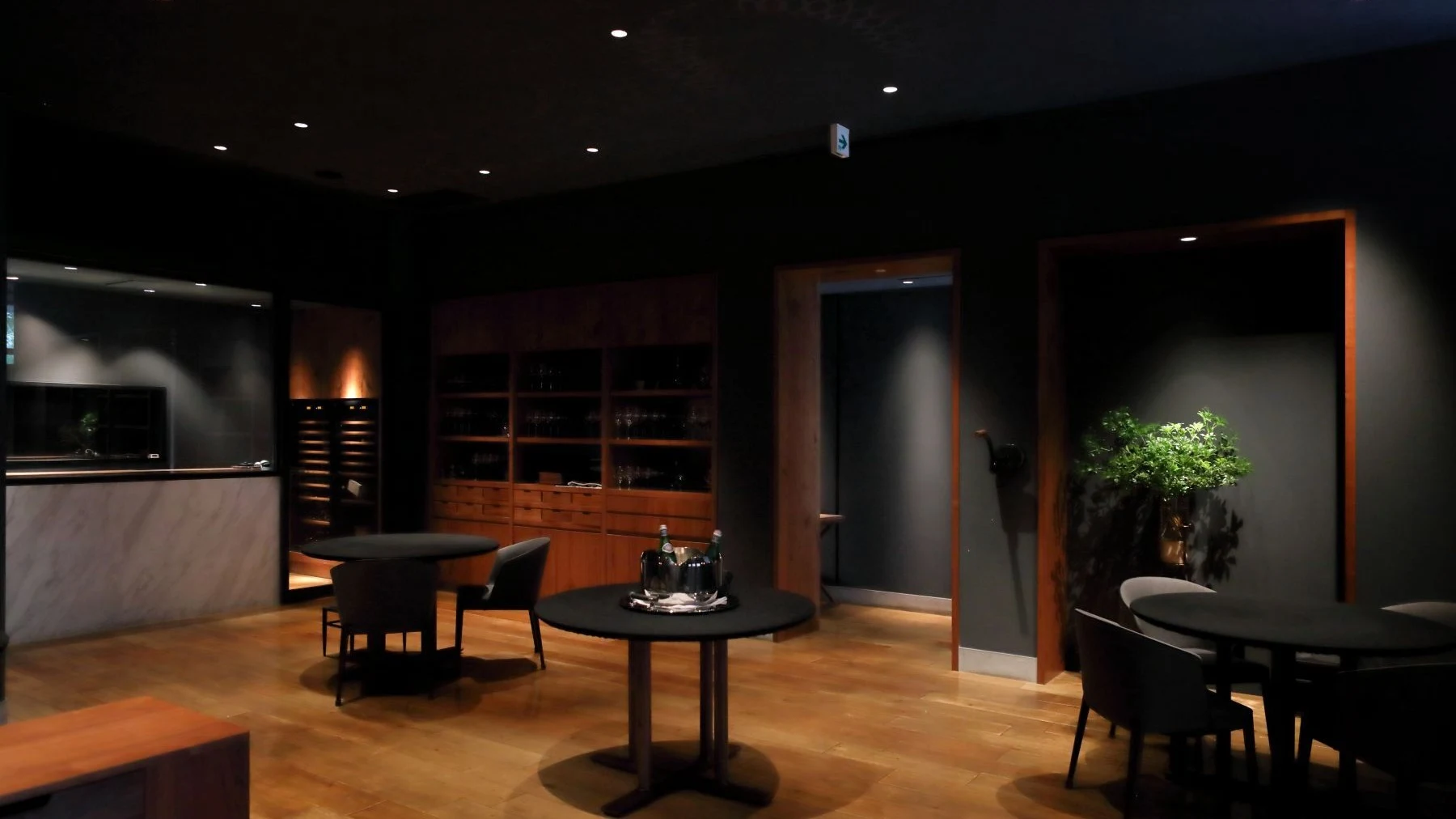
The room is humble and close, with the counter and tables serving the work rather than framing it. Asuro is a 15-seat shop, intimate enough that the production rhythm and the eating rhythm feel joined. Long queues are part of its public life, but inside the attention returns to the pass: bowls moving out, tempura landing hot, cold broth kept clear, noodles asked to keep their spring from first lift to last bite.
Nothing in the room suggests distance from the bench. It is unpretentious, conversational, and built around the immediate exchange between kitchen and guest. The value here is not a flourish; it is the decision to keep the format à la carte and let each bowl prove the mixing, the dashi, and the topping work in sequence. If the house ends on one statement of itself, it is Hiyakake, where clear seafood broth leaves Nishigori's udon with nowhere to hide.
Questions
Frequently asked
Who is the chef behind Ogimachi Udonya Asuro?
Nishigori Koki is the executive chef and the only named culinary lead at Ogimachi Udonya Asuro.
What is the restaurant known for?
The restaurant is known for handmade udon built from a dual-flour approach and clear dashi, with the noodles judged for texture and spring.
What are the signature dishes?
Signature dishes include Toriten to Taichikuwaten to Ontama Bukkake and Hiyakake.
What recognition does it hold?
Ogimachi Udonya Asuro has Michelin Bib Gourmand recognition in 2024 and 2025.
Is it easy to visit without booking?
The restaurant is walk-in friendly, and it is open from 11 AM to 4 PM on Monday, Tuesday, Friday, Saturday, and Sunday, with Wednesday and Thursday closed.
The field
How it compares
| Place | Cuisine | Notes | Awards |
|---|---|---|---|
| Ogimachi Udonya Asuro | Handmade Udon Specialist | Kita, $$ | · |
| HAJIME | Avant-Garde Japanese Fine Dining | Osaka | Michelin 3 Stars, World's 50 Best |
| Honkogetsu | Traditional Kaiseki | Osaka | · |
| La Cime | Modern French with Japanese Ingredients | Osaka | Michelin 2 Stars, World's 50 Best |
| Numata | Michelin-Starred Tempura Omakase | Osaka | Michelin 2 Stars |
| Sushi Sanshin | Edomae Omakase Sushi | Osaka | Michelin 1 Star |
| Taian | Traditional Japanese Kaiseki Omakase | Osaka | Michelin 3 Stars |
In residence
Similar places
Avant-Garde Japanese Fine Dining
HAJIME
Osaka, Japan
★★★ · 50 Best
Traditional Kaiseki
Honkogetsu
Osaka, Japan
Modern French with Japanese Ingredients
La Cime
Osaka, Japan
★★ · 50 Best
Michelin-Starred Tempura Omakase
Numata
Osaka, Japan
★★
Edomae Omakase Sushi
Sushi Sanshin
Osaka, Japan
★
Traditional Japanese Kaiseki Omakase
Taian
Osaka, Japan
★★★
The Sunday letter
Get the next Made By story in your inbox.
We send one email every Sunday morning with the places and people we covered that week.
See a sample of the Sunday emailOne email a week. Unsubscribe from any issue.